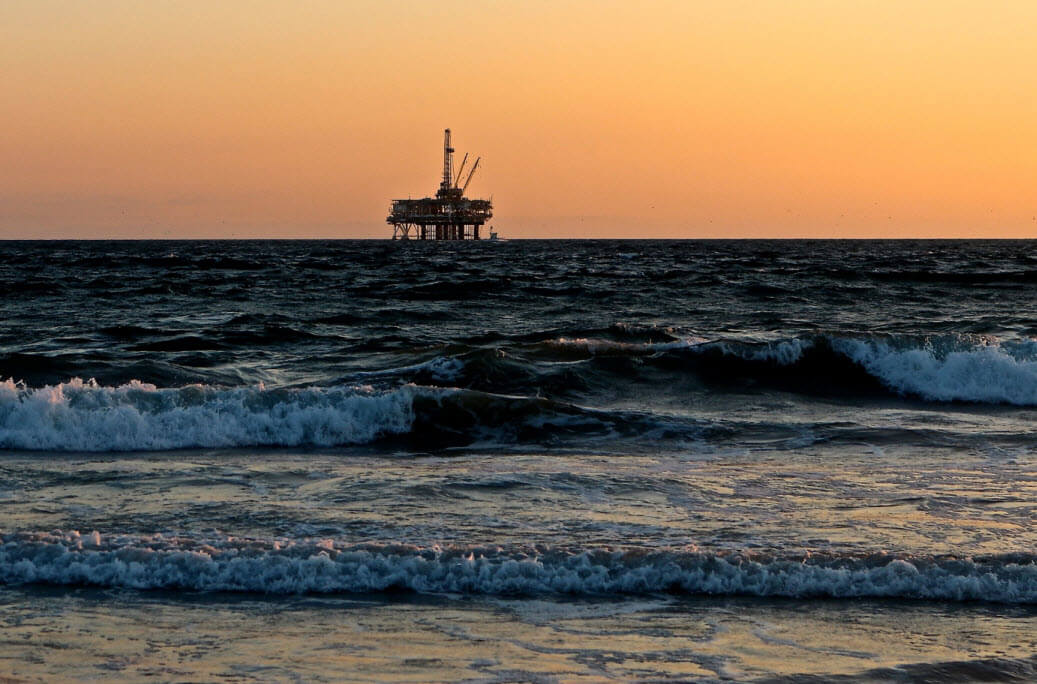
Immersion into cold water such as the North Sea causes the body temperature to rapidly decrease with an estimated life expectancy of 10-12 minutes.
Around 50,000 people travelled offshore to work in the oil and gas industry in 2017, according to the Oil & Gas UK Workforce Report 2018. With this many people working at sea, it is important that measures are taken to protect them from the harsh environment.
Now, academics from Heriot-Watt University, Scotland, have been working with Dundee-based company Iron Ocean and the Oil & Gas Innovation Centre (OGIC) to design and develop the Centurion 3 – an offshore survival system.
Throughout the project, Iron Ocean worked with Heriot-Watt University’s schools of Engineering and Physical Sciences and Textiles and Design.
The academics have developed innovative smart materials for incorporation into Centurion 3, which either individually or in combination, provide new offshore survival garments that can withstand very harsh conditions.
An active heating garment
The three-layer upper body garment produces heat when immersed in cold water and is designed to be worn under the traditional offshore survival suit.

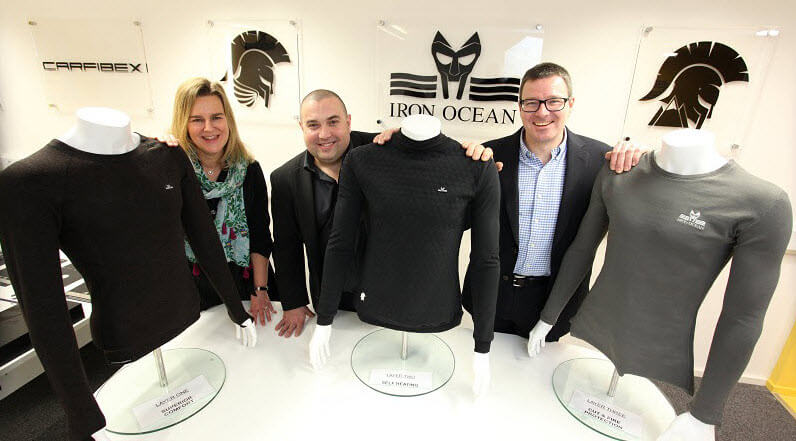 Around 50,000 people travelled offshore to work in the oil and gas industry in 2017. Pictured L-R: Mhairi Begg, project manager at the Oil & Gas Innovation Centre, Simon Lamont, founder of Iron Ocean, and professor David Bucknall from Heriot-Watt University
The garment gives the wearer increased mobility and protection as current garments worn under the survival suit do not provide active heating.
By comparison to the normal life expectancy of 10-12 minutes, the newly developed material incorporated into Centurion 3 immediately activates when in contact with water and produces a heat output above the average body temperature for more than 20 minutes. The self-heating material therefore allows the wearer to retain body heat during a critical period, preventing the fatal effects of cold water immersion.
“We were delighted to get involved in such an innovative project which will help save the lives of those who work in the oil and gas industry,” says professor David Bucknall from Heriot-Watt.
“With our technical expertise and close interaction with Iron Ocean, we’ve managed to turn a great idea into a reality. This unique garment has three layers which are slash and fire resistance, autonomous active heating and compression comfort fit, made to withstand the harshest conditions.
This is just the start of the possibilities that are out there in terms of the health and safety of our oil and gas workforce.”
Simon Lamont, founder of Iron Ocean and former industry health and safety manager explains that he came up with the initial concept of the Centurion 3 following the 2009 Super Puma crash – a helicopter crash in the North Sea that resulted in 16 deaths.
“I realised then that something had to be done to protect workers from the harsh elements of the North Sea in the event of an offshore incident,” he says.
“OGIC’s support at the very beginning of this journey was invaluable, having their backing opened the door for me to work with the expertise of Heriot-Watt University and provided the technical expertise to make my idea a reality.”
With all of the prototype garments now complete, the next step is to introduce the Centurion 3 to market.
There is also potential to bring this technology to other industries including leisure, military and maritime to improve safety in harsh environments, the team says.
The development of the Centurion 3 involved two phases of research co-funded by OGIC. Phase one saw the development of the water-triggered heat-generating materials, which led to phase two, within which the heat-storage material was further developed for use within the prototype Centurion 3 garments.