In the last 20 years ionic liquids, a new class of solvents, have gained increasing awareness in the scientific community. Numerous potential applications are described in the literature and a couple have already reached commercial stage. These include solvents in analytical applications, sensors and supercapacitors in electrochemical applications, chemical synthesis and catalysis, and nanoparticle synthesis. For textile applications, ionic liquids are mostly at the laboratory stage, and in some cases they have reached pilot stage.
There is abundant literature available on the topic of ionic liquids in textile applications. Potentially, they are considered as ‘green’ solvents. In this short article, only a few selected examples are reviewed. For readers who are interested in a comprehensive summary, the author refers to an excellent review article, recently published by Meksi & Moussa.1
The chemistry of ionic liquids
The first ionic liquids reported in the literature in the late 19th century were alkylammonium nitrates.2,3 Since the 1970s ionic liquids, based on alkyl-substituted imidazolium and pyridinium cations, have been explored as potential electrolytes in batteries.4
In many publications dealing with potential textile applications, derivatives of imidazolium salts are used as ionic liquids (examples see Figure 1), due to their properties and commercial availability. 1-Ethyl- or 1-Butyl- 3-methyl-imidazolium salts (Figure 2, structures 1 and 2) were frequently used and, as counterions, various anions have been tested.
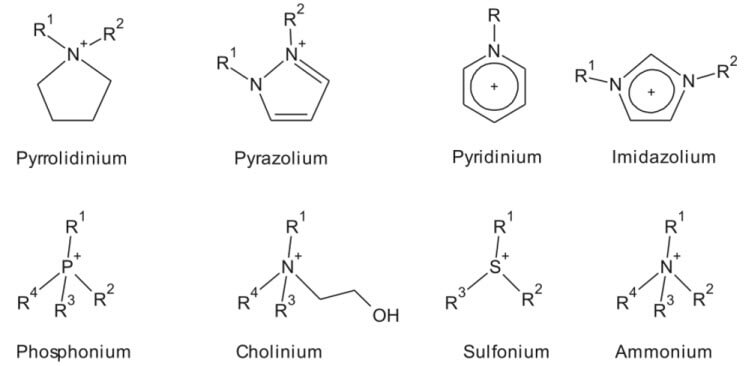
Figure 1: Examples of ionic liquids (source: Meksi & Moussa)1
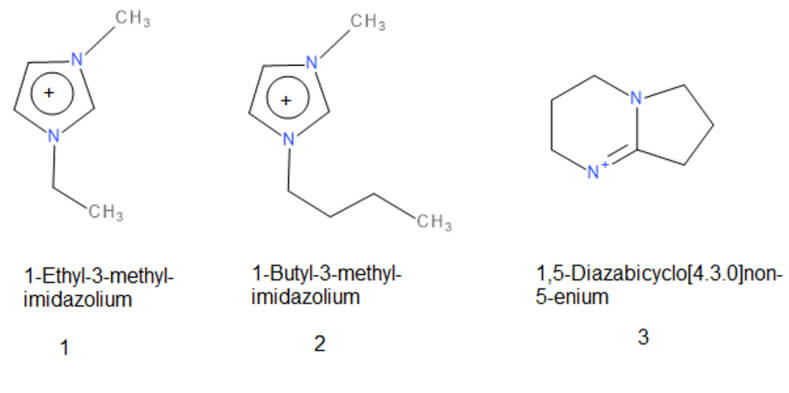
Figure 2: Chemical structures of cations in ionic liquids, with particular focus on textile applications.
Melting points of 1 with various counterions: acetate -20°C, chloride 78°C, diethylphosphate 20°C, ethylsulfate < -30°C
General properties of ionic liquids
Ionic liquids are considered as potentially ‘green solvents’ due to certain environmentally favourable properties, allowing safe and versatile applications. These properties include:
• extremely low vapour pressures
• non-flammability
• high temperature and mechanical stability
• broad liquid range
• electric conductivity
• high electrochemical stability
• potential for recycling
An ionic liquid is a salt in the liquid state which typically has a melting point below 100°C, therefore being liquid at moderate processing temperatures. While ordinary solvents are predominantly made of electrically neutral molecules, ionic liquids are made of electrically charged ions.
The physical properties of selected ionic liquids are available as a comprehensive database.5 Melting point, viscosity, chemical and thermal stability, water and organic solvent miscibility are determined by the cation as well as choice of the anion.
Certain ionic liquids have low melting points, below room temperature (RTILs – room temperature ionic liquids). They consist of bulky and asymmetric organic cations that inhibit crystallisation, while lowering the melting point. Due to their thermostability, some ionic liquids are distillable without decomposition, even at high temperatures, thus allowing recycling in pure form for future reuse.
Availability of ionic liquids
A supplier of ionic liquids is BASF, under the brand name Basionics.6 For example, popular ionic liquids are available from BASF on bulk scale. Iolitec, a German start-up company founded in 2002, offers 300 ionic liquids from catalogue.7 This has provided a toolbox for research into the applications of ionic liquids in various processing industries.
Applications of ionic liquids
Various technologies are explored for potential industrial applications. These technologies include the use of ionic liquids:
• as solvents in chemical reactions and separation processes
• for metal processing: metal deposition
• for polymer processing and functional additives
• as electrolytes in electronic devices
• as functional fluids: hydraulic fluids and lubricants
Ionic liquids in textile applications
The potential applications for the textile industry are:
• fibre manufacturing
• electrospinning for nanofibres
• fibre modification
• recycling of textiles
• coloration
• wastewater treatment
• functional finishing effects
Certain ionic liquids are capable of dissolving textile fibres (Figure 3). Therefore, ionic liquids are potentially suitable for fibre manufacturing and recycling. A review article by Chinese authors8 highlights recent advances in the field of dissolution and processing of cellulose with ionic liquids.
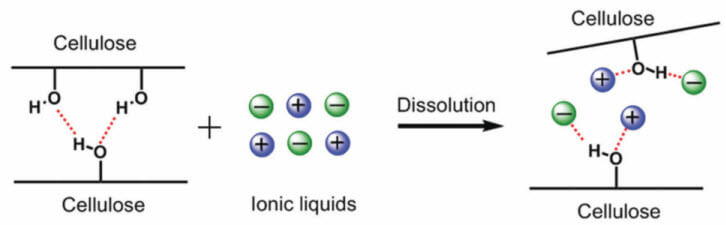
Figure 3: Mechanism of dissolving of cellulose by action of ionic liquids (source: Zhang et al.8)
Ionic liquids in textile fibre manufacturing
Many approaches for use of ionic liquids in fibre manufacturing have been examined in the last 15 years1. For example, a cooperation of German textile institutes ITCF (Institut für Textilchemie und Chemiefasern, Denkendorf), TITK (Thüringisches Institut für Textil‐ und Kunststoff‐Forschung, Rudolstadt), and the chemical company BASF9 examined the use of ionic liquids in manufacturing of cellulose fibres. Figure 4 illustrates the potential advantages of an ionic liquid process compared to the conventional viscose process.
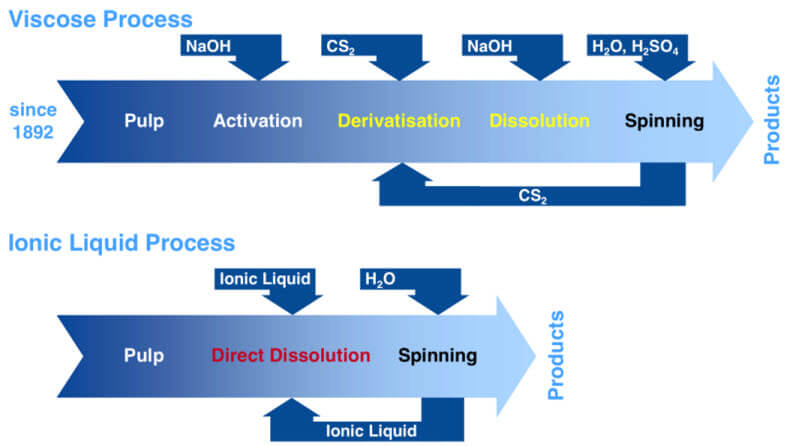
Figure 4: Conventional viscose manufacturing vs. ionic liquid process (copyright: BASF)20
The ionic liquid process is shorter and more environmentally favourable. Conventional viscose manufacturing involves hazardous chemicals like CS2 and causes heavy pollution due to H2S, SO2, and H2SO4. The new ionic liquid process would be also in competition with the process used for lyocell fibres (brand name: Tencel). For lyocell, the solvent N-Methylmorpholin-N-Oxid (NMMO) is used. Selected ionic liquids are non-toxic and chemically as well as physically neutral – an advantage when compared to NMMO.
In the trials carried out at ITCF Denkendorf, cellulose was dissolved in the ionic liquid 1-ethyl-3-methylimidazolium acetate, and after wet spinning a regenerated cellulose fibre was produced on pilot-plant scale. Fibres can easily be prepared by coagulation in water and subsequent spinning processes. The fibres have higher tenacities than those produced by conventional wet spinning.
Other groups identified the ionic liquid 1,5-diazabicyclo[4.3.0]non-5-enium acetate (Figure 2, structure 3, abbreviated ‘[DBNH] Ac’) as an excellent solvent for cellulose fibre spinning, avoiding the otherwise extensive fibre degradation. The concept has been intensively studied in Finland.10
Ionic liquids for recycling of textiles
Since certain ionic liquids are able to dissolve textile fibres, there is potential for applications in the recycling of textiles as well.
As mentioned, the ionic liquid [DBNH] Ac was found suitable to dissolve cotton. It is claimed that a new process based upon [DBNH] Ac “allows the production of virgin textile fibres of substantially higher quality than that from the mechanical recycling methods that are used currently.”11 [DBNH] Ac is a distillable liquid with promising properties for recycling technologies.12
‘Trash-2-Cash,13 an EU funded research project, covers recycling strategies for cotton and polyester-based waste textiles, aimed at “new fibres from pre-consumer and post-consumer waste.” Cotton/polyester blends are a challenge for recycling. Once the cotton was separated from the polyester, it could then be spun into fibres – thereby becoming the basis for new materials.
Ionic liquids in coloration, used as dyeing medium
A high consumption of water, energy and chemicals is required for coloration of textile fibres. In particular, the dyeing of PET (polyethylene terephthalate) polyester fibres with disperse dyes requires high processing temperatures of 130°C or more, in closed dyeing machines operating under pressure. Ionic liquids could potentially help to overcome this limitation.
Ionic liquids could be used for coloration: either by dyeing from ionic liquids, or using them as dyebath additives.
A potentially revolutionary approach applies ionic liquid as a dyeing medium and, being recyclable, it would totally substitute water from the dyeing process. This research, carried out at Deutsches Textilforschungszentrum Nord-West (DTNW) in Krefeld, Germany, has shown that certain ionic liquids could be suitable as a dyeing medium for textiles (eg for disperse, cationic, reactive as well as metal complex dyes). DTNW, which was already a pioneer in the development of dyeing from supercritical CO2, has examined a technique to dye various fibres in ionic liquids, and investigated it for the commercially most important fibre, PET. In a recent paper, the DTNW scientists claim to perform “a pressure-free dyeing at high temperatures with minimal air pollution,” enabling “the textile industry in future to carry out their business with new methods avoiding high consumption of energy, water and chemicals.”14
Promising results were obtained by using 1-ethyl-3-methyl-imodazolium methyl sulphate (Figure 2, structure 1). Acceptable colour fastnesses were obtained. The ionic liquid solvents could be reused for at least 10 cycles.
In a collaboration, DTNW and Centexbel, a collective research networking project was initiated to investigate further this novel approach of textile dyeing in ionic liquids.15
The colouration of cotton is highly water consuming. To address this issue, a dyeing process with only two dyeing agents, a reactive dye and an ionic liquid as a dyeing solvent, was investigated by Brazilian scientists.16 The authors claim that, after dyeing, the unfixed dye would remain active in the bath, in contrast to conventional dyeing processes.
Ionic liquids in coloration, used as dye bath additive
A Chinese patent of Qingdao University17 claims the use of a quaternary ammonium ionic liquid as an auxiliary in the dyebath, for the dyeing of cotton with reactive dyes.
Italian researchers19 investigated the dyeing of wool, polyester and cotton with a disperse dye, using ionic liquid, 1-(2-hydroxyethyl)-3-methylimidazolium chloride, as an additive to the dyebath in isothermal dyeing at 95°C, applied for polyester and wool in an open vessel and without using additional dyebath additives. The authors claim ‘outstanding effects’ in the coloration of “several kinds of fibres (cotton, wool, and polyester) employing exclusively three components: pure disperse dye, water, and an appropriate ionic liquid.”
Further applications of ionic liquids
The application of ionic liquids in textile wastewater treatment by liquid-liquid extraction is another topic of research activities. The removal of various dyestuff classes, acid dyes, basic dyes, vat dyes (indigo), direct dyes and reactive dyes, was examined in scientific studies1.
Many potential applications are conceivable in finishing applications. Antimicrobial finishing on wool,19 antifungal finishing, UV-protection, flame-retardant finishing, water-repellency and comfort finishing are among the published research activities.1
It is beyond the scope of this short article to discuss further potential applications in detail. Literature sources can be found in the review article of Meksi & Moussa.1
Conclusions
Ionic liquids have outstanding potential in the textile industry and beyond. Some of the potential areas of applications are briefly outlined above.
Although there is notable progress in fundamental research, the technology is still largely at the R&D stage. The question comes up as to why ionic liquids not yet applied in the textile industry?
Spinning and potentially a new kind of rayon fibre would probably be the first application to hit the market. However, more generally there are still certain limitations, which have slowed down or prevented further industrial use.
First of all, the textile industry is very cost-conscious, and the cost of ionic liquid chemicals is comparatively high. Therefore, it is essential to use efficient recycling technologies for multiple reuse of the ionic liquid, without decrease of performances and no significant losses. For commercialisation, we need to solve the recycling issue of the ionic liquid. These technologies require capital expenditure for investments.
Secondly, there are still technical challenges to overcome. The high viscosity of ionic liquids, comparable with oil, is a technical challenge for many applications that needs to be overcome.
Thirdly, although ionic liquids are thought to be less hazardous and toxic due to their low vapour pressure, no profound knowledge yet about biodegradability and toxicity is available.
Many ambitious claims have been made so far, but most of the time the proof of concept is missing.
Nevertheless, ionic liquid are an exciting topic and worth pursuing further, beyond the research stage.
References
1. Meksi, N, Moussa, A, “A review of progress in the ecological application of ionic liquids in textile processes”, J. Clean. Prod. 161 (2017), 105-126
2. Gabriel, S, Weiner, J (1888), "Ueber einige Abkömmlinge des Propylamins", Chemische Berichte 21 / 2 (1888), 2669–2679
3. Walden, P, Bull. Acad. Sci. St. Petersburg, 1914, 405-422.
4. Wilkes, JS et al (1982), "Dialkylimidazolium chloroaluminate melts: a new class of room-temperature ionic liquids for electrochemistry, spectroscopy and synthesis". Inorg. Chem. 21/3 (1982), 1263–1264
5. Zhang, S et al, “Physical Properties of Ionic Liquids: Database and Evaluation”, J. Phys. Chem. Ref. Data 35 (2006), 1475-1517
6. http://www.intermediates.basf.com/chemicals/ionic-liquids/index
7. https://iolitec.de/en
8. Zhang, J et al, “Application of ionic liquids for dissolving cellulose and fabricating cellulose-based materials: state of the art and future trends”, Mater. Chem. Front., 2017,1, 1273-1290
9. Hermanutz, F et al, “Special Issue: Structure and Properties of Cellulose: New Developments in Dissolving and Processing of Cellulose in Ionic Liquids”, Macromol. Symp. 262 (2008), 23-27
10. Hummel, M et al, “Ionic Liquids for the Production of Man-Made Cellulosic Fibers: Opportunities and Challenges”, Rojas O. (eds) Cellulose Chemistry and Properties: Fibers, Nanocelluloses and Advanced Materials. Advances in Polymer Science, vol 271 (2015). Springer, Cham
11. Asaadi, S et al, “Renewable High-Performance Fibers from the Chemical Recycling of Cotton Waste Utilizing an Ionic Liquid”, ChemSusChem. 9/22 (2016), 3250-3258
12. Parviainen, A et al, “Sustainability of cellulose dissolution and regeneration in 1,5-diazabicyclo[4.3.0]non-5-enium acetate: a batch simulation of the IONCELL-F process”, RSC Adv., 2015, 5, 69728-69737
13. https://www.trash2cashproject.eu
14. Opwis, K et al, “Dyeing of PET Fibers in Ionic Liquids”, International Journal of New Technology and Research 3/11 (2017), 101-108
15. https://www.centexbel.be/en/projects/textile-dyeing-in-ionic-liquids
16. Andrade, RS et al, “Sustainable Cotton Dyeing in Nonaqueous Medium Applying Protic Ionic Liquids”, ACS Sustainable Chem. Eng., 2017, 5 (10), pp 8756–8765
17. Qingdao University, Chinese patent 102493222 A
18. Bianchini, R et al, “Ionic Liquids Can Significantly Improve Textile Dyeing: An Innovative Application Assuring Economic and Environmental Benefits”, ACS Sustainable Chem. Eng., 3/9 (2015), 2303–2308
19. Kantouch, A et al, “Antimicrobial finishing of wool fabric using ionic liquids”, The Journal of The Textile Institute 104 /4 (2013), 363-369
20. Massone, K, “Ionic liquids at BASF”, Leuven ionic liquids summer school 2010, https://wet.kuleuven.be/english/summerschools/archief-summerschools/2010/ionicliquids/lectures/massonne.pdf