ITMA Asia returned to Shanghai in October, showcasing the latest developments across the textile industry. Andy Rhodes looks back at the knitting highlights.
Near the end of another exciting year in the textile industry, around 1,700 machinery manufacturers descended on Shanghai, China, for the 2018 edition of ITMA Asia + CITME, the region’s largest textile machinery exhibition.
As ever, the event welcomed exhibitors from across the entire textile spectrum with halls dedicated to knitting, weaving and spinning at the National Exhibition and Convention Center (NECC), due to rocketing global demand.
This demand was mirrored by the event’s attendance. 100,000 trade visitors were expected at the NECC across the week, while earlier this year, co-organiser CEMATEX announced that all 170,000 sqm of exhibition space had sold out, reflecting the growing success of the textile machinery industry.
Industrial revolution
According to Technavio, the global knitting industry is expected to grow at a compound annual growth rate of 8% between 2018-2022, with incremental growth estimated to be US$5243.58 (000s) over the same forecast period.
Meanwhile, Asia Pacific is expected to be the leading regional market in terms of both production and consumption, with 92% of growth coming from the area. All regional manufacturers are embracing new technologies in order to remain at the forefront of the industry, with movements such as Industry 4.0 growing in importance.
Speaking to WTiN before ITMA Asia + CITME 2018, Fritz P Mayer, president of CEMATEX, spoke of the key trends expected to define the event. “Automation in textile machinery continues to be an important trend in textile machinery,” he said. “In recent years, we have seen textile manufacturers exploit technologies that optimise the manufacturing process to improve quality and cost-competitiveness.”
The big reveal
Global exhibitions are often the place to announce ground-breaking new products and technologies, and ITMA Asia 2018 was no exception. Hall 4.1 featured a wealth of knitting specialists including Groz-Beckert, Mayer & Cie and Stoll, all of which exhibited their latest developments.
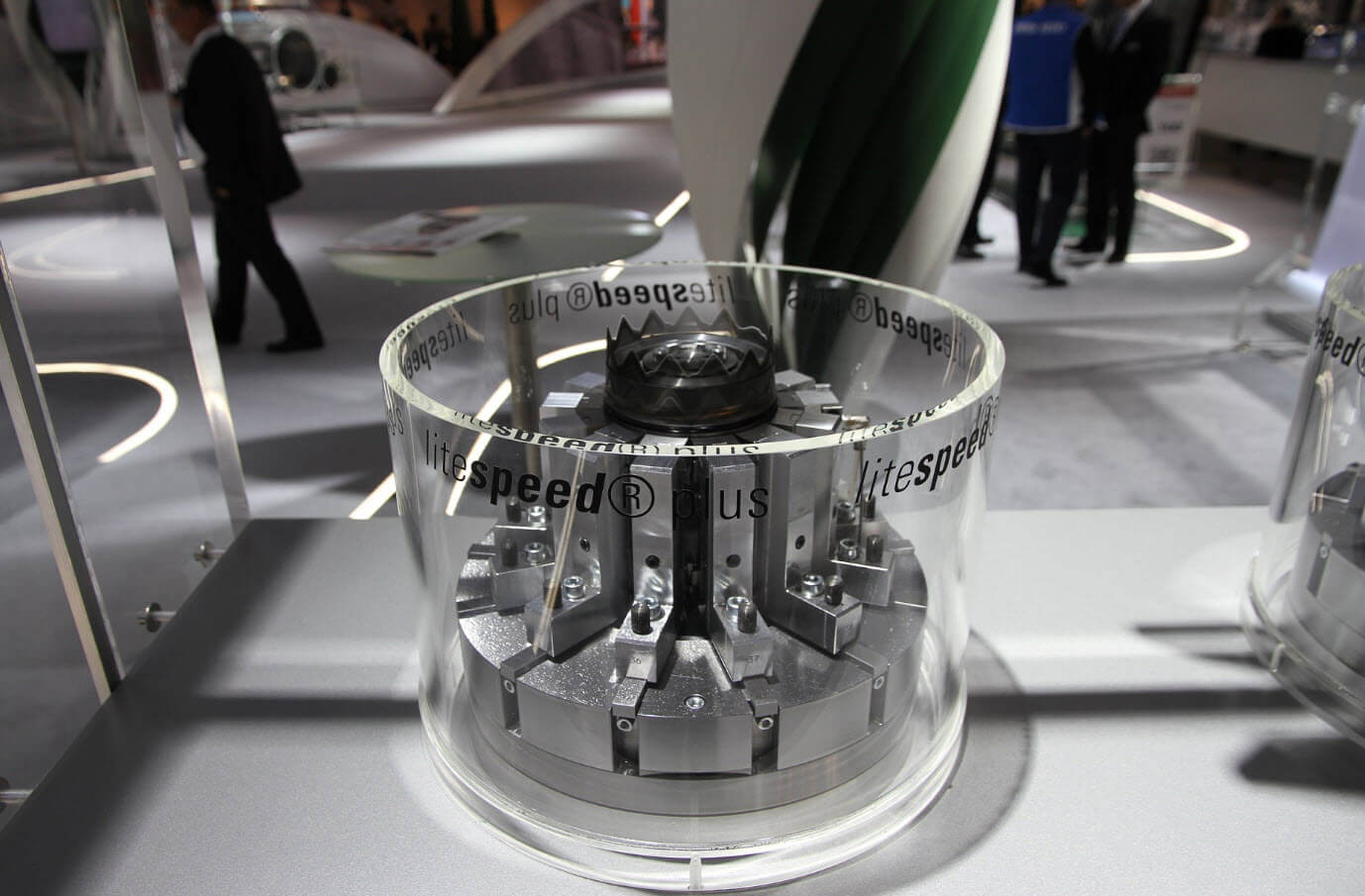
Groz-Beckert's litespeed plus
Industry 4.0 and the rise of automated manufacturing are two 2018’s key trends in the industry, and many of the show’s exhibitors presented technology relating to this field.
For instance, Germany-based knitting specialist Karl Mayer held the official launch of its new digital start-up, KM.ON. According to the company, KM.ON is “a new umbrella brand for all the digital solutions developed by this new company and the entire Karl Mayer Group.”
The brand brings together the Karl Mayer Digital Factory, a new software start-up, and the entire Karl Mayer Group to further implement the changes brought about by Industry 4.0. “Digitisation is a basic component of our company strategy,” says Arno Gärtner, managing director, Karl Mayer.
The company’s new digital portfolio is made up of eight solution categories, focusing on the three key areas of Management, Maintenance and Service. Meanwhile, Karl Mayer’s customers are able to utilise the company’s team of experts through the use of the KM.ON app.
Maximilian Kürig, who is the company’s CEO alongside Antonia Gottschalk, says: “This new venture should develop efficient digital solutions quickly and flexibly for the benefit of our customers. Digital solutions are expanding the possibilities of considerably improving the efficiency of our customers’ production processes and giving them unparalleled competitive advantages.”
Similarly, Japanese giant Shima Seiki explained that it is helping China in its pursuit of consumer-orientated production by leveraging the country’s transition into Industry 4.0. The flat knitting innovator has itself embraced the Fourth Industrial Revolution, and in order to keep up with the demand for consumer products in China, digital machinery is now essential in the Chinese textile machinery industry.
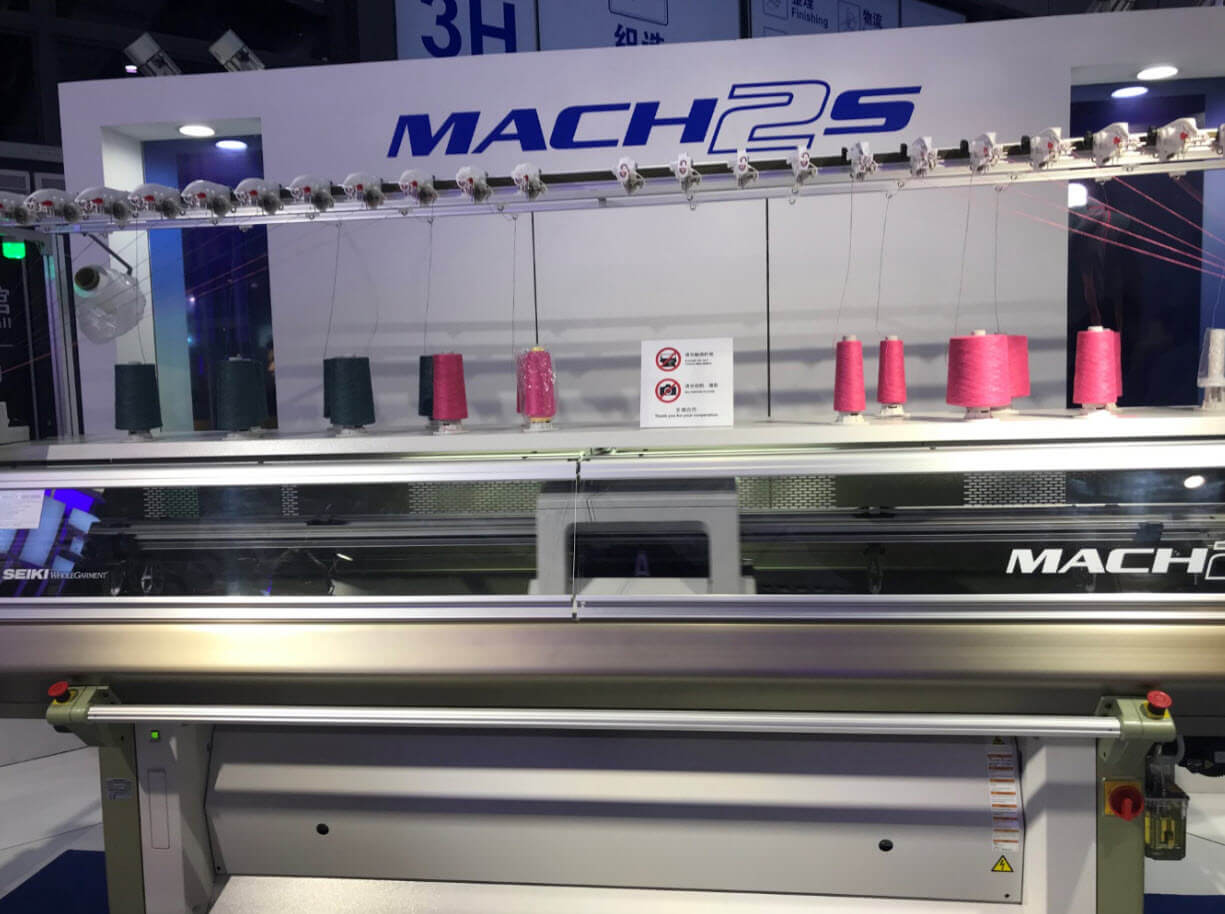
Shima Seiki's MACH2S
Many in the textile machinery industry suggest that because labour shortages combined with the fact that demand for consumer products is rising, Industry 4.0 is needed now more than ever. Ikuto Umeda, executive director, senior director of Sales Headquarters, Shima Seiki, said at ITMA Asia: “China has a huge population and it had previously been known as a source of cheap labour, but those days are gone.”
He continues: “The wages are rising and there is a labour shortage. The pace at which China is advancing is amazingly fast. It’s rapidly changing and at the same time, consumerism is also changing within China.” With China no longer an export-orientated nation in terms of textiles, Industry 4.0 is required in order to cope with the demand.
At the exhibition, Shima Seiki exhibited its Total Fashion System alongside its Wholegarment knitting technology, which was introduced to the industry 23 years ago and has now become the future for the knitting industry. We have created this trend of a very efficient form of knitting in 3D and it is now accepted as the future direction of knitting.” Umeda says: “When it comes to Wholegarment knitting, the company has over 2,000 patents, both registered and pending. Originally based on Shima Seiki’s founding development of its automated seamless glove production machinery that made the first Wholegarment products, the company is showcasing three machines, each with its own unique capabilities.”

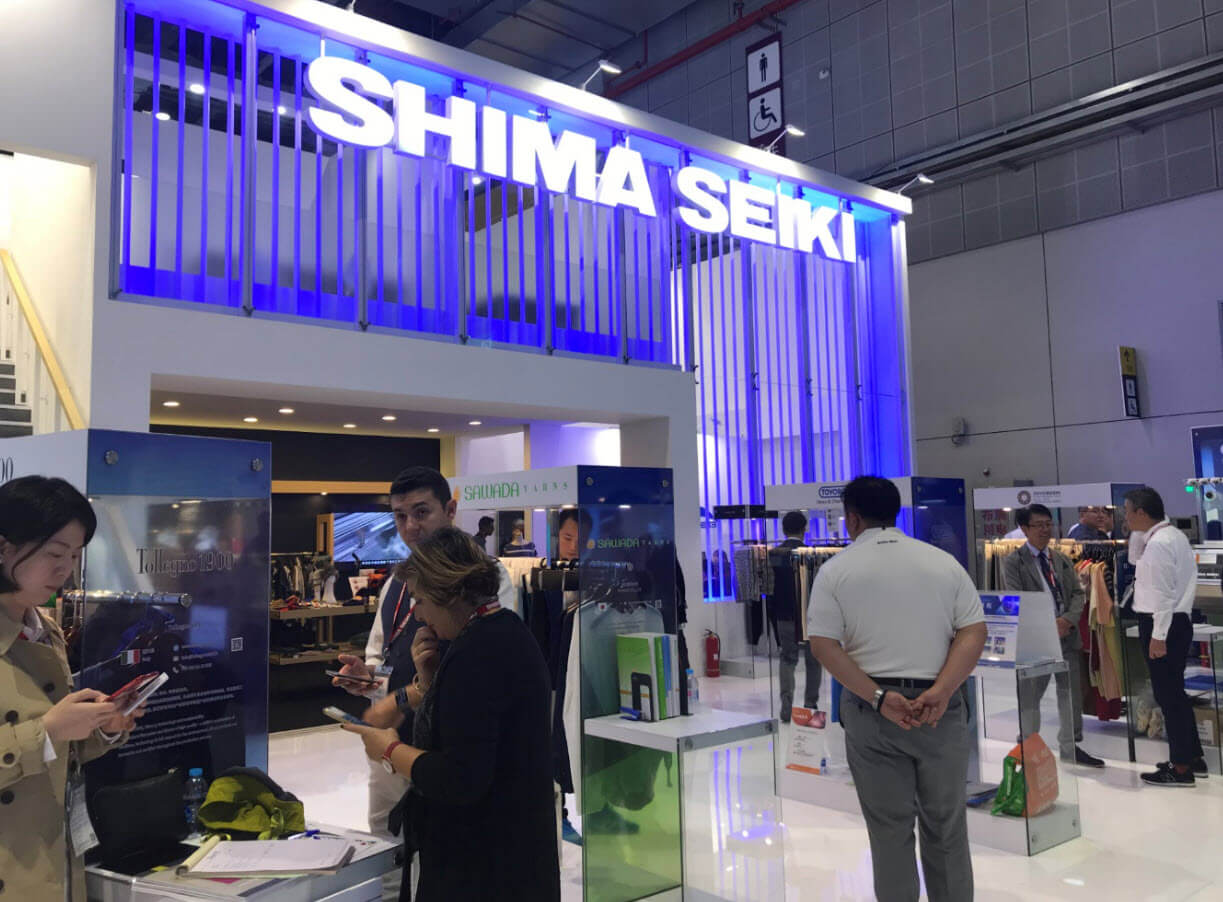
The Shima Seiki booth at ITMA Asia + CITME
Other players in the knitting industry looked to promote their technologies designed to boost efficiency and save on energy and raw material usage. At a press conference hosted by the VDMA, the German association of textile machinery manufacturers, Michael Tuschak, head of sales/marketing, Spinit, Mayer & Cie, described the company’s Spinit 3.0 E spinning and knitting machine.
He says: “This is a spinning and knitting machine, so it brings together different technologies on one circular knitting machine. Mayer started some years ago with a new concept combining spinning and knitting. It’s a circular knitting machine and mounted on that machine are drafting units as we know them from the spinning industry.”
Simiarly, Marcus Reichardt, managing director of Groz-Beckert China, described the company’s litespeed plus development which also offers savings relating to money and raw material usage as financial and environmental sustainability come together. “In terms of profitability, productivity and environment, the litespeed plus needle stands for cost reduction, significantly increased efficiency and a reduced CO2 footprint,” he says. “In detail this can result in reduced power consumption, machine temperature and oil consumption, and can enable maximum possible machine speeds.”
The show was received well by exhibitors, with many stating that their time in Shanghai had been a success. George Dumayne, president, Industrial Machine Sales – a machine manufacturer for the production of scarves and knitwear – says: “The show has been very successful for us. We’ve been meeting with a lot of European and Western customers due to the fact that they have all come here looking for something special, and our biggest selling point now is that we have no competition in Europe to make these sorts of scarves.
“Right now, they are all being made on flat knitting machines and we’re the only circular producer doing them,” he adds. “We’ve sold more than 150 machines in North America and we have started to make a big attack into the UK, especially for factories making Premier League scarves, but also for private schools and a lot of promotional wear. The big idea with this is you can make custom scarves, so if you need 24 pieces or you need one piece, you can do it. We have a customer in Germany that sells one-off scarves. Another good point is that there’s a huge mark-up on them, so the cost is very low and there is no competition for us right now.”
The next edition of ITMA Asia + CITME will be held in 2020.