Klopman, the European leader in the production of fabrics for workwear, has created a degree award on environmental sustainability and circular economy in the textile sector.
Members of the company, of the CRUI (Conference of Italian University Rectors) and of the CNR (National Research Council) will award a thesis in engineering or chemistry with an internship worth €15,000.
The deadline for entering the award is 26 July 2019
“The old model of linear economy is no longer sustainable,” says Marra Klopman, CEO. “Circular economy represents the future.”
Klopman has launched, in collaboration with the CRUI and with the Department of Chemical Sciences and Materials Technologies of the CNR, the first edition of a degree award for the best thesis on “Environmental sustainability and/or circular economy in the textile sector” within the Engineering and Chemistry departments of the Italian universities.
A panel made up of company managers and members designated by CRUI and CNR will assign the award to the best project in terms of validity, feasibility and replicability.
Klopman will offer the winner a six-month paid internship, inclusive of room and board, with a value of around €15,000 and the opportunity to see their project realised. Theses must have been produced during the period between 1 January 2018 and 26 July 2019. The deadline for entering the award, and the works, must be sent to the email address hr@klopman.com.
The call is open to all Italian universities and addressed to all graduates and undergraduates of the specified courses who are interested in pursuing a career in the textile industry with a leading company in the sector and with a strong and long-standing presence in global markets.
Other sustainability measures
The degree award is the latest advance in Klopman’s drive to enhance sustainability in all its forms. In fact, the initiative follows other social responsibility projects collected in the CSR document, which the company presents each year to all its stakeholders.
Besides meeting the most rigorous worldwide environmental standards, the company boasts among its range of products, fabrics made with organic or Fairtrade cotton or with fibre derived from the pulp of trees or from recycled plastic bottles.
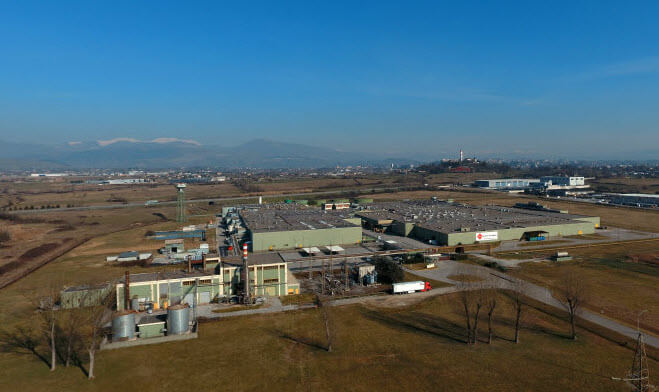
Furthermore, Klopman has just started work on a new co-generation plant which will allow the recovery and reuse of almost all the thermal energy produced in the combustion process, with a reduction of 4,500 tons a year of CO2 and 60% less dust.
“Klopman is extremely mindful of its impact on the environment, committed to innovation and sensitive to the needs of the younger generation, and the award is a very important initiative for us because it perfectly puts together these characteristics of our company,” says Alfonso Marra, CEO of Klopman.
“The old model of linear economy based on consumption and waste is no longer sustainable from both an environmental and an economic point of view, and the conversion to a circular economy model calls all companies, especially those in the textile sector, to a strong commitment in terms of innovation and planning. As a leader in its field, Klopman is setting out the path and we hope that our example will be followed by a growing number of actors.”