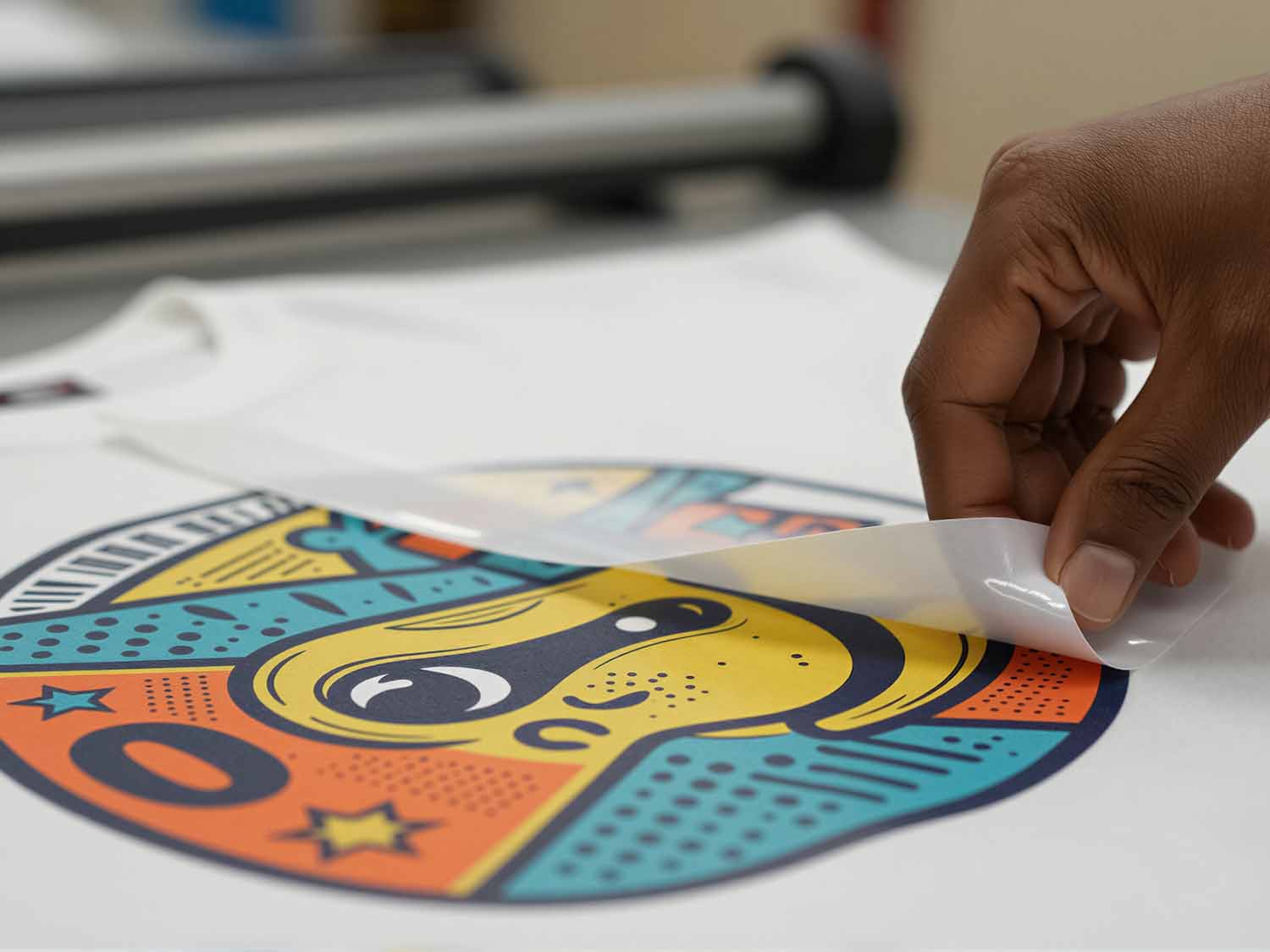
Dye-sublimation digital textile printing is growing in Australia for swimwear and sportswear, while digital printing of home textiles is also increasing due to the rising requirement of being responsive to the domestic market and its demands.
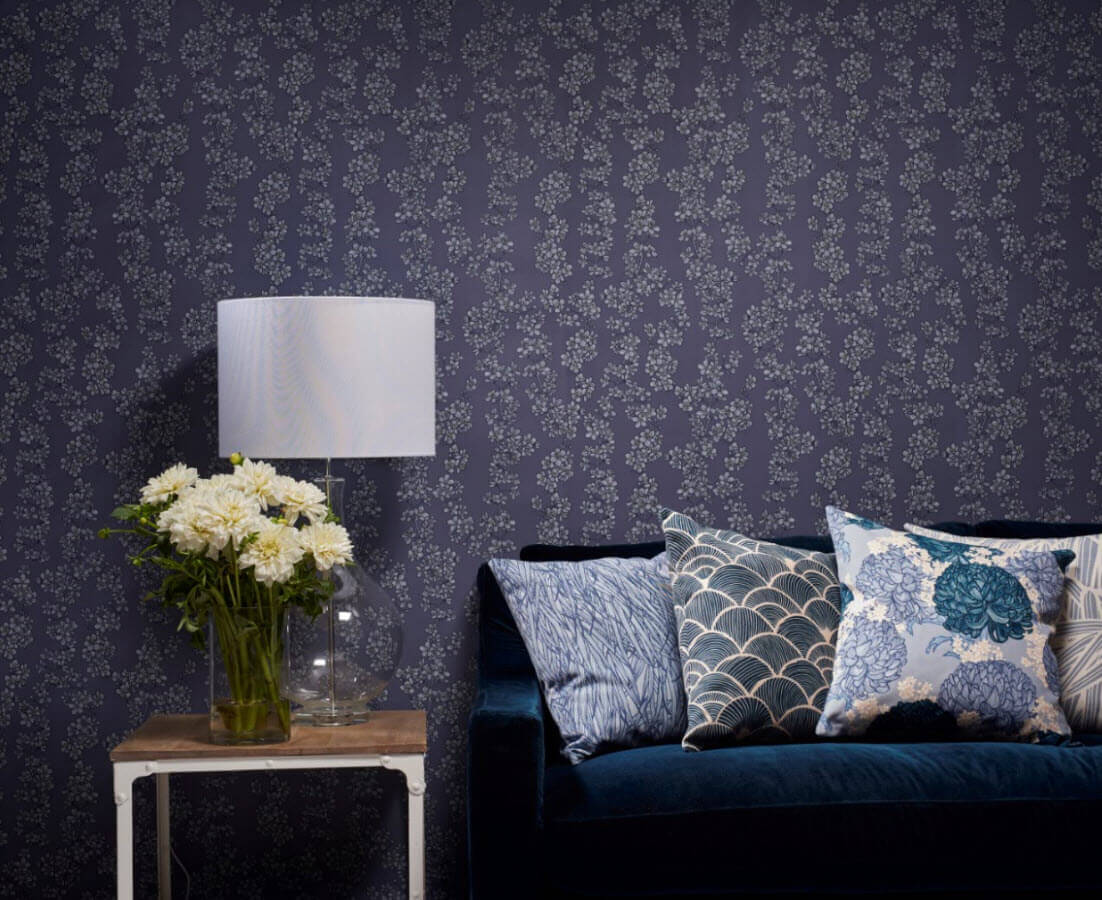
Tranquil Lines - Indigo by Patricia Braune
Sydney-based Sparkk is a family-run business servicing Australia and New Zealand primarily, but also takes enquiries globally. It designs and digitally prints textiles, wallpapers and roller blinds for residential and commercial interiors. The company’s products are printed to order so its clients are able to customise prints through colour, scale and orientation using Sparkk’s online tools on its ecommerce website.
Ecommerce is a growing trend in the textile industry and gives customers the flexibility to choose what they like in much smaller batch sizes. The demand for individuality is the reason for the growth of this type of business model, according to Christian Rysenbry from Sparkk. He explains: “In today's market, everyone is looking to add their own style and signature looks, they want something that no one else has. This runs alongside the sustainable on-demand desire, today's online shopper is after something that isn't mass produced somewhere – they want unique, sustainable and ethical.”
And this is achievable in a small market like Australia, where customisation and localised production is very popular. “We are a small and isolated market with global competition on our doorstep. Our love of local has seen a rise in digital textile printers in Australia over the last five years. The importance of being in the local market and being able to respond quickly to client demands is accelerating the growth in the market,” says Rysenbry.
Technology
At the moment, Sparkk uses dye-sublimation for printing on textiles using DGI and Roland printers. The company uses Kiian inks from JK Group – now part of Dover Digital Printing – and Transjet dye-sublimation papers. For natural fabrics, Sparkk uses Mutoh printers to print directly on to the textile with pigment inks. And for printing wallpapers and roller blinds, the company uses HP’s Latex technology. Rysenbry comments: “As with all technologies, as soon as they are installed there is something new and shiny to replace it. We have spent a number of years trialling different technologies and consumables and have settled in with our current workflows.”
Sparkk also offers technical coatings, which is a service increasingly in demand as the consumer need for added value, in both home textiles and apparel, intensifies. Rysenbry says: “Our technical coatings give fabrics what they are missing. Flame retardancy is a requirement for commercial use and we are able to provide topical coatings that helps the fabric meet these requirements when tested by the authorised facility. Stain resistance is also an important coating and once it is applied the liquid will bead on top of the fabric so they can be removed before staining the textiles. As we can provide these coatings with no minimums, clients are able to offer them as an add-on and only need to coat when required.”
With three generations and over 60 years of experience in the textile and interiors industry, Rysenbry’s father had a screen-printing business in the 90s, with long tables and large heat-setting equipment required to produce prints. Now with digital technology, Rysenbry says: “[The Sparkk] can now output ten times more in a space a tenth of the size. Whilst the quality and handle of hand screen-printed fabrics really are incomparable, the ability to respond quickly and make small changes on the fly has proven invaluable to our business.”
He adds: “It also allows us to open our studio to local designers to produce textiles and wallpapers as there are minimal setup costs and the time taken between trials for colour and scale is minutes, not days.”
Even with these benefits, Rysenbry notes that there are some challenges when it comes to digital printing onto textiles, particularly maintenance and colour management. “As with anything involving a lot of moving parts, correct usage and maintenance is always a challenge, especially when staff are involved. When properly maintained and operated, these machines will keep going. However, as soon as this falls to the wayside they can go from bad to worse very quickly.” He continues: “Colour consistency is also a challenge, especially when a sample was produced six months ago and the client wants exactly that. With temperature, pressure, humidity, ink batches, paper batches, and so on, all playing a role it makes colour management a central focus.”
However, according to Rysenbry the biggest gap in the technology for Sparkk is the lack of ability to print on outdoor fabrics. “Different technologies all seem to have different pieces of the puzzle,” he says. “UV for the stability, pigment for the handle and sublimation for the washability, but no one technology brings them all together to provide a long-lasting outdoor upholstery fabric.”
Market
Despite the recent growth in the market, as reported by Sparkk and WTiN Intelligence: Digital Textiles, digital printing is still a very small part of the Australian textile market. Rysenbry says: “Print is a small part of the Australian textile market as most of the industry still follows the traditional models of specifying textiles. Digital print is a relatively new technology and has been seen as something used for small, bespoke projects.” However, this is beginning to change. Rysenbry continues: “With more and more clients understanding the quality and scalability of using digital print for large commercial projects it is becoming more prevalent.” He adds that the growth in the market also comes from being able to evolve the design and colour “when the designer and client has a style and mood which is a moving target is something that can only be achieved with digital print.”