Abstract
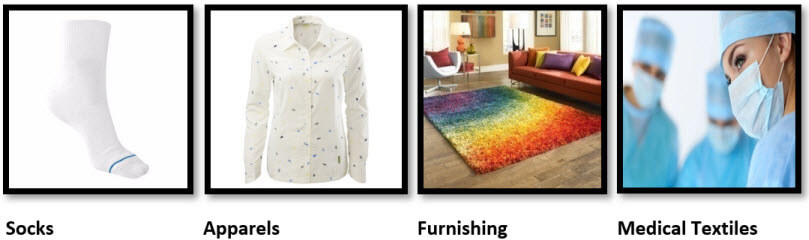
We usually think about textiles as the clothes we wear, but there is a new trend towards functionality. Market research shows that most of us are very conscious about our hygiene and cleanliness. Therefore, textile finishes with added value, particularly for medical clothes, are greatly appreciated and there is an increasing demand on a global scale. Consumers want a hygienic lifestyle and there is a need for textile product with antimicrobial properties. Textile commodities, especially those made from natural fibres, provide an excellent environment for microorganisms to grow; they can be found almost everywhere and are able to multiply quickly, depending on the moisture, nutrients and temperature. With the advent of new technologies and the growing needs of the consumer in the area of health and hygiene, antimicrobial finishing has become inevitable. The application of antimicrobial textile finishes includes a wide range of textile products for medical, technical, industrial, home furnishing and apparel sectors.
Keywords: Textiles, antimicrobial, antibacterial, durability, environment impact, health impact
Introduction
Microbes are very small living organisms that cannot be seen with the naked eye. Microbes will degrade the performance, properties and quality of fabrics by the eating cellulose content in the textile material and causing staining on the fabric. It is observed that fungi are active at a 6.5pH. An alga is a kind microorganism that grows under water and sunlight; it produces darker stains on the fabrics. Dust particles that are present in the environment may stick to the human skin and can cause allergic reactions, and also respiratory disorders. Warmth and a moist atmosphere are very conducive to bacterial growth. Bacteria are sub-classified into different groups, namely Gram positive (Staphylococcus aureus), Gram negative (E-Coli), spore-bearing or non-spore-bearing types.
Most textile materials currently used in hospitals and hotels are liable to cause cross-infection or transmission of diseases caused by microorganisms. The infections acquired in hospitals may be caused by several species, such as Escherichia coli, Klebsiella pneumonia, Pseudomonas aeruginosa and Acinetobacter baumannii. Microbial infestation poses danger to both living and non-living matter. This can lead to an unbearable smell from inner garments such as socks, while spread of diseases, staining and degradation of textiles are some of the detrimental effects of unwanted microbes. Human beings have an immune system to protect against accumulation of microorganisms but material such as textiles can easily be colonised by high numbers of microbes, or even decomposed by them. Textiles are carriers of microorganisms such as pathogenic bacteria, odour- generating bacteria, mould and fungi.
Though the use of antimicrobials has been known for the decades, it is only in recent years that applications have been developed to finish textiles with antimicrobial compounds. Antimicrobial finishing prevents the growth of bacteria, is health protecting and prevents diseases. Clothing and textile materials are not only carriers of microorganisms such as pathogenic bacteria, odour generating bacteria, moulds and fungi, but also good media for the growth of these microorganisms. The antimicrobial property of fabric is considered to be important with garments that are in direct contact with the human body.
Antimicrobials enhance the functionality and value of textile products by keeping the microorganisms that cause odour and fibre degradation under control. Antimicrobial fabrics are not only important in medical applications but also in daily use conditions. There is great demand for antimicrobial textiles based on eco-friendly agents that not only help effectively to reduce the ill effects associated with microbial growth on textile materials, but also comply with the statutory requirements imposed by regulating agencies. Recently, there are lot of focus on natural herbs as the basis of antimicrobial agents because they are eco-friendly and safe.
Need for anti-microbial finish
• To control the infestation by microbes
• To avoid cross infection by pathogenic micro organisms
• To arrest metabolism in microbes in order to reduce the formation odour
• To safeguard the textile products from staining, discoloration and quality deterioration
Requirements for antimicrobial finish
Textile materials, in particular garments, more susceptible to wear and tear. It is important to take into account the impact of stress as well as thermal and mechanical effects on the finished substrates. The following requirements need to be satisfied to obtain maximum benefits from the finish:
• Durability to washing, dry-cleaning and hot pressing
• Should not produce harmful effects to the manufacturer, user and the environment
• Compatibility with other chemical processes
• No deterioration of fabric quality
• Easy method of application
Understanding the requirements of end users, Sarex has developed a low-cost antimicrobial agent, Saraguard-FL.
Saraguard-FL is a methanol-free antimicrobial agent for finishing cellulosic substrates. It can be applied by padding, exhaust, soaking and spraying methods. Saraguard-FL is a non-leaching antimicrobial agent. It is effective against broad spectrum of microbes.
Unique features
• Non-leaching
• Durable to multiple home launderings
• Works on all types of microbes such as Staphylococcus aureus, Escherichia coli,
• Does not affect the hydrophilicity of the fabrics
• Concentrated
• Economical
Materials and methods
100% cotton and polyester fabrics were treated with 50gpl Saraguard-FL, with 65% pick-up. A pH of 5.5 was maintained and the fabrics were dried at 150oC for 2 min.
Antibacterial testing
The AATCC 100-2004 Assessment method was used for testing the antimicrobial activity of finished and unfinished fabrics.
Results and discussion
It is evident from Table 1 that treated fabrics showed excellent antibacterial activity, while on the unfinished fabric there was heavy growth of bacteria. This is because fabrics finished with Saraguard-FL will bind with microorganisms’ cell membrane and disrupt the lipo-polysaccharide structure, resulting in the breakdown of the cell, thus providing an antimicrobial effect. Also, because of the binding capacity of Saraguard-FL, the fabrics will show durability against home laundering.
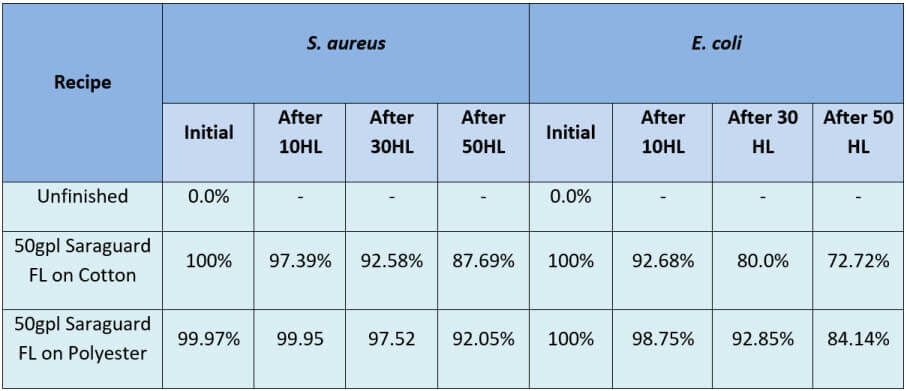
Table 1: Antibacterial activity of treated fabric with Saraguard-FL
Conclusion
In the last few years, the customer’s desire for comfort, hygiene and well-being, concerning odour control and protection from microorganisms, has created a large and rapidly increasing market for the expansion of antimicrobial textiles. As discussed in this article, Sarex has reacted to this demand by launching Saraguard-FL as a low-cost antimicrobial agent for different textile substrates, which can be applied by exhaust and padding at the finishing stage. Also, no cross-linker or intermediate treatment is required on textiles to obtain durability with Saraguard-Fl.
Saraguard-Fl’s effectiveness and durability depend on the concentration used, type of textile fibre and method of application.