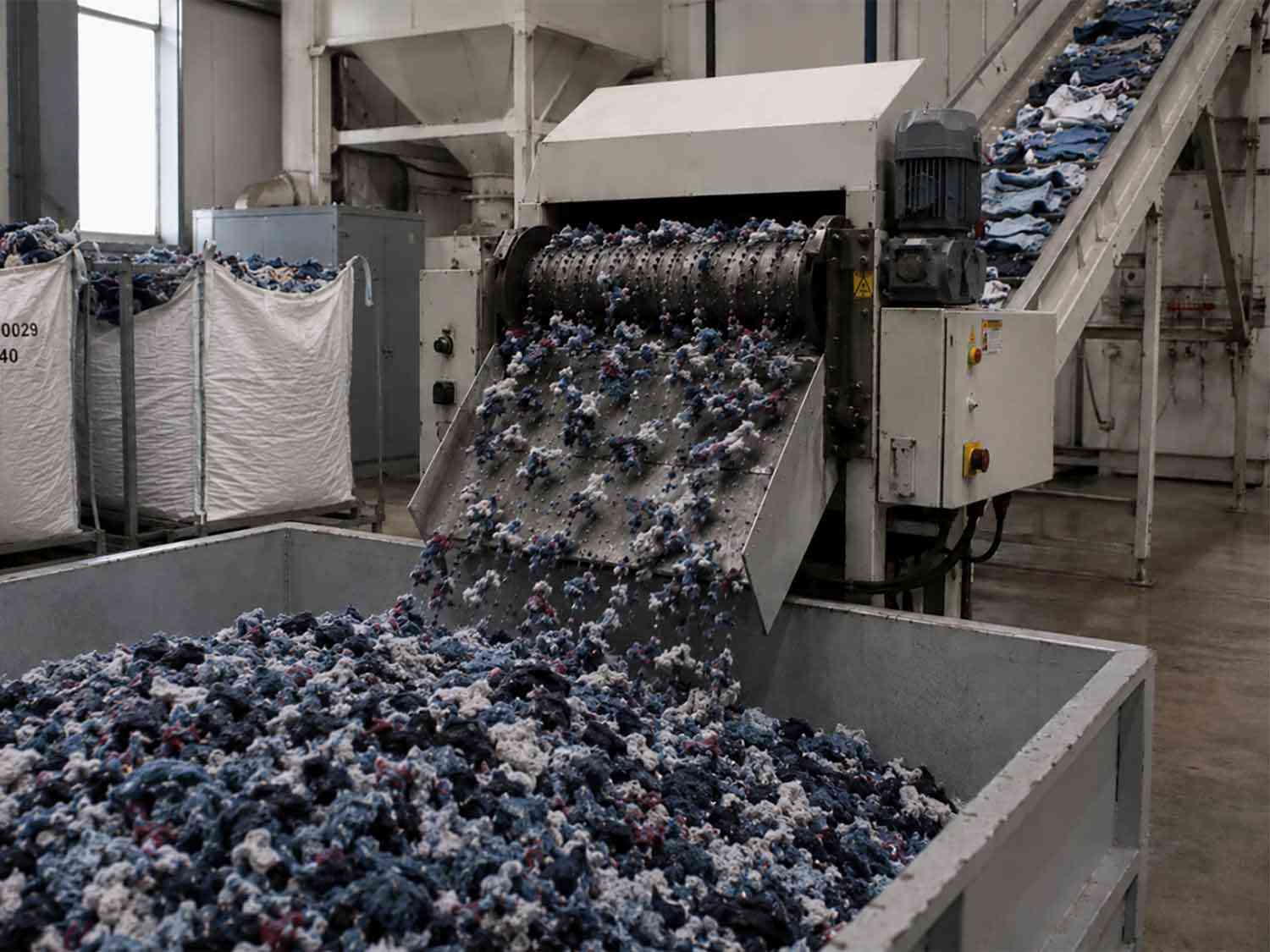
The pursuit of excellence is what defines Maglificio Maggia. Located in Occhieppo Superiore, in the textile district of Biella, Italy, the company specialises in the production of knitwear fabrics. It stands out for the high quality of its fabric, made from wool and other noble fibres, and for a rich heritage in the textile sector that goes back to the mid-1700s.
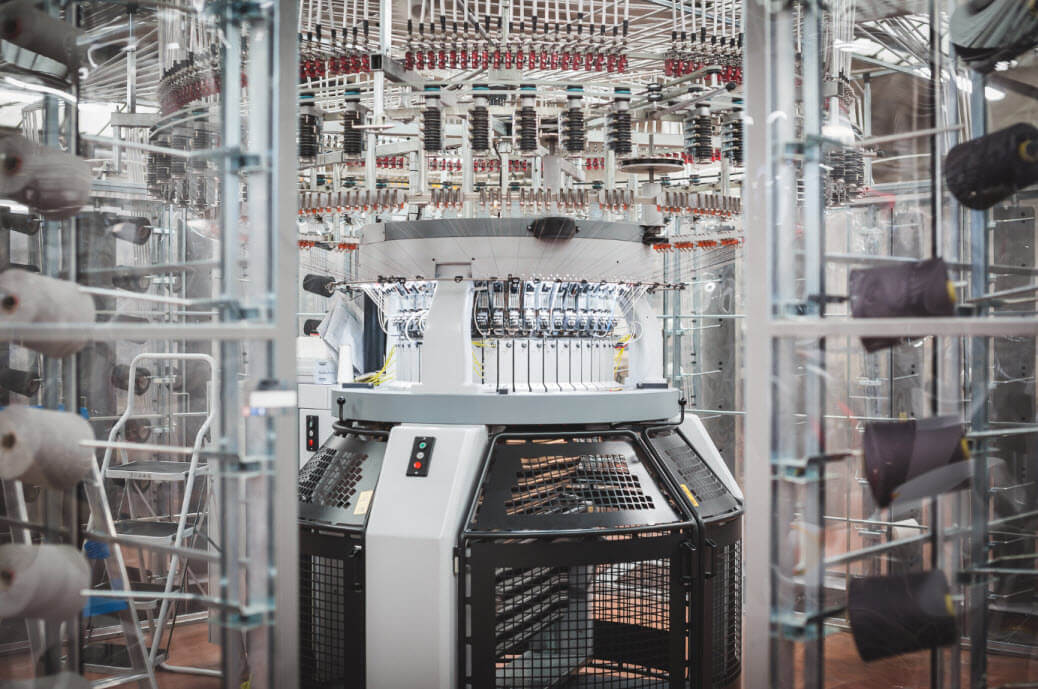
Circular knitting machinery at Maglificio Maggia
The Maggia family is of ancient Swiss origin. Gaspare, the progenitor, was a measuring expert and wool textile producer. He settled in Pettinengo, a small village in the hills that surround Biella, in the 18th century and established a small textile factory which was then expanded by his son Eusebio and nephew Francesco.
The industrial revolution, with the mechanical looms and the driving force created with steam, was an opportunity for development for the plant, to which another was added with the purchase of the Fratelli Vigna company in Occhieppo Superiore, where today Maglificio Maggia still operates.
The 20th century saw the opening of new companies with other partners in Turin, Vercelli and in Yugoslavia. Not only were fabrics produced but also clothing, with important clients such as the Italian army, a historic customer which remained on the books until Maglificio Maggia decided to devote itself only to knitwear fabrics in the mid-1990s.
The knit factory today produces over half a million metres of fabric a year with a turnover that has grown from €4.5m in 2014 to over €8m in 2017. The attention to the market and to the evolution of its requests has always been very high, starting with the most requested fibres.
"We have historically worked with all the fibres, even though in the second half of the last century we were specialised in cotton,” says Umberto Maggia, the Maglificio Maggia managing director. “This allowed us, in the wake of the successes of local or neighbouring brands like Fila and Sergio Tacchini, to take the path of sportswear production, especially for tennis. Between 1976 and 1986 we sponsored high-level athletes like the Australian John Newcombe and the American Vitas Gerulaitis.”
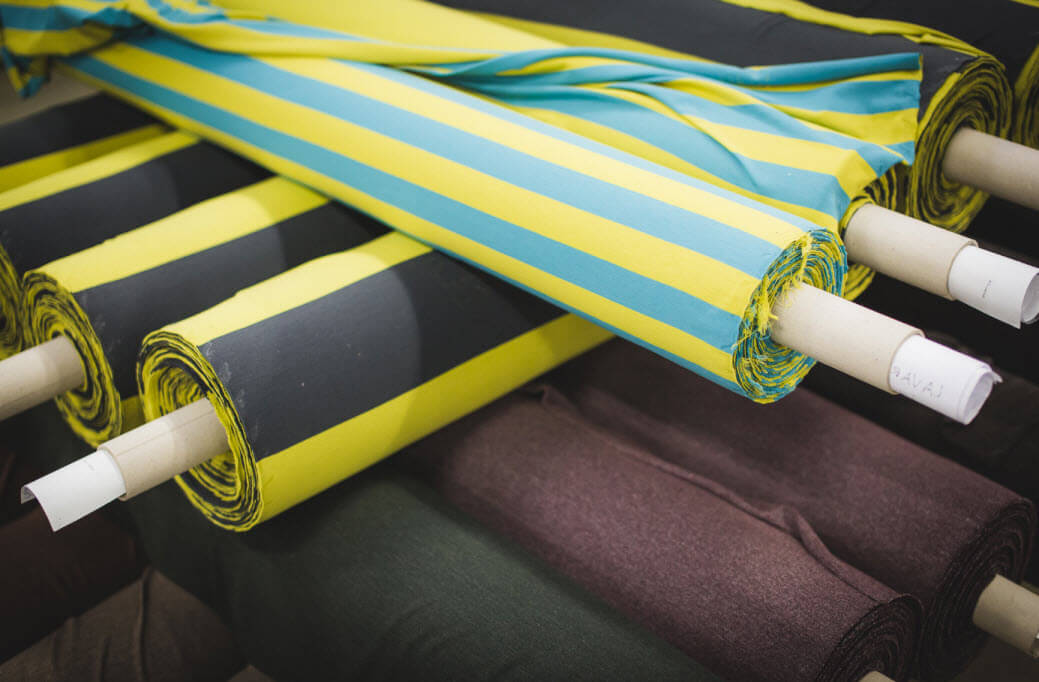
Fabrics in the Maglificio Maggia sampling office
Know-how in the production of sportswear was the key to a subsequent collaboration with Enrico Coveri, for which casual and intimate garments were made.
Meanwhile, in addition to cotton production, the knitwear factory had developed an integrated wool supply chain, starting with sheep breeding, to obtain fibre, through to spinning, knitting and then garment manufacture.
"We maintained this up to 15 years ago,” says Umberto Maggia, who is now supported by his son Ludovico, who started to work in the family company a few years ago. “But times changed, and it was no longer possible to continue. Another reason we decided to quit our own wool production is the high quality of our fabrics, for which we need the finest wools coming from Australia, New Zealand and South Africa, along with cashmere, alpaca, linen, silk, cotton and, for women's knitwear fabrics, also synthetic fibres."
Maglificio Maggia’s main customers are Italian and overseas luxury brands, looking for a Made in Italy production with a guaranteed excellence.
"Our internationalisation process began less than a decade ago,” says Umberto. “Today about 25% of our fabrics end up abroad, in Europe but also in China, the US, Japan, Turkey and South Korea. Our philosophy consists of offering the customer great care, but above all the personalisation of the fabrics according to their requests. Every season we prepare a new collection that is presented at major trade shows in the world, but we consider it simply a starting point and then we are ready to develop something unique for each of our customers."
The fact that the Maglificio Maggia plant is located in the Biella area, the wool textile district that has kept intact the entire production chain and therefore offers all the necessary processing, is an important aspect of Maglificio Maggia's enduring success.
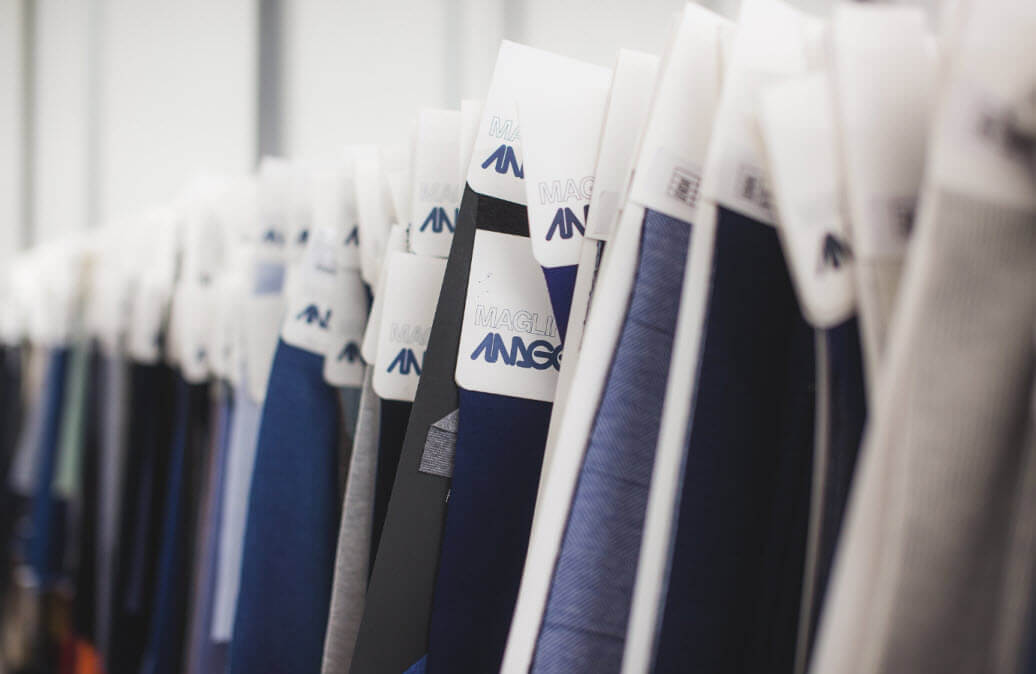
The Maglificio Maggia fabric archive
The company carries out about 80% of its knit production at its own plant, which houses around 40 circular knitting machines, and 60% of the dyeing and finishing of its fabrics, in particular those made from cotton. Umberto explains that “the remainder of the knitting, finishing and mercerising is entrusted to specialised companies in the area that guarantee us the level of quality we need.”
He adds: “The fact that they have a great experience and are geographically close, so that in case of problems you can even meet in person to find the most suitable solution, are strategic aspects for us. The type of clientele we have, which belongs to the luxury and the highest quality fashion range, requires us to comply with very strict standards, so we must pay the utmost attention both to internal and outsourced work.”
The Biellese cluster is mainly devoted to fabrics for high-end clothes, so Maglificio Maggia stands out with its specialisation in the knitwear sector. "We have only one big competitor in this market in Italy and being dedicated to this segment, along with the ability to work with fine fibres, has allowed us to grow in these years, despite the general economic challenges,” says Umberto.
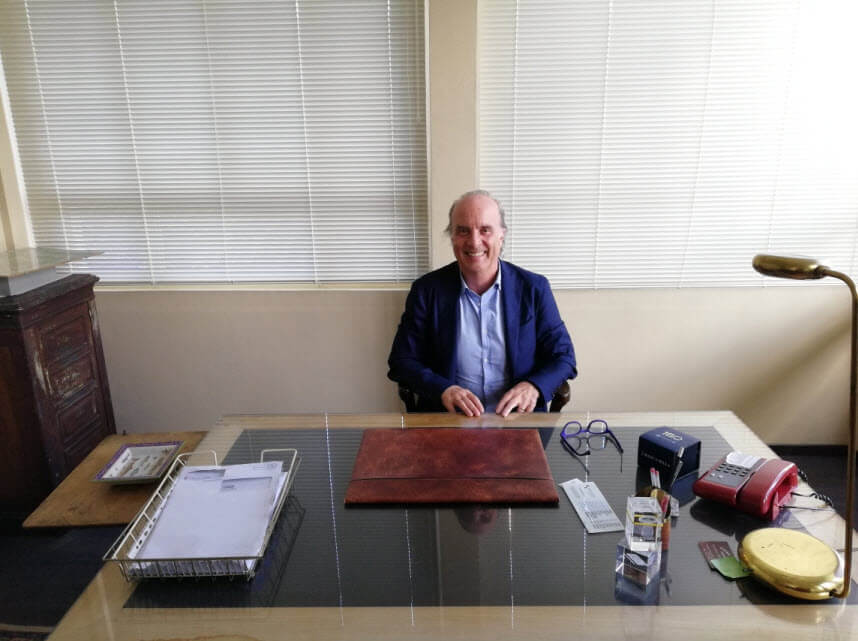
Umberto Maggia, the Maglificio Maggia managing director
However, he warns that the long economic crisis, which in the Biellese area has been particularly serious, has had an unexpected consequence that is now worrying the local companies involved in textiles, including Maglificio Maggia.
“The entire population was and still is convinced that the sector will not have a future anymore, so the new generations deserted technical schools,” he says. “Our knitwear school of reference, in Novara, no longer exists today and as the old technicians and specialists retire it is hard to find the right staff to replace them. This will be an increasingly significant problem for the entire textile and fashion supply chain in the coming years, and not only for Biella.”
It is not by chance that the last assembly of the Young Entrepreneurs Group of Sistema Moda Italia, the principal textile and fashion association in Italy, was focused on training and education to sustain the Made in Italy development.
However, this certainly won't be the only challenge, because for those who work in luxury clothing "it must be taken into account that consumer preferences are moving towards other areas such as travel, technology, experiences and other types of objects,” adds Umberto. “It will be up to the creatives but also to the components of the production chain to continue to maintain the appeal for clothing. And we are ready to play our part.”