
Last week, the Make it British Forum was held in Huddersfield, UK, with speakers focusing on digitalisation, social media and the quality associated with being Made in Britain.
Britain was once at the forefront of the global textile industry. The industry began to boom at the beginning of the 18th century and the introduction of the steam engine and assembly line helped to boost production. Yet, Britain lost its position as a major textile manufacturer in the 20th century due to outsourcing manufacturing and competition from other countries offering cheaper wages.
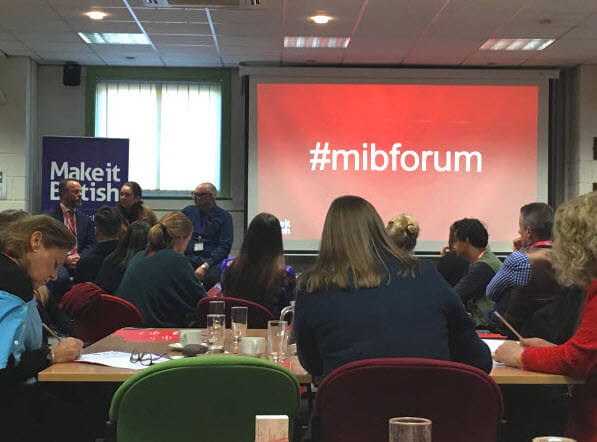
This year, over 100 delegates attended the Make it British Forum event held at the Textile Centre of Excellence in Huddersfield, UK, on 2 November
Make it British was set up by Kate Hills, a former buyer with 25 years’ experience in the industry, back in 2011 as a way of providing British-made businesses with a platform to promote what they do and make the most of their ‘Made in the UK’ label.
This year, over 100 delegates attended the Make it British Forum event held at the Textile Centre of Excellence in Huddersfield, UK, on 2 November. The conference saw a range of presentations and panel discussions delivered by industry professionals from British companies such as Dr Martens, HD Wool and WTiN.
The event saw a total of 15 presentations, including insights into the digital transformation in the textile and apparel value chain, how to use social media to promote a business effectively, and how to stand out in an ever-crowded marketplace.
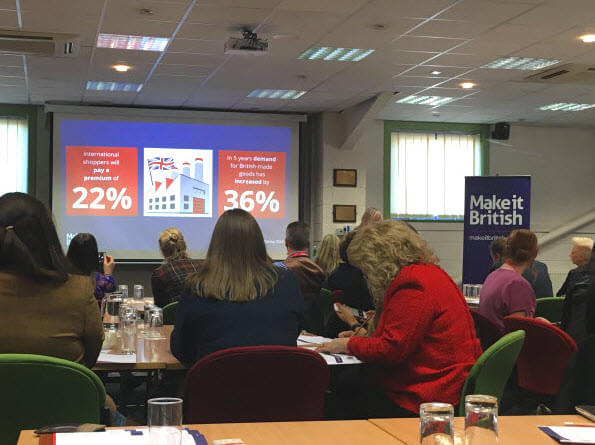
Being ‘Made in Britain’ is proved to be associated with quality
“Instagram helped to promote my brand globally”
Social media has been around for a while now, and in 2018 there were 3.196 billion social media users worldwide, according to Smart Insights.
Originally, social media was created to help connect individuals, but businesses now use the various platforms to promote their products.
“Instagram has helped me to grow my brand globally,” says Patrick Morrison, founder of Furious Goose, during his presentation at the forum.
Furious Goose is a designer silk scarf and pocket square company based in Brighton, UK. Morrison took to Instagram to promote his designs and products, and this move has helped him to secure stockist deals across Japan, South Korea, Nigeria and Australia.
Stephen Bent, international sourcing/production manager at Dr Martens, explained in his presentation that many of his current apprentices applied for their positions through finding Bent on Instagram.
“When our apprentices join, we hand them the passwords to the Dr Martens apprentice Instagram account and they share their daily jobs and tasks on there,” says Bent.
By using Instagram, the apprentices connect with other brands and help to promote the Dr Martens values. Bent also explained that “social media is designed to be user friendly” and so businesses should not be afraid of utilising it.
Digitalisation
WTiN’s managing director, Mark Jarvis, also spoke at the Make it British Forum. Jarvis gave a presentation on the digital transformation in the textile and apparel value chain, explaining that currently, the industry is focused on operational efficiency, but it may be heading towards a focus on material innovation and a pull economy.
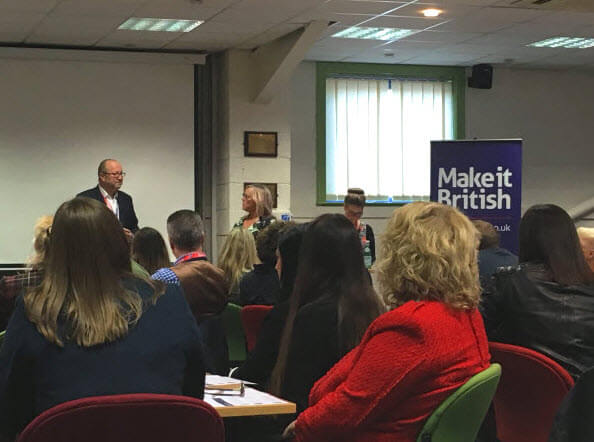
Mark Jarvis, managing director at WTiN, Jarvis gave a presentation on the digital transformation in the textile and apparel value chain
“We’re moving into a new phase, a fourth industrial revolution, where technology and new machinery will enable a change,” says Jarvis.
“I believe this is an opportunity for Britain, and I believe that we will begin to see manufacturing start to grow and come back, but to meet the needs of consumers, and that is about mass personalisation.”
Jarvis also spoke about the rise in sewbots, technical textiles and how by 2022, many people will be wearing clothing connected to the internet.
“Mobile and microprocessor companies are interested in wearable textiles because the value is going out of sticking processors into phones and watches, whereas the next stage of value creation in their eyes is in wearable textiles.
“It’s my view that if these companies are behind this then it’s going to happen at some point.”
What Brits do best
Although Britain is no longer at the forefront of the global textile manufacturing industry, one thing that Britain is still well-known for is quality.
“Being ‘Made in Britain’ is proved to be associated with quality,” said Kate Hills, founder of Make it British, at the event.
“International shoppers are willing to pay a premium of 22% for products that are made in Britain, and in five years, demand for British made goods has increased by 36%,” she adds.
Andy Ogden, general manager at English Fine Cottons, also spoke about the authenticity of British textile manufacturing, explaining that “the message we’re trying to give is about authenticity, honesty, truth and passion about British manufacturing as these qualities all add value to the product.”
Other speakers at the event, such as Paul Jowett from English Tailoring and Olly Platts from Joshua Ellis, again reiterated that customers enjoy having ‘Made in Britain’ or even ‘Made in Huddersfield’ on the selvedge.
Other presentations at the conference were delivered by representatives from the UKFT, Textile Centre of Excellence, The Beehive Brand, Turtle Doves, The Great British Exchange and HD Wool.
For more information about Make it British, visit: https://makeitbritish.co.uk/


