Malaysia’s digital textile printing industry is growing at a steadfast pace, with local demand driven by regional designers and fashion brands, particularly when producing Islamic wear, such as scarfs and shawls.
However, the industry faces challenges securing enough orders to fully utilise its capacity. A dip in business due to Covid-19 pandemic restrictions has also stalled the industry. Nevertheless, Malaysian economists are confident that growth should resume once restrictions are lifted.
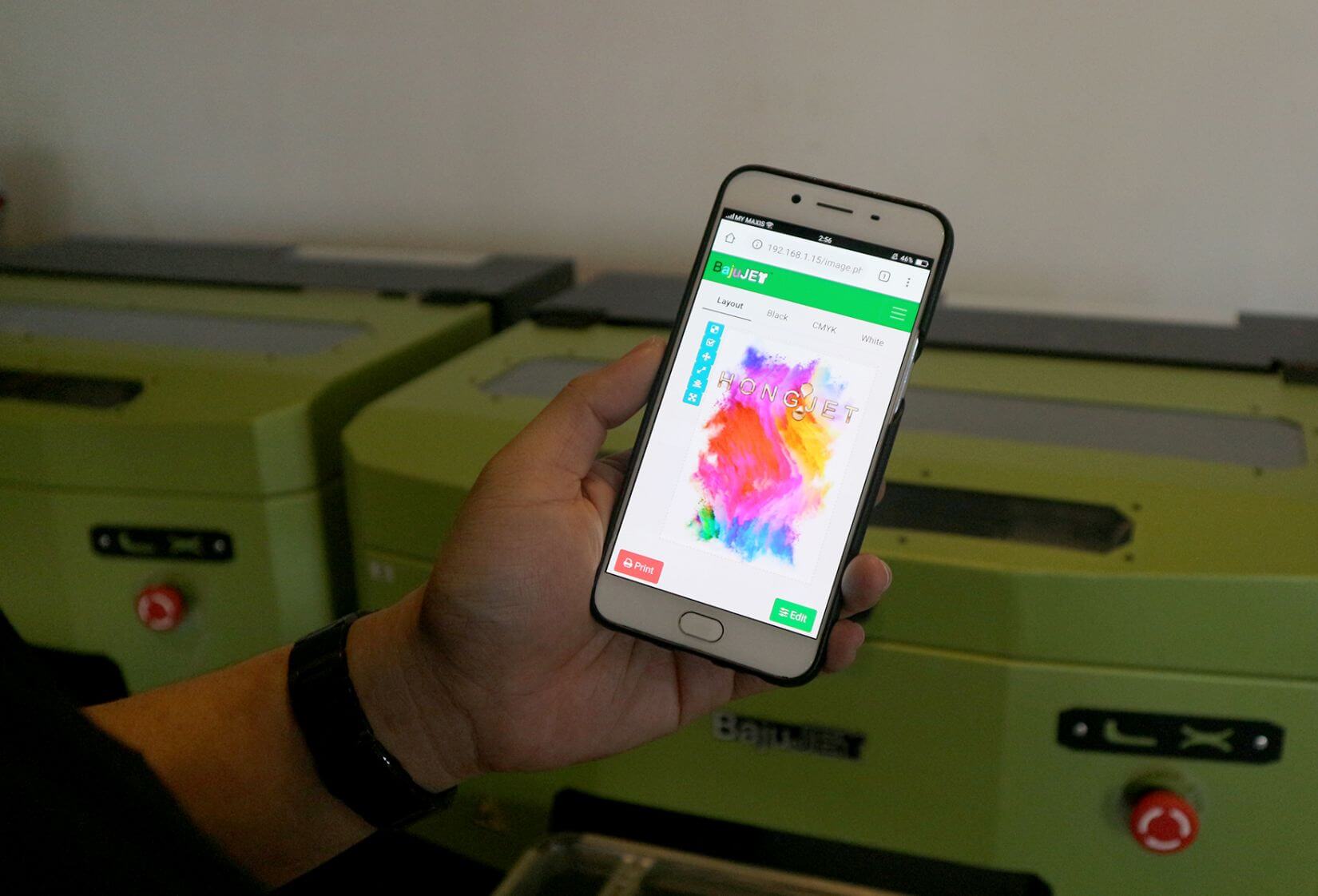
To boost the industry, Malaysia’s federal government is providing printers for use in educational programmes aimed at strengthening skills and developing local finishing talent. The country has also developed its own digital textile printing hardware and software technology that is being sold internationally, such as A-Tex Worldwide Sdn Bhd’s (Ulu Tiram, Johor) A-Tex Ultrajet line, and Hongjet Technology Sdn Bhd’s (Kuala Lumpur) Baju JetXL, which comes with its own web-based Raster Image Processing (RIP) software.
Malaysia has a large textile & clothing industry to service. The Malaysian Investment Development Authority (MIDA) reported that in 2018, textiles and textile products exports generated receipts of US$2.8bn. The country’s total manufacturing overseas sales were worth US$16.66bn in 2018, with textiles, apparel, leather, and footwear sales increasing by 7.3% between 2018 and 2019, according to the Department of Statistics Malaysia (DOSM).
But, reflecting the government’s long-standing manufacturing strategy of focusing on value rather than volume in Malaysia, the director of Selangor-based Lookup Printing, Saman Saffari comments: “Malaysia’s digital textile printing industry is small compared to China. We’re only printing thousands of metres a day, rather than hundreds of thousands. But our strength is that we are able to focus on quality, not quantity. With high-quality fabrics and Japanese technology, Malaysian prints are of a higher grade than our competitors.”
Print service provider (PSP) Lookup Printing works with high-end designers and fashion brands from around the region including Malaysia, Singapore, and Brunei. Printing direct to textile with Mimaki Tx300P-1800 printers and following International Organisation for Standardization (ISO) standards for printing, Lookup Printing produces 3,000 to 5,000m/day and has the capacity to print up to 6,000m/day.
Saffari says: “Around 70% of our business comes from printing scarves, and the other 30% from clothing orders. Regional designers and fashion brands are starting to realise that digital printing saves time without compromising quality. It’s much faster for fashion designers and local brands to copy their prints and experiment with samples and product lines compared to traditional printing methods.”
Meanwhile, the director of Ipoh, Perak-based Custom My Printing Sdn Bhd, Muhammad Akram bin Abdul Aziz, claims Malaysia’s boutique digital printers are also using Japanese technology, with most small-medium sized print shops using dye-sublimation printers from Epson. Muhammad Akram says: “We’re using Epson F7270 and F6070 printers. With 64-inch printing widths, we can print quite fast. I’m able to deliver product more efficiently.”
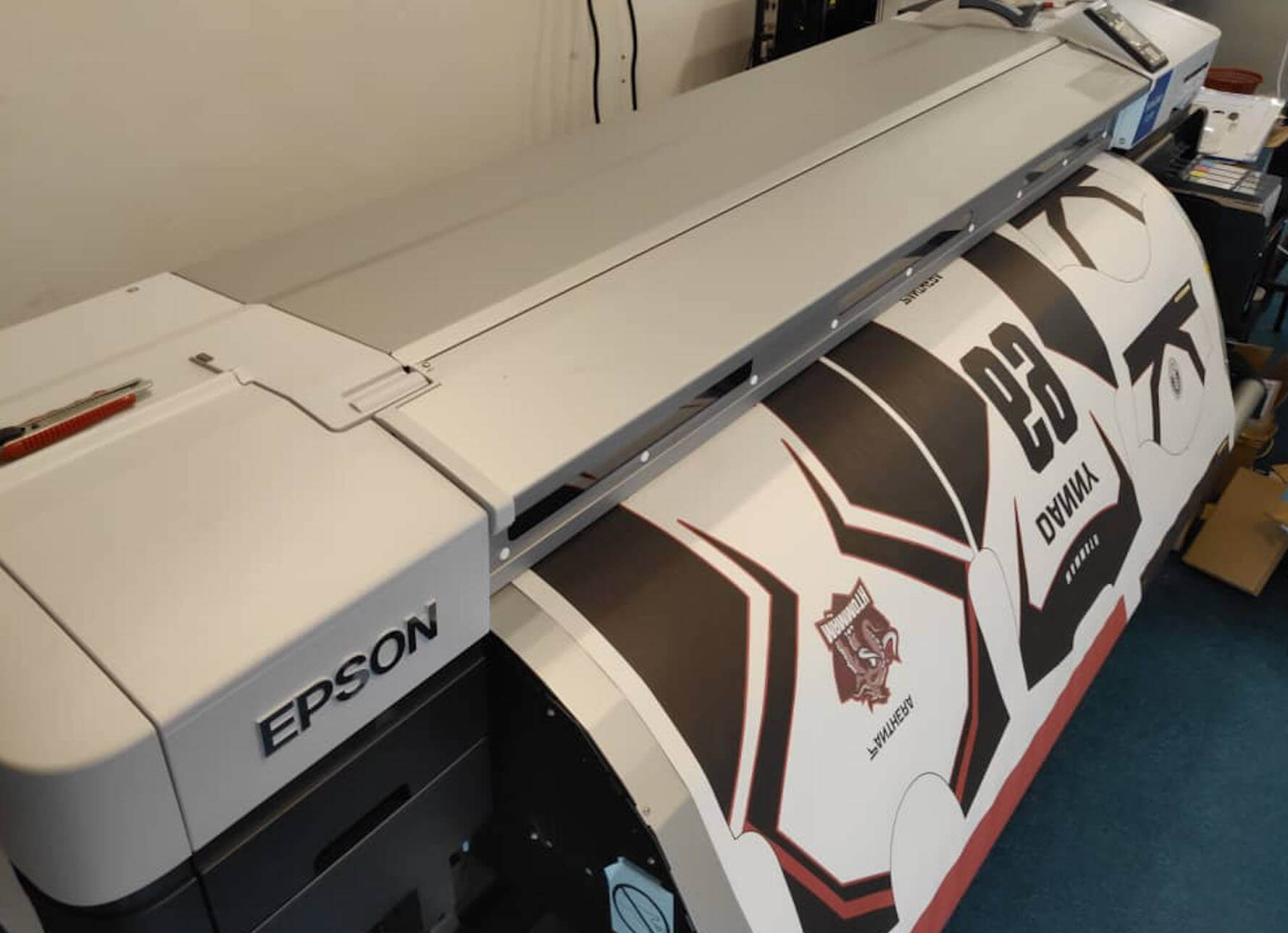
Working with local agents who are mostly graphic designers, Muhammad Akram explains: “My biggest sellers are jerseys, hoodies, jackets and children’s products such as backpacks and baby blankets. However, with Covid-19 restrictions, our sales have dropped by around 50%. Our clients are submitting fewer orders and we’re getting fewer inquiries. To sustain business, we have been giving special promotions and prices to our agents.”
However, Muhammad Akram believes the key to growing the industry is in the development of local talent to differentiate Malaysian prints from others. He says: “In general, we need more graphic designers, fashion designers, and tailors to produce top quality patterns and designs.”
His sentiments are echoed by initiatives such as digital batik training courses run by the Sabah Handicraft Centre (PKS), which has received funding from the federal government for buying printing machines. The centre planned to launch training courses on digital batik printing earlier this year (2020). However, the launch has been postponed until Malaysia’s Covid-19 restrictions are fully lifted.
The Sabah Foundation (part of the educational Yayasan Sabah Group) director, Datuk Haji Jamalul Kiram bin Datuk Haji Mohd Zakaria told the Borneo Post last November (2019): “We are indeed responding to the government’s call for a digitisation era as we do not want to be left behind by neighbouring countries such as Indonesia, China, and Vietnam who have utilised such machines for many years. With the machines, we will be able to produce more batik fast and at a lower cost.”
With respect to the international market, Haji Suhaili Haji Sulong, founder of Shah Alam, Selangor-based Sulong Technologies Sdn Bhd, also known as Printrix explains: “Even though the market is big, the big jobs tend to go to China. But we have the capacity to service larger orders, such as uniforms for the government, political parties, and universities and at a higher quality than our competition. There just needs to be more awareness of what we’re capable of globally. Even boutique digital printers can process more. We’re a small family-owned company and we can print up to 200 metres of fabric per day, but we rarely reach our full capacity.”
Despite restrictions put on Malaysian businesses during the Covid-19 pandemic, Haji Suhaili predicts: “When the restrictions are lifted, we will have more local orders for tadika [kindergarten uniforms] printing, because education-related business tends to be resilient to recession. But we really need local business to support local digital textile printers. Let the ringgit circle around our communities rather than go overseas to China.”
Though Japanese dye-sublimation digital printing is the most popular method amongst local textile printing boutiques, A-Tex Worldwide Sdn Bhd, (a subsidiary of Ultrajet Engineering Sdn Bhd), manufactures a full range of pre and post-digital textile printing products.
Established in 1997, the Malaysian company’s digital printing technologies include applications such as reactive digital printing, acid digital printing, disperse digital printing, decorative digital printing, direct to garment digital printing, and leather digital printing, in addition to dye-sublimation digital printing.
A-Tex Worldwide Sdn Bhd has also developed its own printing and monitoring software that supports multiple file formats and allows several images to be created and saved on a single print job. The company claims its software, “provides faster output and a more economic use of materials” and “more efficient print job management”.