
Saikat Ghosh, Timothy Smith, Sohel Rana and Parikshit Goswami from the Technical Textiles Research Centre, Huddersfield, UK, explore the application of nanofinishing in technical textiles – focusing on current developments in sportswear.
1. Introduction
Textiles have been around since ancient times as a primary means of protecting the human body from the outside environment. The 18th and 19th centuries saw a major step change in textile technology when the industrial revolution led to mass production of textiles, turning the textile industry into a dominant one. In the 20th century, another revolution took place when synthetic fibres such as rayon, nylon and polyester came into the market.
A notable change in this sector happened in the 21st century with the advent of nanotechnology – the application of which allowed textiles to go far beyond apparel and fashion applications. The past two decades have seen a surge towards the application of different nanoparticles in technical textiles [1], followed by an increased demand of more sophisticated textiles in different applications. This article aims to provide an overview of nanomaterials and highlight the benefits and applications of nanotechnology in textiles with a particular focus on sportswear.
1.1 Nanoparticles and their application in technical textiles
1.1.1 Definition, classification and properties of nanoparticles
The concept of nanotechnology was only revealed in the late 1960s and since then it has emerged as one of the primary research areas in material science. The term ‘nano’ itself implies its size, which should be less than 100 nm in at least one dimension, and its shape varies from 0D to 3D [2-4]. The primary difference between bulk and nanoscale materials is their physical properties. In general, nanoparticles come in a wide range of aspect ratios and variable shapes and it is mainly these two characteristics along with their composition which give nanoparticles their unique and fascinating properties such as colour, conductivity, surface properties etc. [2-5]. Interestingly, some of the nanoparticles have complex structures and are comprised of three layers: the outermost layer which can be functionalised, followed by the middle layer or shell layer, which separates the core and the outer layer, and finally the innermost core layer which is the primary nanoparticle structure [4],[6].
Nanoparticles come in many different classes, such as carbon-based, ceramic, polymeric, metal, semiconductor and lipid-based nanoparticles [7],[8]. These structures are generally synthesised by two main approaches: top-down and bottom-up. The bottom-up approach is also known as the self-assembled approach as it builds up the nanoparticles one layer at a time. The top-down approach is one where a larger material is reduced in size until it is ‘nanoscale’. The primary advantage of the bottom-up approach is the production of nanoparticles with fewer defects compared to the top-down approach. With the top-down approach the surface becomes uneven as their size is reduced chemically or by physical means. And the physical methods of forming nanoparticles are less preferred as these processes involve high temperature and pressure, thereby consuming a huge amount of energy. Alternatively, it is favourable and more effective to synthesise nanomaterials at low temperatures via sol gel or biosynthesis methods [3], [7].
1.1.2 Application of nanoparticles in technical textiles
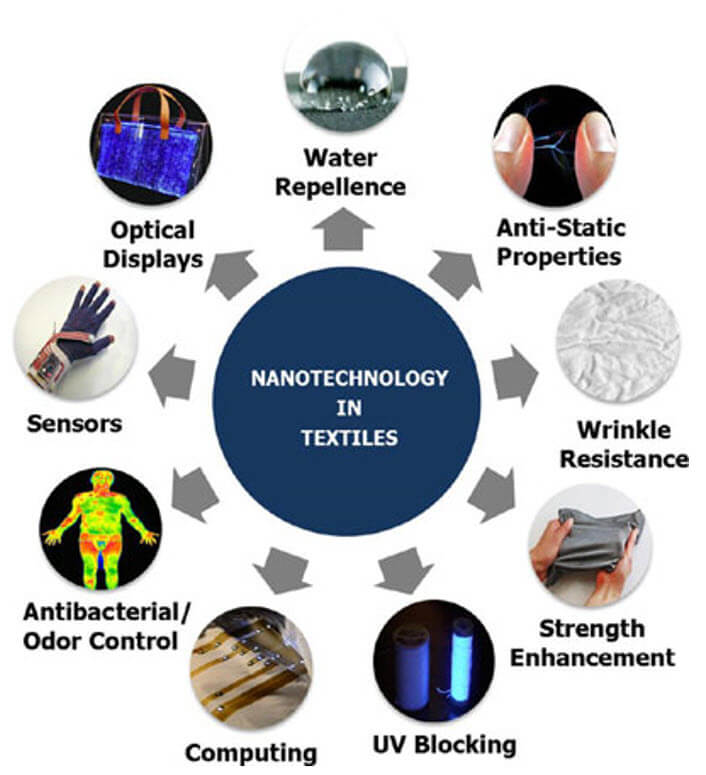
Metals and metal oxides are the most widely used nanoparticles in technical textiles. The application of these nanomaterials in textiles is quite diverse, as can be seen in Figure 1. Some of the dominant areas include antimicrobial textiles for medical applications, textiles for moisture management and water repellency, sportswear, conductive e-textiles and so on. The most widely used nanoparticles are silver, zinc oxide (ZnO), titanium dioxide (TiO2), copper, gold, carbon nanotubes and their nanocomposites [5],[7],[9]–[12].
Nanoparticles offer a range of special characteristics that are attractive and extensively utilised in different industrial sectors such as electronics, cosmetics, coating, packaging and biotechnology. One example of such features exhibited by many nanoparticles is the colourless nature of their solutions and composites.
Due to the nanosize, nanoparticles do not interact with the critical wavelengths of visible light, helping them to become effectively transparent and potentially very useful in textiles, cosmetics, coating and electronics [7],[9]. However, some nanoparticles show distinct colour in the solution depending on their size: for example, blue and red colour of gold nanoparticle suspensions. Metal oxides such as ZnO exhibit a high band gap and a high binding energy, which makes it a good semiconductor material. It also has low toxicity and is a thermally stable nanoparticle [9]. In textiles, these features provide a number of potential benefits such as UV blocking, conductivity and fire retardancy.
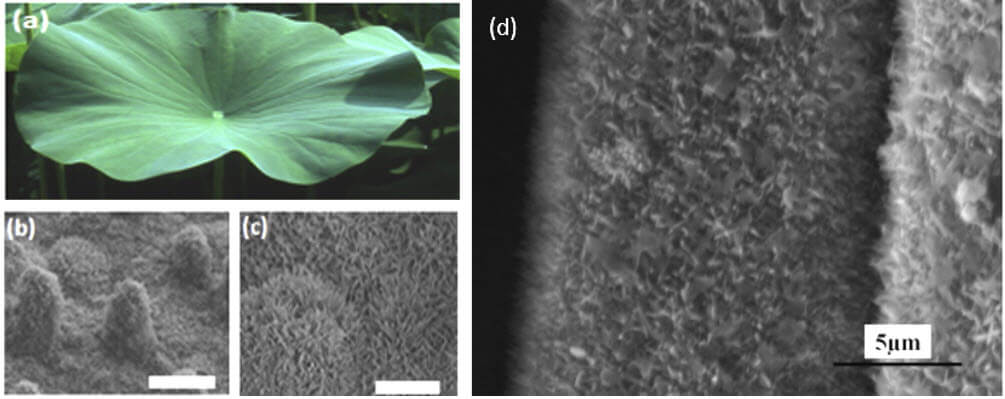
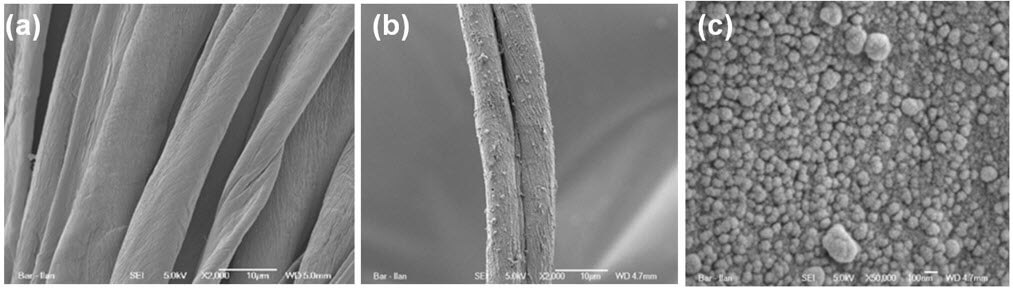
TiO2 has excellent functional properties. One of the primary uses of this nanomaterial in the textile sector is in photocatalysis, degrading waste dye materials present in the industrial effluents. Along with this, TiO2 can present self-cleaning properties and protection against ultraviolet rays, as it can absorb light in the UV region [10]. Silver has also shown self-cleaning properties through the ‘lotus’ effect (as shown in Figure 2), in addition to its brilliant antimicrobial activity against more than 600 different types of bacteria [13]. Silver nanoparticles can be applied to textiles at low temperatures which is a highly desirable property for manufacturers. An example of silver nanoparticle application on textiles is shown in Figure 3 [15].
Nanoparticles can be applied onto textiles through different approaches, namely ex-situ and in-situ processes. In the case of ex-situ processes, nanoparticles are synthesised prior to application. During synthesis, agglomeration of nanoparticles is prevented through binding or stabilising agents.
Some examples of binding agents are chitosan, acrylic binders, soluble starch, and commonly used stabilising agents including sodium dodecyl benzyl sulphonate and polyvinyl pyrrolidone [7],[8]. Conversely, in-situ formation of nanomaterials is the synthesis of nanomaterials in the presence of textile substrates which are to be functionalised and therefore, no additional application step is required in the case of in-situ processes, saving time and money. However, uneven deposition and agglomeration of nanoparticles on the textile fibre surface is one of the major challenges of this approach and an active research area for the Technical Textiles Research Centre.
Currently, a huge amount of research efforts are being directed towards developing electronic textiles (commonly known as e-textiles) for a wide range of applications including sensing (eg pressure, humidity, strain etc), energy harvesting (eg from friction, vibrations etc), thermal management and energy storage (eg batteries, supercapacitors etc). Conductive nanoparticles such as carbon nanotubes, graphene and graphene oxides, and boron nitrides etc have been extensively utilised for these applications [16-18]. Some examples of these applications have been schematically shown in Figure 4.
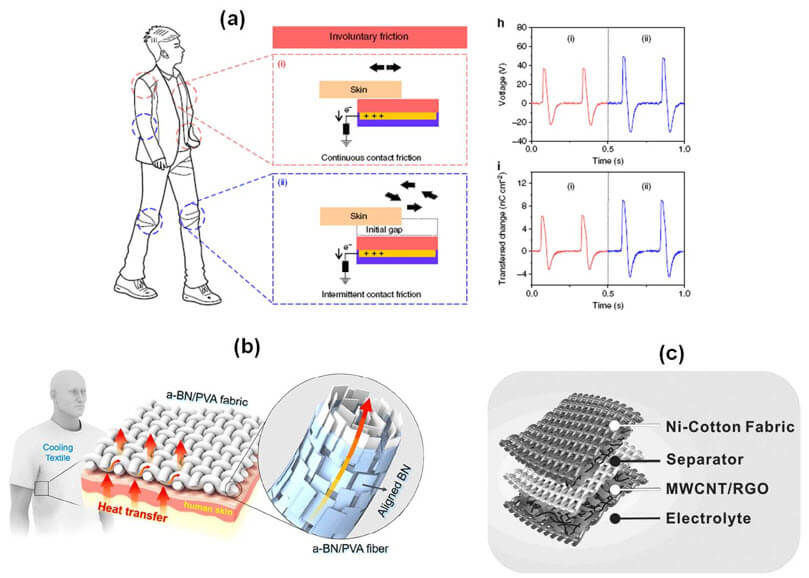
The first example shows an energy harvesting textile capable of producing energy from friction due to human body movements [16]. This energy harvesting fabric was developed from PET textiles through nanofunctionalisation with black phosphorus encapsulated with hydrophobic cellulose oleoyl ester nanoparticles. Touching by hand with a small force (~5 N) and low frequency such as ~4 Hz could generate high voltage output (~250–880 V, ~0.48–1.1 μA cm−2) that can power a digital watch and a number of light emitting diodes [16]. Figure 4 (b) schematically shows the function of a boron nitride nanoparticle functionalised polyvinyl alcohol fibre textile that can produce 55% higher cooling effect over conventional cotton textiles [17]. Figure 4 (c) shows the structure of a nanofunctionalised cotton fabric (functionalised with carbon nanotubes, graphene oxide and Ni) with a high areal capacitance up to 6.2 F cm−2 at a high areal current density of 20 mA cm−2 [18].
2. Nanofinishing for antibacterial effect and moisture management
2.1 Antibacterial nanofinishing of textiles
Growth control of bacteria is the primary function of antimicrobial agents. When applied to textiles, these biocidal agents destroy microbes on or close to the textile surface. Biocidal surfaces can be effective in two ways: (a) contact active biocides and (b) biocidal releasing surfaces [19] . In the case of contact active biocides, bacteria will be destroyed only when they are in contact with the surface [20]. Researchers have successfully developed antimicrobial cotton textiles by treating with biocidal nanocomposites made of quaternary ammonium compounds and sodium alginate [21]. Silver is another commonly known antimicrobial agent with potential application in activewear [20]. Metal ions like silver, copper and zinc create a positively charged surface which attract the negatively charged bacteria and then destroy the bacterial cell [22]. In case of biocidal releasing surfaces [23], ‘zone of inhibition’, a uniform circular zone with no bacterial growth, is observed. This is an important characteristic exhibited by few nanoparticles (for example, metal oxides) and is mainly attributed to two mechanisms: (1) metal oxide nanoparticles have free hydroxyl radicals on their surface, which can move a small distance from the particles. These radicals have high potential for destroying the outer membrane of bacteria. (2) Metal oxides produce metal ions through oxidation and these ions can themselves solubilise and attack bacteria.
The solubility of nanomaterials strongly depends on particle size; typically, as the particle sizes decrease their solubility increases. The dissolution occurs due to the large surface area-to-volume ratio. It was observed that ZnO nanoparticles with the smallest particle size showed a larger zone of inhibition and enhanced antibacterial activity [5], [24], [25]. ZnO nanoparticles result in a complex formation where Zn2+ cations and hydroxyl anions are both present, particularly on the nanoparticle surface. The hydroxyl radicals are mostly oxidative in nature due to high redox potential and therefore, they oxidise the bacterial membrane and kill them. Moreover, the strong cationic charge of Zn2+ ions attracts and binds to the microbe through electrostatic interactions. This attachment makes the bacterial membrane impermeable, thus destroying it [9], [26].
In the current Covid-19 scenario, the role of nanomaterial-based antiviral systems and their importance in the future of personal protective equipment (PPEs) are worth mentioning. The remarkable chemical and physical properties of nanoparticles put them in prime place for innovation in the antiviral finishing of textiles. There already exists plenty of research on the use of nanoparticles as vessels for transporting antiviral drugs; for example using dendrimers and liposomes as well as metal nanoparticle such as silver [27]. However, much more research and innovation should take place for successful development of antiviral textiles and hence an important research area for the Technical Textiles Research Centre.
2.2. Nanofinishing for moisture management (sportswear)
Moisture management of textiles is important in both sportswear and leisure wear. It is vital for two primary reasons: it improves the comfort of the wearer by removing sweat, which is also a medium for bacteria growth [28] and therefore, it enhances the antibacterial function of textiles. During strenuous body activity in sports, a wearer heavily perspires, and the moisture should be quickly absorbed by the cloth and transferred to the outer atmosphere to keep the skin dry. On the other hand, in leisure activities the human body stays in a more relaxed state and the cloth doesn’t need to absorb moisture so effectively [26]. As a result, completely different approaches should be opted for designing sportswear as compared to everyday apparel.
In sportswear, an efficient transfer of excess heat and moisture is required making moisture management extremely important. Wetting, wicking and moisture vapour transmission are essential properties influencing the comfort performance of textiles used in sportswear. During sports activities, the core body temperature rises and consequently, the skin temperature becomes higher than 37oC leading to increased sweating [14], [22]. Research has shown that a close relationship exists between thermal transmission, moisture content and surrounding air velocity [29-31], making thermal and moisture management interdependent. Thus, the comfort characteristics of sports textiles and the wearer performance are highly dependent upon these parameters, which are essential factors to be considered while designing sportswear.
Although other methods of functionalisation do exist [32], researchers have attempted to use nanoparticles to enhance the thermophysiological comfort of textiles. For example, superhydrophobic silica nanoparticles in aerogel form have been applied to wool/aramid blended fabrics to produce fire-retardant protective clothing. The water transport behaviour of these fabrics is strongly dependent on the water content of the fabric; the higher the water content of the fabric, the faster it transports the moisture [33]. In multilayered garments, a significant difference was noticed depending on the layer in which the nanocoating was applied and therefore, this is an important factor while designing high-performance functional textiles for applications like sportswear. The moisture management properties cannot be improved if nanofinishing is applied on the outer surface of the fabric [33]. On the contrary, nanofinishing proved to be highly effective if applied on the inner layer of the fabric, next to the skin. The nanofinishing layer in this case helps to absorb moisture from the skin and allow transport of the moisture to the surface layer, from which it is released to the surrounding atmosphere [33]. Some external factors are also responsible for the Overall Moisture Management Capacity (OMMC) of textiles, such as the presence of thickener and the number of coating layers [31], [33].
The use of microfibre functionalised with nanoparticles showed distinct advantages in the moisture management of textiles [34]. Microfibres have a small diameter which helps by increasing the number of capillaries in a yarn cross-section. Moisture flow through capillaries typically depends on the radius of the capillaries. Generally, finer capillaries lead to higher flow speed. Thus, using microfibres helps in fast transportation of fluids through capillaries. The moisture management capacity of microfibre fabrics can be further improved by depositing nanoparticles onto the fibre surface. Using a combination of microfibre layers and nanoparticles leads to faster transport of perspiration away from the skin [34]. The particle size of nanomaterials is another important factor influencing OMMC of textiles and therefore, should be carefully considered while designing nanofunctionalised sports textiles. OMMC was observed to decrease when nanoparticle suspensions contained larger particle size. For example, in the case of ZnO nanofinishing, the lowest size of particles showed better OMMC compared to larger particles [14], [35].
3. Nanofunctionalised sportswear: current market and products
The functionalities which are sought after in current sportswear include waterproofing, antimicrobial, moisture management and UV blocking, and nanotechnology is playing a vital role in imparting these essential properties to sportswear. Due to cutting-edge innovation and novel applications, the future of nanotechnology in the sportswear sector seems to be bright. In the US, the application of nanofunctionalised textiles for apparel is predicted to grow exponentially over the next few years [36]. Many companies around the globe are trying to utilise nanotechnology to develop a wide range of sports products.
For example, a Swiss company named Schoeller has developed a nylon-based apparel functionalised with fluorocarbon nanospheres, providing optimal comfort, air permeability, wind and water resistance, and self-cleaning properties for cold weather sports [36]. Another interesting example is anti-slip footwear soles which have been designed by adding nanoparticles to rubber [37].
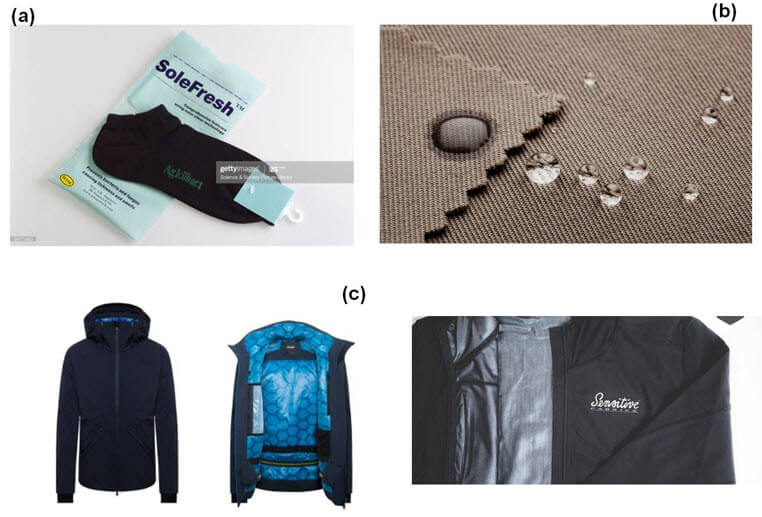
A recent patent application highlights the use of nanoparticles to increase the frictional resistance of textiles against skin. This fabric will have many obvious applications in the sportswear market [20]. UK-based company JR Nanotech has developed socks (SoleFresh) made with silver nanoparticle functionalised nylon fibres. These socks have been specially designed to speed up the release of moisture (sweat) in order to improve odour control and reduce bacterial growth. This product significantly improves comfort through moisture management as a result of wicking, transporting and release of sweat from the body [38]. Korean company Hyosung is also manufacturing sportswear using nanosilver functionalised nylon fibres [39]. And Italian company Directa Plus has launched its G+ technology for producing textiles functionalised with graphene.
These textiles have been certified as non-toxic, non-cytotoxic and hypoallergenic for human skin. These fabrics have the unique capability of distributing body heat throughout the fabric in cold weather and a heat dispersion effect in hot weather to keep the body temperature down. Directa Plus is currently collaborating with Eurojersey to produce graphene functionalised textiles with thermal management capability, excellent breathability, water and windproofness, which make them ideal for sportswear [41]. A few examples of nanofunctionalised commercial textile products are shown in Figure 5.
4. Concluding remarks
Nanotechnology is becoming a massive industry and showing a fast-growing trend in the activewear sector, maximising the use of specialised products starting from equipment, coverings and clothing. Among all areas of nanofunctionalised textiles, sportswear is probably the most focused and fastest growing. The high-performance demand by athletes for responsive apparel for fast fluid transport, breathability, thermal regulation and comfort, along with specialist functions such as sensors, reduced friction/drag and better durability, will be the focus for innovations in nanofunctionalised textiles in the future. This technology will ultimately attract everyday users developing even more sophisticated textiles, leading to substantial market growth.
For further information on the work of the Technical Textiles Research Centre, visit:
https://research.hud.ac.uk/institutes-centres/isiaip/ourcentres/technical-textiles/
References
- J. A. Rivero, Pedro J, Aitor Uttutia, Javier Goicoechea, “Nanomaterials for Functional Textiles and Fibers,” Nanoscale Res. Lett., no. 10, p. 501, 2015.
- A. Fedlheim, D. L., & Foss, Metal nanoparticles: synthesis, characterization, and applications. 2001.
- Y. Thakkar, K. N., Mhatre, S. S., & Parikh, “Biological synthesis of metallic nanoparticles.,” Nanomedicine nanotechnology, Biol. Med., vol. 6, no. 2, pp. 257–262, 2010.
- T. Tran, Q. H., & Le, “Silver nanoparticles: synthesis, properties, toxicology, applications and perspectives,” . Adv. Nat. Sci. Nanosci. Nanotechnol., vol. 4, no. 3, p. 033001, 2013.
- Chandran, S. P., Chaudhary, M., Pasricha, R., Ahmad, A., & Sastry, “Synthesis of gold nanotriangles and silver nanoparticles using Aloevera plant extract,” Biotechnol. Prog., vol. 22, no. 2, pp. 577–583, 2006.
- Hyeon, “Chemical synthesis of magnetic nanoparticles,” Chem. Commun., no. 8, pp. 927–934, 2003.
- Mohanraj, V. J., & Chen, “Nanoparticles-a review,” Trop. J. Pharm. Res., vol. 5, no. 1, pp. 561–573, 2006.
- J. Penn, S. G., He, L., & Natan, “Nanoparticles for bioanalysis,” Curr. Opin. Chem. Biol., vol. 7, no. 7, pp. 609–615, 2003.
- Hong, R., Pan, T., Qian, J., & Li, “Synthesis and surface modification of ZnO nanoparticles,” Chem. Eng. J., vol. 119, no. 2–3, pp. 71–81, 2006.
- Ba-Abbad, M. M., Kadhum, A. A. H., Mohamad, A. B., Takriff, M. S., & Sopian, “Synthesis and catalytic activity of TiO2 nanoparticles for photochemical oxidation of concentrated chlorophenols under direct solar radiation,” Int. J. Electrochem. Sci, vol. 7, no. 6, pp. 4871–4888, 2012.
- R. Reddy, “Gold nanoparticles: synthesis and applications,” Synlett, no. 11, pp. 1791-1792., 2006.
- Dhas, N. A., Raj, C. P., & Gedanken, “Synthesis, characterization, and properties of metallic copper nanoparticles,” Chem. Mater., vol. 10, no. 5, pp. 1446–1452, 1998.
- Zhang, M., Feng, S., Wang, L., & Zheng, “Lotus effect in wetting and self-cleaning,” Biotribology, no. 5, pp. 31–43, 2016.
- Ashraf, M., Siyal, M. I., Nazir, A., & Rehman, “Single-step antimicrobial and moisture management finishing of PC fabric using ZnO nanoparticles,” Autex Res. J., vol. 17, no. 3, pp. 259-262., 2017.
- Perelshtein, I., Applerot, G., Perkas, N., Guibert, G., Mikhailov, S., & Gedanken, “Sonochemical coating of silver nanoparticles on textile fabrics (nylon, polyester and cotton) and their antibacterial activity,” Nanotechnology, vol. 19, no. 24, p. 245705, 2008.
- Xiong, Jiaqing, Peng Cui, Xiaoliang Chen, Jiangxin Wang, Kaushik Parida, Meng-Fang Lin, and Pooi See Lee. "Skin-touch-actuated textile-based triboelectric nanogenerator with black phosphorus for durable biomechanical energy harvesting." Nature communications 9, no. 1 (2018): 1-9.
- Gao, Tingting, Zhi Yang, Chaoji Chen, Yiju Li, Kun Fu, Jiaqi Dai, Emily M. Hitz et al. "Three-dimensional printed thermal regulation textiles." ACS nano 11, no. 11 (2017): 11513-11520.
- Yang, Yu, Qiyao Huang, Liyong Niu, Dongrui Wang, Casey Yan, Yiyi She, and Zijian Zheng. "Waterproof, ultrahigh areal‐capacitance, wearable supercapacitor fabrics." Advanced Materials 29, no. 19 (2017): 1606679.
- -F. Börner, H. G., & Lutz, Bioactive Surfaces. Advances in Polymer Science. 2011.
- Goswami, P., Smith, T., Hebden, A., & Russell, S. (2018). S. Patent Application No. 15/766,255.
- H. Kim, H. W., Kim, B. R., & Rhee, “Imparting durable antimicrobial properties to cotton fabrics using alginate–quaternary ammonium complex nanoparticles,” Carbohydr. Polym., vol. 79, no. 4, pp. 1057–1062, 2010.
- M. metana, A. B., Klabunde, K. J., Marchin, G. R., & Sorensen, “Biocidal activity of nanocrystalline silver powders and particles,” Langmuir, vol. 24, no. 14, pp. 7457–7464, 2008.
- Bulman, S. E., Goswami, P., Tronci, G., Russell, S. J., & Carr, C. (2015). Investigation into the potential use of poly (vinyl alcohol)/methylglyoxal fibres as antibacterial wound dressing components. Journal of biomaterials applications, 29(8), 1193-1200.
- C. Rios, J. L., & Recio, “Medicinal plants and antimicrobial activity,” J. Ethnopharmacol., vol. 100, no. 1–2, pp. 80–84, 2005.
- Padmavathy, N., & Vijayaraghavan, “Enhanced bioactivity of ZnO nanoparticles—an antimicrobial study,” Sci. Technol. Adv. Mater., vol. 9, no. 3, p. 035004, 2008.
- Karolia, D. A., & Paradkar, “Comfort properties of knitted microfiber fabrics,” Indian Text. Journal, vol. 2005, pp. 81–85.
- A. Marija Milovanovic, Aleksandar Arsenijevic, Jelena Milovanovic, Tatjana Kanjevac, Antimicrobial Nanoarchitectonics. 2017.
- Sampath, M. B., Mani, S., & Nalankilli, “Effect of filament fineness on comfort characteristics of moisture management finished polyester knitted fabrics,” J. Ind. Text., vol. 41, no. 2, pp. 160–173, 2011.
- O. Ukponmwan, “The thermal-insulation properties of fabrics,” Text. Prog., vol. 24, no. 4, pp. 1–54, 1993.
- A. Scott, Textiles for protection. 2005.
- P. Saville, Physical Testing of Textile, 1 st edtn. 1999.
- Shaid, A., Fergusson, M., & Wang, “Thermophysiological comfort analysis of aerogel nanoparticle incorporated fabric for fire fighter’s protective clothing,” Chem. Mater. Eng., vol. 2, no. 2, pp. 37–43, 2014.
- Edward, N. W., & Goswami, P. (2018). Plasma-based treatments of textiles for water repellency. In Waterproof and Water Repellent Textiles and Clothing(pp. 215-232). Woodhead Publishing.
- Hu, J., Li, Y., Yeung, K. W., Wong, A. S., & Xu, “Moisture management tester: a method to characterize fabric liquid moisture management properties,” Text. Res. J., vol. 75, no. 1, pp. 57–62, 2005.
- Durán, N., Marcato, P. D., De Souza, G. I., Alves, O. L., & Esposito, “Antibacterial effect of silver nanoparticles produced by fungal process on textile fabrics and their effluent treatment,” J. Biomed. Nanotechnol., vol. 3, no. 2, pp. 203–208, 2007.
- H. Choi, Y., Lee, S. D., & Yoo, “Health effects of nanomaterials with sportswear applications,” Int. J. Appl. Eng. Res., vol. 12, no. 16, pp. 6155–6158, 2017.
- R. Baydal-Bertomeu, J. M., Puigcerver, S. A., González, J. C., Gomez, J., Perez-Fernandez, M., & Sempere-Tortosa, “Nanotechnology can provide a real breakthrough in the anti-slip properties of safety footwear soles,” Footwear Sci., vol. 7, no. sup1, pp. S58–S60, 2015.
- Sawhney, A. P. S., Condon, B., Singh, K. V., Pang, S. S., Li, G., & Hui, “Modern applications of nanotechnology in textiles,” Text. Res. J., vol. 78, no. 8, pp. 731–739, 2008.
- Mohapatra, H. S., Chatterjee, A., & Maity, “Nanotechnology in fibers and textiles,” Int. J. Recent Technol. Eng., vol. 2, no. 5, 2013.
- https://www.nanowerk.com/spotlight/spotid=42713.php
- https://www.graphene-info.com/tags/textiles