
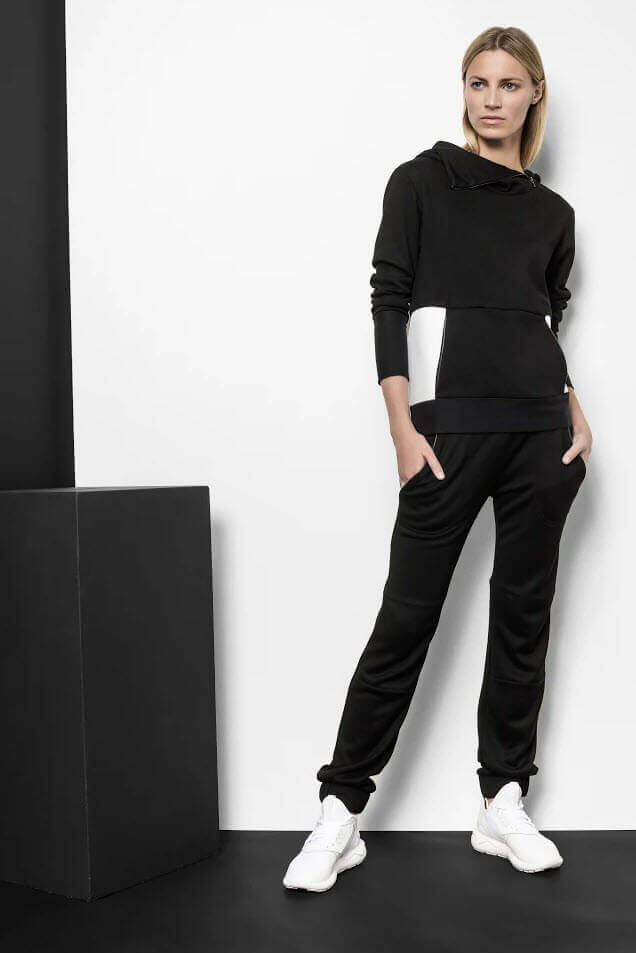
Designer and product developer at Pyrates smart fabrics, Pilar Tejada López, tells Jessica Owen about the company’s fabrics and collaborations.
What started out as an athleisure brand, Pyrates smart fabrics has now transformed into a company that specialises in creating natural, health-benefiting fabrics that help care for the wearer’s body.
“Pyrates was founded in 2014 by Regina Polanco who is now the CEO of the company,” says Pilar Tejada López, designer and product developer at Pyrates smart fabrics.
She continues: “At the time, Regina was living in Switzerland and she noticed that many young people were wearing tracksuits, but they were quite ugly. So, she decided to create elegant athleisure wear.
“However, after the first collection launched, Regina realised that the brand was not going to survive because so many big brands were starting to offer streetwear and athleisure wear, too.”
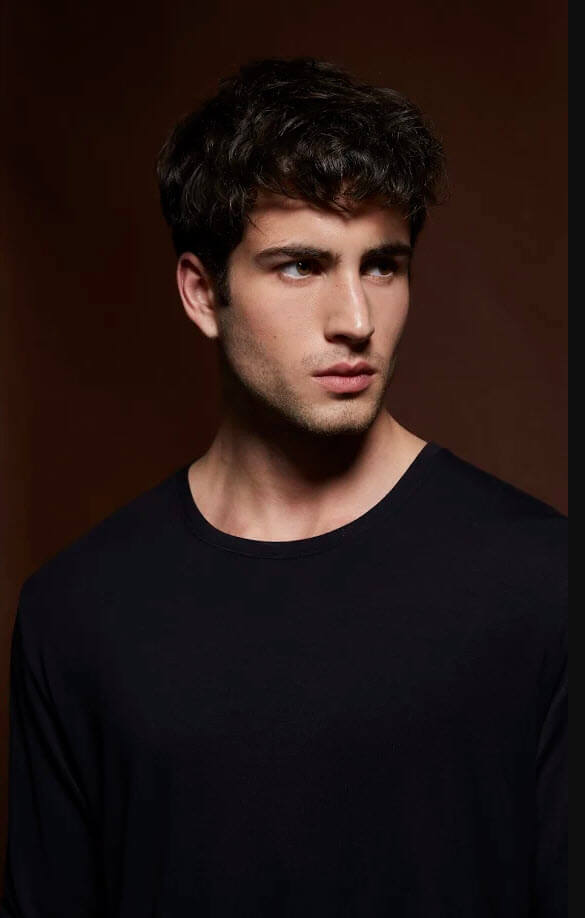
Following the initial launch of Pyrates and the realisation that the brand would not survive on being an athleisure brand alone, three years of R&D then followed. Polanco started to read up on how the environment can harm the body through pollution and through radiation from phones and UV, and so Polanco started to contact textile companies across Europe to learn more about natural smart fabrics.
“People take good care of their bodies now through sports and watching what they eat or even through wearing simpler cosmetics, but no one thinks about this when getting dressed,” adds Tejada López.
With this in mind, the company launched its Pyratex fabric range just over a year ago. Pyrates smart fabrics now offers ready-made garments made from the Pyratex fabric range in addition to its B2B business whereby the brand collaborates with others using Pyratex.
Pyratex fabrics
At the moment, the company has five different types of fabric – Pyratex Health, Pyratex Power, Pyratex Veggy, Pyratex Freshness and Pyratex Cosmetic.
“We have five different fabrics at the moment and they are made with four different fibres. All of our fabrics are made from natural vegetal fibres, too,” says Tejada López.
“We use a vegetal fibre for our Pyratex Health range, for example. We are currently patenting the textile use of this because we are currently the only ones to make a fabric using this fibre.”
Pyratex Power – This fabric is made from Tencel and has sweat management, antibacterial and anti-irritation properties. It is more absorbent than cotton, softer than silk and cooler than linen, and is ideal for making sportswear.
Pyratex Health – This fabric is manufactured from a natural vegetal fibre containing protein and 18 different amino acids. It helps to relax the body and boost the wearer’s immune system. The fabric is soft and flexible and also protects from UV rays.
Pyratex Freshness – Manufactured from cellulose fibres extracted from bamboo, this fabric helps to thermoregulate the body while providing antiperspirant properties. It is specially adapted for making fitted clothing.
Pyratex Cosmetic – This fabric is made from algae, using the SeaCell fibres harvested from the fjords in Iceland. The inherent mineral salts, vitamins, amino acids and iodine within the algae fibre provide detoxifying and skincare properties. The fabric also helps to neutralise free radicals as well as having an anti-inflammatory and anti-allergic effect.
Pyratex Veggy – Made from cellulose extracted from bamboo, this material is soft and comfortable. It has temperature management and insulating properties and is very breathable.

“The fibres used for our fabrics have these properties naturally within them. We don’t apply treatments and we don’t apply chemicals. The properties come from the fibre and so they don’t wash away,” explains Tejada López.
“It can be difficult keeping these properties throughout the production process from fibre to the final fabric, but we always test our fabrics to make sure the properties have not been lost along the way.”
Although the company was founded in Switzerland, Polanco is actually Spanish and moved the company to Madrid, Spain, a few years ago. The R&D phase was carried out all over Europe and the company’s factories are based in Italy, although there are some factories based in Portugal and Spain, too.
Collaborations
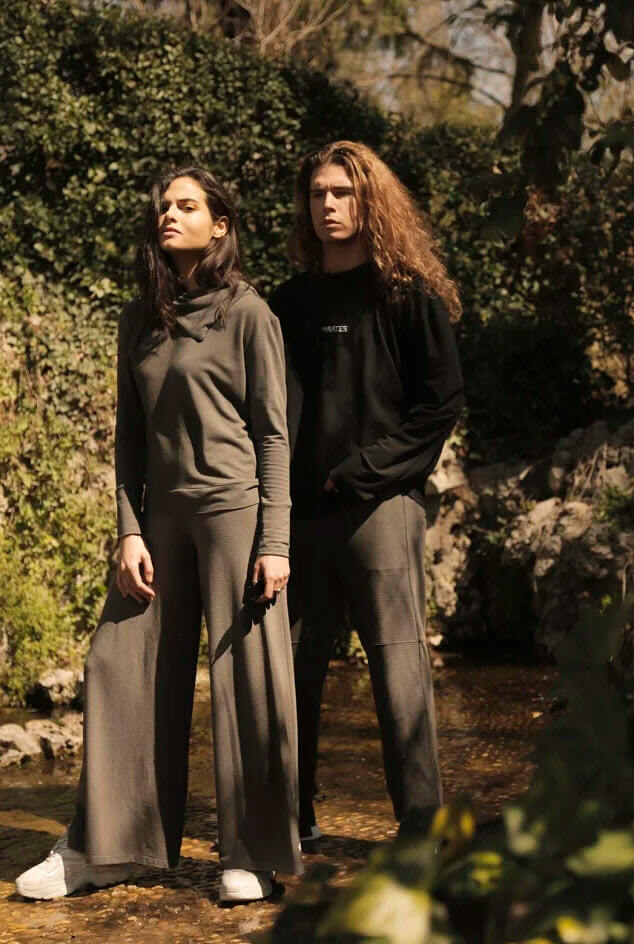
The company also collaborates with other brands to launch additional collections.
“We don’t want to get lost in the supply chain and become another fabric supplier, so that’s why we work on collaborations.
“For example, we started selling our fabric from one metre because we know what it’s like to try and make the prototype. Suppliers don’t want to sell you less than so many metres of fabric, so we always offer that option, which means that a lot of smaller brands contact us and then when they grow, they grow with us,” says Tejada López.
Right now, Pyrates smart fabrics collaborates mainly with three types of brands – athleisure wear, pret-a-porter and accessories.
“Currently, we are working on a collection with Asics, so that will be a sportswear collaboration where we are helping to co-design using our fabrics. Then, accessories wise, we have an ongoing collaboration with Haute Hijab in New York, US.”
Haute Hijab makes under scarves. The company teamed up with Pyratex to offer a more luxurious line of under scarves using Pyratex Freshness.
“The scarves sold for about US$50, which is quite a high price for what Haute Hijab usually sells their products for,” adds Tejada López. “But they sold out in under 24 hours and they’re now re-launching for the second or third time.”
In the next month or two, Pyrates will launch other collections with bigger brands and they are looking to introduce some new fabrics to the range in 2019, too.
“We’re continuously working on new fabrics and we’re very centred on innovation.”
Sustainability focus
With the fashion and textile industry supposedly being the second largest polluting industry in the world after oil, companies are now under pressure to become more sustainable, and Pyrates smart fabrics is working towards this, too.
“Obviously, the fashion industry is one of the most polluting industries in the world, and we try hard to make our brand as sustainable as we can throughout every step of the process,” Tejada López explains.
“For example, aside from our fabrics being natural, the yarner is not far from the weaver. We try and reduce transportation time, so that there’s less pollution and we try and find factories that aren’t far from each other.”
Asics is also trying to be more sustainable, and both companies through their collaboration are working on measuring their CO₂ emissions. Additionally, Pyrates is working on offering its clients natural dyes which involve obtaining colour from bacteria, for example.
“Sustainability in textiles is still evolving, but there are little things that you can do, such as just making a product to last.”
Challenges
Developing a new fabric, let alone five, is not an easy task, and Tejada López explains that the biggest challenge is getting people to believe that the fabrics do what they claim to do.
“The biggest challenge as always when introducing a new product, especially something like our fabrics, is explaining how these properties work.
“Obviously, they’re all certified but you always have to explain that we’re not just claiming this, we’ve actually tested them, and we have the certification.”
Tejada López also says that it is challenging to show people that its product is worth the price. Pyrates’ garments are quite expensive as they are aimed at the luxury market, but it can still be difficult for people to justify the price.
The ultimate goal
For Pyrates smart fabrics, the ultimate goal is to help educate people about taking care of themselves while caring for the environment at the same time.
“We want to keep on innovating and be able to offer even more fabrics with other specific properties, perhaps for healthcare and for people with diseases and skin disorders,” says Tejada López.
“We also want to keep making the range bigger and to keep on collaborating with big brands and expanding people’s access to our technology, not only through our brand, but sharing it with other brands as well.”


