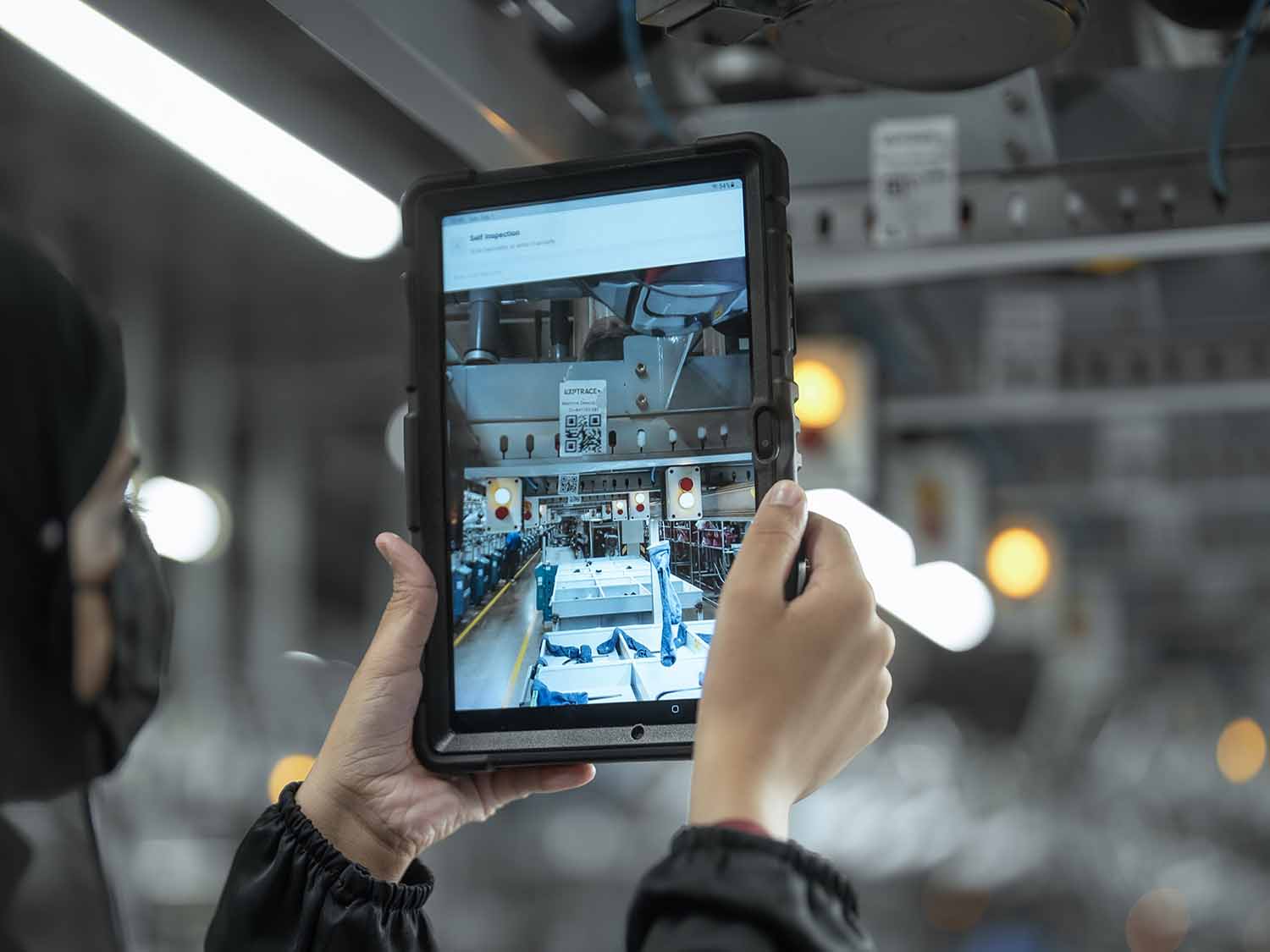
IoT platforms are springing up in every nook and cranny of the textile and apparel value chain. In the sewing technology sector, the recent Texprocess exhibition saw the commercial launch of Dürkopp Adler’s new offering in this area: Qondac.
As the biggest European manufacturer of industrial sewing technology, Dürkopp Adler’s customers are each operating tens of sewing machines across large industrial factories. Optimisation of these facilities has been a motivating factor in Dürkopp Adler’s development of the Qondac platform, which connects entire plants via high-tech servers, even crossing country borders, the company says.
Thomas Brinkhoff, marketing manager, Dürkopp Adler, comments: “This will open up a completely new horizon for the industry. We can collect details from all the machines, which wasn’t possible before. We can increase the performance of the machines, the visibility [of the process] and the quality of the resulting product, all by analysing the real-time data, reacting immediately to any problems or deviations from targets.”
With real-time analysis of the gathered machine data, the availability of machines and overall performance of the production facility can also be monitored, Dürkopp Adler states. For example, industrial sewing machines like the M-Type Premium lockstitch machine or the company’s new pocket welting sewing unit, class 756, can be adjusted centrally from the server, and maintenance processes can be digitised based on real usage.
Brinkhoff adds: “Real time data is important to the industry because if you have thousands of machines and you have to wait a day or a week for a report then it’s too late to react. […] The immediate reaction is essential.”

Dürkopp Adler says of feedback from its customers that the possibility to connect not only Dürkopp Adler machines but also all other machines in a factory by sensor technology or open access interfaces is also of huge benefit, enabling central monitoring of the whole production process.
Connections to ERP systems have also been developed. And, Dürkopp Adler has launched the new smart touch control panel Qondac Commander CSP. The panel for M-Type Premium machines can show on-demand HD videos and HTML pages and enables new communication options to the central Qondac server.
This innovation will be introduced step-by-step to other machines of the ShangGong Group, the mother company of Dürkopp Adler. Also part of the group are: Beisler, a specialist automation of trouser manufacturing; Pfaff Industrial, an expert in welding and shoe manufacturing technology as well as the manufacturing of jeans; and KSL, the robotics arm of the group, which develops machines for large scale textiles such as those used in the automotive industry.
“Digitisation will bring a lot of new processes to the industry,” adds Brinkhoff. “The logistics will change, and we will see more robotics. But to do this efficiently, we need data. Any robotics need a constant data flow, so you first need to connect the machines. The real change will be seen not so much in the sewing technology itself but in the handling of the material. This will change a lot.”
Mechanisation of fabric piece gripping and handling technologies have been slow to develop, and automation of the processes is set to be an even bigger trial. Brinkhoff says: “Handling these materials has always been a very big challenge. There are some technologies that are stiffening the material and some [effective] grabbing technologies but this will remain a challenge for a long time. We do not see a total breakthrough in the next two or three years because the innovation is so difficult – we need some time.”
For more on current fabric gripping technologies, visit wtin.com to access the “Fabric gripping technology for future automation” report.
Seam optimisation
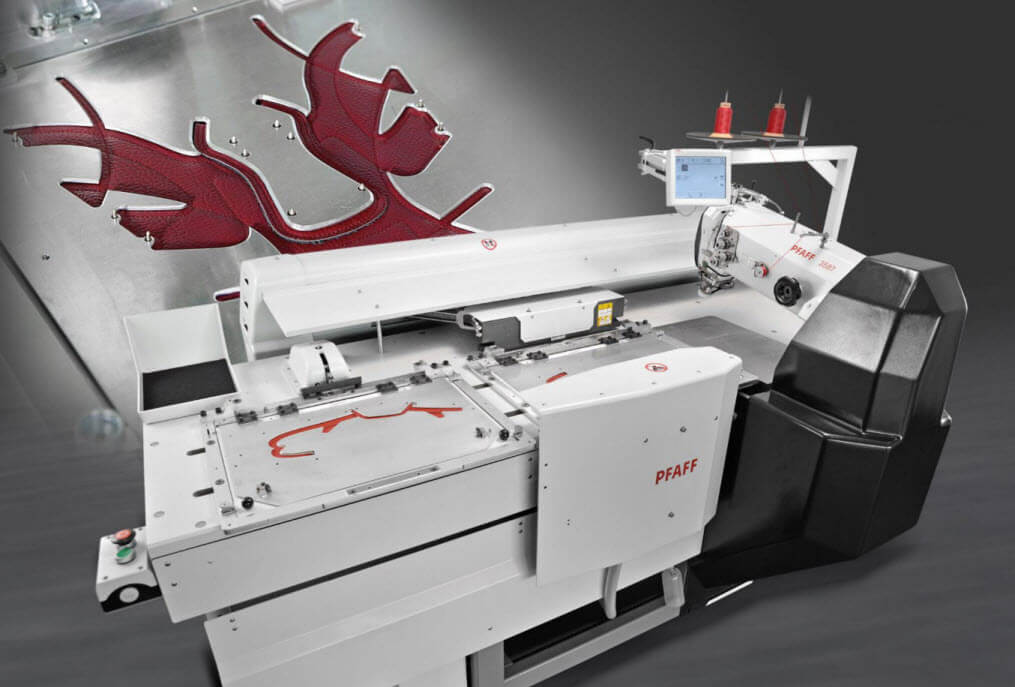
Pfaff 3587 CNC stitcher
Dürkopp Adler’s sister company, Pfaff, recently introduced the Pfaff 3587 CNC-large-area computer stitcher. With a sewing area of 500x300mm, the machine is designed for manufacturers for whom process reliability and production output are equally important, the company says.
At the core of the stitching automat is the intermitting material feed system featuring a patented drive. Because of the intermittent feed – feed stop when the needle enters the material – a positional change of the cuts in the clamp are avoided. This way, the Pfaff 3587 ensures the highest stitching accuracy, the company says, and high sewing performance, performing 3,200 stitches per minute with intermittent feed.
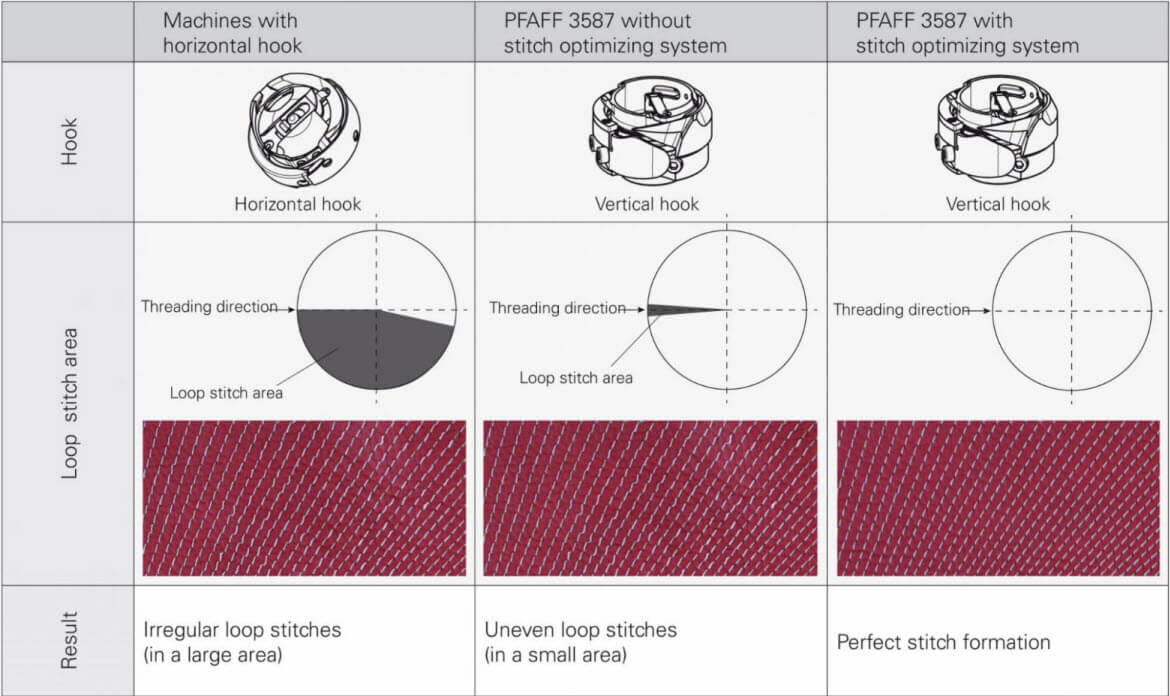
Based on a seam-optimisation system (needle-turning device with bobbin thread slide), this sewing technology “ensures superb seam quality and a perfect stitch pattern in multi-directional sewing operations,” says Pfaff. The needle-turning device in combination with the bobbin thread slide and the vertical hook is designed to prevent slip stitches in highly decorative seam patterns with a circular seam contour.
Pfaff adds that the system also includes a unique automatic clamp-changing system that permits a completely overlapping fully automated operation. Only the material still needs to be inserted manually.
With workplace ergonomics in mind, the machine also features a height adjustment, which may be altered to the respective operator at the push of a button.