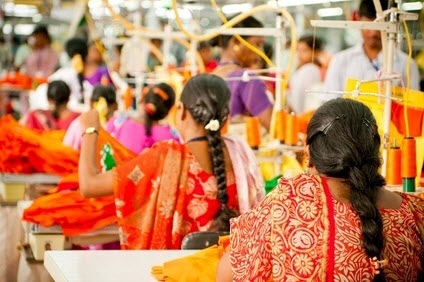
The State of Gujarat in India has issued a new game-changing policy towards making Gujarat the leading state for textile industry investment and production. With upcoming national elections looming, the new textile policy is women-worker friendly and is specially directed towards generating a high quantum of investment in the textile & apparel sector which, it is hoped, will in turn increase the employment rate in both the textile & apparel sector and in the state.
The 2019 policy has a focus on attracting new, larger investments into the textile and apparel industry, enhancing women workers’ employment and making the textile industry friendlier and more viable with subsidies on power tariffs etc. The hidden agenda is also to compete head on with a similar policy in neighbouring state Maharashtra. The new textile policy has strived to underplay this with respect to the cotton ginning and yarn spinning sectors.
With the launch of the new textile sector-friendly policy, the State of Gujarat is clearly aiming to retain its leadership in the textile projects investment by attracting US$14bn of investment in the next five years along with a new jobs creation target of one to 1.2 million. The other vital objective addressed in the new policy is the rationalisation of power and electricity costs. The state has been losing investments in its textile sector to the adjoining Maharasthra state as its power has been aggressively subsidised, and power is therefore around 50% of the cost. With such a power-centric subsidy, the State of Gujarat is trying to compete with Maharashtra’s textile hubs such as Tarapore and Bhiwandi and will also aim to stem the exodus of working powerlooms from south Gujarat to nearby hubs including Tarapore and Bhiwandi in the bordering Maharashtra.
The key and core objective behind the new investments, especially in the apparel and technical textiles sectors, is to target the complete cotton value chain, with a special focus on spinning, textile weaving/processing, technical textiles and eventually the apparel sector.
Arvind Group
Textile manufacturer Arvind Group, based in Ahmedabad in Gujarat, and with a turnover of US$1.7bn, has taken the lead on women-focused employment and announced the planning of mega-investments of around US$0.5bn, to create three apparel manufacturing hubs in and around Ahmedabad, creating 12,000 new jobs at each hub. These new mega investments, under the benefits of the new Gujarat Textile Policy, will help Arvind Group in the long-term to transform its business model to a more apparel focused model over the next 4-5 years.
One of the hubs is in the eastern state of Jharkhand. By setting up this textile-apparel manufacturing hub, global Arvind Group will not only gain substantially from the economic benefits of Gujarat’s new policy, but also create considerable ‘value addition’ in the textile manufacturing chain by converting nearly 50% of its fabric production into value-added garments over the next five years at the rate of three million apparel pieces per month for each new hub. Overall, Arvind Group thus aims to generate additional sales revenue of US$1bn per new hub, with an average profit margin of 10% on such sales. To this end, the company will also add and accrue economic benefit of US$56 per employee with a targeted 12,000 employees per hub.
The way forward
With its women-worker friendly incentives, the new textile policy aims to generate increased employment for women workers and, in the process, benefit the textile investors with wage subsidies to give a further thrust to the apparel manufacturing sector.
However, with an average 10-12% of workers in the state’s textile sector being female, there is a further need to encourage and subsidise the creation of women’s jobs at different manufacturing hubs. This is the main demand from the women of centric South Gujarat Productivity Council [SGPC], based in the textile hub of Surat.