
In a paper published in Scientific Reports by Nature, scientists from Surrey joined forces with Johns Hopkins University in Baltimore, US, and the University of California, US, to develop a material that has high stiffness and damping.
The new material could make travelling more comfortable and reduce the impact of collisions
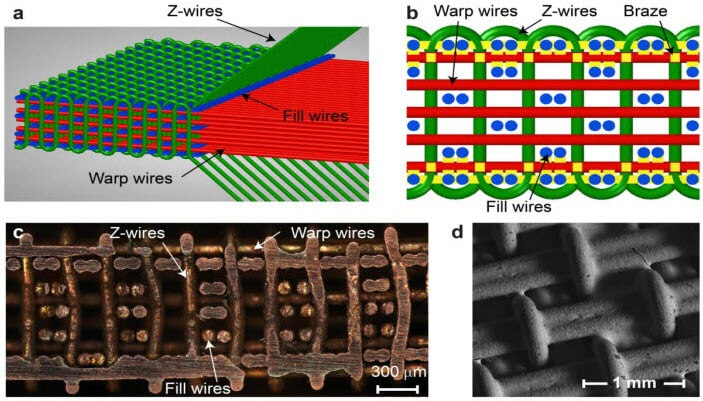
The team achieved this near-impossible combination in a material by using 3D woven technical textile composite sheets, with selected unbonded fibres – allowing the inside of the material to move and absorb vibrations, while the surrounding material remains rigid.
The researchers believe their new material could usher in a new wave of trains, cars and aircrafts, allowing customers to experience little to no vibration during their travels.
“The idea of a composite that resolves the paradox of stiffness and damping was thought to be impossible – yet here we are,” says Dr Stefan Szyniszewski, lead author of the study and assistant professor of Materials and Structures at the University of Surrey.
“This is an exciting development that could send shockwaves through the car, train and aerospace manufacturing industries. This is a material that could make the vehicles of the near future more comfortable than ever before.”
The researchers say that comfort in transportation will be improved because they have demonstrated experimentally that damping increases at high frequencies, especially as it approaches acoustic frequencies. Thus, the materials have a capacity to dissipate high-frequency vibrations and noise produced by vortices as the air rushes around the car’s body. The material also has a capacity to dampen the engine noise.
“I am very confident that you would feel a difference if you could drive a car incorporating the partially bonded 3D woven composite parts,” says Szyniszewski. “The architectures could also reduce the impact of collisions.”
Szyniszewski is currently looking for a car manufacturer who would be willing to take the risk and invest in a prototype component. The team has already had meetings and discussions with the mobility technology company, Magna.
“We are also developing a proposal with Surrey Satellite Centre for Space Applications,” says Szyniszewski. “Instrumentation in space is sensitive to vibrations, during the take-off and also during the operation of the satellites.”
Szyniszewski says he was inspired by the work on locally resonant structures by professor Chiara Daraio from The California Institute of Technology, California, US, and by professor Kevin Hemker who developed 3D woven lattice structures for heat exchanges and structural application in his DARPA funded project.
“Our mechanism occurred to me when I was working with safety-related subsystems for a nuclear power plant in the US about a decade ago,” he adds.
“Lightweight, non-safety related, flexible cable trays survived a massive earthquake in California. The subsequent study attributed their surprising resilience to high damping, which was experimentally shown to reach values up to 30% of critical damping. That experience made me think that such systems could be scaled down to meta-material level by combining the stiff, skeleton-like structure with long wires or lattices that are free to move and interact with the encompassing architecture.”


