Higher expenses, a shorter time-to-market, digitalisation and more complex packaging processes – the hygienic paper industry faces huge challenges. Partnering with the Packaging Pioneers is the Optima Nonwovens answer. This was the motto of an in-house show from June to August at Optima in Schwäbisch Hall. New concepts for modularity, automation, communication and service were presented by the Optima experts and the course for future technologies was set, in collaboration with the users.
Markus Urich, key account manager at Optima Nonwovens and organiser of the in-house show, explains more.
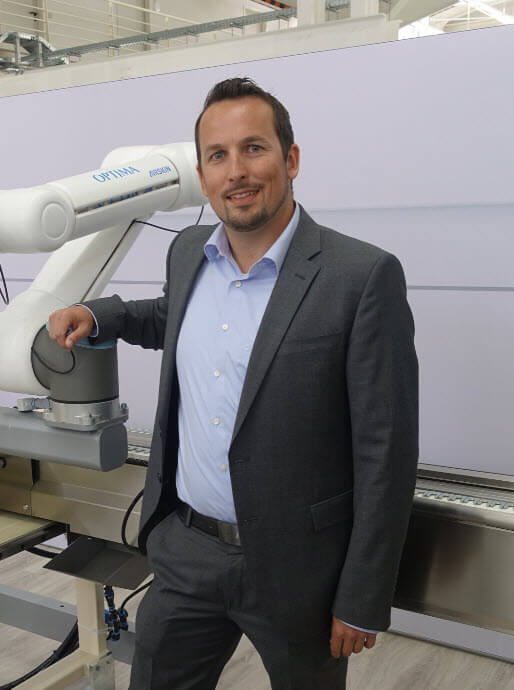
Markus Urich, key account manager at Optima Nonwovens
What is new with this show concept?
Until now, we showed existing technologies and looked far into the future during shows. This year’s in-house show Partnering with the Packaging Pioneers also looks at the future but with a healthy dose of realism. We want to include our customers early on to develop future concepts.
What are the objectives of Optima Nonwovens with the in-house show?
We want to start discussions with our customers at an early stage of the design phase and get their immediate feedback. We want to know if we are on the right track with our ideas for the future, therefore increasing the success rate of our products. It is also conceivable to start the dialogue for a development partnership during the in-house show.
Why is this so important?
The industry is changing. People are changing. Time is fast moving, and we are constantly confronted with new challenges. There are new, agile project approaches and methods. During these changes, we recognised that it is important to get in touch with the users of our machines and software solutions, in order to offer customised products. These were the reasons for our in-house show.
What are you trying to find out?
We are convinced that the concepts presented will give our customers added value. Whether or not our customers feel the same way will have to be seen during the in-house show. If the technologies are not what the customers want, we have the option, with this event, to find out early and change the course of our developments.
Why did you pick the topic modularity?
Our understanding of modularity is that the user receives a machine that adapts without difficulties to changing market requirements. The market and therefore the consumer needs are changing constantly, hence the machines must adjust easily and in a timely manner. We are successful in this area but believe we can and have to move the subject to an even higher level to sustain our success.
How are you going to present the topic at the show?
We are visualising our solution approaches with live demonstrations, a video clip, VR-applications in which the customers can observe the concepts in a virtual reality, and a presentation. With the prepared procedures and target-orientated questions, we want to check how customer orientated our designs are.
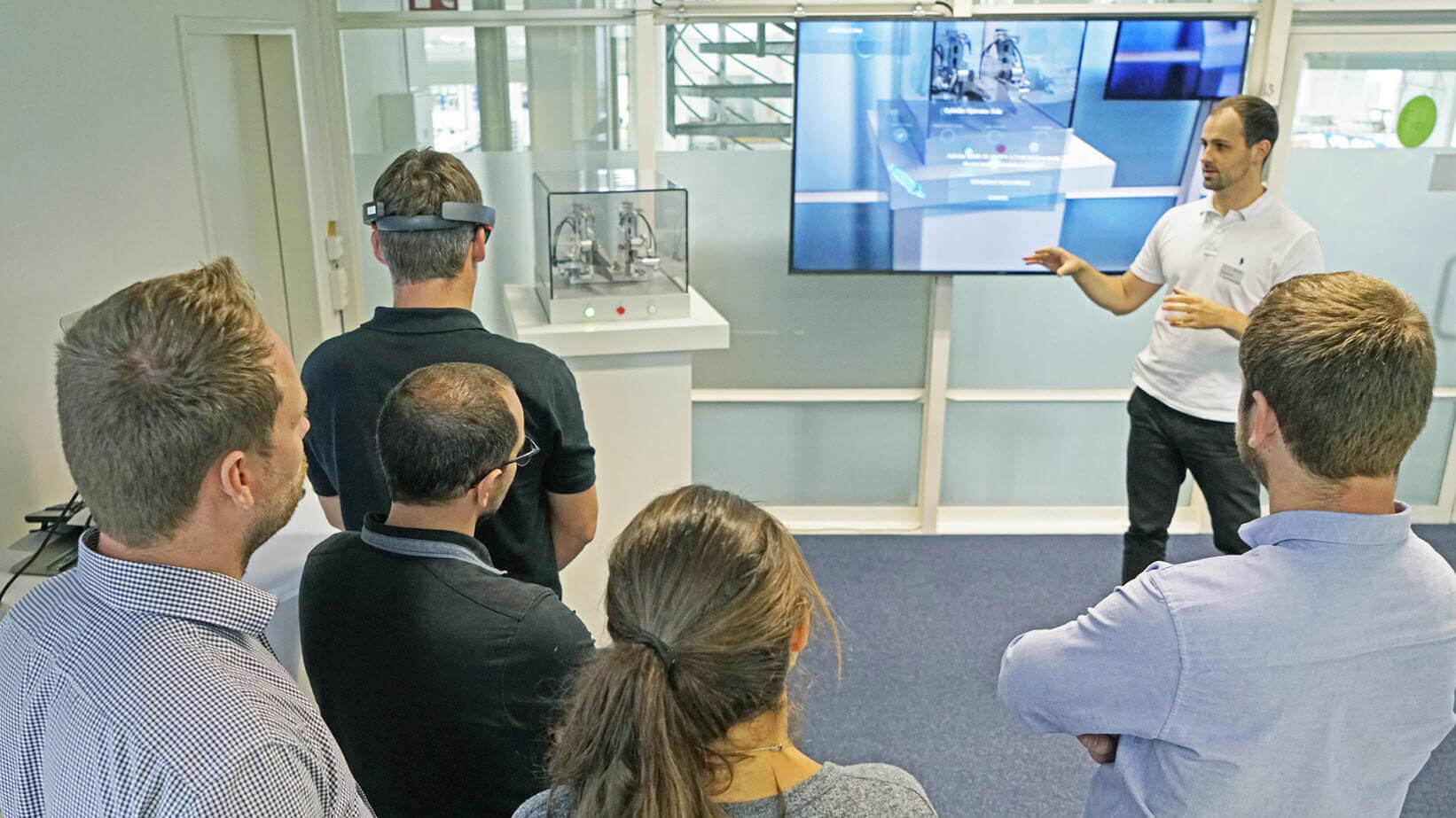
How does the communication of the future look First answers are offered by Dominik Roll. One possibility Augmented reality
Keyword automation – how is this topic implemented?
Most of our machines still have an HMI (Human Machine Interface) during the production. Due to faster running machines and high labour costs, the importance of reducing personnel is increasing. Automation can help to reduce the need for operator personnel, make it more efficient and, lastly, eliminate the need for operator personnel altogether. We presented the Optima Zero concept during our previous shows. We will revive this subject and look at one aspect more closely – the restacking of bags. This is the only work required at our machines and needs the most labour performance.
How can this effort be reduced?
We have two concepts. For the first concept the operator is supported by a cobot – a robot that is designed to physically interact with humans in a shared workspace. The operator will only fill a buffer while the cobot will take care of the restacking.
The second concept is an ‘end-to-end-solution’. This design has the objective to have no operator personnel at all. This might be solved with the fully automatic delivery of bags to the machine.
How are the customers experiencing these concepts?
With the help of use cases. We will introduce them, and our customers have the opportunity to take part. An automatic bag stacker and a cobot will offer the possibility to reproduce any application directly. Virtual reality supports the experience of the second concept.
What is the story behind the topics, communication and service?
Here, we will focus on Optima Total Care, continue with it and discuss it with our customers. However, we don’t want to just investigate the future, but also concentrate on developments at the beginning. We have many pilot projects with customers. We will gather feedback, show what is happening right now and discuss how we can further develop this concept. Continuous improvement is the keyword.
This includes, for example, a new human machine interface and a completely new operation philosophy. This is the concept we want to check on its practical application and future viability.
In other words: you want to know which Industry 4.0 solutions are really suited for industrial applications?
Absolutely correct, that is the intent. And, of course, how these solutions should be further developed in order to be intuitively operable. Industrial developments are, in part, still in its infancy. Augmented reality applications, for example, must be checked for practicality. We want to set an example and be pioneers and therefore, we need the feedback of our customers.
This sounds like a paradigm shift?
Yes, that is correct. We want to be more than just a machine supplier, we also want to be a service provider that is the correct contact for any concern. This is our aspiration and motivation.
Meanwhile, Martin Gärtner, group manufacturing director at Ontex, visited the in-house show with a five-member delegation. He describes his experience.
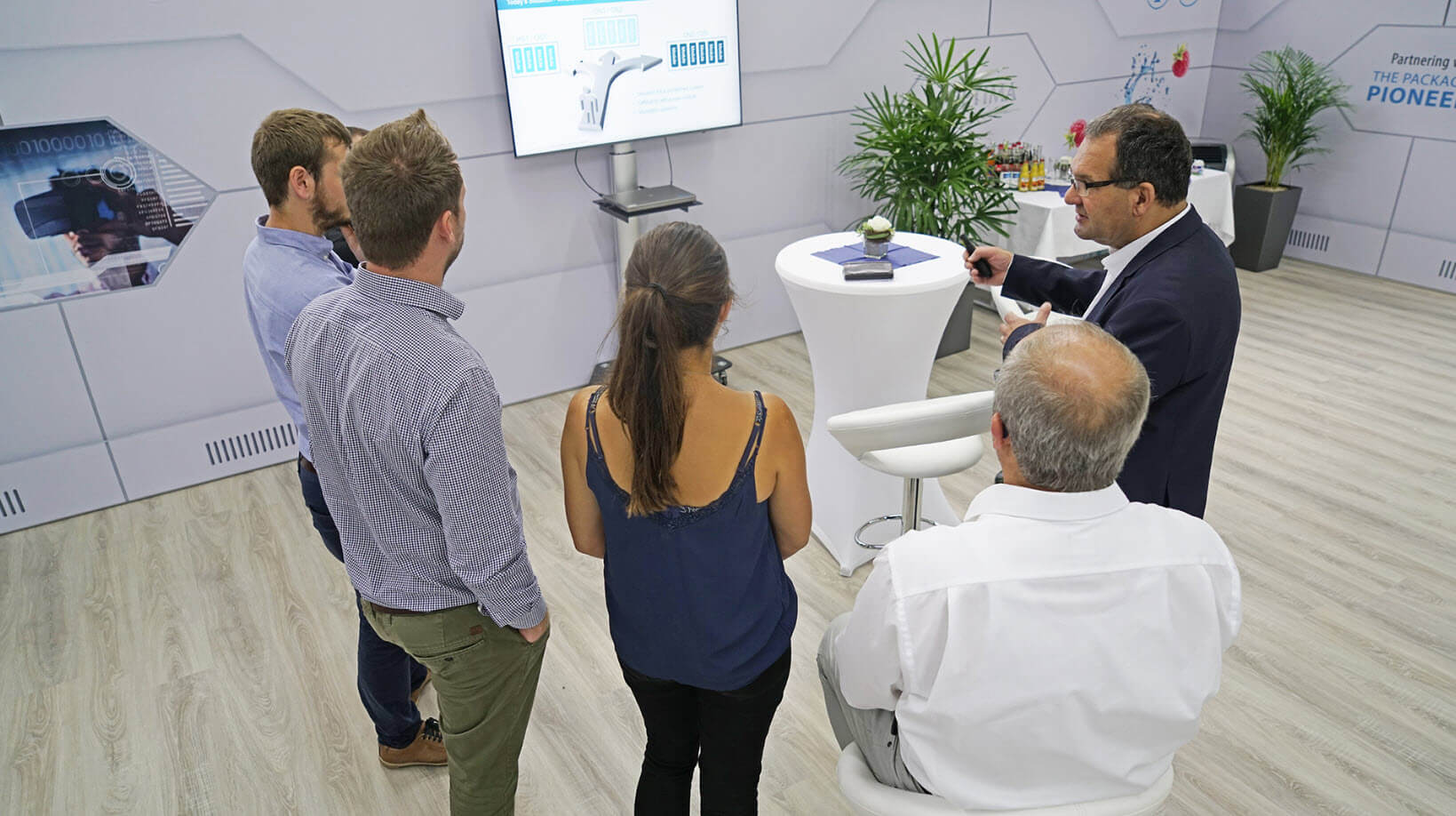
Martin Gärtner and his team listen, while Wilfried Laser, key account manager at Optima Nonwovens, explains how modular packaging machines are adjustable to new market requirements
“I didn’t have any specific expectations for the in-house show; I came to see what is new with Optima Nonwovens. I saw some approaches that are very interesting, and we will continue to follow them over the next few months and years. It is always interesting to be inspired by new approaches. We were especially intrigued by the cobot. When we saw how it placed the stack of pre-made bags onto the bag infeed conveyor, it made us think. This is an approach worth thinking about, especially for countries where the labour costs are increasing. The presentation with the three topics was also very interesting.
I can only recommend in-house shows since the focus is more on the customers and their requirements – different than large shows where one can say ‘hello’ and ‘goodbye’ and cannot discuss projects or problems in detail. Shows are their own industry. They are expensive for the exhibitor and the visitor. Therefore, in-house shows are a great alternative to conventional shows. I would prefer them anytime over larger shows, maybe even in combination with virtual impressions on the website in advance. I am sure this will become even easier and more common in the future.