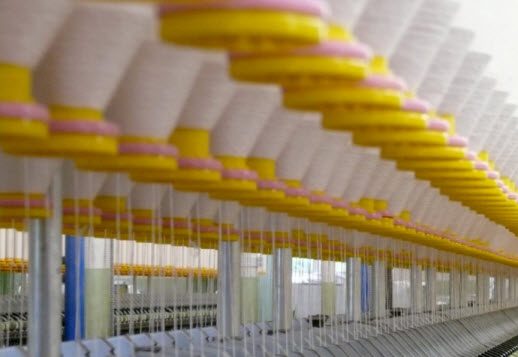
Spoerry 1866 – family owned and run since being established by two Spoerry brothers in 1866 – today successfully combines heritage, longevity and luxury. Added to this are innovation and forward thinking.
Peter Spoerry is the fifth-generation head of the business, based in Switzerland where the firm started. The company’s CEO and owner, he is an enthusiastic proponent of new ideas and developments, always keen to find new ways of developing a high-quality yarn which sells to the most prestigious names in luxury shirting and clothing fabrics.
The end product appears on catwalks and in famous collections from the Far East to Europe and the US.
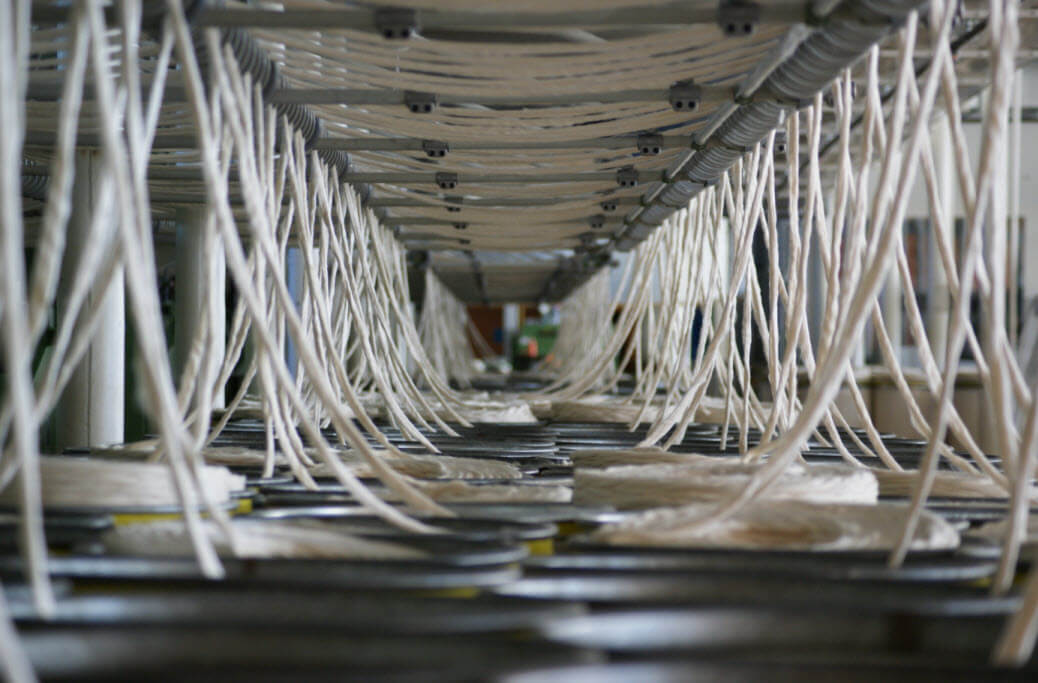
Spoerry 1866’s reputation is based on West Indian Sea Island cotton, at the very top end. “We still grow it in Jamaica exclusively for our own use,” says Spoerry, adding that it also uses luxury Giza from Egypt and other high-quality cottons.
Spoerry 1866’s boutique mill is the powerhouse for developing and testing new products and blends. The company’s well-known performance yarn is Ice Cotton, which can react to and affect the body’s climate in hot weather.
The development has proved extremely effective, finding favour with clients across the world. Sportswear technology has not yet been a specific focus but global moves away from synthetics and the personal climate regulation offered by Ice Cotton are boosting its appeal in many areas, leading to more research in the pipeline.
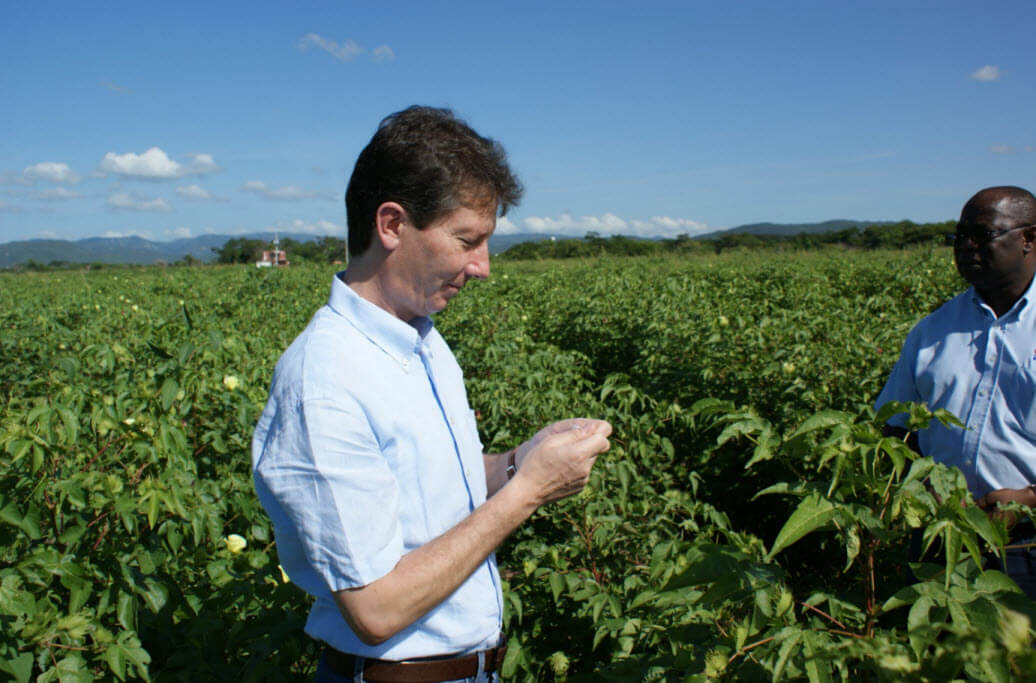
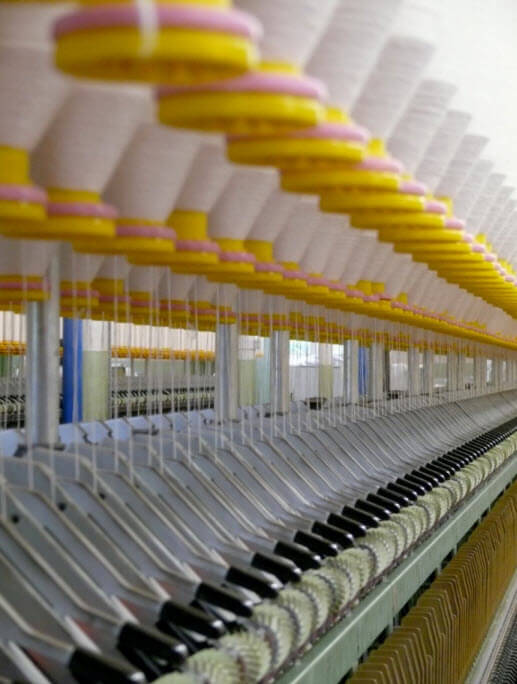
The boutique mill has been recently expanded, with investment in a new winding department and spinning equipment. Of one thing Peter Spoerry is adamant: “We do not want to grow too much – we want the right size for producing boutique, luxury yarn for our customers.”
He explains that the company works to make exact products for the market according to customer needs, with that level of service requiring enough leeway to provide a tailored product.
“Our customers are not buying huge quantities but need a special yarn which is used for very expensive items,” he says. “This mill is where we develop it. Ice Cotton was developed here. We have the knowledge of fibres and technical expertise for new creations, whether destined for weaving or knitting, and luxury products have been the Spoerry niche since its inception.”
Recent research initiatives by Spoerry 1866 have resulted in Cosy Cotton, the adjunct and opposite to Ice Cotton in that it provides extra warmth. “Basically, the idea behind it is the same, so using technology developed for Ice Cotton we find the right fibre and spinning technology to achieve the results we want,” says Spoerry.
Dyed yarn was introduced three years ago, produced mainly for the Asian market, with Japan, China and Hong Kong areas of increasing trade for the company.
Spoerry 1866 is also heavily involved in creating blends. These now include organic cotton, with the company receiving GOTS accreditation at the beginning of November. “Our aim is to produce yarn from sustainable origins and to make organic yarns for the luxury market,” Spoerry states.
He hopes that the granting of the GOTS license can dispel uncertainty among some customers. “There is quite a confusion among people with so many labels about,” he says, adding that he views GOTS as having a wide acceptance pertaining to standards and authenticity, providing a picture and also responding to demand which has come from the end consumers, “who don’t always understand the difference between sustainability and organic standards.”
Spoerry 1866 has introduced organic cotton blends including 50/50 qualities with cashmere, Merino wool, silk and linen, having developed techniques of spinning some previously incompatible fibres.
Choosing cotton is a specialised skill, Spoerry stresses, with many people not understanding different cottons which are grown. He explains that the skill is choosing the right cotton for blending with other fibres for knitting or weaving.
“For example, Sea Island cotton has unique characteristics – the staple is long, and the hand-touch is exceptional, very different from other cottons, but in fact we have to be aware that this source is not available in great quantities,” he says.
“The move to blending cotton with different fibres gives greater scope across seasons, which are not as clear-cut as they used to be. In reality, precise seasons do not exist even for Ice Cotton or Cosy Cotton. At Pitti Filati we might state such and such a yarn is for summer, but customers will arrive and quite possibly want yarns for different seasons.”
New methods of traceability are also an important focus, with future developments already in train, not yet on the market but in advanced stages. One such is Clear View, designed to enable brands to trace yarns back to the grower. “We will be able to trace each step to its origins and vice versa,” Spoerry explains. “For example, cotton grown in Europe – Greece or Spain, let’s say – can be followed right along to the spinning mill.”
In addition, a new joint venture with Swiss firm Haelixa seeks to track the whole identity chain in the near future.
Clearly, sustainability is a growing focus. “Our company policy is that we want to do business that is living with the times and the issues,” says Spoerry. “One pair of jeans can use 7,000 litres of water, and you ship the yarn to one country, it is made up in another and the price is inevitably subsidised. If we are going to run out of resources, we have to handle them differently, in a way that is more sustainable, so as an industry we have to be a lot more organised.”
Spoerry 1866’s mill is playing its part in leading developments on recycled cotton. “During production a certain amount of cotton goes to waste,” Spoerry explains. “We now save it. Before, it was sold cheaply to the paper industry or thrown away. We can now (re)use the actual fibre or sell it into the market – there are initiatives all around this.”
He adds: “We have many other developments in the pipeline, but they take some time to come to market, one or two years in R&D, and to manufacture and market it can take up to five years altogether.”
In times of great change Spoerry 1866 is evidently playing the long game.