2020 has been a rollercoaster of a year thanks to Covid-19 and the performance textile sector has not escaped the ride. Yet, companies are persevering, and new developments are keeping them afloat.
With the help of natural language programming, WTiN has assessed the sentiment of 329 articles spanning both internal and external sources regarding the performance textile sector. The sentiment average for Q3 2020 is +0.50 – a decrease from Q2 2020’s score of +0.56. This is on a scale of -1 to +1, where the extremes represent strong negative and positive sentiment, respectively.
Although the change in sentiment scores between the two quarters could be much worse, the decrease does represent a slight depression within the performance textile industry, probably due to the ongoing Covid-19 pandemic causing disruption and uncertainty. Many companies have said that recovery to pre-crisis levels could take between 12 and 24 months, and so it could be a while yet until the sentiment improves. However, the positive news is that the performance textile sector is faring slightly better than the rest of the industry. The wider industry’s sentiment score for Q3 2020 sits at +0.45 which is 10% lower than the performance textile market. This is probably because the pandemic has encouraged more people to exercise and look after their health, which translates into more activewear sales, new consumer trends, and an increased demand for R&D, all of which contribute to a slightly more positive outlook.
The ongoing effects of Covid-19
While on the subject of Covid-19, let’s have a look at this quarter’s sentiment score: in Q3 2020 the sentiment value for this theme was +0.32, a decrease from Q2 2020’s score of +0.49. One justification for this result is that back in Q2 there were quite a few stories highlighting how companies were positively responding to the pandemic, whether it be Nike and Adidas making PPE for healthcare workers or news that companies thought they were through the worse of the situation. However, in Q3 news started to emerge that a second wave of the virus was bound to occur in some parts of the world causing further uncertainty and exasperation.
The initial spirit to overcome the pandemic is also present when you look at the number of articles published around the theme of Covid-19. In Q1 2020, 36 articles were published, compared to 25 released in Q2 and only nine published in Q3. This suggests that the Covid-19 ‘hype’ is over, and that the performance textile industry is moving on and trying to adapt to the new normal, despite the fear of a second wave.
Companies are making efforts to move past the crisis
This notion that companies are moving on from the Covid-19 pandemic is evident when you look at the Q3 2020 sentiment scores for the themes of trade (+0.46) and companies and finance (+0.69). In Q2 2020, the sentiment score for trade had only just passed zero at +0.06 – that’s 86% lower than Q3 and a representation of the hit that the industry had experienced thanks to travel and import-export restrictions. However, since many restrictions have now been lifted, the situation seems to have improved significantly.
This is also the case for companies and their financial situations. In Q2, the sentiment score for this theme was +0.62, which was unsurprising considering the economic uncertainty at the height of the pandemic. However, in Q3, several organisations have announced collaborations and new facilities, which suggests that brands are rethinking their operations to move forward in a post-Covid-19 world. For example, Nufabrx has opened its new innovation centre, Footlocker has opened a store in Singapore, and DuPont Sorona and Sateri’s EcoCosy have joined forces to create innovative fabrics for athleisure.
Moving forward though, it is likely that these sentiment scores will drop once again as in many parts of the world a second wave of the virus is currently underway. However, both companies and consumers know roughly what to expect this time, and with the vaccination expected for 2021, it’s possible that the industry will fare the storm better this time around.
Industry events still taking a hit
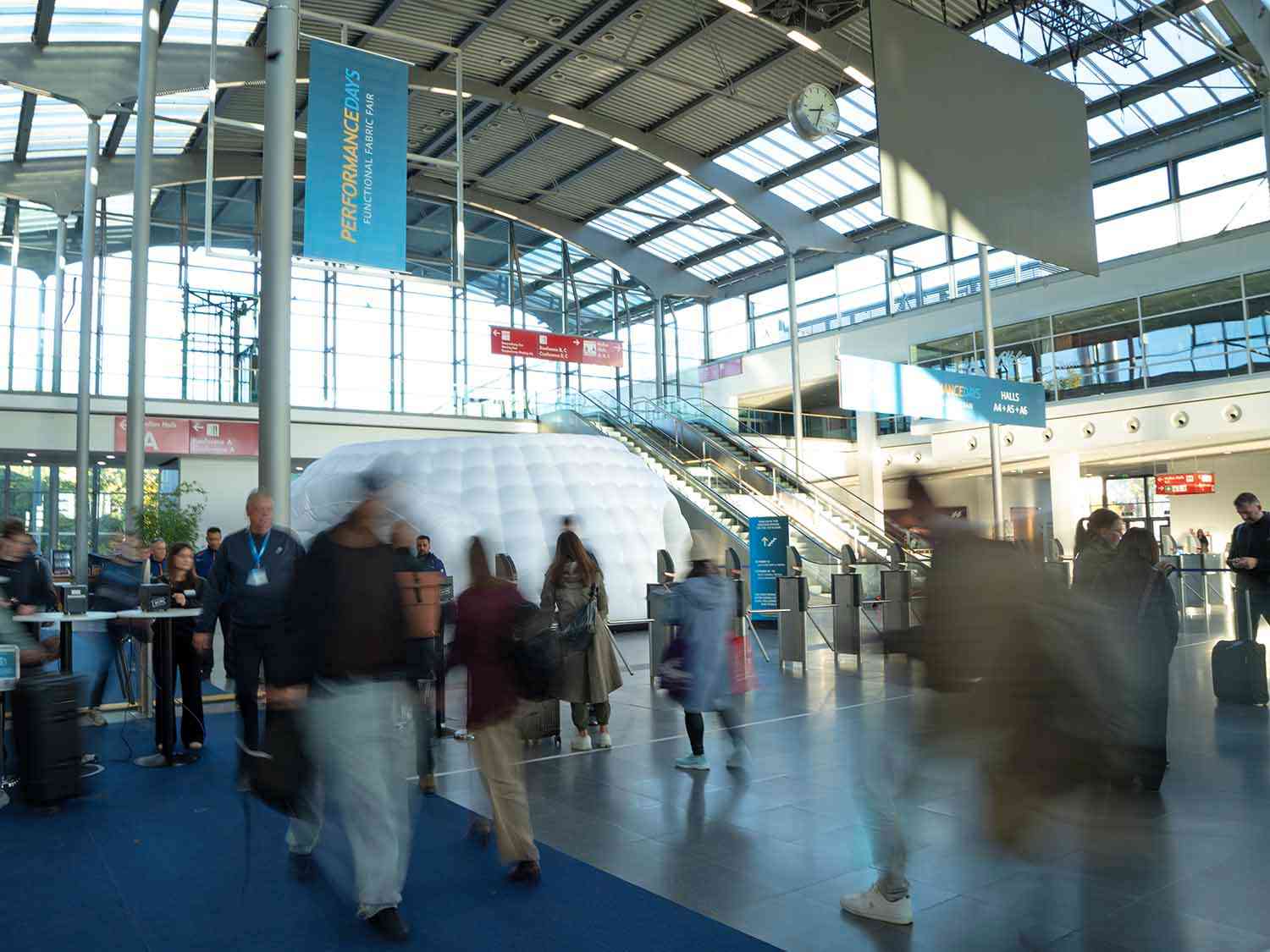
Back in Q2, the biggest driver of positivity was industry events (+0.79), however the sentiment has dropped to +0.62 in Q3. In the second quarter of the year, several events in the performance textile industry went digital, for example ISPO Re.Start Days and Performance Days both had successful online shows, however, there haven’t been as many shows in Q3 and news is already coming out about further cancellations and postponements of events in 2021. Most event organisers hoped that the virus would be under control by next year, but it seems that no/very few physical events will proceed until a vaccine has been found.
That said, there is one virtual trade show that made headlines in Q3: WTiN’s Innovate Textile & Apparel. The show (which took place in Q4 on 15-30 October) was launched in a bid to reconnect the entire textile & apparel industry in the Covid-19 pandemic, and news about exhibiting companies was released in Q3 on the run up to the event. Companies connected to the performance textile market that took part included Polygiene, Karl Mayer and NC State’s Wilson College of Textiles.
Sustainable developments persevere
Another area that has taken a knock in terms of sentiment is the theme of sustainability. In Q2 2020, the score was +0.65, but this has dropped to +0.46 in Q3. This is unusual because there were more stories about sustainable developments published in Q3 (47 articles) compared to Q2 (32 articles). However, it should be noted that sentiment is calculated by using natural language programming, and sustainability in the textile industry is often a subject that is talked about negatively before the innovation is explained.
As mentioned though, there have been several sustainable developments announced in Q3. For example, Asahi Kasei Advance has introduced a new sustainable fabric collection for sportswear and athleisure, branded ECOSENSOR, which combines high-performance with traceable production. Described as ‘a new eco high-tech force of nature’, ECOSENSOR has concentrated all of its key values into a nature-driven and high-tech fabric collection that respects the environment and human beings. Elsewhere, Puma, Living Colour and Streamateria have collaborated on a biodesign project called Designed to Fade. Products within the line are either dyed using bacteria or made from degradable materials, which are created in closed loops and can be manufactured locally and at short notice. In other news, BAM has launched its Get Fresh Challenge to encourage people to wash clothes less, Nike released its Nike Sportswear Recycled Canvas pack, and Unifi has reached its goal of recycling 20 billion PET bottles.
Continuing with new developments, the theme of R&D has kept a consistent sentiment score of +0.60 in both Q2 and Q3 2020. The fact that companies are continuing with their R&D efforts amid the pandemic is not surprising as one way in which these brands can stay ahead of the competition is through innovation, making better products that align perfectly with consumer demands. For example, the Taiwanese sporting goods manufacturer Atunas has created the Pretty Skin Light and Supercooling Shirt to give consumers sports apparel that is UPF50+ and easy to care for. Elsewhere, researchers at the Pritzker School of Molecular Engineering (PME) at the University of Chicago have produced crystals that can produce optical effects if stretched or strained. The colour-changing sensing system developed by the scientists may be used in smart coatings, as part of sensors or for wearable electronics.
Companies take a knock in 2020
Looking at some of the key players in the performance textile industry, the sentiment for these brands seems rather uniform. In Q3, Puma (+0.27), Nike (+0.11), Lululemon (+0.25) and Adidas (+0.24) all have positive scores, yet these aren’t near as high as they were in Q3 2019 where scores were well above +0.50. This is unsurprising though considering the unprecedented situation that everyone is experiencing now.
One company whose sentiment score is almost double others though is Asics (+0.46). In this quarter, the company continued its offline expansion amid the pandemic with the opening of its biggest store in India, it started producing face masks, and it announced that it had joined the RE100 – the global environmental initiative aimed at using 100% renewable energy.
Elsewhere, although Adidas’ score is much lower than this, the company has jumped up from its score of +0.15 in Q2. This is due to a couple of sustainability-related initiatives as the company has successfully placed its first sustainability bond and unveiled its Clean Classics footwear.
Another interesting company development to note concerns lifestyle brand Ghost Flower. Since 2018, Ghost Flower has created activewear with what it calls a ‘deeper self-healing purpose’. And now, the team of experts in Eastern medicine and acupressure, as well as in disciplines of dance, stretch, yoga, Pilates, and body movement, have developed an activewear collection for women focused on self-healing and empowerment having worked closely with the brand’s fashion designer and pattern maker.
What to expect moving forward
Looking ahead to Q4 2020, it is difficult to say what to expect seeing as though a second wave of the virus is underway. This situation will likely mean more disruption as stores could shut once more, but additionally Christmas is just around the corner which could mean an increase in sales for some companies. But from this current sentiment analysis, it seems that the pandemic has gone on for so long now that companies are no longer dwelling on the negatives but instead focusing on the future with the announcements of new facilities, innovations and sustainable initiatives. The Nobel Prize winning chemist Ilya Prigogine once said: “The future is uncertain … but this uncertainty is at the very heart of human creativity”, and this very much seems to be the case for this particular sector.
WHAT IS DISCOVERY CONTENT?
Discovery is our umbrella product name for a collection of features that use machine learning and natural language processing to help our customers discover more content throughout WTiN.com. Using the features you can uncover new trends and analysis and draw links between content that may not be immediately obvious. Every piece of content published by WTiN or aggregated by our systems is passed through natural language processes; the result is a rich metadata set that can be aggregated across sectors, themes, topics, companies and more. Core to Discovery is the ability to deep-dive into specific companies - look out for links and company logos to use this feature.
Sentiment is an expression used to describe whether an article (or collection of articles) presents an impression that is positive, negative or neutral about the company or other subject described. Click here to open the discovery panel for this article and deep-dive into its content and learn more about the overall capabilities of Discovery (including more details on sentiment analysis) here.