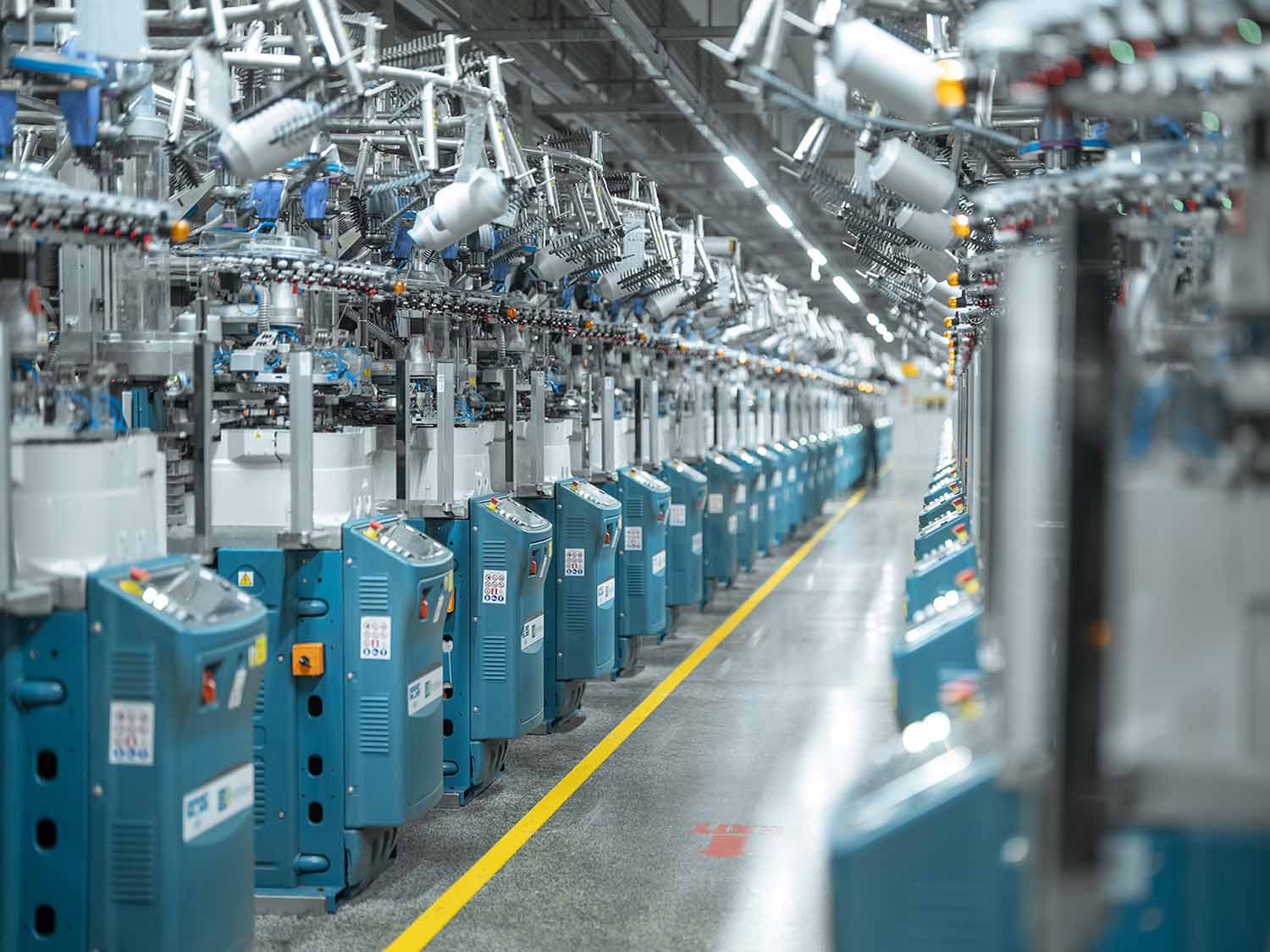
Otis Robinson explores the adoption of Industry 4.0 technologies and concepts around the globe and asks what solutions are available to address inaccessibility issues.
“Industry 4.0 is inevitable,” says John Oyekan, lecturer in digital manufacturing in the Department of Automatic Control and Systems Engineering at the University of Sheffield, UK. “As a human civilisation, we’ve always grown leaps and bounds when we embrace a new technology or a new paradigm.”
The term Industry 4.0, initially the title of a project in the high-tech strategy of the German government [1], was first introduced to industry in 2011 at the annual Hannover Fair/Messe. The German Industry 4.0 strategy involved the digitalisation of the manufacturing process, the use of automation technology (supported by self-optimisation, self-diagnosis and self-configuration), flexible mass production, customisation of products, the interconnection of machines and people (Internet of Things (IoT) and Internet of People (IoP) respectively) and information transparency [1]. Arguably the driving forces behind the project were growing shifts in consumerism towards individuality in products, increased efficiency and environmental responsibility among others.
Over the past decade since its introduction, the textile & apparel industry has posited the shift towards intelligent Industry 4.0-based manufacturing as unavoidable. Touted as the Fourth Industrial Revolution, it has snowballed interest since, and now most governments around the globe recognise the importance of implementing Industry 4.0 concepts in its manufacturing sectors.
Years of development later, Industry 4.0 is now interpreted as “the application of […] cyber physical systems within industrial production systems” [2] which can be characterised by interoperability, virtuality, real-time capability, decentralisation, service orientation and modularity in the supply chain [3], [4]. But with such advanced concepts and future-forward thinking come complex challenges and hurdles to overcome – so how accessible is Industry 4.0 really?
1. Benefits
The accessibility and availability of Industry 4.0 is driven by its benefits to industry. Some argued in only 2017 that this ‘paradigm shift’ towards intelligent manufacturing required more research to further develop the knowledge about the drivers and accomplishments of Industry 4.0 [4], yet only four years later they seem to be clearly defined, indicating its adoption is fast realised and rolling out. The four pillars pushing the implementation of Industry 4.0 are ‘organisational’, ‘technological’, ‘innovation’ and ‘operational’ drivers [4]. These benefits to process come in a handful of technologies.
First and foremost is automated, autonomous machinery, supported by machine-to-machine (M2M) communication – ultimately, this allows factories to run remotely thanks to their connected and communicative processes. Elsewhere, sensor technologies, whether applied to legacy machinery or innovative automation, further support businesses in operating remotely and in a decentralised way. Coupled with artificial intelligence (AI) or machine learning (ML) technologies, data can be gathered by sensors to allow smart analysis of processes and increase efficiency. Simply, by implementing this technology, businesses can enable remote monitoring of garment manufacturing lines, predictive maintenance of machinery to avoid downtime, and intelligent quality control systems that arguably benefit speedy, faultless production. Other processes include intelligent trend forecasting using AI, a digitalised product development workflow, smart analysis of supply chain and sourcing models and more.
These smart processes enable cost savings. Accenture claims that 13% of businesses have realised the full impact of their digital investments, enabling cost savings and growth generation [5]. The report adds that an ‘optimal mix of technologies’ could save large companies up to US$16bn [5].
2. High-growth areas and drivers
With such immense benefits at the industry’s fingertips, it may come as a surprise that implementation is fairly slow. Around the globe there exists a race to reach the finish line, but some continents may have had a clear head start compared to others, suggesting there are unique circumstances driving adoption for some continents, yet stubborn challenges associated with accessibility for others.
2.1. Europe
Unsurprisingly, Germany was touted as a ‘clear front-runner’ in the race to Industry 4.0 by a global McKinsey survey [6]. Yves-Simon Gloy, partner at Gherzi Textil Organisation and lecturer at RWTH Aachen University, suggests this is because of its existence within Europe’s diverse playing field and the continent’s devout interest in future-proofing its industry through technology and innovation – specifically now, with the continent battling the Covid-19 pandemic and its reverberations throughout the regional economy.
In Europe, Gloy has observed that textile and home textile production plants have come up against rising demand because of supply chain interruptions. Faced with an inability to fulfil their orders due to limited capabilities, these companies are turning to Industry 4.0 and digitalisation, despite previously remaining firm in tradition. According to Gloy, the questions circling the European textile industry include: How can manufacturers reduce planning times? How can businesses reduce the loss of data written on paper that has become lost within an organisation? How can a manufacturing facility train new, inexperienced staff faster by using digital assistance systems? How can companies improve sales by using digital channels? How can industry predict or forecast material demand? How can industry better line up its suppliers? Or how can products be faster designed by perhaps removing the need for samples?
“[Overall], they are asking how they can raise their efficiency and are realising digitalisation and Industry 4.0 are things that are needed,” Gloy explains. “In Europe, there are now more and more digitalisation projects being started and implemented.”
This growing number of European Industry 4.0 frontrunners can be accredited to the environment around it. Europe is perhaps set apart from its global neighbours due to its diverse and incubatory environment for housing technological change. Europe is the home of machinery OEMs (original equipment manufacturers); textile production hubs remain strong in Portugal, Romania, Lithuania and other areas of Eastern Europe; the production of technical textiles is a key focus in Germany, and the German government itself was the first to implement Industry 4.0 into its plans for the future; areas like Belgium showcase a variety of research institutes and textile production focuses; and Italy, a fashion capital, boasts similar research capabilities.
“Europe has a strong base in mechanical engineering – all these textile machinery manufacturers, leading companies, a lot of them are European based. In the field of automation and electrical engineering, you find a lot of hidden champions and great companies in Europe.
“Maybe it’s this environment in Europe that is really helpful,” Gloy summarises. “Having machinery manufacturers, having textile producers, having research departments from different disciplines – it gives you an equal system where these things can be easily adapted and applied. Regions implementing these balanced systems have an advantage.”
Europe’s unique advantage is noted by other industry experts. Juliane Stephan, associate partner at Bain & Company, whose focus lies on performance improvements, digital transformations and Industry 4.0, says Europe has been faster to adopt Industry 4.0 technologies than other regions because “many factories in Europe already operated with production systems that emphasise operator empowerment and drive continuous improvement, alongside a basic IT infrastructure that allowed them to adopt Industry 4.0 innovation in a more targeted and accelerated way”.
However, one major bottleneck to Industry 4.0 within the European textile industry is a lacking technical workforce that can implement and maintain advanced digital processes. Gloy notes that the technologies, concepts, ideas and use cases are already available, but facility and staff capabilities are a different issue.
2.2. North America
The aforementioned global McKinsey survey showed the US, along with Germany, was another ‘clear front-runner’ when it comes to adopting Industry 4.0 technologies and concepts [6]. However, from a practitioner’s perspective, Stephan says adoption in the Americas felt much slower than in other continents until very recently – for example, companies in the US less often took a holistic perspective on Industry 4.0 as a way to transform their business, instead focusing on smaller pilots that were often not scaled.
Traditionally, the US has been good at scaling and driving new business models, notes Gloy, which means the new digital approach has arguably become a key focus in the US industry. Its main hurdle is engineering and technology, he adds, because the US does not have as much of a stronghold in the global market as Europe does when it comes to the production of original equipment, and it has traditionally imported goods rather than manufactured them. Nevertheless, Gloy predicts that this has led to an immense drive for reshoring and localised production, which may arguably strengthen its Industry 4.0 footprint and digitalisation strategy. Stephan concurs, explaining that innovation in advanced automation, advanced analytics and artificial intelligence (AI) have the potential to enable a “cost-neutral reshoring of manufacturing [back to] the US”. One study notes that the declining cost of robotics mean companies can automate processes and opt to move supply chains closer to home, and a first wave of relocation is ‘already underway’ [7]. Perhaps this movement will strengthen its position in the global textile & apparel market.
As seen in Europe, the US has put efforts into its Industry 4.0 strategy. Over the last couple of years, Stephan says regions around the US have been encouraged towards adopting Industry 4.0 in a handful of ways. Firstly, public private partnerships (often driven by universities or research institutes focused on creating forums for best practice exchange) have provided training, education and funding for research projects. For example. Stephan references Manufacturing USA, Notre Dame iNDustryLabs, MSU Denver Advanced Manufacturing Sciences Institute, and MxD. Elsewhere, tax incentives, allotting research funds to businesses or funding accelerators are other ways the US has supported industry and its players, and Stephan even suggests investments in innovative yet arguably fringe infrastructure like 5G connectivity will prove important for Industry 4.0.
Unavoidably, the North American region was further driven towards digitalisation during the Covid-19 pandemic. It was eager to adapt to new safety measures, operate factories with less leadership via technologies like proximity sensors and the IoT, and increase proactive and real-time decision-making during periods of interruption and deviation from the typical manufacturing schedule. Elsewhere, the ability to ‘cut out the middleman’ – where manufacturers can ship directly to end-consumers, an attractive capability to cater to the demanding North American apparel market – and the ability to personalise products have proven essential drivers of Industry 4.0 in the region.
2.3. Oceania
Across the North Pacific Ocean, Australia’s manufacturing industry is similarly set to “evolve into a highly integrated, collaborative and export-focused ecosystem that provides high-value customised solutions within global value chains” between now and 2040, according to a report by the Commonwealth Scientific and Industrial Research Organisation (CSIRO), an Australian national science research agency aiming to “solve the greatest challenges using innovative science and technology” [8].
Again, as witnessed in Europe and the US, it’s a credit to Australia’s success in the adoption of advanced manufacturing is the support of its government. Austrade, the Australian government’s Trade and Investment Commission is supporting advanced manufacturers across multiple sectors. Prior to Covid-19-related travel restrictions, Austrade had partnered with the Australian Manufacturing Growth Centre and set up plans to ‘lead a delegation’ of the country’s companies to the 2020 Hannover Messe trade show, the world’s leading industrial technology show [9].
Aside helping to usher its players into the spotlight of Hannover Messe, Austrade doubly offers financial support to push its manufacturing sector. For example, its exportation of manufactured goods reaches around AU$96.1bn (almost US$75bn), although 5% of firms drive 99% of this amount. To help other businesses respond to overseas demand and expand their export base, the Export Market Development Grant (EMDG) Scheme is said to have “underpinned the growth of [these] companies” [9]. Thus, the region can be assumed to be fully on board with the progression of its manufacturing sector, evidenced by its government’s financial and R&D focus on the innovation and exportation of its supply chain.
“The Fourth Industrial Revolution is transforming the prospects for Australian manufacturing. Inventiveness and agility are displacing scale and logistics as the key determinants of global competitiveness,” said the Australian Trade and Investment Commission [9]. “As a nation of innovators, Australia’s global prospects in manufacturing have rarely looked better.”
2.4. Asia
In Asia, the adoption of Industry 4.0 has also been considerably high, driven by a desire for efficiency, environmentalism and competition. Areas within the continent are aware of the stakes when it comes to staying ahead of the curve. As Industry 4.0 interest proliferates along global supply chains, informed by consumer demand, it is considered ‘a disadvantage’ if an enterprise cannot digitalise to stay up-to-speed, says Ching-tang Huang, director, department of processing technology development at the Taiwan Textile Research Institute (TTRI).
In Taiwan, in 2015, Industry 4.0 was included in the national development policies of the Taiwanese government. To promote the technologies and processes involved in Industry 4.0, Huang says the Taiwanese government began to “promote the intelligent manufacturing of industry” in 2016. Consequently, the TTRI aims to help Taiwan’s textile industry engage in Industry 4.0 and the institute cooperates with government policy to invest in this field.
“[We have] been dedicated to integrating digitalisation, data and automation into the Taiwanese textile industry and [developing] a variety of automated equipment and enterprise resource planning (ERP) systems for Taiwanese textile companies to achieve production optimisation,” Huang says. “In response to […] Industry 4.0, TTRI focuses on data convergence, which enables us to access a significant amount of data. With the proper application of data convergence to the manufacturing processes, the manufacturing process can effectively reduce the cost, improve the quality and enhance on-time delivery performance rates, and therefore enhance the reliability [of] businesses.”
The Taiwanese industry is doubly utilising Industry 4.0’s big data and AI capabilities to address the following key issues: marketing, management, manufacturing, production cost, on-time delivery rates and equipment reliability.
Additionally, businesses have made it a priority to diminish negative environmental impact. For example, in an article published by Textile 4.0 magazine, where Taiwanese original equipment manufacturers (OEMs) shared their experiences and knowledge of automation in the region’s textile industry, it became clear that Industry 4.0 technologies will be used to address environmental change [10]. This will no doubt increase Taiwan’s competitiveness in the global industry.
Other regions in the south of the continent are adopting Industry 4.0 to increasing their market potential and strengthen their competitive angle. For example, according to a recent McKinsey survey which “included more than 200 business leaders throughout the 10 countries” that make up the Association of Southeast Asian Nations (ASEAN), the “transformative potential of Industry 4.0 was confirmed” [6]. The report adds that Industry 4.0 technologies can allow ASEAN companies to become the ‘next leaders in their fields’ and compete with industry heavyweights such as China,” explains Stephan. “Meanwhile, China itself has embraced and invested in Industry 4.0 as part of its 10-year plan “as a remedy to increasing labour costs that could undermine China’s competitiveness as a manufacturing outsourcing location.”
3. Lacking accessibility
Although these regions boast thriving Industry 4.0 adoption strategies, other continents have major hurdles to overcome. First and foremost – and somewhat obviously – Industry 4.0 comes with high economic costs and monetary demands.
It is argued that Industry 4.0 does not take into account small-to-medium-sized enterprises (SMEs), who do not have the resources to invest in suitable technologies, cannot create a roadmap supported by consultancies [11], or face reluctance from stakeholders [12]. Even large brands and companies within Europe today face challenges convincing stakeholders to invest in the technology. Hugo Boss Textile Industries, based in Izmir, Turkey, shared with WTiN its intention to continue to build upon its Industry 4.0-based smart factory, but noted challenges around creating a financially interesting story, alongside implementation obstacles and a lack of use cases [13].
And the cost for similar roll-out plans outweighs SME capability. A literature review revealed that most large-scale enterprises “have rolled out investment plans, some of which […] exceed the turnover of SMEs in all cases (<GB£50m/>US$70m), which makes access to those technologies by SMEs very difficult” [11]. Even within Europe, where the Fourth Industrial Revolution is considered to be under way, figures taken in 2018 showed that 93% of the continent’s 25 million enterprises were micro-SMEs, which suggests a considerable chunk of industry faces inaccessibility [11]. Despite this, it can be argued that SMEs have greater fluidity and flexibility in their structures, that can be more adaptable to new processes, technology and ways of working whereas larger companies have much more rigid compositions that can take time to accommodate change and more ‘corporate hoops’ that must be jumped through.
Aside cost inaccessibility, the concept itself is undoubtedly complex: its applicability to several industries means different approaches are required from sector to sector [11] while unqualified workforces and a lack of regulation, standards and certifications on a political and governmental level are restricting some countries from fully developing digitalisation plans.
3.1. Africa
For continents including Africa, University of Sheffield lecturer John Oyekan says the challenges faced differ from the experiences of Europe, Asia or the Americas, because these issues are infrastructural in origin. This has led to dissimilar government initiatives around the continent, though he says all regions consider digital manufacturing a main goal. As such, in application, Industry 4.0 could facilitate an improvement to agricultural infrastructure and improve farmer prosperity throughout.
“In Africa, there’s a large agricultural base where local farmers [on large portions of land] cultivate and produce materials and crops,” Oyekan explains, “but the problem they are facing is that because of the hot climate and lack of storage facilities (an infrastructural problem), the majority of these crops end up rotting away or dumped. It’s a vicious cycle: farmers work hard to produce a lot but they’re not able to sell [that produce] efficiently to enable more prosperity or to move out of poverty.
“One of the ways by which Industry 4.0’s tools could help them is through better integration of these farmers, or better connections, with global markets and storage facilities.”
Oyekan says smart devices such as mobile phones could be used on local farms to log data. In application, this would allow farmers to alert neighbouring farms of pest problems or even highlight unsold produce and call on the local government to help support the farmer with the overflow and perhaps look for local buyers.
Similar improvements to raw material farmer welfare were noted by technology provider Infinichains, whose mobile phone blockchain solution was developed to improve the success of Indian farmers by allowing them to share their process data upstream, doubly improving the transparency of brands [14]. This is a great use case of how the implementation of Industry 4.0 technologies can improve the material supply chain both up and downstream for regional industry while supporting essential farm owners.
But due to its unique situational requirements, the African region’s Industry 4.0 roadmap may look entirely different to Europe.
“The way I see Industry 4.0 being implemented in Africa would be different from the way it’s done in Europe,” explains Oyekan. “I feel the driving force in Africa will be […] utilising the connectivity (of devices like mobile phones) to either collect data from the immediate environment, send it to each other or the government so the government can better support them, or connect them to storage facilities and the global market.”
On the contrary, North African country Egypt is a notable exception. The region has a long history in the global textile sector which seems to have encouraged its own infrastructural investments into digitalised factories. Numerous reports suggest the reindustrialisation of Egypt’s textile market, markedly based on the announcement of a project to build the ‘world’s largest textile manufacturing facility’ in the northern city of El-Mahalla [15].
Within the LE21bn (US$1.3bn) project in the North African country, the government will develop, modernise and merge 23 spinning, weaving, dyeing and processing companies, alongside comprehensive development in machinery, management, marketing and training systems [16]. Hesham Yawfik, Egypt’s Minister of Public Business Sector, said in a televised interview that the project will enable the country to compete and triple current production capacity [17]. These developments showcase the vital nature of government support in the digitalisation of industry.
3.2. South America
Although the North American continent has accelerated its pace of change over the past couple of years, the South American market faces a more complicated journey to Industry 4.0.
As it stands, the ABC region (Argentina, Brazil and Chile) tends to import new technologies rather than develop them, which can hinder the prospects of generating high value jobs [18]. For now, this may prove a blessing in disguise, as there are fears throughout the ABC region that manual work will come under increasing pressure from IoT and smart machines. It is estimated that in 80 years, robots and machinery will carry out half of the jobs performed by Chileans [18]. According to many sources and studies, Industry 4.0 and digitalisation will hit the ABC region’s labour market much harder than central European countries [18].
Currently, there are few examples of digitally transformed companies in the region, and there are pressures from the industry to begin a ‘business revolution’ to promote medium- and long-term economic, business and social dividends for companies, workers, governments and society throughout regions such as Brazil [19].
In fact, the impact of the Fourth Industrial Revolution on South America has been noted to be more ‘dramatic and disruptive’ than any other part of the world, and according to a Deloitte study, the path ahead of Brazilian companies will involve a complete business transformation driven by urgency [19] and competition.
3.3. Asia
Meanwhile in Asia, Huang says Taiwanese businesses face a lack of financial support both internally and externally. The Taiwanese government is increasingly aware of this issue and has started to allocate more funding to enhance the digitalisation of the textile industry, Huang claims. Additionally, there is a gap between current circumstance and the full potential of automation in the region’s textile industry – as of now, it remains predominantly labour-intensive, which Huang says is limiting large scale data collection and convergence.
Nevertheless, Huang says the need for an advanced industrial revolution in the textile & apparel industry is down to the complexity of the supply chain and is thus unavoidable: “The shift is so inevitable for all industry nowadays that it is just a matter of time for industries to implement digital transformation based on the complexity of the industry and depth of the data collection.”
4. Bridging the gap
“So, with all these challenges in mind, how do you go about actually supporting industries or regions in the adoption of Industry 4.0?” I ask.
Oyekan explains, as mentioned, that most adoption issues are tied to infrastructure, legacy equipment, ongoing unanswered issues or, most importantly, cost.
“There are two major bottlenecks to Industry 4.0 implementation. One of them of course is the skill issue. So, upskilling people to know how to sensorise systems, how to process the data using AI and what other technologies can be [brought together] to support [them] towards the Industry 4.0 journey.
“The second of the issues, of course, is capital investment. If the majority of these [regional manufacturing] systems use legacy equipment, it takes a huge capital investment to be able to move these companies into an Industry 4.0 environment.”
When faced with monetary obstacles, one of the ways struggling regions or businesses can usher themselves into digitalisation is not to wholly replace legacy equipment and infrastructure – which relies deeply upon stakeholder faith and funding – but to think about ways to upgrade the system in a non-intrusive way, which can be incrementally cheaper and keep directors happy.
“It’s about trying to look for ways that this equipment can be sensorised, without too much investment,” Oyekan explains. “You could attach sensor or IoT boards on legacy equipment to derive data from them. You could then apply AI or other technologies to process that data.”
This, combined with smaller changes coming to industries, such as the cheapening of IoT technologies (cloud computing is fast becoming a well-established technology that can be acquired at a low price [11]), could allow smaller enterprises to begin mining data from its legacy equipment.
Although companies may feel pressured to take a dive in at the deep end, Stephan adds that it is important to realise the effort is shared across the value chain: “Many challenges today are not solvable by one company alone but require multiple value chain partners to problem-solve together.”
Additionally, there are ways that local governments could be looking to take the first steps toward Industry 4.0, even if investment is a barrier for individual companies. For example, research suggests that existing technology roadmaps for pursuing Industry 4.0 are unclear, which “makes it difficult for organisations to understand the implications around the high diversity of technologies and concepts and, consequently to accomplish its vision and goals” [4]. As such, more research and fully thought-out roadmaps are required from a government and infrastructural level to support manufacturers.
5. Future context and inevitability
Deloitte points out that the current pace of technological advance is unprecedented and shows no sign of stabilising [9], [20]. It has also been said that the Covid-19 pandemic exacerbated the necessity for innovation in global supply chains – specifically, drawing attention to the need for Industry 4.0.
“Digital tools and Industry 4.0 give manufacturers the opportunity to reinvent themselves and double down on novel business models,” explains Stephan. “Novel business models focused on more personalisation, customisation, new ownership models and new business channels. […] It will be key for the future competitiveness of manufacturers.”
This epiphany is not just at industry level, but on a governmental level too. Local governments and their industries may soon find it unavoidable to get involved in the drive for digitalisation. Reports suggest industries should “ready themselves to embrace this potential industrial revolution to remain competitive in a turbulent and hyper-competitive market” [2]. Frontrunners Germany and US were noted to be successful in digitalisation due to government support in the shift and “clear policy efforts to encourage companies to adopt these technologies” [6].
“Governments are waking up to the realisation that in this competitive, connected world, being able to support the [local] manufacturing sector to be more efficient, more agile, more adaptive to disruptions on a global stage is very important,” says Oyekan. “In various countries around the world, manufacturing supports a heavy chunk of [a country’s] GDP, so governments are realising they need to support the manufacturing sector, so it is more agile and resilient to disruptions on a global scale.”
Oyekan adds that academia is also at the forefront of the drive for Industry 4.0 adoption around the globe. Aside upskilling workers to use Industry 4.0 technologies, academia does much of the heavy lifting by developing new robust algorithms to process manufacturing data streams.
“As a result, both academia and the government need to work hand-in-hand to ensure the manufacturing sectors of various countries are resilient and more able to move towards Industry 4.0,” says Oyekan. “Every government should be prepared for Industry 4.0 and start thinking in advance as to how they can support industries in taking up these new [technologies].”
Of course, complex paradigm shifts are always easier said than done, and accessibility will remain a gargantuan issue for many global industries.
“One of the biggest challenges governments will have to deal with is how do we ensure that we have an infrastructure to support this move towards Industry 4.0,” Oyekan concludes.
“If governments do not take it up, then what’s going to happen to their countries is that they might get left behind, and that [infrastructural] gap will increase. It’s something that governments need to take seriously.”
References
[1] Bundesministerium für Bildung und Forschung, “Industrie 4.0 - BMBF,” Bundesministerium für Bildung und Forschung. https://www.bmbf.de/de/zukunftsprojekt-industrie-4-0-848.html (accessed Feb. 03, 2021).
[2] M. Ghobakhloo, “The future of manufacturing industry: a strategic roadmap toward Industry 4.0,” J. Manuf. Technol. Manag., vol. 29, no. 6, pp. 910–936, Oct. 2018, doi: 10.1108/JMTM-02-2018-0057.
[3] M. Hermann, T. Pentek, and B. Otto, “Design principles for industrie 4.0 scenarios,” 2016.
[4] C. Santos, A. Mehrsai, A. C. Barros, M. Araújo, and E. Ares, “Towards Industry 4.0: an overview of European strategic roadmaps,” ScienceDirect, 2017, doi: 10.1016/j.promfg.2017.09.093.
[5] Accenture, “Industry 4.0 | What it is & Why it Matters | Accenture,” Accenture, 2021. https://www.accenture.com/gb-en/insights/industry-x-0-index?c=gb_gb_industryxo_10348895&n=psgs_generic_0818&gclid=EAIaIQobChMI4--1z4nf7gIVlWDmCh0CoQGgEAAYASAAEgJfIvD_BwE (accessed Feb. 10, 2021).
[6] I. Arbulu, V. Lath, M. Mancini, A. Patel, and O. Tonby, “Reinvigorating ASEAN Manufacturing for the Future,” 2018. Accessed: Feb. 18, 2021. [Online]. Available: https://www.mckinsey.com/~/media/mckinsey/business functions/operations/our insights/industry 4 0 reinvigorating asean manufacturing for the future/industry-4-0-reinvigorating-asean-manufacturing-for-the-future.ashx.
[7] S. Rajan, J. Hinkel, A. Thakker, and R. Tsang, “Shock-Proof: How to Forge Resilient Supply Chains,” Bain Co., 2020, [Online]. Available: https://www.bain.com/insights/shock-proof-how-to-forge-resilient-supply-chains/.
[8] CSIRO, “Advanced Manufacturing Roadmap,” 2020, Accessed: Feb. 24, 2021. [Online]. Available: https://www.csiro.au/en/Do-business/Futures/Reports/Future-Industries/Advanced-manufacturing-roadmap.
[9] Australian Trade and Investment Commission, “Industry 4.0 transforms prospects for Australian manufacturing,” Aust. Trade Invest. Comm., 2020, Accessed: Feb. 18, 2021. [Online]. Available: https://www.austrade.gov.au/news/insights/industry-4-0-transforms-prospects-for-australian-manufacturing.
[10] O. Robinson, “Taiwanese industry wields automation to tackle environmental issues,” WTiN, Oct. 26, 2020. https://www.wtin.com/article/2020/october/261020/taiwanese-industry-wields-automation-to-tackle-environmental-issues/ (accessed Apr. 15, 2021).
[11] A. Cotrino, M. A. Sebastián, and C. González-Gaya, “Industry 4.0 roadmap: Implementation for small and medium-sized enterprises,” Appl. Sci., vol. 10, no. 23, pp. 1–17, 2020, doi: 10.3390/app10238566.
[12] O. Robinson, “Half of manufacturing leaders resistant to digitalisation,” Feb. 01, 2021. https://www.wtin.com/article/2021/february/010221/half-of-manufacturing-leaders-resistant-to-digitalisation/ (accessed Feb. 03, 2021).
[13] O. Robinson and M. Chaouch Orozco, “Hugo Boss Textile Industries explores its digital transformation,” WTiN, 2019. https://www.wtin.com/article/2019/may/070519/hugo-boss-textile-industries-explores-its-digital-transformation/ (accessed Feb. 24, 2021).
[14] O. Robinson, “Increasing traceability within the Indian textile value chain,” WTiN, 2020. https://www.wtin.com/article/2020/july/270720/increasing-traceability-within-the-indian-textile-value-chain/ (accessed May 18, 2021).
[15] H. McMullen, “Inside the ‘world’s largest’ textile facility with EFI Reggiani,” WTiN, 2021. https://www.wtin.com/article/2021/may/310521/inside-the-world-s-largest-textile-facility-with-efi-reggiani/ (accessed Jun. 03, 2021).
[16] O. Robinson, “Egypt to develop ‘world’s largest spinning factory,’” WTiN, 2020. https://www.wtin.com/article/2020/august/030820/egypt-to-develop-world-s-largest-spinning-factory/ (accessed Jun. 03, 2021).
[17] Egypt Independent, “World’s largest spinning factory to open in Egypt on 2021,” Egypt Independent, 2020. https://egyptindependent.com/worlds-largest-spinning-factory-to-open-in-egypt-on-2021/ (accessed Jun. 03, 2021).
[18] A. Jaques-Apke and J. B. Facco, “Industry 4.0 and the future of work: Argentina, Brazil, Chile and the EU – state of affairs, opportunities and challenges – IFAIR,” IFAIR, Aug. 24, 2020. https://ifair.eu/2020/08/24/industry-4-0-and-the-future-of-work-argentina-brazil-chile-and-the-eu-state-of-affairs-opportunities-and-challenges/ (accessed Feb. 18, 2021).
[19] A. Rossato, “Is Latin America ready for the Fourth Industrial Revolution? | World Economic Forum,” World Economic Forum, 2018. https://www.weforum.org/agenda/2018/03/industry-4-0-fourth-industrial-revolution-is-latin-america-ready/ (accessed May 13, 2021).
[20] J. Hagel III, J. Seely Brown, and M. Lui, “From exponential technologies to exponential innovation | Deloitte Insights,” Deloitte, 2013. https://www2.deloitte.com/us/en/insights/industry/technology/from-exponential-technologies-to-exponential-innovation.html (accessed Feb. 24, 2021).