Hong Kong Polytechnic University (PolyU) has developed an intelligent fabric-defect detection system, WiseEye, which uses Artificial Intelligence (AI) to support quality control in the textile industry.

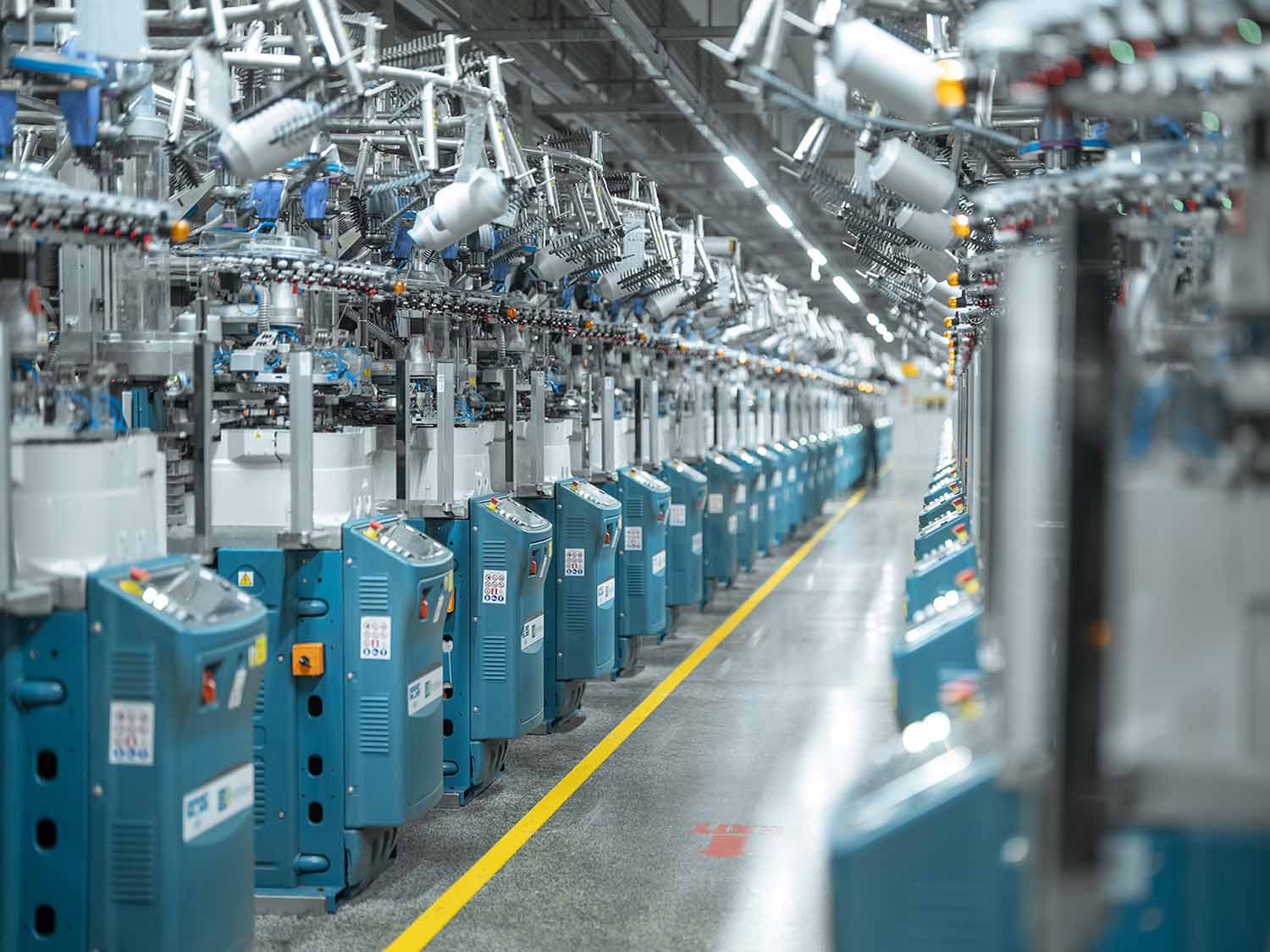
The intelligent fabric defect detection system developed by PolyU's Prof Calvin Wong and his research team marks a significant milestone in the quality control automation for the textile industry. Picture: PolyU
PolyU claims the system reduces the chance of producing substandard fabric by 90%, thus substantially reducing loss and wastage in the production.
Supported by AI-based machine-vision technology, WiseEye can be installed in a weaving machine to help fabric manufacturers detect defects instantly in the production process. The system was developed by the Textile and Apparel Artificial Intelligence (TAAI) Research Team, which is spearheaded by Prof Calvin Wong, Cheng Yik Hung Professor in Fashion of Institute of Textiles and Clothing.
PolyU says textile manufacturers currently rely on human efforts to randomly inspect the fabric by the naked eye. Human factors such as negligence or physical fatigue mean defect detection is usually inconsistent and unreliable. It says textile manufacturers have attempted to use other fabric inspection systems, but claims they were unable to meet the industry’s needs.
Wong says: "WiseEye is a unique AI-based inspection system that satisfies the requirements of textile manufacturers. It is an integrated system with a number of components that perform different functions in the inspection process. The system is embedded with a high-power LED light bar and a high-resolution charge-coupled-device camera, which is driven by an electronic motor and is mounted on a rail to capture images of the whole width of woven fabric during the weaving process.
“The captured images are pre-processed and fed into the AI-based machine vision algorithm to detect fabric defects. Real-time information gathered throughout the detection process will be sent to the computer system, and analytical statistics and alert can be generated and displayed as and when needed."
The research team has applied Big Data and Deep Learning technologies in WiseEye. By inputting data from thousands of yards of fabrics into the system, the team has trained it to detect around 40 common fabric defects with ‘exceptionally high’ accuracy resolution of up to 0.1 mm/pixel.
"In view of the numerous fabric structures that give great variations in fabric texture and defect types, automatic fabric defect detection has been a challenging and unaccomplished mission in the past two decades,” says Wong. “Our innovative introduction of AI, Big Data and Deep Learning technologies into WiseEye not only is a technological breakthrough that meets the industry needs; but also marks a significant milestone in the quality control automation for the traditional textile industry.
WiseEye has been trialled for over six months in a real-life manufacturing environment and PolyU says results show it is able to reduce 90% of the loss and wastage in fabric manufacturing, compared with traditional human visual inspection.
WiseEye can already be applied to most types of fabrics, with different weaving structures and solid colours. The research team plans to further train and extend the system to detect defects in fabrics with more challenging patterns, such as complicated stripe and check patterns. The ultimate target is to cover all common kinds of fabric within five years.
Wong and the TAAI research team have been conducting fundamental and applied research on AI, computer vision and machine learning, specifically for the fashion and textile industry since 2012. The team earlier introduced the first-of-a-kind FashionAI Dataset, which integrates fashion and machine learning for systematic analysis of fashion images through the use of AI.
Areas covered by other projects include intelligent textile material and apparel quality inspection, large-scale fabric-swatch and fashion-image searching, and fashion sales forecasting. The team has also collaborated with various local and international companies in a number of research projects and published research articles in world-leading journals, including IEEE Transactions on Neural Networks and Learning Systems, IEEE Transactions on Cybernetics, and IEEE Transactions on Image Processing.