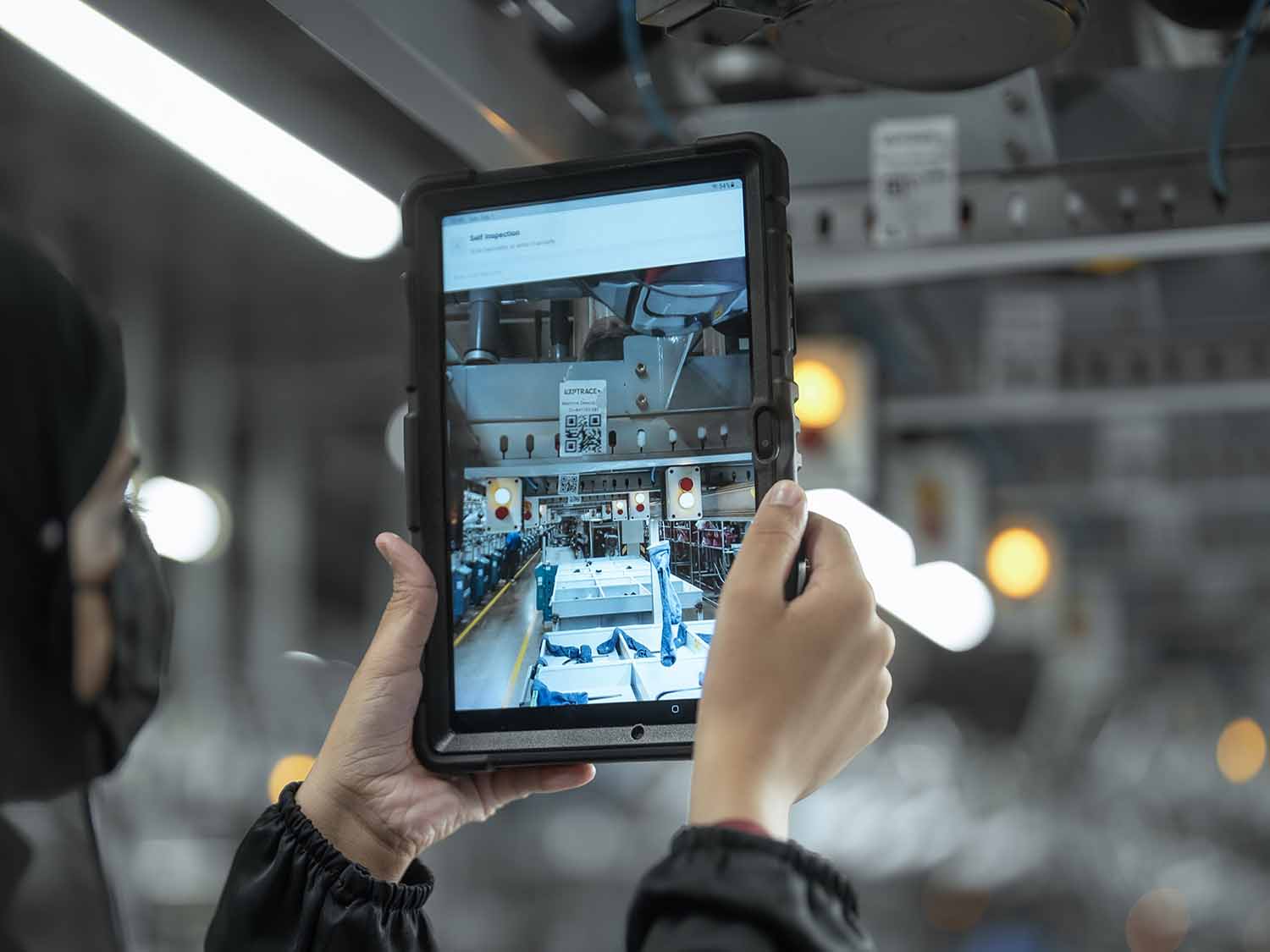
PrimaLoft representative Jochen Lagemann speaks to Anna Borkowicz about the company’s new 100% PCR insulation range, which it exhibited at OutDoor Show in June.
This summer, materials science company PrimaLoft exhibited its latest collections at OutDoor Show in Friedrichshafen – the final edition before the event heads to Munich next year.
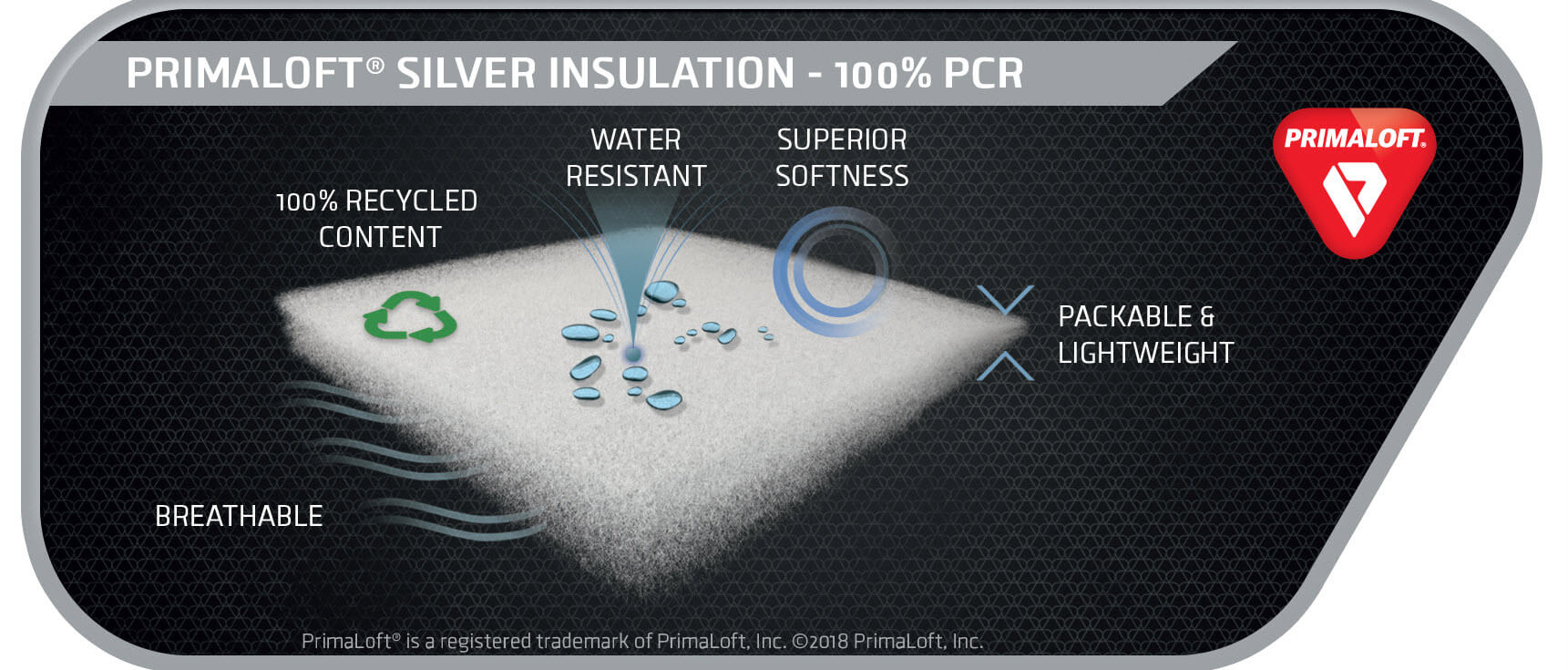
The insulation has all the renowned properties that have made PrimaLoft the benchmark in performance insulation
One of the main trends in the spotlight was recycled and environmentally-friendly gear, which PrimaLoft demonstrated with its 100% post-consumer recycled (PCR) insulation. This takes the form of three collections – PrimaLoft Silver Insulation, PrimaLoft Black Insulation and PrimaLoft Gold Insulation Luxe.
The R&D behind the new products has resulted in the production of high-performance fibres that are finer and softer than cashmere and boast high bulk density and unmatched thermal performance. Properties achieved by the insulation include low weight, high compressibility and water-repellent characteristics. Around nine commercially available PET bottles are necessary to create the insulation layer for one jacket, according to PrimaLoft.
Speaking to WTiN about the story behind the new ranges, Jochen Lagemann, managing director, PrimaLoft Europe and Asia, says: “Many years ago we started to add recycled content into our products and, for us, one of the key values is ‘performance first’, so we want to make sure the end consumer feels comfortable with whatever they do, so that is why we have different products.”
He continues: “We then tried step-by-step to increase the recycled content all the way to 100%, so for our autumn/winter 2018 products coming into the market, you already have the first products in retail with our brand customers that are 100% recycled. It is extremely important for us that they have the same performance and no limitations, and step-by-step we will increase it and add recycled content as soon as we can, so we can leave the virgin product completely, because the performance is the same.”
This concept of ‘step-by-step’ is of particular importance to the company, as Lagemann explains: “In 2012, we said that we wanted to be an environmentally- and economically-sound business. We are not an NGO that says that everything needs to be recycled tomorrow. That is not available right now, so we need to work on solutions in a pragmatic way. There are other areas we need to work on, but we definitely have this target. By 2022, we’re aiming for at least 90% of our collection to have more than 50% recycled content.”
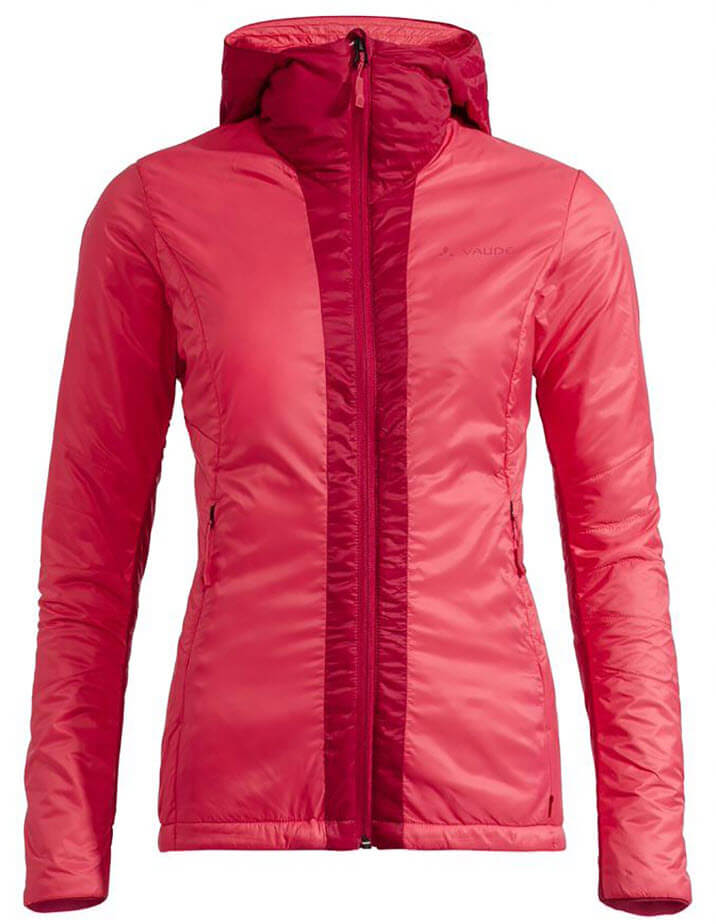
Vaude is one of the first adopters of PrimaLoft's sustainable synthetic insulation,
seen in its Freney jacket range
Quality seeking
In the beginning the higher cost of the recycled content proved a challenge to PrimaLoft, particularly where its customers are concerned, but the company made the decision to take a margin hit in order to provide a solution. “We earn a little bit less with it, but we say that is our contribution and our investment into a better world. That is one thing concerning relentless responsibility; the other is that we have a closer look at the manufacturing process, so we see how much energy is consumed and where the energy is coming from.”
Another challenge, says Lagemann, came from the sourcing of its insulation. “We need a very consistent quality product, and that is not always easy to source. The sourcing therefore could have been an issue, but we solved that. In addition, our insulation is not made of exactly the same fibres; it’s a combination of different fibres that have a different function. And those different fibres react in a different way, which makes the proprietary of our product. We have some products that are virgin with no recycled content and now, some with 100% recycled content. So, that is a challenge as well, to not only have, for example, three products with 100% recycled content, but also to look at what we do with the virgin product. Can we get some PCR content in there at all?”
The company is also looking at the location of its manufacturing plants to meet changing demands. Lagemann says: “Quite a lot of our customers are moving their garment manufacturing out of China due to rising labour costs, and they are moving to Vietnam. We have manufacturing sites in Vietnam as well, so we are following that a little bit.”
Lagemann also believes that the digitalisation trend we’re seeing across the textiles industry will have an impact on moving manufacturing back to developed countries. “In some areas you see that already. Ethiopia is starting to ramp up, so it is already coming back to Africa. We see a lot of smaller brands with smaller quantities coming back or trying to get manufacturing done in Europe. We still have a lot of fashion garment manufacturing in Southern Europe, so a lot of our Italian and Spanish brands still have their own manufacturing. I call that kind of manufacturing ‘tourism’ because they spend around five years in China followed by Vietnam, Cambodia or Myanmar.”
He continues: “I expect that the switches won’t be as quick in the future, as it is not only about labour costs. Sustainability is gaining importance there as well and, if you want certification such as bluesign and Oeko-Tex for all the new sites, it takes time and it is another investment, so it is super important that all those steps are guaranteed before you move there.”
Industry interest
Lagemann says that, so far, customer feedback on PrimaLoft’s 100% PCR insulation has been good.
One of the first adopters of the technology is Vaude, a German producer of mountain sports equipment. Starting in the winter 2018/19 season, Vaude will convert all products that were previously equipped with PrimaLoft Silver and Black Insulation to the 100% PCR versions by summer 2019.
Speaking about the decision behind the adoption, Aaron Bittner, head of apparel, Vaude, says: “One of our key goals is to reduce the use of fossil fuels in our products and create closed circuits. PrimaLoft provides us with innovative solutions on this path ‘away from the oil’. Thanks to our longstanding ingredient partner, we are delighted to be able to use high-performance insulation made from 100% recycled material for the first time. “
New horizons
Commenting on the relocation of OutDoor Show to Munich next year, Lagemann believes that the move highlights the changes that are being witnessed throughout the industry. He says: “Going back to when OutDoor launched 25 years ago, the market has changed in that time, so maybe the trade show needs to change to take the industry to the next level.
“I think it was a smart move from the European Outdoor Group (EOG), and EOG members have decided to move to Munich with a little bit of a different concept. So, on one hand it’s sad because here, there’s a great mood and there’s the lake and there’s a great atmosphere – it’s like a family gathering. But the good thing is that it presents new opportunities to rethink about what is needed for the industry to grow. What is the right timing? What is the right format? What is the right content? Who are the players? Do we need to widen understanding of what outdoor is? I think that will come with a new trade show concept, so I’m feeling positive about the future, and hopefully, the new location will provide a fresh platform for the industry to have future growth.”
www.primaloft.com