
Industry consultant David Jackson provides some insight into raw materials used for absorbent hygiene products for a sustainable future.
What is sustainable? This is many things to many people. For disposable absorbent products, wipes and many medical nonwovens, it usually has two meanings.
It can mean using biobased precursors for polymers, fibres and films, or it can mean alternative disposal for products other than landfill that also typically use biobased raw materials.
In light of the recent implementation of the Single Use Plastics Directive of the European Union, and potential legislation in other regions, care may be required to determine the sources of the raw materials used in nonwovens etc, particularly for feminine hygiene products.
- Biobased vs biological
- Compostable vs dispersible – flushable

Biobased
This can again mean many things. In many cases it can mean conventional polymers, but the precursor chemicals are derived from biological sources as opposed to oil-sourced raw materials – for example, green polyethylene as developed by Braskem, or biobased polyesters with biologically derived polyols and/or di-acids, such as PTT from DuPont Chemical or Plant Bottle by Coca Cola etc. These polymers, while essentially having the same attributes as the incumbent polymers, do not change the disposal profile of the products.
Certain synthetic fibres are directly based on biological raw materials. For example, rayon in its various forms are synthetic fibres produced from wood, be that formed using the viscose or lyocell processes. Recent developments in polymers also have allowed the formation of meltspun fibres. These polymers, for example, are PLA (polylactic acid) and PHAs in general (polyhydroxyalkanoates) and, most recently, PHBH (poly-3-hydroxybutyrate).
Disposal
One consideration that should be given in the current environment is the ultimate fate of the products made by this industry and the raw materials required.
Flushing vs composting
Several years ago, I was involved in reviewing what would be needed for disposable diapers to be either flushable or compostable. It was determined at the time that this was likely a 10-year-plus effort and would require much development in raw materials. This approach can also be applied to feminine hygiene, incontinence and wiping products. In addition, many medical disposables and other items could be produced with these approaches.
At the same time as this effort was occurring, a move to low volume flushing of toilets was being implemented, thus making flushability that much more difficult.
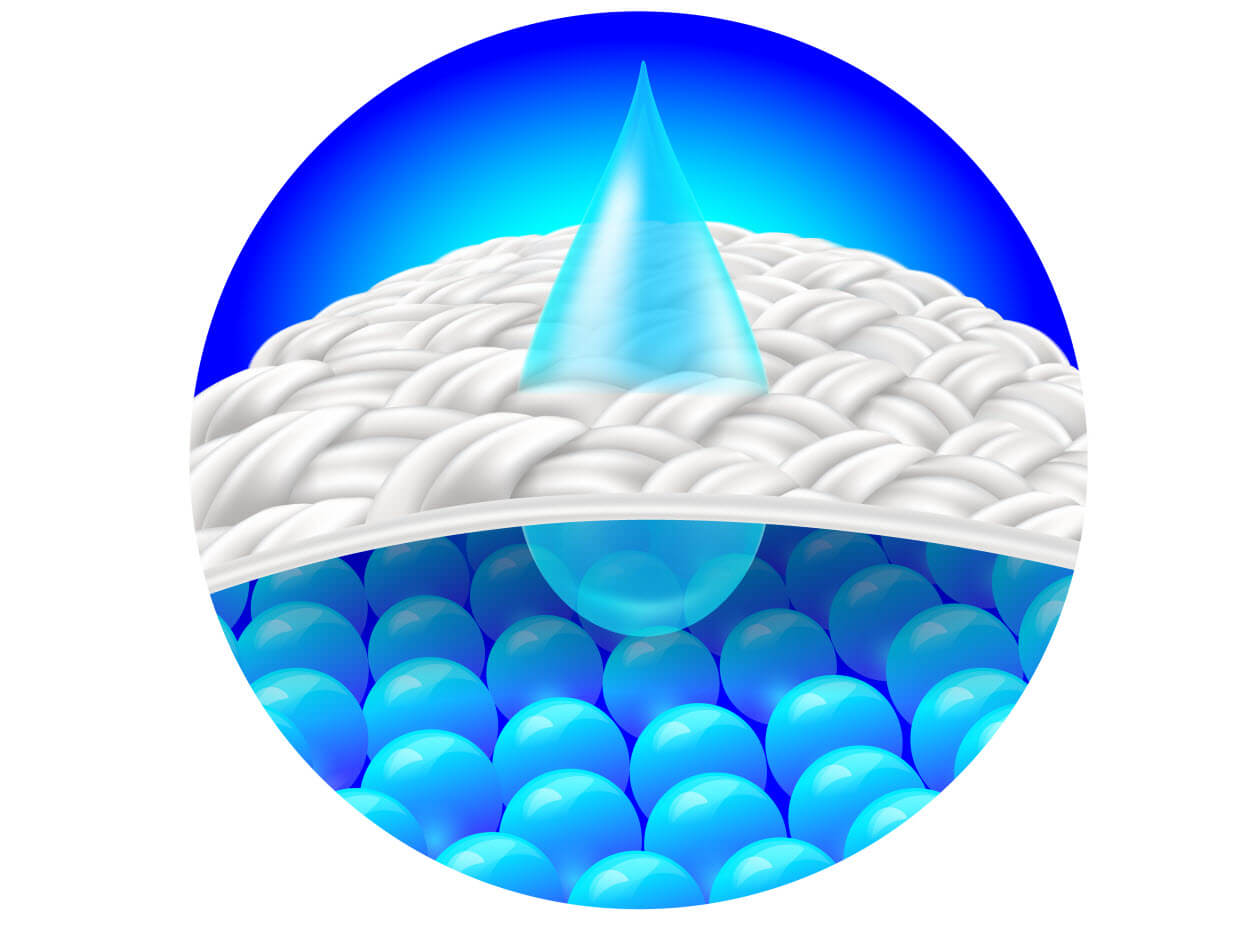
The main components of a diaper and similar products are: Body side liner, intake composite, absorbent core, outer cover and elastics for shaping. Most of these components are fibre composites, either carded, dry formed or meltspun; the main exception being the absorbent core, which while still in many cases being made from a large percentage of wood pulp, increasing amounts of super absorbent polymer is used. This single component is currently made from acrylic acid, while several developmental materials are made from proteins, starches etc. The main issue is that the absorbent capacity of the SAP is so high that even the small amount in a diaper will soak up essentially all the water in the commode and make it difficult to handle. No good method exists of ‘turning off’ the SAP. This then tends to lead to composting for products with SAP content.
Composting
Whether the products are flushed, for example wipes that disperse or go directly to composting, the raw materials still need to be able to be biologically broken down in aerobic conditions, the activated sludge process, used by the majority of municipal wastewater municipalities. As has been demonstrated recently, traditionally ‘plastics’ are not digested and whether traversing the wastewater system or being carried into the oceans and water courses by improper waste management or in many cases, bypassing wastewater treatment by stormwater runoff in combined sewers, the raw materials requirements are similar.
Municipal composting is becoming more common in parts of the world where space available for landfills is becoming sparse, if available at all. Consequently, raw materials used in absorbent products and wipes etc should be able to be composted in conventional municipal composting facilities.
Examples of materials that can be composted
In order to not have to make major changes to the high-speed production processes currently in place, it would be best if the new materials for compostable products were able to be processed in current or only slightly modified machinery.
Coverstocks/body side liners
These low basis weight, open materials need to compost, but they still need to pass fluids and remain dry in use. Examples for this are: PLA spunbond, typically a bicomponent PLA/PLA or PLA/PHA materials; carded/entangled or thermal bonded fabrics produced from synthetic cellulosic fibres (viscose or lyocell), mechanically cleaned cotton or PLA. PLA based binder fibres are also available.
Direct formed nonwovens
Considerable development has taken place in meltspun nonwovens (ie spunbond) to produce PLA-based products. These are typically bicomponent materials to allow good thermal bonding. A low MW PLA or PHA polymers could be appropriate for the sheath component of the bico filaments. PHBH may also have potential.
Additionally, much development has been carried out on direct formed nonwovens using the lyocell dope spinning process. Lenzing Fibres has done considerable development on this technology and now has a pilot line running producing excellent materials. While these materials don’t melt and can’t be thermal bonded, they are excellent for applications where non melting is a positive attribute. Additionally, there are several groups developing other direct formed materials from wood pulp.
Surface properties
These materials tend to be either fully wettable or, in the case of mechanically cleaned cotton, fully repellent. To function properly as a body side liner and allow full fluid penetration but remain dry in use, various surface treatments will be required. However, in many cases these treatments are simpler to apply than on PP or PE SB.
Intake composites
These materials are heavier weight/medium/low density composites that intake fluid rapidly and then release it to the absorbent core. They can be produced from cross-linked pulp/lyocell fibre and PLA binder fibres, for instance. Thermally bonded airlaid or carded nonwovens are a good route to a roll form material.
Absorbent core
Absorbent cores were produced from all fluff pulp many years ago, which would compost well, but now require SAP granules to achieve the required level of dryness. Developments have been ongoing for some time investigating various routes to compostable SAP materials. These include SAP based on starches, protein (animal and soy etc) or soy cellulose. These can all closely approach the performance of current acrylate SAP and compost. The development has been slow up to now due to major suppliers not being pushed for these materials.
Outer cover
These materials are currently ‘clothlike’ in many cases, which are laminates of a coverstock-style fabric and a film. Typically, the film can be PLA-based and be plasticised to reduce noise and improve adhesion in thermal or adhesive lamination.
Adhesives
While many water dispersible adhesives are available, less work has been done on compostable adhesives for product construction. For convenience of application processes, these materials would be best if hot melt applicator capable. Materials based on PLA/PHA etc could be developed if volumes were required by the industry.
Elastics
This is the least developed material for composting at present. Materials based on caprolactone or ester-based polyurethane are potential routes to compostable elastics.
Wipe-specific issues
Much development has been carried out on nonwoven substrates specifically aimed at wiping applications.
Personal care wipes are developed for personal hygiene, general wiping and flushable applications. These are distinctly different in engineering/chemistry terms. In addition, industrial and janitorial or medical wipes are being designed with alternate disposal in mind.
Flushable products must be engineered to have adequate tensile strength in use to be used typically in a wet state. Typically, the wet wipe contains 300% add-on of lotion based on the wipe dry weight. They then must be able to disperse in a short time, typically about two to three hours in excess water, to allow proper processing in the sewer and sewage treatment systems.
General wipes, however, are not designed to be flushed and must be disposed of properly either in general trash or composting. In terms of composting, the same raw materials outlined for absorbent products can be used. In the case of carded/hydroentangled or thermal bonded substrates, rayons (viscose or lyocell)/cotton/PLA/PLA or PLA/PHA bico fibres and/or wood pulp can be used. In terms of spunmelt-type products (SB/MB etc) and composites, the lyocell nonwoven or PLA and PHA polymers are available for these applications.
Many of the raw materials referenced in the above discussion are commercially available. Some will require development for scale up to the commercial needs of product convertors.
In most cases I have not specifically referenced commercial suppliers, but they are easy to determine.
David Jackson is an independent consultant at Materials / Process Connexxions in Atlanta, Georgia, and a retired technical leader at Kimberly Clark. More information on his work and research background can be found at http://nwconnexx.com/