A team of scientists at the Georgia Institute of Technology, US, has developed polymers that can vaporise immediately after they've served their purpose.
Originally developed for the US Department of Defence, these novel disappearing polymers are rugged enough to ferry packages or sensors into hostile territory and vaporise immediately upon a military mission’s completion.
This advancement means that electronic sensors and delivery vehicles can be deployed and then leave no trace of their existence after use, thus avoiding discovery and alleviating the need for device recovery.
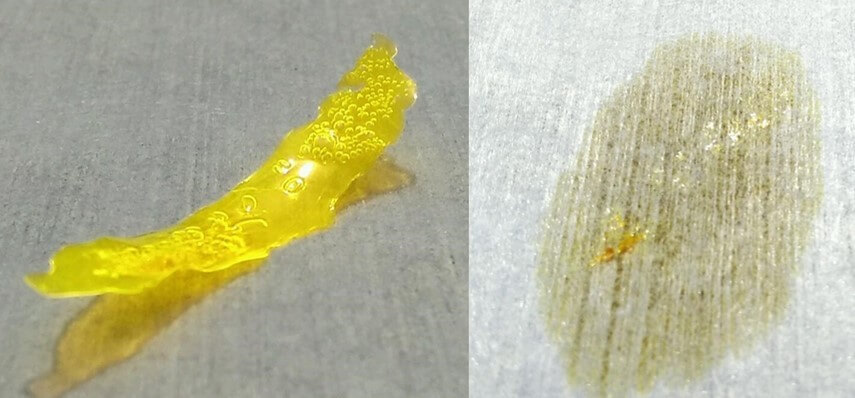
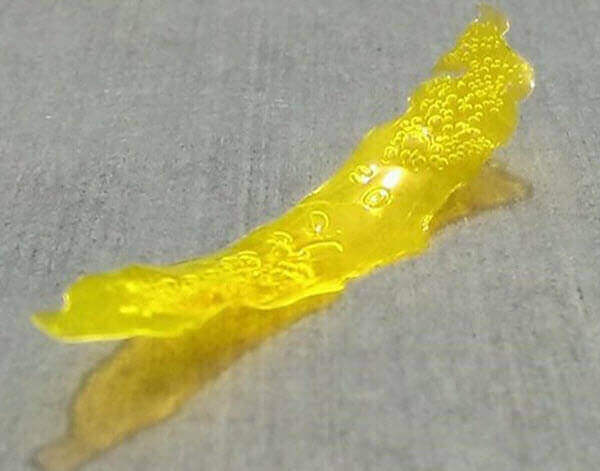
“This is not the kind of thing that slowly degrades over a year, like the biodegradable plastics that consumers might be familiar with,” says Paul Kohl, PhD, whose team developed the material.
“This polymer disappears in an instant when you push a button to trigger an internal mechanism or the sun hits it.”
So far, the material has been made into a rigid-winged glider and a nylon-like parachute fabric for airborne delivery across distances of a hundred miles or more. It could also be used someday in building materials or environmental sensors.
A disappearing act
The key to making a polymer disappear, or break apart, is 'ceiling temperature'. Below the ceiling temperature, a polymer configuration is favoured, but above that temperature, the polymer will break apart into its component monomers.
Common polymers, like polystyrene, have a ceiling temperature above ambient temperature and are very stable. And even when they are warmed above their ceiling temperature, some of these materials can take a long time to decompose.
For example, thousands of chemical bonds link all of the monomers together in polystyrene, and all of these bonds must be broken for the materials to decompose. But with low ceiling-temperature polymers, such as the cyclic ones Kohl is using, only one bond needs to break, and then all the other bonds come apart, so the depolymerisation happens quickly.
"It's a bit like peeling a banana," says Kohl. "To peel a banana from the middle is difficult, but if you start at the end it just peels back easily."
The process can be triggered by a temperature spike from an outside or embedded source, or by a light-sensitive or chemical catalyst.
Previous struggles
For many years, researchers have attempted to make these polymers, but were unsuccessful because of the materials’ instability at room temperature.
Kohl’s research group at the Georgia Institute of Technology discovered that they could overcome this issue if they were careful to remove all impurities formed during the synthesis. In addition, they found a number of aldehydes, including phthalaldehyde, that readily form cyclic polymers. Once they had optimised this polymer’s synthesis, they focused on ways to make it disappear.
To do this, the researchers incorporated into the polymer a photosensitive additive, which absorbs light and catalyses depolymerisation.
“Initially, we made it photosensitive to just ultraviolet light so we could make the parts in a well-lit room with fluorescent lighting, and it was just fine – it was stable,” Kohl says.
But when the polymer was placed outside, exposure to sunlight vaporised it (or reverted it back to a liquid, in some cases). A vehicle deployed at night would, therefore, disappear with the sunrise.
Future work
Kohl’s group has since discovered new additives that can trigger depolymerisation at different wavelengths of visible light, so the polymer can decompose indoors.
“We have polymers designed for applications in which you come in the room, you turn the light on, and the thing disappears,” Kohl says.
The group has also determined how to stall depolymerization.
“We have a way to delay the depolymerisation for a specific amount of time – one hour, two hours, three hours,” he says. “You would keep it in the dark until you were going to use it, but then you would deploy it during the day, and you would have three hours before it decomposes.”
The team has considered chemical methods to start the decomposition process, as well. In addition, they are testing various copolymers that can be added to phthalaldehyde to change the material’s properties without altering its ability to vanish.
Kohl says that this 'James Bond-like' material is already being incorporated in military devices by other researchers. But he also sees the potential of the materials for non-military applications. For example, the researchers have made a disappearing epoxy for a temporary adhesive that could be used in building materials.
They also imagine the material could be used as sensors for environmental monitoring. Once the sensors are finished collecting data, there is no risk of littering the environment since they can be triggered to vaporise. The material can also be used for delivery vehicles in remote areas where recovery is difficult.
The researchers acknowledge support and funding from the US Department of Defence.
Author's comment
This is a very exciting and interesting development. And just like Kohl mentions himself, it resembles technology that James Bond would use in the field. But this advancement is not just for fun, it has serious applications for the military and even has commercial opportunities. In a recent press conference, Kohl mentions that these polymers all have design-specific applications, so it is possible that say balloons in the future could disintegrate once they have burst and littered the floor with its rubber remnants, for example. And of course there is the sustainability angle. If products can completely vanish, then there is no need to worry about the remains ending up in landfill and adding to the global plastic waste crisis. Of course, this research is still relatively new, but the future implications of it are promising.