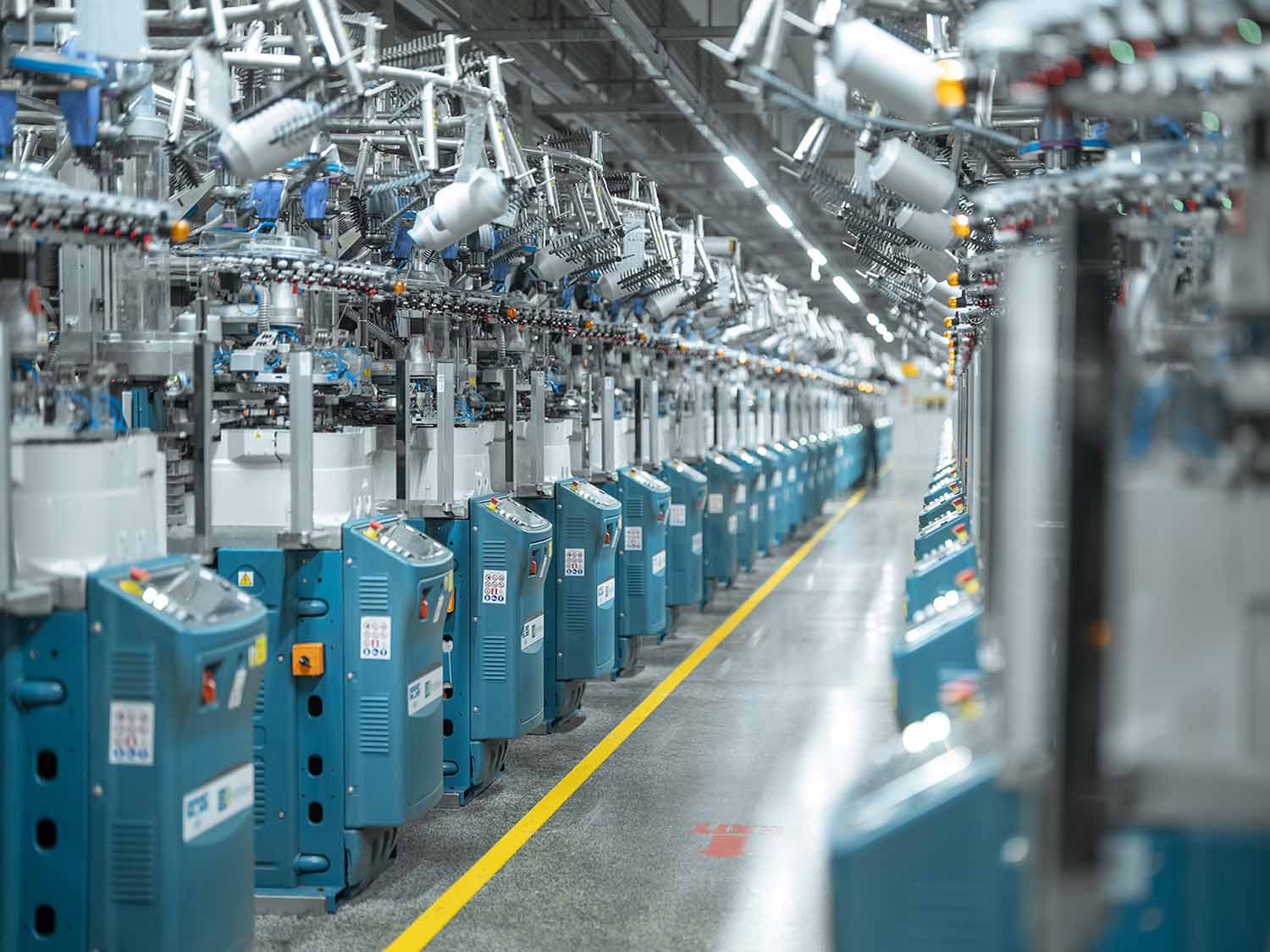
Industry 4.0 technologies are helping textile manufacturers leverage a commitment to sustainability to bolster the bottom line, says Liane Gerber, global lead, SAP Textiles Industry.
As chemical, water and energy-intensive as textile manufacturing is, there are few businesses for which profitability and sustainability are so inextricably linked. In particular, the challenge for companies in the spinning, weaving and finishing sectors of textile manufacturing is how to forge and reinforce that link along the entire value chain. In other words, how to turn sustainability into a strategic difference-maker?
The answer lies in Industry 4.0 technologies and business practices – technology investments that allow manufacturers to harness the power of big data, predictive analytics and more, to monitor, analyse, predict and automate across enterprise – improving productivity, efficiency and sustainability. The investments textile manufacturers are making in technologies that merge the physical and digital worlds, across cross-functional silos and value chains, and vertically from the top floor to the shop floor, are illuminating new opportunities to bolster sustainability.
Sustainability is a growing priority for companies inside and outside of the textiles industry. A 2017 survey of CEOs conducted by GlobeScan and BSR found that more than half of chief execs – 52% – view sustainability as a top-five priority; around one-quarter see it as one of their top three priorities.
In the manufacturing sector, whether the business is textiles or consumer goods, sustainability doesn’t have to come at the expense of profitability. Indeed, companies are discovering that their commitment to operating a business sustainably can bolster the bottom line. The international consumer goods producer Unilever, a leader in sustainable manufacturing, says that among its 400-plus brands, from Dove to Hellmann’s to Ben & Jerry’s, those that have integrated sustainability into both their purpose and products accounted for nearly half the company’s global growth in 2015. Collectively, they are also growing 30% faster than the rest of Unilever’s business.
“By cutting waste and reducing use of energy, raw materials and natural resources, we create efficiencies and cut costs,” the company explains. “Cost avoidance and savings ultimately help to improve our margins.” All told, Unilever’s eco-production and waste-reduction efforts have yielded some €850m (in excess of US$1tn) in avoided costs since 2008.
Companies such as Unilever are helping to define a new paradigm for manufacturers, where the more resource-intensive a company is, the greater the opportunity to leverage sustainability as a means to increase profitability. So, for textile manufacturers, sustainability is not only a strategic imperative, it’s a competitive differentiator, whether their products are destined for use in automotive, building materials, aeronautic medical/healthcare applications.
What types of Industry 4.0 tech investments are providing them with the most bang for their buck? Here are six potential areas of investment:
• To sustainably innovate across the entire enterprise by turning to an integrated platform that combines future-facing technologies with in-memory capabilities that link to the Cloud. These Industry 4.0 systems bring together the Internet of Things, machine learning, analytics, Big Data, blockchain, data intelligence and design thinking into a single system with evaluation, simulation and prediction features to reinforce enterprise-wide sustainable practices.
• To leverage the IoT by merging operational technology with information technology among systems, things and devices across an entire manufacturing enterprise. On the factory floor, manufacturers are investing in cyber-physical systems, adding sensors and microchips to tools, machines and components wherever possible, making them ‘smart’ and able to collect and share data in real-time. For example, textile manufacturers have access to Industry 4.0 monitoring tools that allow them to compare plant information and connect multivendor weaving machines to an ERP application, increasing visibility and efficiency, and lowering costs.
• To use advanced analytics to monitor and optimise energy usage during production, cutting overall consumption and cost.
• To use predictive maintenance tools that gather data from assets in real-time to predict and preclude failures, so production runs optimally.
• To use predictive quality tools to increase product quality by acting on causal relationships between production machine parameters and production alerts. The goal: to constantly deliver high quality by acting on potentially improvable product during production process.
• To uncover opportunities to recycle and repurpose fibre and support the process to reuse textile waste.
Can a textile manufacturing concern be consistently profitable without also being sustainable? Can it achieve operational excellence without an enterprise-wide commitment to sustainability? The answer to both questions appears to be a resounding, 'Not anymore!' Consumers have let it be known they prefer to buy goods produced by manufacturers with a demonstrated commitment to sustainable processes and practices. For example, fully one-third of consumers now buy from brands based on their social and environmental impact, according to a 2017 study by Unilever.
Answering this escalating global demand for sustainable products and environmental stewardship starts at the top of the manufacturing chain, with an Industry 4.0 digital core that empowers textile manufacturers to automate, monitor, analyse and optimise at every level.
Have your say. Tweet and follow us @WTiNcomment