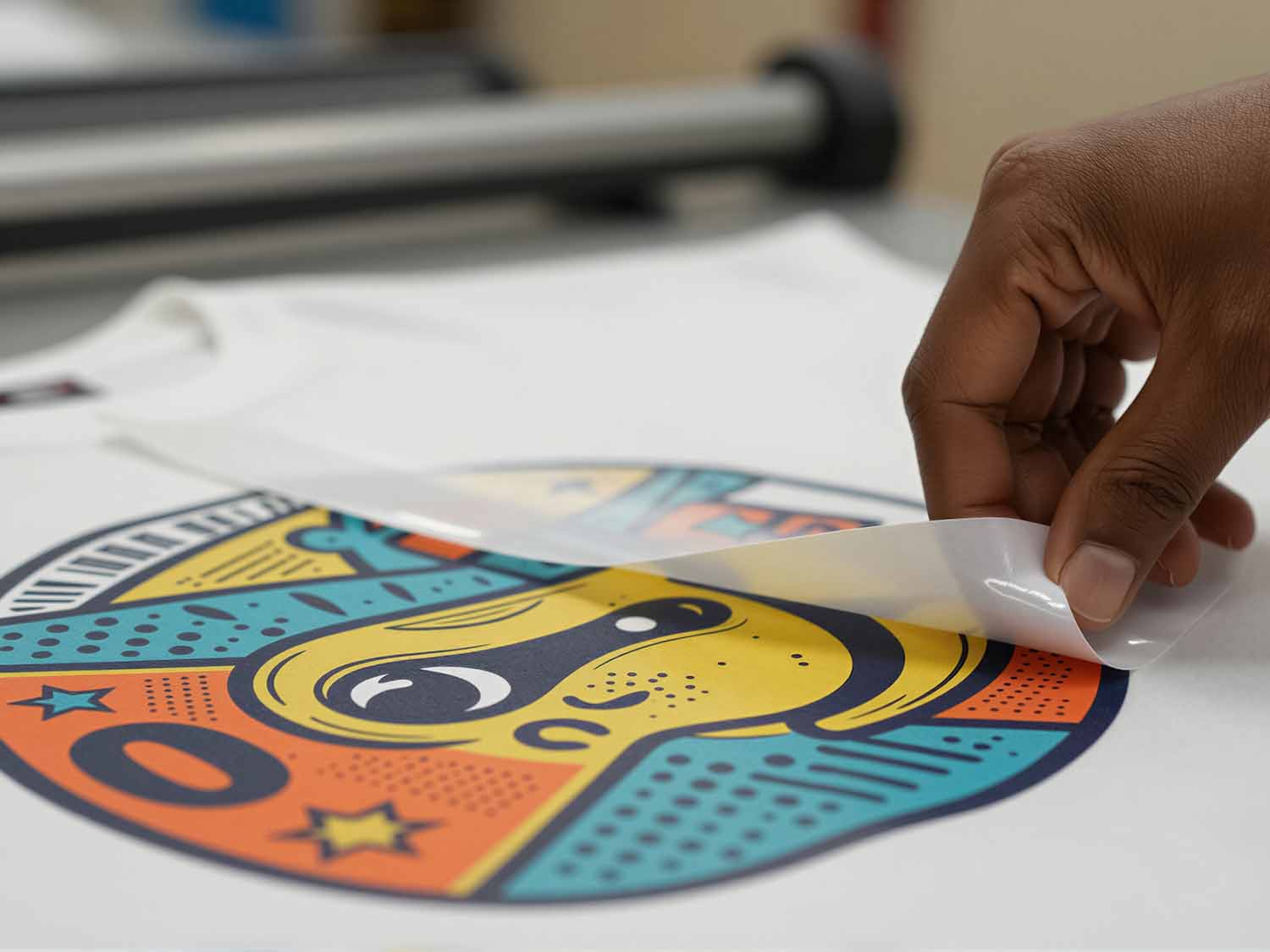
Lauren Malone, founder of freelance digital textile print design studio The Indigo Room, talks to Madelaine Cornforth about the benefits and challenges of designing for digital textile printing in the Australian market.
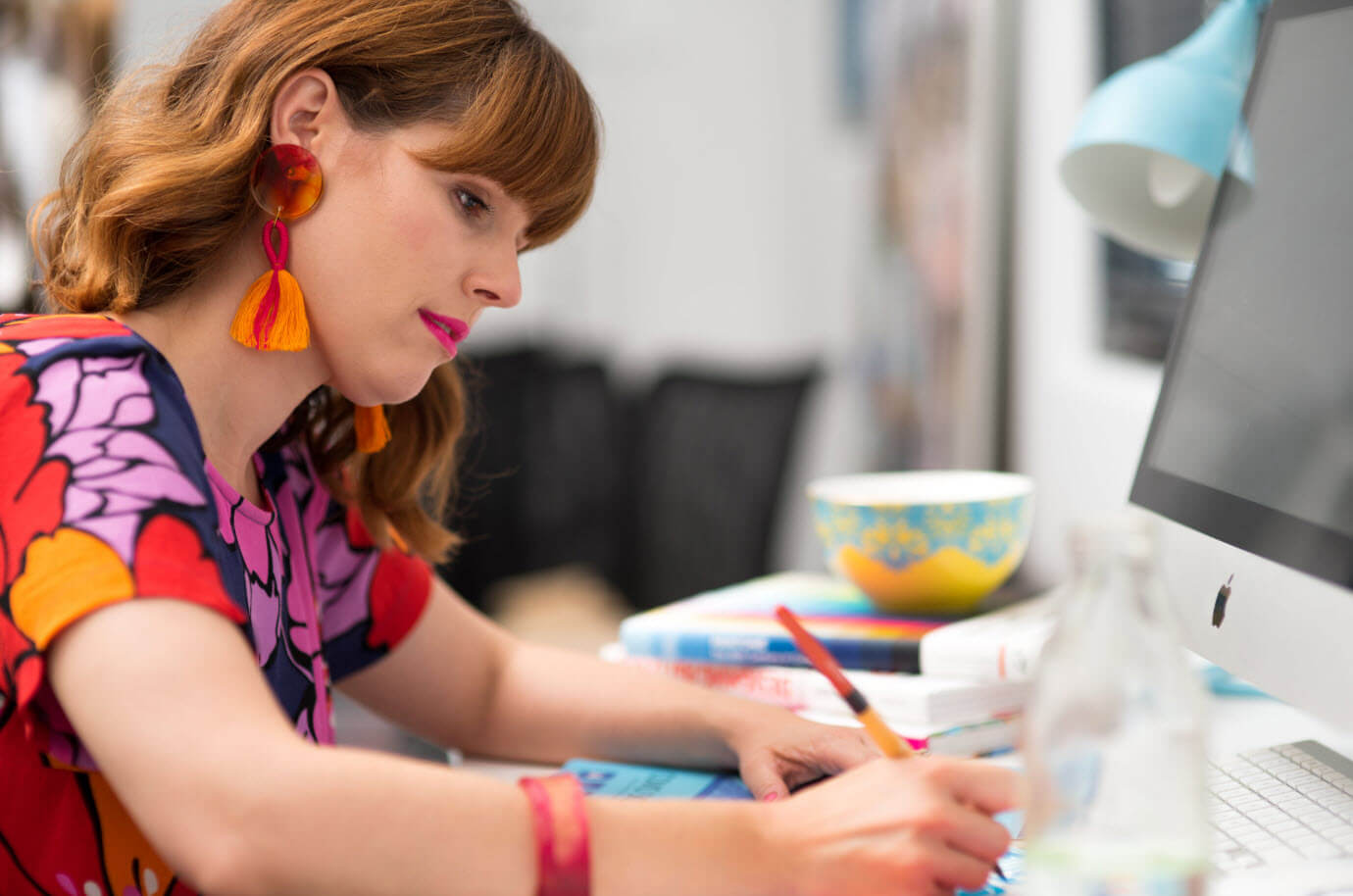
Lauren Malone of The Indigo Room
The Australian digital textile market is growing steadily across the board, for soft signage, home interiors and fashion & apparel. In a country known for its white sandy beaches, there is no surprise that dye-sublimation printing for swim and beachwear continues to be on the rise.
However, digital textile printing on natural fabrics such as cotton, linen and silk is also gaining popularity. The Indigo Room is a textile print design studio that specialises in designs for natural fabrics such as silk, linen and cotton. Lauren Malone, founder of the freelance studio, says: “For commissioned work, my clients print on a variety of fabrics depending on their budget, environmental/ethical values, target market and the garment's purpose. Clients have chosen to feature my designs on a wide range of fabrics including silk for bridalwear, bamboo/spandex, rayon and GOTS-certified organic cotton for apparel, and linen for homeware.”
Malone specialises in creating bespoke hand-painted wearable art for independent Australian fashion labels. “I am fascinated by the way textile prints visually share stories of history, culture, people and their environment,” she says. “I think of textile prints as dynamic and functional works of art on living, moving individuals. I also share my knowledge through running my own textile print design workshops and tutoring emerging textile print designers.”

Maiocchi Made with Love dress in blue
However, Malone doesn’t just use digital technology, but some more traditional design methods as well. All of The Indigo Room’s prints are born from marrying traditional artistic techniques with design and the digital world. Malone says: “After in-depth research and experimentation, I explore concepts through painting, drawing and mixed media on paper, before scanning and digitising the artwork using Adobe Photoshop.”
She continues: “This is truly when the magic happens – it is both a labour of love and an art within itself to edit and manipulate the original work by playing with scale, colour and layout. All the while, ensuring the pattern retains its original hand-generated qualities and communicates the intended concept, whilst upholding industry standards as a seamless pattern repeat.”
As a smaller-scale design studio, The Indigo Room outsources its digital fabric printing. Malone currently has a collection of textile print designs featured with Melbourne, Australia-based on-demand fabric printer, Next State Print. “Clients who commission my work source their digital fabric printing through a variety of printers here in Australia and overseas, including the US, China, and India,” adds Malone.

Maiocchi Pinch me I'm Dreaming dress in emerald
Benefits
Malone has found many benefits to digital textile printing and designing for digital print applications, as opposed to screen printing. She says: “It offers me freedom and flexibility to experiment with limitless colours and layouts. The world is my oyster in terms of flexibility in colour, texture, layout and repeat dimensions. I can also more easily get into a state of ‘creative flow’, as I am not worried about making mistakes,” as any mistake in design can be corrected digitally later on.
Digital printing also fits the style of Malone’s designs and allows her to experiment in a cost-efficient way. She says: “Digital printing perfectly captures the hand-painted feel of my original artwork. It also allows you to test design concepts and colourways cost effectively. At a few digital printers in Australia, you can print small swatches or one metre strike-offs without an additional set-up fee. I don’t have to worry about costs associated with individual screens when screen printing.”
Malone has also found that digital helps designers and printers when it comes to colour matching, which is an area of controversy for the digital print world. “I love that I can purchase PANTONE colour map charts on supplied base cloths to assist with digital colour selection and matching in order to predict the final printed textile colour appearance,” she says. “It allows for the textile designer and fashion designer to speak the same colour language, supporting the efficiency of fabric printing and reducing waste.”
Challenges
However, Malone has come across a number of challenges in the Australian digital textile print design industry. One of these is due to her choice of substrates. “There are a select few digital textile printers offering a diverse range of weights and weaves in natural fabrics such as cotton, linen and silk,” she says. This is because in Australia there is a larger number of digital textile printers offering a diverse range of synthetic fabric printing, potentially due to the thriving swimwear market. However, Malone says: “There seems to be a large movement from independent Australian labels to manufacture their garments locally and ethically on environmentally sustainable or organic fabrics.”
Although, Malone explains that many of her clients have expressed a strong desire to support her and the Australian fabric and garment manufacturing industry, responding to growing consumer values of ethical, local and environmentally sustainable products. She says: “Australia produces premium quality cotton. However, to my knowledge, most of our Australian-farmed cotton is transported offshore and mixed with cotton fibres sourced from other countries and woven into base cloths. Therefore, the majority of the natural base cloths offered by Australian digital textile printers are sourced from overseas textile mills in places like India and China.”
Full Circle Fibres (www.fullcirclefibres.com) is a pioneering force, working collaboratively with Australian cotton growers, such as Australian Super Cotton (www.austsupercotton.com.au) to keep the entire process of growing, ginning, spinning, plying and weaving cotton-base cloths within Australia, according to Malone. “A limited range of these pure Australian cotton base cloths have been trialled with select Australian digital textile printers,” she says. “Currently, digitally printing on these pure Australian fabrics may present challenges in terms of production costs for Australian designers producing smaller fabric and product runs, but hopefully this will improve as time goes on.”
Some Australian digital textile printers accept client-supplied base cloths (when the printer does not offer a specific fabric type). “However, the testing process can be expensive, and the quality of the outcomes are unreliable,” adds Malone.
Despite the limited variety of natural, apparel weight base cloths, Malone says that it can also be cost prohibitive for independent Australian fashion labels to produce small runs of fabrics that are competing with larger companies “that manufacture off-shore with low-cost meterage and high-minimum printing runs.”
Also, Malone says that it could be beneficial for the flexibility of the printing technology and inks to be improved to be able to reliably respond to a variety of natural base cloths.
Australia
The Indigo Room largely serves its domestic market. It is primarily Australian womenswear designers, including custom bridalwear, who commission the company’s textile print designs. But the company is also commissioned by local labels creating products such as stationery and homeware.
The demand from the Australian market is increasing as the market becomes more educated in digital textile printing. Malone says: “I feel the digital textile printing market in Australia is steadily growing. There are a number of new Australian digital textile printers that have emerged over the last five years offering a greater range of fabrics and quality printing.”
According to Malone, there are many factors supporting the growth of digital textile printing in Australia. The first factor Malone calls the ‘maker movement’. “There continues to be a groundswell of interest in slowing down and creating your favourite products yourself,” she says.
“People are re/learning how to sew and are keen to source unique fabrics not found in mainstream chain-stores,” adds Malone. “These ‘DIYers’ are keen to learn other crafts including how to create their own textile print designs. My textile print design workshops have consistently been in high demand over the last two years. Interstate digital textile printers and textile designers are also responding to this demand with an increasing frequency of workshops being offered. There is now increasing variety in online learning options to study the art of textile design.”
Coinciding with the ‘maker movement’, is a growing consumer conscience to support local, ethical and sustainable products and small businesses. “Small Australian businesses appear to be the core consumers that are digitally printing locally, where quality can be controlled and minimum meterage is low,” says Malone. This gives new and small players in the competitive Australian fashion market a USP.
“New fashion labels are constantly emerging in a saturated industry and need to stand out in the crowd,” she continues. “Fashion designers don’t want to risk releasing collections inspired by the latest trends only to find the same textile print walking down the runway. Commissioned work continues to be steady for textile print designers who have a unique style and interpretations of trends.”
However, perhaps a barrier to digital textile printing’s growth in the country is its lack of a dedicated Australian digital textile print trade show, considers Malone. “A trade show would assist in exposing the Australian digital textile industry to international markets,” she says. “It would also provide professional development opportunities and a platform of collaboration between designers and printers as well as showcase the work of local Australian designers on an international stage.”
Additionally, the limited amount of educational institutions offering tertiary level digital textile design qualifications could also be slowing the growth potential of digital textile printing in Australia and the wider region, according to Malone. It is true that digital textile printing is much more popular in countries whose educational institutions have supported the industry, such as in Italy and the UK. One primary institution in Australia, RMIT in Melbourne, Victoria offers a Bachelor of Textile Design, but Malone says: “The majority of graduates seek jobs in a saturated Melbourne/Sydney market with limited job opportunities other than freelance/self-employment elsewhere in Australia.” The digital printing market in Australia, therefore, needs to spread across Australia for it to grow substantially in the future.