Ticks are small arachnids, typically three to five millimetres in length. They are usually found clinging to grass and plants, waiting for animal flesh to brush past so they can feed on their blood. As nasty as this sounds, most of the time tick bites go unnoticed, however some ticks do carry human pathogens, such as Lyme disease.
Permethrin is a synthetic form of an insecticidal compound derived from the chrysanthemum flower
“It is very important to reduce tick bites,” says Lars Eisen, PhD, research entomologist at the CDC’s National Centre for Emerging and Zoonotic Infectious Diseases, and senior author of the study.
“For example, among the approximately 50,000 cases of illness caused by mosquitoes, ticks and fleas reported to the CDC each year in the US, roughly 95% are caused by tickborne pathogens and over 70% of these infections are Lyme disease.”
Lyme disease is a bacterial infection and can be treated with antibiotics. Symptoms include fatigue, arthritis and neurological disorders, and celebrities such as George W Bush, Bella Hadid and Matt Dawson have been reported to have contracted the infection.
To prevent tick bites, people often use insect repellents which contain DEET for example, and now researchers at the US Centers for Disease Control and Prevention have conducted a series of lab tests to study whether clothing treated with the insecticide permethrin has strong toxic effects on three primary species of ticks in the US.
Permethrin
Permethrin, a synthetic form of an insecticidal compound derived from the chrysanthemum flower, has been documented for its utility as protection against bites from ticks, mosquitoes and flies since the late 1970s, but researchers continue to probe its effects on various species under varying conditions.
“Permethrin harms the ticks’ nervous systems. When coming into contact with permethrin-treated clothing the ticks first lose their ability to move and bite normally,” says Eisen. “As the effect gets stronger, they eventually die.”
Amid the ongoing geographic expansion of ticks in North America, a greater understanding of the effectiveness of consumer-based products for protection from ticks is necessary to combat the threat of Lyme disease and other human infections caused by tick-transmitted pathogens.
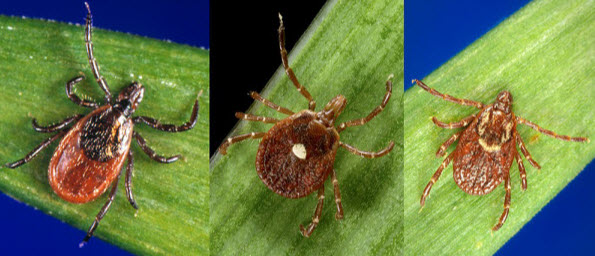
While previous research from the CDC has focused on permethrin’s effects on the blacklegged tick (Ixodes scapularis), its latest study finds similar effects from permethrin on both the lone star tick (Amblyomma americanum) and the American dog tick (Dermacentor variabilis), as well, and it also found permethrin to have notable effects across both nymphal (juvenile) and adult life stages of the blacklegged tick and lone star tick.
The tick tests
Various garments (shirts, pants, and socks) produced by a leading manufacturer of permethrin-treated clothing were tested in the experiments, in which the researchers affixed portions of the clothing to flat surfaces and placed ticks on them.
In some tests the surface was placed at a 45° angle and ticks were observed for their likelihood to let go and tumble off due to the irritant effect of permethrin.
In other tests, the ticks were placed on level surfaces and contained for specific intervals (1-5 minutes) and then observed for their ability to move normally over the following 24 hours.
“All tested tick species and life stages experienced irritation – the ‘hot-foot’ effect – after coming into contact with permethrin-treated clothing,” says Eisen.
“This caused the ticks to drop off from a vertically-orientated treated textile designed to mimic a pant leg or the arm of a shirt. We also found that sustained contact with permethrin-treated clothing – up to five minutes – resulted in loss of normal movement for all examined tick species and life stages, leaving them unable to bite.”
Effects varied somewhat between species. Permethrin-treated clothing showed the strongest effect on blacklegged tick nymphs (after a one-minute exposure, 100% lacked normal movement one hour later), followed by lone star tick nymphs (86%), blacklegged tick adult females (62%), American dog tick adult females (18%), and lone star tick adult females (2%). A five-minute exposure to permethrin-treated clothing led to loss of normal movement for all ticks of all three species and life stages for at least one hour.
Promise to reduce tick bites
“Based on the results of this study, use of permethrin-treated clothing has promise to reduce bites by several species of ticks in the United States,” adds Eisen. “That being said, permethrin-treated clothing is only protective if people wear it consistently.”
Permethrin treatment is available in various forms to consumers. Certain manufacturers produce clothing pre-treated with permethrin. Other companies offer mail-and-return treatment through which consumers send clothing they already own to be treated with permethrin and returned. Alternatively, permethrin sprays are available for consumers to apply to their clothing on their own at home.
The CDC recommends treatment for clothing and gear such as boots, pants, socks and tents with products containing 0.5% permethrin and notes that it remains protective through multiple washings.
Ongoing and future research will seek to determine just how long various permethrin treatments last over time, wash cycles, and wearing conditions, Eisen says.
“We also need more research comparing the rates of tick bites and tickborne disease among people who wear permethrin-treated versus non-treated clothing during their daily activities in habitats where ticks may be encountered,” says Eisen.
“Ultimately, we’d like to be able to provide more specific guidance about the use of permethrin-treated clothing, including what types of clothing provide the best protection. Additional research in this area can improve public health recommendations.”