Sponsored by Brother
Due to the continuing growth of apparel printing, the garment decoration sector has been awash with new solutions, which ultimately claim to give users an edge in an increasingly competitive market.
One of the leaders in the manufacturing of garment printing technologies is Brother. The OEM was originally renowned for its low-volume, direct-to-garment (DTG) equipment but has since entered the industrial DTG and high-growth direct-to-film (DTF) sectors.
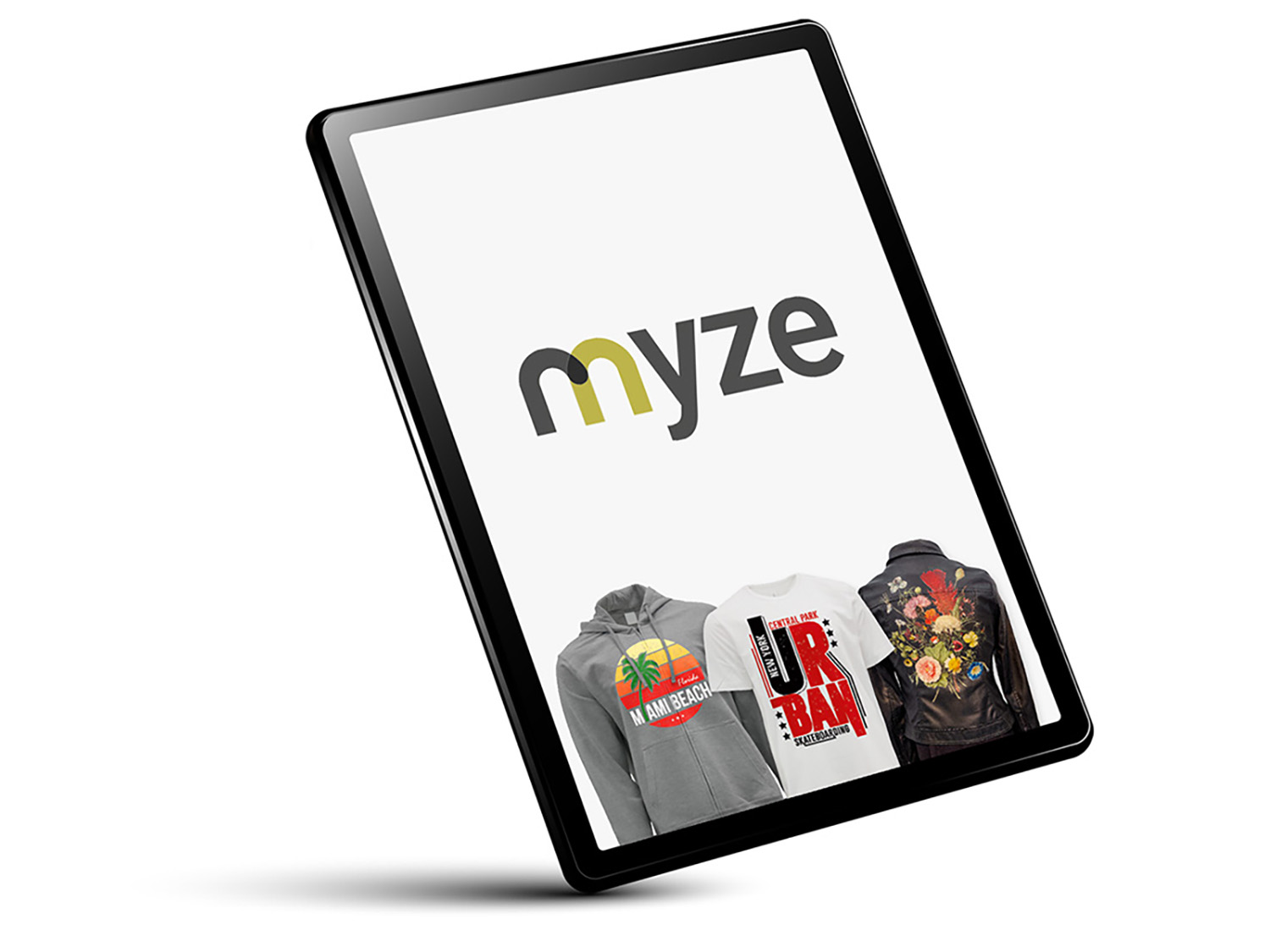
WTiN has reported on Brother’s many printing products. Some of the most recent include the GTX600 DTG printer, DTF iterations of Brother’s GTX printer fleet and more recently an innovative software development called Myze.
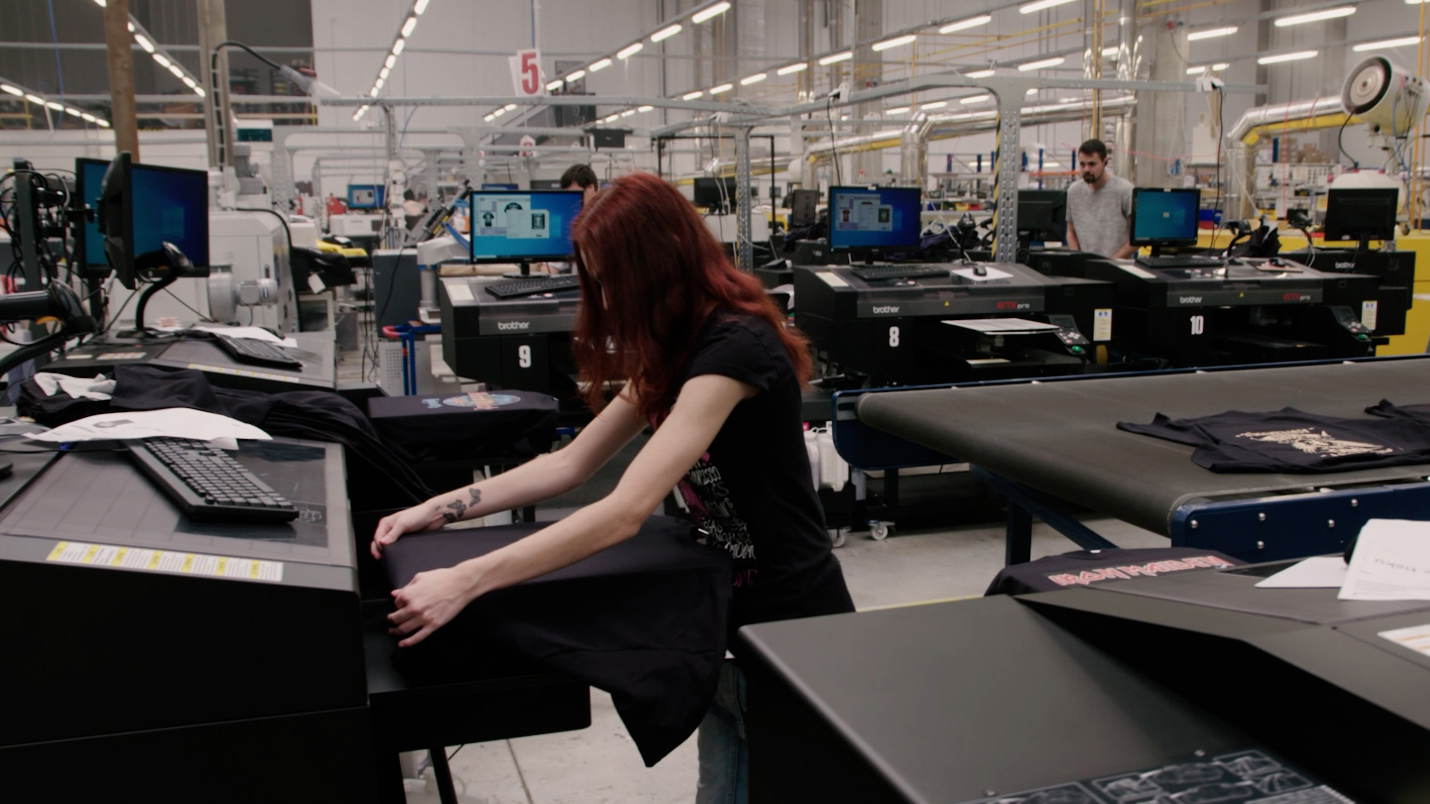
Following a series of global challenges – from the Covid-19 pandemic, through to energy scarcity and high inflation – Brother has stuck to its product pipeline, according to marketing manager Folker Stachetzki.
This has been a key requirement of OEMs whose customers are, in many instances, squeezed financially due to soaring consumables and energy prices, long lead times and brands who are unwilling to pay more as they recover lost revenue from the pandemic.
Therefore, OEMs are being tasked with providing affordable and flexible solutions.
A caveat to this is that many governments protected their businesses from the economic impact of Covid-19 and are looking to do the same in light of the worsening energy crisis. Governments introduced various support packages back in 2020 that often encouraged investment. And generally speaking, investing is exactly what print service providers did, in spite of the health and economic crisis. Ultimately, the garment decoration sector’s global output capacity has increased to meet growing consumer demand.
But there is more to fulfilling the needs of print service providers than launching a more productive printer. Flexibility, data and usability are key factors for OEMs to consider. This is what inspired many of the software packages introduced by garment printing OEMs in recent months. Take Brother Myze, for instance.
Stachetzki says: “Digital technologies and platforms not only help us, but also our customers to be able to react quickly to market changes. We have set ourselves the goal of becoming a pioneer in the digital environment and Myze is just the beginning.”
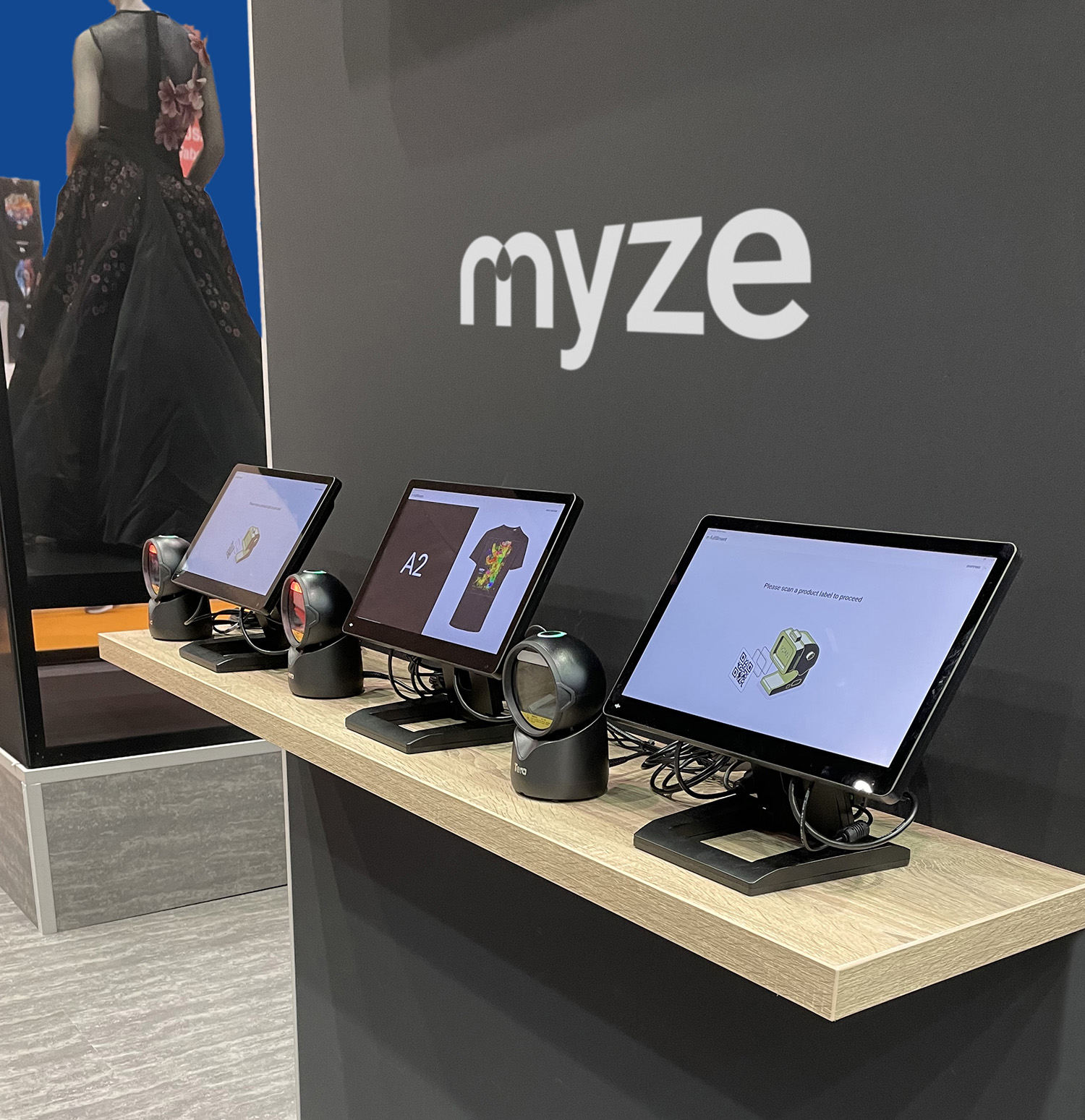
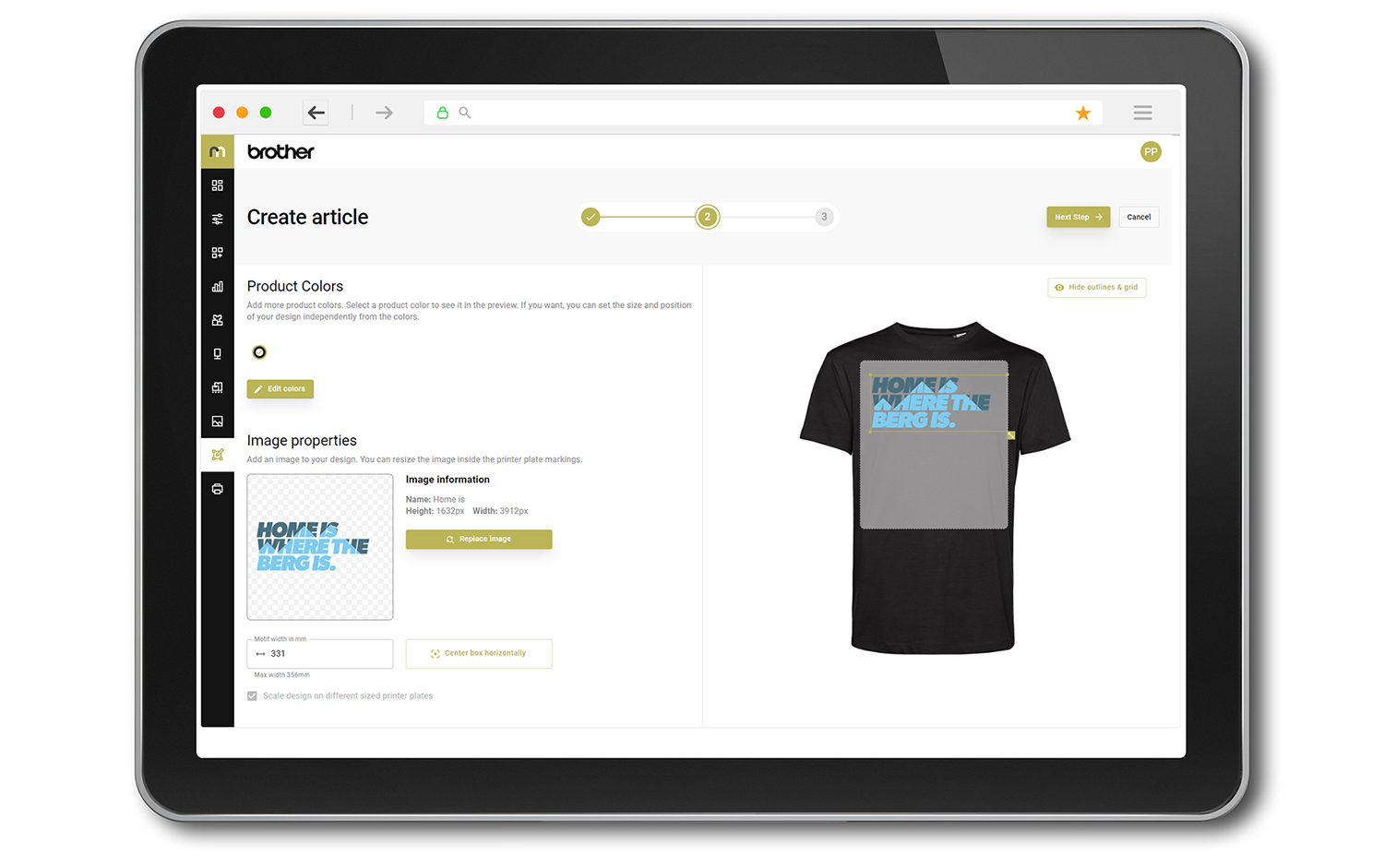
Myze contains numerous modules for the user’s every need. It facilitates customisation by enabling a print shop to create – using a touch terminal in Myze Creator – consumer designs efficiently. It transforms the online shopping experience of consumers, according to Stachetzki.
Myze also consists of the Analytics module which, among other things, promotes efficiency and productivity by providing machine operatives with more knowledge about production workflows. It is available to all users of GTX series printers.
Meanwhile, Myze fulfilment is an all-in-one solution that oversees a print run from initial order to production, through to product shipments. The system allows for label printing, picking, sorting, printing, drying, quality control and box packing ready for shipment. Maintaining the efficiency that the module affords are QR codes, which ensure the right garments belong to the right order.
And worth a mention is Store Connector, which links directly to Shopify and other known platforms. It taps directly into the evolving on-demand ecommerce trend.
Summarising the importance of Myze, Stachetzki says: “With our end-customer platform, we create added value that supports our customers in their daily work. At the same time, we have created a tool to further improve our service. Myze can be used for a wide range of production types and work steps and meets every requirement.”
Due to competitiveness among print service providers, especially in North America, demand for such solutions is growing. Stachetzki continues: “Interest is very high. New customers can’t wait to use Brother solutions. We are in the early access phase; we are discussing further functions together with our customers based on their feedback. The aim is to support their production processes, from small print jobs to large, in the best possible way.”
And despite targeting the on-demand ecommerce space, which is especially popular in North America and Europe, Stachetzki says that Myze is a relevant solution around the world.
He adds: “Myze simplifies production-on-demand, which is a very important step in reacting flexibly to fluctuating demand. This avoids overproduction, unnecessary costs and also saves resources. As we move forward we will work closely with textile manufacturers so that orders can be bundled and passed on effectively. Additionally, for every Myze account, we will plant a tree.”
Through enhanced efficiency, and by targeting the sustainable on-demand printing trend, it is hoped Brother’s customers will be able to navigate what is a very difficult period. The energy crisis and subsequent inflation has put untold pressure on companies across the textile supply chain. And it is not just the print service providers who are feeling the pinch, OEMs are also hurting.
Supply chain bottlenecks and initial energy price increases in 2020 were a result of a spike in demand across all industries following the pandemic. Add to this a war between Ukraine and Russia, the latter being one of the biggest suppliers of energy to mainland Europe, and you have a perfect storm.
“Of course, the situation of the last few years has had an impact on us, as it has on all companies,” says Stachetzki. “We are very well positioned internally – our warehouse and logistics were, and are, prepared for supply chain bottlenecks and can therefore handle most requests promptly. Thanks to our in-house technicians and other specialised departments, we only have to rely on external companies in a few instances. What also helps us, and our customers, is the flexibility of our GTX series printers. Whether it's high-volume production or personalised items, our customers can react cost-effectively to variable demand.”
Meanwhile, environmental pressures are high on the agenda at Brother, if not the rest of the textile industry. It is a perpetual problem and, according to experts, isn’t something we can afford to ignore despite current financial hardship. This is seen as an opportunity for businesses to become less dependent on fossil fuels and invest more in renewables to mitigate future energy crises.
Stachetzki says: “We have been working on reducing our internal energy consumption over the past few years. This was, and is, achieved through structural measures like better insulation, optimising heating systems and a complete switch to LED lighting. But it is also because the topic of sustainability is important to our employees, and they are actively working to reduce their energy consumption too.
“We have recently filled the position of sustainability manager, which helps us [Brother] to tackle and implement further measures; among other things, of course, the question of a company-owned solar system.”
As a company that has rallied print service providers to innovate their production lines and choose inkjet, Brother is aiming to lead by example by continuing to develop cutting-edge solutions commanded by the market. And by also committing to environmental pledges, using technology as a way of realising them.