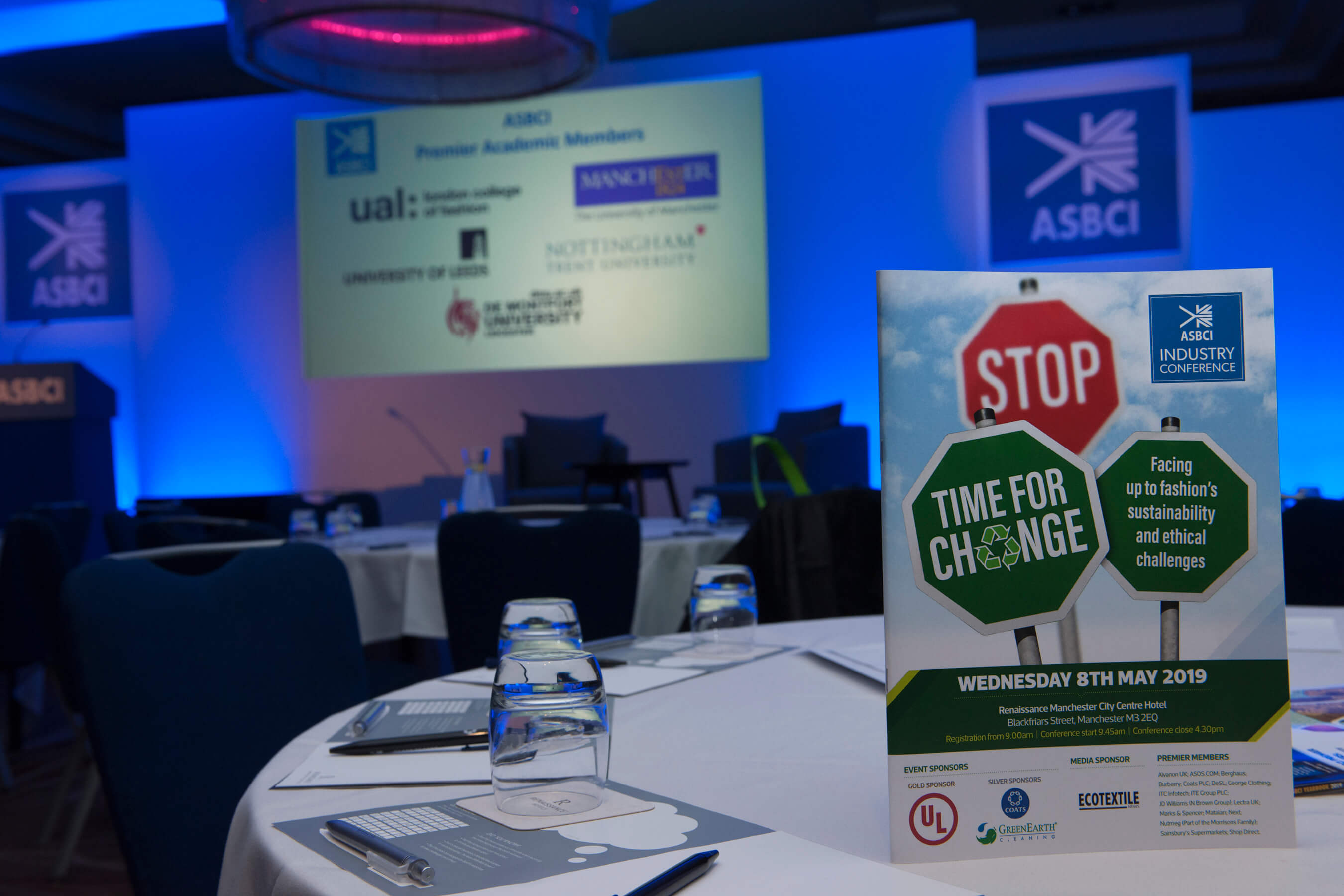
The Association of Suppliers to the British Clothing Industry's (ASBCI) latest conference returned to Manchester recently to tackle fashion's sustainability and ethical challenges. Jessica Owen reports.
Fast fashion, modern slavery and consumer behaviour were just a few of the insightful topics that were presented at the ASBCI's latest conference, which took place at the Renaissance City Centre Hotel in Manchester, UK, on the 8 May.
The event was introduced by the organisation's events committee chairman, Dr Julie King, and the presentations kicked off with a sofa discussion between the keynote speakers, Michael Spenley, co-founder of The Cotswold Sustainability Company, and independent fashion and sustainability expert, Colin McDowell OBE.
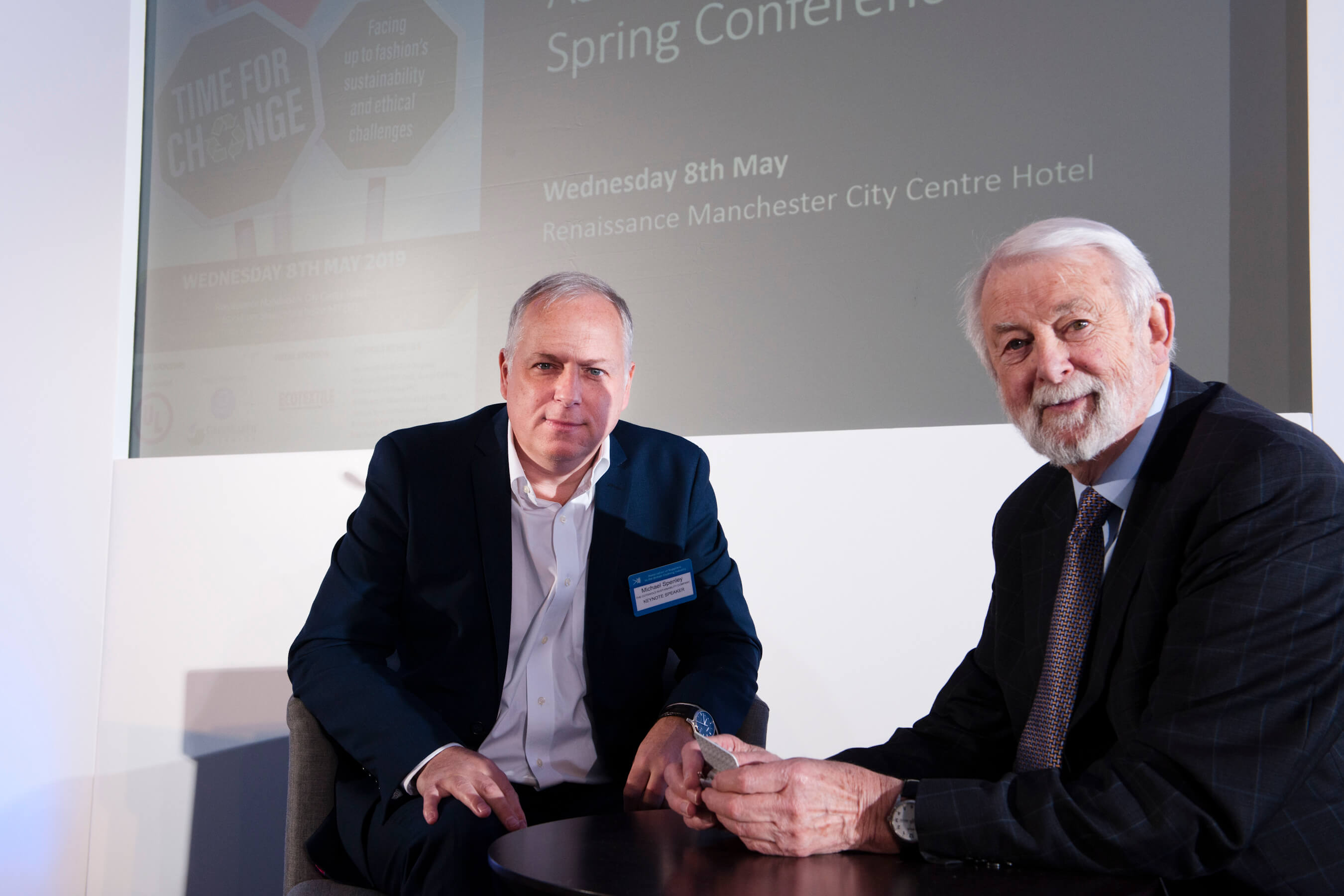
The pair discussed challenges that the fashion industry is facing such as overproduction, under-pricing and social ethics, with Spenley stating that, actually, ‘it’s not all doom and gloom’. Social media, celebrities and events such as the Oscars were also noted as being some of the drivers behind the increasing demand.
In terms of solutions, Spenley claimed that ESG (environmental, social and governance) ‘could really save us’, while McDowell explained that "we need to have governments who believe that things such as climate change are going to finish us all off" if we are to make progress.
Concluding the discussion, McDowell said: "Go forth and multiply. If there are enough people who actually care, things will change."
Moving on, Daphne Guelker, head of advisory services at UL Consumer Retail Services, gave a noteworthy presentation on modern slavery – a topic that in this day and age is often overlooked, yet around 16 million people are forced into labour in the fashion and textile industry.
Guelker explained that asylum seekers and refugees are often the most vulnerable when it comes to this issue, and possible solutions include adopting an employer pays principal, mapping the labour supply chain and assessing recruitment companies.
Other speakers throughout the morning session included Lucy Murphy, business development officer at Shirley Technologies, Carly Bilsbrough, global responsible sourcing manager at Shop Direct, and Vanessa Wakefield, general secretary at Recyclatex.
Wakefield spoke about how ‘textile waste should be valued as a resource’ and named many companies who are working on recycling garments into new fibres, and others creating new business models, for example Teijin, Paramo, Block Texx, Worn Again and Evrnu.
Garry Knox, sustainability director at GreenEarth Cleaning, focused on garment aftercare, addressing the issue of microfibres and using GreenEarth's silicone-based technology to dry clean clothes. He said: "Just making a garment last nine months longer could make a significant difference."
Marks & Spencer's technical lead on environmental sustainability and technical services, Phil Townsend, gave a presentation on M&S’ journey to sourcing more sustainable cotton.
The well-known high street retailer's spring/summer 2019 collection has been made with 100% cotton that has been more sustainably sourced and produced, and Townsend said that the Better Cotton Initiative (BCI) has helped a lot with this process.
"Farmers are now producing better cotton that is of a better quality, and because of this they are actually getting a better price for it," he said.
After lunch, Andrew Morgan, head of corporate responsibility at Coats, spoke about the company's priorities and targets regarding sustainability, noting that one of its aims is to recycle 100% of its premium polyester by 2024.
Jackie Lewis, senior consultant at Alvanon, posed an interesting question during her presentation on caring for the people and the planet – where's the profit? - "Is sustainability just the new buzz word for efficiency?"
She explained: “If you start telling businesses that sustainable practices will save them money and reduce waste, they will listen more than just telling them that it is the right thing to do."
Peter Hughes, sustainability lead at Eurofins/BLC Leather Technology, gave a balanced explanation on the rise of vegan alternatives to leather.
People often consider 'vegan' alternatives to be more environmentally and animal friendly, but actually vegan materials have many challenges, too. For example, less than 3% of these materials are recycled, they have longevity and performance issues, there's still a potential for microplastic release and fossil fuels are used to make the raw materials.
Representatives from the popular online retailer Missguided also attended the event. Kristian Lee, fabric and product compliance manager, and Grace Downes, supplier development manager, spoke about the company's buying strategy, supply chain, returns management and initiatives regarding sustainability.
"Our buying strategy is to test, repeat and then maximise," said Downes. "We are also using social media to try and re-educate our consumers about wearing items more than once."
And last but not least, Dr Mark Sumner, lecturer in sustainability, retail and fashion at the University of Leeds, gave a thought-provoking type of psychology lesson about the power of habit, needs and desires, and how educated consumers are green consumers.
"Consumers are absolutely bonkers, they have no idea why they buy stuff," he said. In fact, "34% of the population buy items that they hadn't planned to – that is not rational."
He finished by saying: "There are a whole range of stakeholders that we need to be listening to, like academics, NGOs and the media to some extent. Sometimes we need to put aside consumer behaviour and just do what's right."
To close the conference, the ASBCI's chairman Dr Alistair Knox, said: "What we do at ASBCI events is to help spread best practice, industry awareness, training and education.
"We cannot control population growth, but what we can do is treat that as effectively, efficiently and environmentally friendly as we can."
To find out more information about the ASBCI, visit https://www.asbci.co.uk/