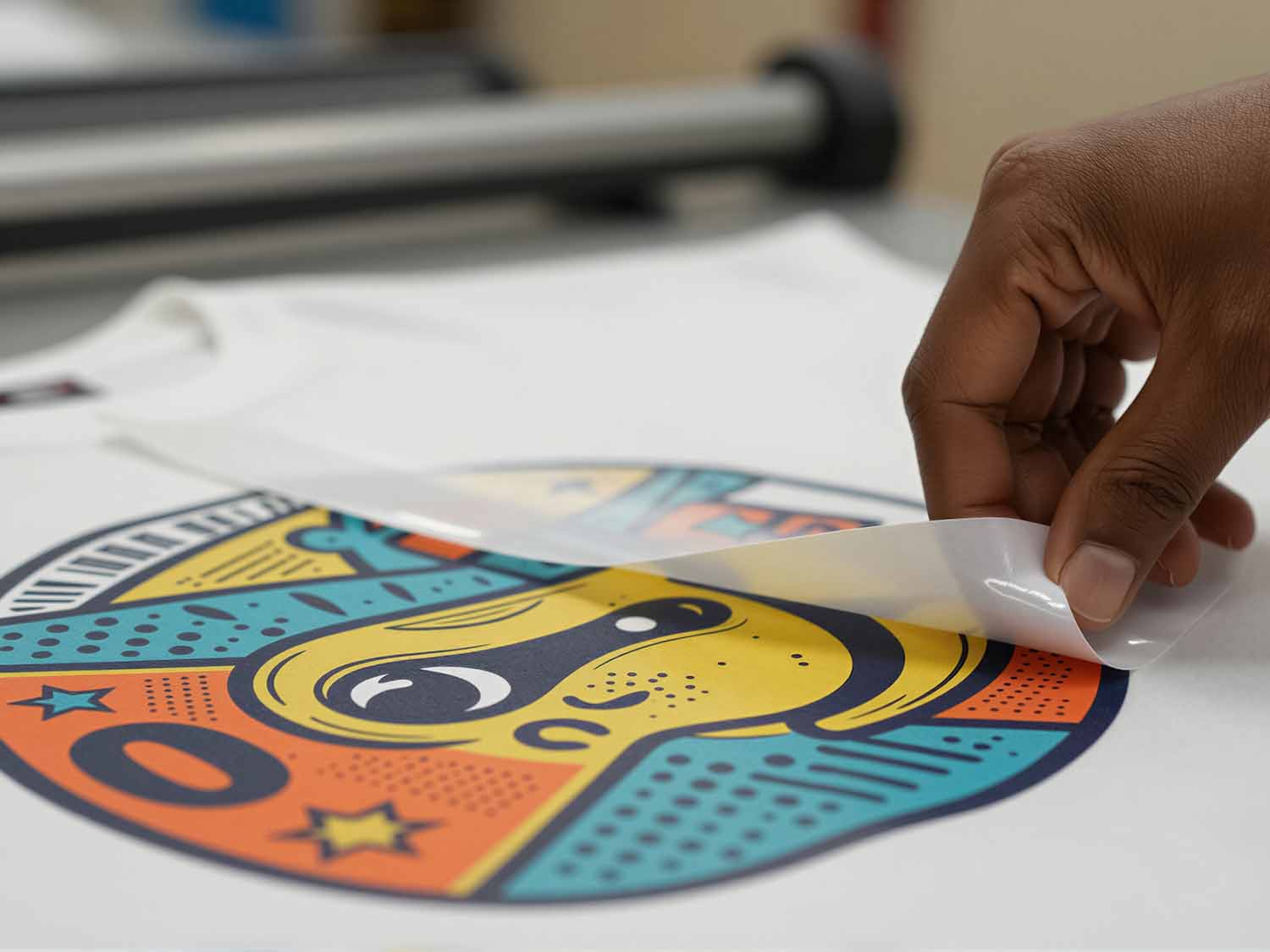
The evolution of digital inks throughout the last two decades has been integral to the growth of the inkjet textile printing market.
However, there is evidence to suggest that the drive for high-performance inks, at a reasonable price, has come at the expense of the environment.
Dye-based inks currently boast the largest share of the digital textile printing market. Of these, dye-sublimation inks are the most common due to their compatibility with polyester fibres: the use of synthetic materials, like polyester, has grown due to the demands of fast fashion.
But pigments are now making significant inroads into the digital textile printing market thanks to the work of companies like Itaca Textile. The Spanish company originally made a name for itself by producing pigment solutions for digitally-printed ceramics and has since applied its knowledge to the inkjet textile printing market as well.
“To date, pigment printing has faced numerous technological and market barriers, but Itaca’s expertise has enabled many of these hurdles to be overcome,” says Teresa Carda, Itaca’s textile project coordinator. “As the remaining obstacles fall, we can expect huge growth in digital pigment printing.”
Previously, pigment inks faced intense scrutiny because of a limited colour gamut, poor hand feel, and a tendency to clog inkjet print heads. So what has changed?
During the past decade, interest in digital textile pigment inks grew substantially because of their sustainable credentials. This resulted in more ink producers and OEMs investing money and resources into developing a digital pigment printing solution which was free of any pitfalls.
Itaca saw this as an opportunity to expand its business and by doing so became one of the leaders in developing a new class of inkjet pigment inks, it says. The company’s textile offering has been commercially available in Spain for over two years.
Additionally, the introduction of stringent environmental regulations, first in Europe and subsequently in China, were a turning point for the industry. They have urged print service providers to look at more environmentally friendly manufacturing processes. Modern inkjet textile pigment inks, which Itaca says have also been industrially tested, have become the only viable alternative on the market for many textile print houses.
Changing consumer landscape
In recent years, the spotlight has been focused on the textile supply chain’s environmental shortcomings, and there is now evidence to suggest that, due to increased awareness, consumer buying habits are changing. This shift has boosted on-demand manufacturing and the personalisation trend, in which pigment inks play an important role.
“Pigment inks increase flexibility, shorten lead times, reduce customer product development times, lower water and energy consumption, reduce capital outlay, broaden the range of printable fabric composition, and enhance lightfastness,” according to Carda. “Digital pigment printing also provides greater flexibility on recycled fibres, thus boosting the circular economy.”
Taking this into account, it is unsurprising that pigment inks are now in widespread use across the digital textile printing industry.
Improvements
But it has been uttered that these inks are not yet the perfect all-round solution when it comes to sustainability, due to the fact that pre-treatments are sometimes required to achieve optimum printing performance.
Itaca, however, strongly disagrees with this notion. According to data published in a recent study - carried out by a third-party textile engineering consultant at Itaca's request - digital pigment printing inks, compared to dye-based digital inks, reduce water consumption by 67%, energy use by 50%, C02 emissions by 47%, and production time by 40%. Itaca adds that these figures cut operating costs by a further 19%.
The study also found that the performance of the final product was maintained. "The textile goods produced during the tests remained compliant with clear to wear fastness requirements," Carda says. "These findings reaffirm Itaca's belief that digital pigment printing technology is the most sustainable textile printing process available on the market. It is here to stay."
New approach
But as well as finding a more all-round solution to the issue of sustainability, Carda believes that the digital textile printing industry’s outlook needs to change.
She says: “Though sustainability is a key factor in purchasing inks and consumables, most print houses prioritise price. However, the supply chain as a whole needs re-engineering and all the stakeholders need to re-focus their priorities, particularly in the sourcing of the fabric.
“The route towards enhanced sustainability will probably require the adaptation of current technologies, and digital pigment printing is a major step in that direction. Digital pigment printing enables fast delivery and production on-demand, reduces stocks, overproduction, and transportation, thus also diminishing the carbon footprint.”
Itaca sources also delineate that digital pigment printing boosts the circular economy - a new approach to economic development which is being advocated by opponents of the take-make-waste linear model. But as Carda previously suggested, significant change will not ensue until the priorities of decision makers across the textile supply chain change.
Economic challenges
There are fears that environmental concerns will be cast aside as the textile industry suffers ongoing turmoil as a result of Covid-19. The global economy has been devastated and the textile industry has been particularly hard hit due to a demand slump and order cancellations.
Itaca exhibited at ITMA for the first time last year as it looked to expand into the textile industry. The show was a success for the company and the digital textile printing market more broadly. “A great many customers and stakeholders expressed their interest in our inks and technology,” Carda says. “And that interest resulted in sales in the second half of 2019.”
But no one was prepared for what was to materialise at the start of 2020. Itaca, which Carda says is a leader in the Spanish home textile digital pigment printing market, said the plan was to move further into foreign markets, but this expansion has had to be put on hold.
Pigment solutions are featuring more readily in the product catalogues of inkjet printing OEMs, which is evidence that the demand and awareness of inkjet pigment inks is growing. But the implementation of new technologies is no longer on the agenda of print service providers around the globe.
The events calendar has also been decimated in 2020 due to coronavirus. And, according to Carda, this is also having a big impact on the number of digital textile pigment installations.
It is hard for analysts to predict a timescale for economic recovery because the world finds itself in an unprecedented position, but the issue of sustainability will return and when it does companies like Itaca will be in a position to capitalise.