1. General overview
The North Face was founded in 1968 and has grown to become one of the leading brands in the design, manufacture and marketing of apparel, footwear, equipment and accessories for outdoor sports. However, the brand has recently redefined its market positioning and now it not only focuses on the traditional outdoor market, but has also started addressing new territories of lifestyle.
The North Face is headquartered in Alameda, California, US, and belongs to VF Corporation (VFC) – one of the largest footwear and apparel companies – which certainly enforces the brand’s capabilities in developing products. VF Corporation owns more than 30 brands categorised in the following four coalitions: Outdoor; Active; Work; and Jeans. The North Face belongs to the Outdoor category which, together with Active, forms one of the largest contributing segments to the company’s business. In FY 2019, its sales accounted for around 34% (US$4.6bn) of the total revenue. Other brands belonging to the Outdoor coalition include: Timberland, Icebreaker, Smartwool, and Altra.
The North Face is one of five key brands in the company’s diversified portfolio. Therefore, the brand is of strategic importance to VF Corporation and this report uses data and information focused on VF Corporation to analyse The North Face’s strategic behaviour.
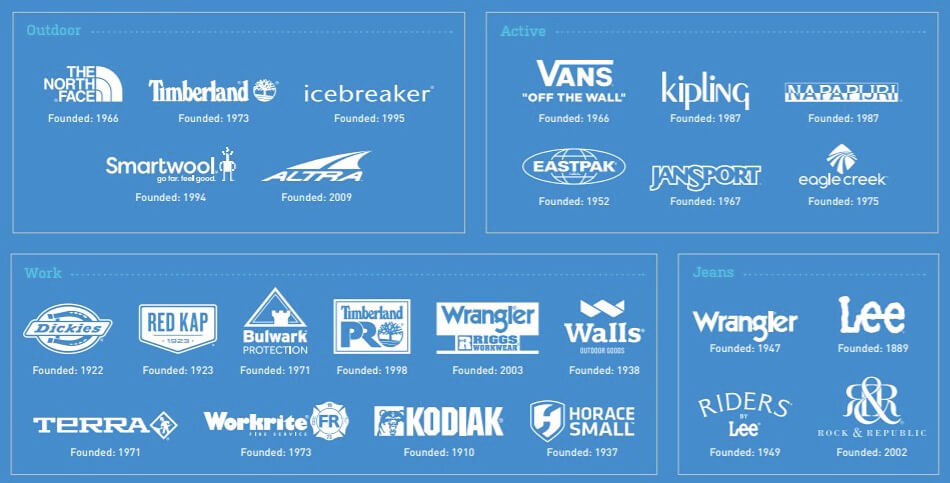
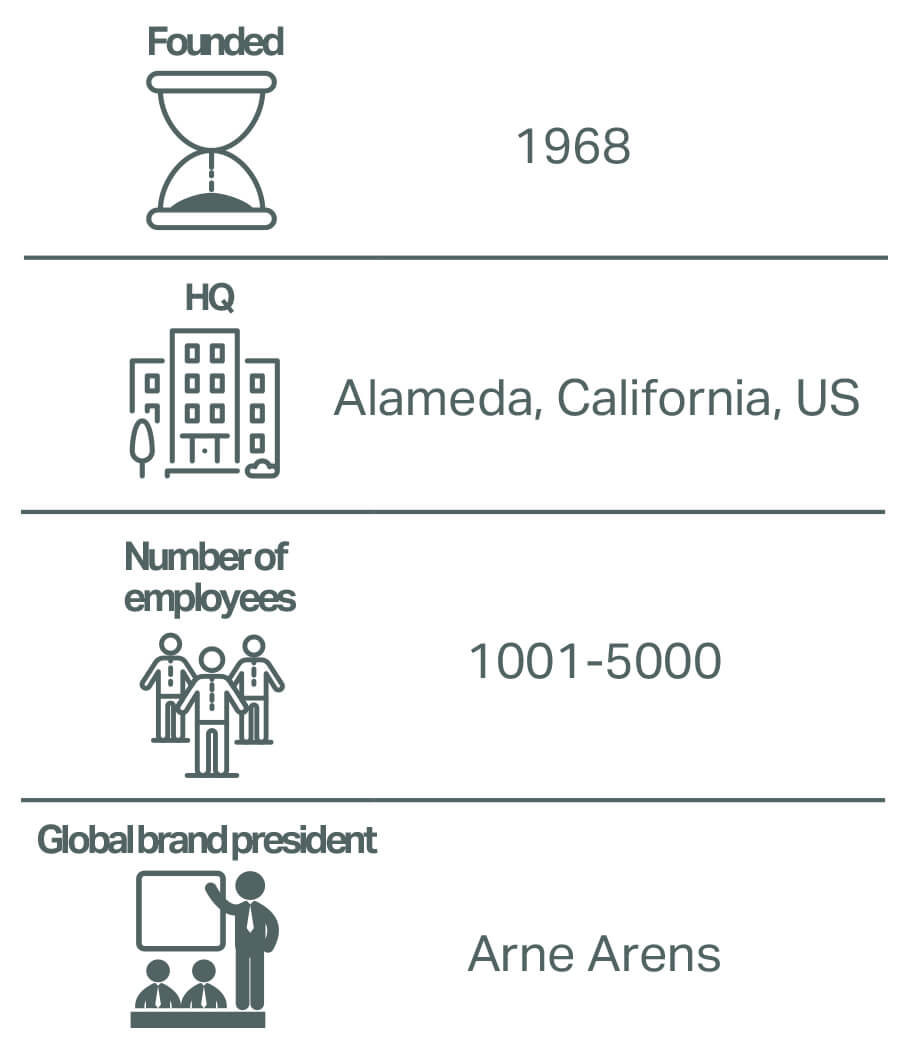
Figure 3: VFC’s revenue split FY 2019. Source: VFC’s Annual Report
2. Financial performance
VF Corporation’s revenue increased 12% in FY 2019 to reach a value of US$13.8bn. The key contributing factors to this value were the company’s US$1bn organic growth and US$696.3m raised through acquisitions. The Outdoor segment to which The North Face brand belongs played an integral part, with its revenue increasing 9% to US$4.6bn, including US$244.4m coming from acquisitions.
Looking at The North Face specifically, its global revenue increased 9% and reached a value of US$2.6bn in FY 2019. This was primarily driven by strong operational growth across all channels and regions, including strong performance in the wholesale channel and growth in the direct-to-consumer channel driven by increasing online sales, comparable store growth, and new store openings. Going forward, the brand’s aim is to achieve global revenue growth of 8-9% within the next few years, adding around US$1.2bn to the total brand revenue by 2024.
According to the brand, the targeted market that includes the Mountain Sports, Mountain Lifestyle and Urban Exploration segments is worth US$135bn. The brand has been traditionally focused on the core Mountain Sports category, which looks to be the most established. It has only recently started attracting new consumers and capitalising on the growth potential of the Mountain Lifestyle and Urban Exploration segments. It is estimated that the brand holds a share of around 6% in Mountain Sports, 4% in Mountain Lifestyle, and around 1% in Urban Exploration.
Figure 4: The North Face’s revenue growth, Source: Investor Day 2019
3. Geographical locations
In FY 2019, VF Corporation sourced around 59% of its revenues from the US and 41% internationally. When looking at the Outdoor segment specifically, 48% comes from the US and 53% internationally.
Focusing on The North Face itself, currently around 58% of sales come from the US, followed by 27% from Europe, the Middle East and Africa (EMEA), 10% from Asia-Pacific (APAC), and 5% from the non-US Americas. It is reported that the APAC region in particular presents numerous growth opportunities for The North Face. In FY 2019, there was a 13% revenue growth in this region, followed by 11% in EMEA, and 8% in the Americas. Looking forward, it is estimated that from 2019-2024, APAC will continue to deliver the highest growth rate of 13-14%, followed by EMEA with 7-8%, and the US with 7-8%. As a result, it is expected that APAC’s revenue share for The North Face will increase to 13% by 2024.
Figure 5: The North Face’s revenue by geographies. Source: Investor Day 2019
This comes as no surprise as the Asian market presents lucrative opportunities, with China in particular driving growth prospects. A long way from maturity, it is safe to say that a few years ago, the Chinese outdoor apparel & footwear market experienced a growth spurt, prompting an increasing number of Western outdoor brands, including The North Face, to allocate massive resources. In fact, outdoor sportswear demand in China has been greatly stimulated in line with rising consumption levels. According to the World Economic Forum, in the coming years, consumption will grow by an average of 6% annually to reach RMB56tn (US$8.2tn) by 2027. Besides, Chinese consumers are moving towards a health-conscious lifestyle, which means that people are in general willing to pay more for healthcare-related goods and services, and their increased participation in outdoor sports activities has supported the demand for outdoor products. Moreover, according to Euromonitor International, Chinese consumers’ tastes are gradually shifting from traditional luxury goods towards sports pieces and healthy lifestyle brands, signalling opportunities for high-end fashionable outdoor gear.
4. Production locations
VF Corporation owns 19 VF-operated manufacturing facilities and around 700 independent contract manufacturing facilities in about 60 countries. As for The North Face itself, the company seems to be interested in manufacturing in the US. This can be seen through the implementation of the Backyard Project in 2014, which focuses on producing garment lines in the US. The company collaborates with American cotton farmers and local businesses focusing on fabric knitting, sewing and dyeing.
5. Environmental sustainability
The North Face’s strong focus on sustainability can be seen through various initiatives. The brand pays close attention to the materials selection and manufacturing processes, which seem to have the largest environmental impact. According to the company, 65-85% of the impact comes from the materials manufacturing stage of production.
The company has partnered with bluesign technologies since 2010 and increasingly uses bluesign-approved fabrics. The annual share of bluesign-approved fabrics in the apparel line has grown from 21% in 2010 to 39% in 2015, and has resulted in water savings of 310,507,006 gallons, energy savings of 69,594,408 kWh, and chemical savings of 8,742,596 lbs until 2015, suggesting that being part of the bluesign system is an important criterion in a supplier’s selection.
"VF Corporation aims to use 50% recycled polyester
and nylon by 2025 across all of its brands"
One of the main focus areas is the circular economy. VF Corporation aims to use 50% recycled polyester and nylon by 2025 across all its brands, including The North Face. In fact, The North Face already uses rPET in many of its product lines, including ThermoBall Eco – a recycled reinvention of its ThermoBall jackets originally launched in 2013. The company’s recent commitment to circularity can also be seen through a group project it has funded and participated in that aims to research, map and identify opportunities to pilot circular supply chains driven by the mechanical and chemical recycling of cotton, viscose and polyester textile waste.
Notably, an important issue facing the textile industry is what to do with textile products at the end of their life, and how to recycle them. An estimated 150 million tonnes of clothing and shoes are sold worldwide each year, with the majority reaching landfill or incineration. Infrastructure to recover waste textiles from the consumer is not widely established, though there are companies in this space as well as brands establishing their own recovery programmes, with one of them being The North Face.
The brand has launched its ‘Clothes the Loop’ programme, which encourages consumers to take their used clothing and footwear to The North Face retail and outlet stores in exchange for a US$10 voucher towards the next purchase of US$100 or more at The North Face. It collaborates with Soles4Souls – a charity that collects new and used apparel and shoes and redistributes them to people in need and through micro-enterprise partners. According to the brand, since the programme’s inception, consumers have donated more than 95,000 pounds of garments and shoes for reuse and recycling.
Moreover, The North Face brand has also introduced a pilot partnership in Europe with The Library of Things to develop a rental programme for camping gear, luggage and other equipment. People can borrow the professional camping equipment for GB£2.20 per day.
Other initiatives include the Renewed programme - launched at the end of 2018 - which focuses on selling previously owned, damaged and repaired or used products. According to the company, between the programme launch and May 2019, there were 14,342 garments renewed, saving more than 100,000 pounds of garments from going to landfill. Besides, circular design seems to be increasingly important; the brand aims to expand its Renewed programme through investing in education, to take more responsibility for creating smarter products.
One way of addressing the sustainability challenge is by exploring the design aspects of durability and repairability. The North Face provides a lifetime guarantee for clothing and equipment. Although this might lead to a lower frequency of product changes, it certainly minimises the environmental footprint.
"In 2018, 34% of VFC’s products were PFC-free and
the company aims to achieve a goal of 100%
non-fluorinated DWR used in clothing products by 2025"
Also, VF Corporation has its own chemical management programme, CHEM-IQ, which aims to eliminate hazardous chemicals from the supply chain. It collaborates directly with the chemical industry, which supplies its partners to assure compliance with CHEM-IQ. Some fabric manufacturers provide the whole chemical inventory for CHEM-IQ screening. Suppliers are obliged to eliminate usage of any prohibited chemicals. There are more than 430 substances that each sample is screened against. The North Face’s strong commitment to chemical management can be seen through its increasing replacement of durable water repellent (DWR) chemicals with environmentally-friendly solutions. In 2018, 34% of VFC’s products were PFC-free and the company aims to achieve a goal of 100% non-fluorinated DWR used in clothing products by 2025.
The North Face also pays close attention to sourcing sustainable cotton, which can be seen through its partnership with the Better Cotton Initiative (BCI). In 2018, 83% of used cotton by the whole group was sustainably grown. The company prioritises the purchase of cotton from the US, and all cotton purchased by VFC that is not from the US or Australia is grown under a cotton growing sustainability scheme.
Moreover, all virgin down purchased in 2017 and 2018 was certified to the Responsible Down Standard (RDS). In 2018, it was also the first time that VFC purchased recycled down, which was certified to the Global Standard (GRS). The North Face uses most of the goose down acquired by VFC.
6. Current product portfolio
6.1. Segments
The North Face separates its product lines into three categories – Mountain Sports; Mountain Lifestyle; and Urban Exploration. The product segments sell the following products:
Figure 6: The North Face’s product categories
Notably, in FY 2019, its core category Mountain Sports accounted for the largest share of the business (53%), followed by Mountain Lifestyle (30%) and Urban Exploration (17%).
The North Face’s apparel products are developed for snow activities, climbing, hiking, training and climbing. Looking at the apparel products’ distribution across activities, the male portfolio is focused on snow activities, followed by camping, whereas the female portfolio is more concentrated on hiking, followed by climbing and training.
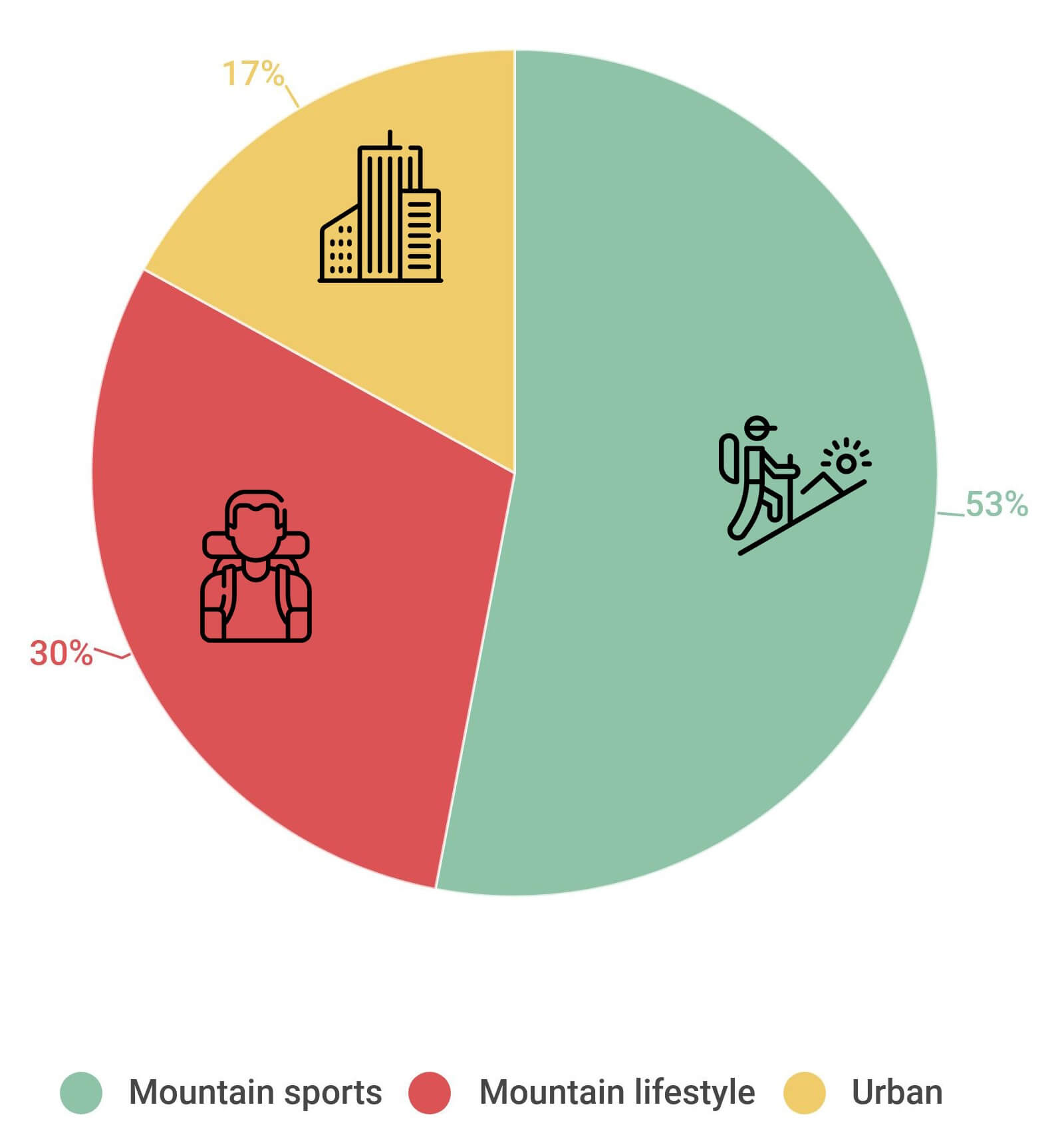
Figure 8: The North Face’s male product distribution across categories. Source: The North Face US e-commerce website accessed in February 2020
Figure 9: The North Face’s female product distribution across categories. Source: The North Face US e-commerce website accessed in February 2020
*The products are included in more than one category if they are designed for more than one category
6.2. Products
The company’s products incorporate technologies developed by various textile companies, such as Gore-Tex, PrimaLoft, HeiQ, DuPont, and Polartec. However, it also develops its own technologies. Some of the recent key developments include:
THERMOBALL
In partnership with PrimaLoft, The North Face developed ThermoBall – synthetic insulation that mimics down clusters. The brand claims that Kansas State University proved that ThermoBall has a warmth equivalent to 600-fill goose down. The key performance properties include low weight, loft, warmth, and compressibility of down with the wet-weather insulating performance of a synthetic. In 2018, the brand launched the Eco version of the technology, utilising recycled polyester fabric and recycled PrimaLoft insulation made from plastic bottles diverted from landfills.
FUTURELIGHT
Futurelight features a three-layer nanofibrous fabric that provides lightweight, breathability and protection against harsh environmental conditions. According to the brand, increased air permeability is achieved without compromising on durability and waterproof properties. A combination of all these features seems to be particularly important for mountain sports, which take place in harsh environmental conditions and require a high level of physical activity.
The membrane is created through a nanospinning process. This technique essentially extrudes polyurethane fibres through more than 200,000 nozzles and then repeatedly layers the fibres onto themselves to create an ultra-thin and flexible membrane structure. The nanospinning process creates nanoscale pores within the membrane; the pores allow air particles to penetrate the fabric while blocking out water molecules. According to The North Face, the membrane is bonded onto the internal and external fabrics which are constructed from 90% recycled materials with a non-PFC durable water-repellent (DWR) finish, making this fabric its most sustainable to date.
Tunability is one of the unique features of the fabric. The fabric’s weight, stretch, durability, texture, breathability and construction can be adjusted during the manufacturing process to match the end-use of the product and enhance the comfort of the wearer – making it suitable for use across a variety of the brand’s ranges. Currently, The North Face has utilised this technology for several collections including its Summit Series for high alpine conditions, Steep Series for back country treks, and Flight Series for long runs on intense trails.
Summit Series Advanced Mountain Kit
As mentioned above, Futurelight is featured in the brand’s recently developed Summit Series Advanced Mountain Kit, which is claimed to be breathable, packable, warm and lightweight. The kit features 21 products that are designed to work together. Notably, construction innovation plays a critical role in this development. The system uses Cloud Down, which is created using a discontinuous offset baffle construction for increased thermal performance in a lighter package. This construction features an asymmetrical inner and outer construction, allowing maximum space for the down to loft while keeping the lining close to skin for enhanced thermal performance. It also utilises 50/50 Down – a breathable down layer with less bulk than traditional options, FutureFleece – a full-loop, lightweight fabric made of octagonal yarn, as well as Dot Fleece – an active baselayer that pulls moisture away from the skin with the use of hydrophilic and hydrophobic yarns.
7. R&D trends
The brand’s research, development and design process comprises four steps. The first involves Research & Design in conjunction with world-class athletes, which focuses on collecting athletes’ feedback. The second step is Advance Material Research & Development. At this stage, the brand collaborates with materials engineers to develop fabrics with high technical performance. The third step is Innovative Design & Construction, while the last one is Laboratory Testing & Expedition.
7.1. Expanding footwear business
The North Face reports that it intends to expand its footwear business. Footwear currently makes up around 7% of The North Face’s business, and the brand’s ambition is to double that by 2024. Increasing effort in this category can be seen through the creation of a separate footwear department in-house in 2017. Establishing a new leadership in the footwear category with an outdoor and performance footwear background also signals a strong focus on this segment. The brand has announced that it is working on a new innovation platform that aims to be launched in spring 2021.
The North Face’s proposition seems to be an active outdoor brand, and therefore, it is expected that it might redefine the outdoor footwear category – which tends to be associated with a lack of activity and heaviness – by delivering improved stability, control and comfort.
7.2. Focus on women
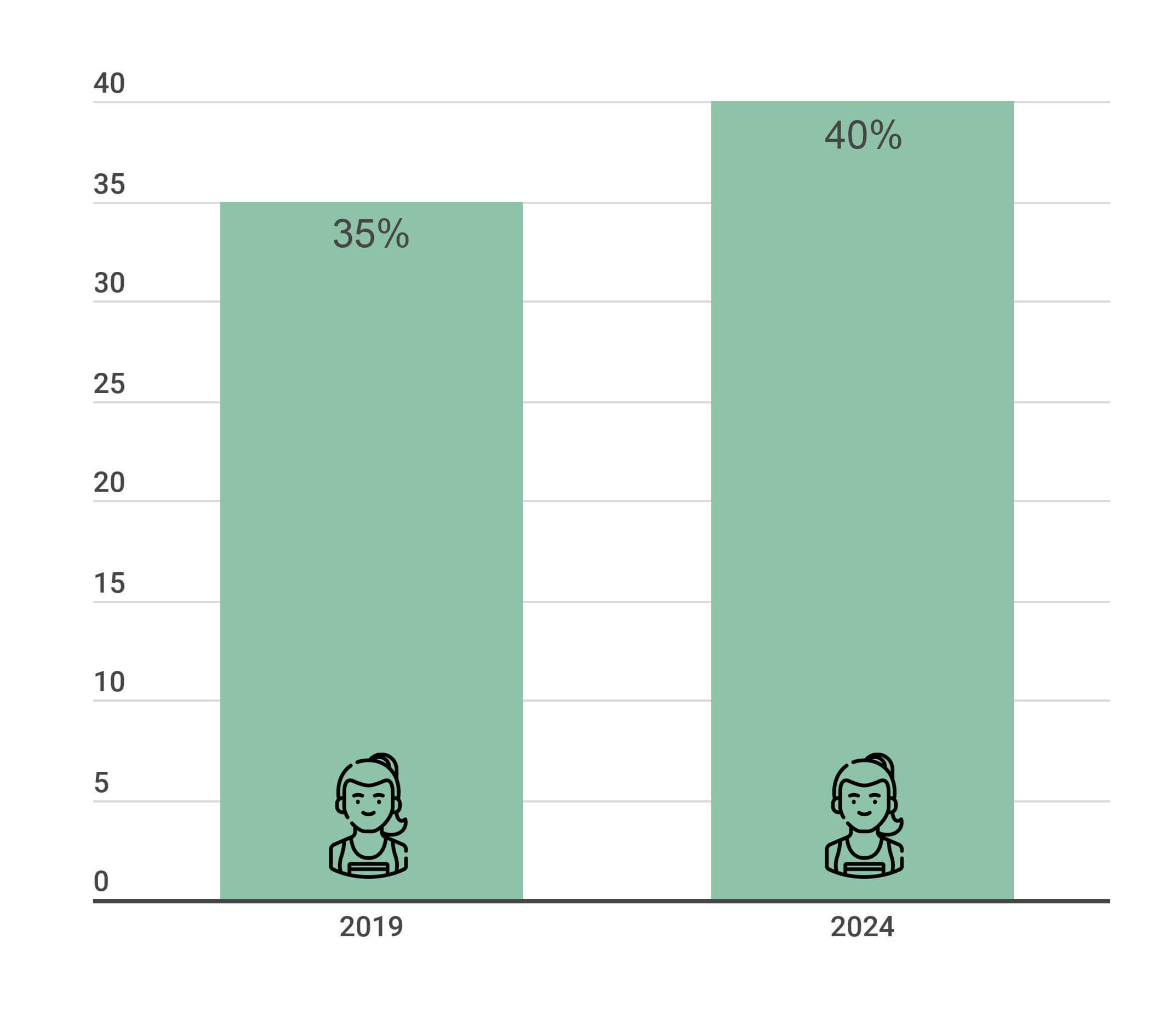
It is estimated that The North Face’s current female business accounts for around 35% of total revenue, but the brand’s ambition is to grow it to 40%. These efforts can be seen through its partnership with Girl Scouts of the USA to launch Girl Scouts’ Outdoor High Adventure badge programming which includes 12 new outdoor adventure badges designed to introduce the 1.7 million active girl scouts across the US to outdoor activities. Additionally, the first two female-specific stores were opened in the US in 2018: in Edina, Minnesota, which focuses on running and training apparel, and in San Francisco, which covers all product lines for women. This continuous effort to grow the women’s business will likely result in the brand increasing product design innovations tailored to the female market.
In fact, female consumption of outdoor products is still less than that of men and has historically been under-represented in the marketplace. However, there seems to be a shifting conversation in women’s outdoor participation and product sales. Today, women are increasingly embracing their adventurous side, focusing on their physical and mental wellbeing and engaging in outdoor sports. According to the market research group NPD, men’s apparel and footwear in the outdoor industry product segment was flat in the most recent year, whereas women’s increased 2%. This has driven the emergence of female-specific outdoor brands, such as Astrid Wild, and has motivated traditional outdoor brands to expand their female portfolios.
7.3. Diversification from core mountain category
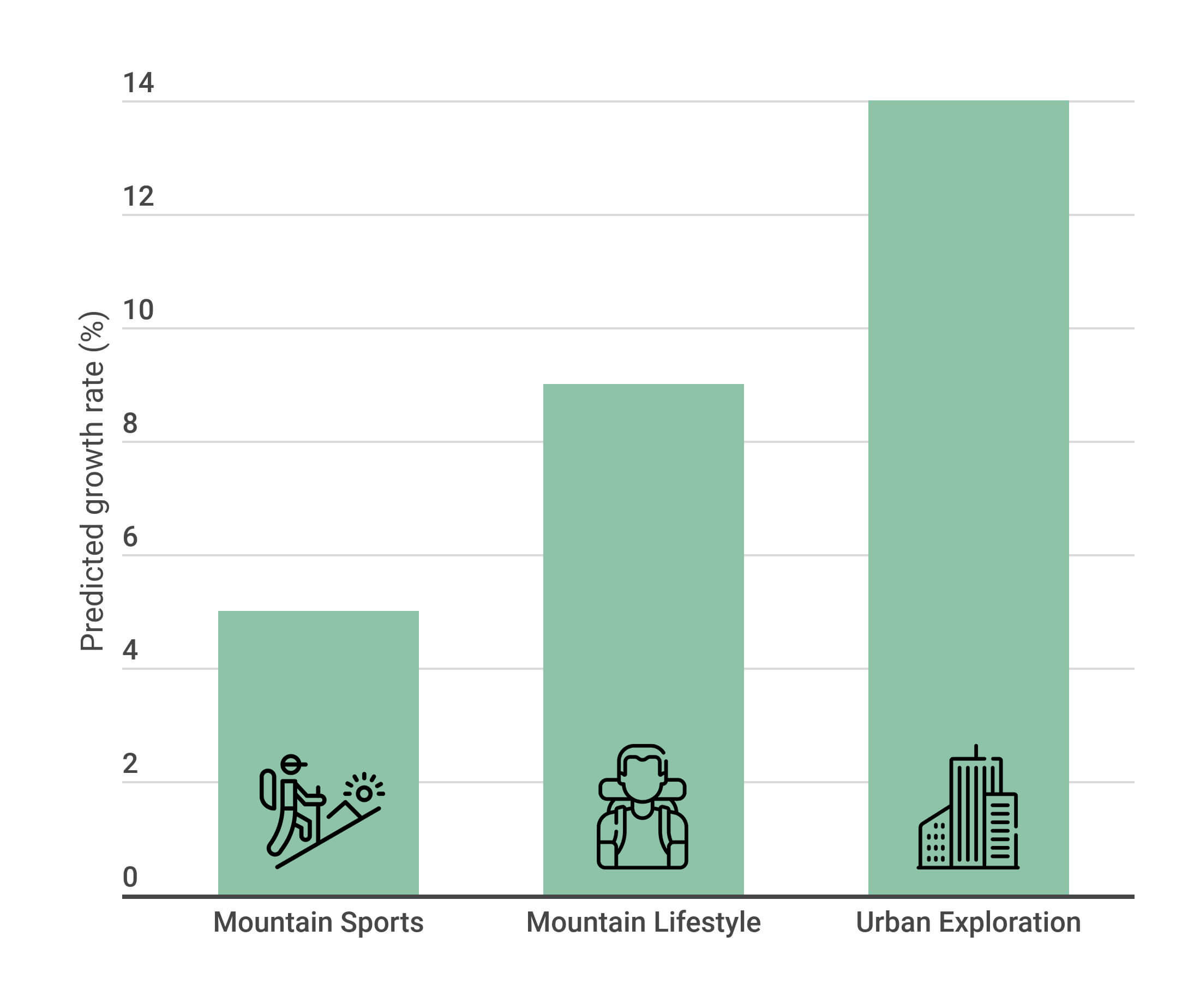
The North Face continues to build on its performance innovation, which has laid at the heart of the brand for over the last 50 years, and the recent development of the Summit Series Advanced Mountain Kit proves its continuous commitment to this category. However, the growth is expected to be particularly driven by the Mountain Lifestyle and Urban Exploration categories, which seem to be positioned as premium products that are rooted to the brand’s heritage in technology or design.
According to the brand, the Mountain Lifestyle and Urban Exploration categories are anticipated to grow at above-average growth rates of 9-10% and 14-15% respectively between 2019-2024, which will result in Mountain Lifestyle accounting for 32% and Urban Exploration accounting for 23% by 2024. This will likely result in a growing number of products within these categories.
Moreover, the brand is increasingly diversifying itself from being too dependent on outerwear by growing its spring/summer side of the business. This can be seen through the new team it has appointed to work on sportswear both in product design and supply chain. The brand also claims that it has adjusted its supply chain to be more agile and sportswear-specific; this also signals its commitment to become more of an all-year relevant brand with more spring/summer focused collections. This move comes as no surprise as winter seasons are becoming increasingly shorter with less snow, thereby resulting in demand slowing down for winter-specific products.
7.4. Growing smart textiles focus
Despite multiple challenges related to the commercialisation of smart clothing in the sports and outdoor sector, the increasing demand for smart solutions and the rising popularity of the internet of things (IoT) are expected to facilitate the adoption of smart textile products. The North Face seems to be just one of the outdoor brands that are tapping into the game. This can be seen through its recent partnership with clim8 – an ingredient brand which offers intelligent self-regulating thermal systems that monitor, analyse, activate and regulate temperature according to the user’s specific needs. The technology can be integrated into next-to-skin garments. The user can define a comfort temperature as everyone has specific needs depending on gender, date of birth, height and weight. Current partners of clim8 include ODLO, Ixon, K2, and W.L Gore.
References
To collect data for analysis of company profiles we use a wide range of data and information sources such as the following:
- Company website
- News websites
- Press releases
- Private equity websites
- Market reports
- Annual reports
- Investor Day
- Sustainability report
- WTiN news
And for this specific profile, we have also used the following:
- “ Revenue growth of VF Corporation’s The North Face brand by region worldwide 2019 | Statista.” [Online]. Available: https://www.statista.com/statistics/1011877/revenue-growth-of-vf-corporation-s-north-face-brand-worldwide-by-region/. [Accessed: 23-Mar-2020].
- “Future of Consumption in Fast-Growth Consumer Markets: China.” [Online]. Available: http://www3.weforum.org/docs/WEF_Future_of_Consumption_in_Fast_Growth_Consumer_Markets_China.pdf. [Accessed: 23-Mar-2020].
- “Sustainability Is Opportunity For The North Face: An Interview with James Rogers, Director of Sustainability | CleanTechnica.” [Online]. Available: https://cleantechnica.com/2018/08/27/sustainability-is-opportunity-for-the-north-face-an-interview-with-james-rogers-director-of-sustainability/. [Accessed: 23-Mar-2020].
- “The North Face Environmental Initiatives | Paddy Pallin.” [Online]. Available: https://www.paddypallin.com.au/blog/the-north-face-environmental-initiatives/. [Accessed: 23-Mar-2020].
- “Is The North Face worth your money? - YouTube.” [Online]. Available: https://www.youtube.com/watch?v=I7ODh021stA. [Accessed: 23-Mar-2020].
- “Recycled Reinvention: ThermoBall Goes Eco.” [Online]. Available: https://www.thenorthface.com/about-us/news/2018/ThermoBall-Eco.html. [Accessed: 23-Mar-2020].
- “Homepage - I:CO.” [Online]. Available: https://www.ico-spirit.com/en/. [Accessed: 23-Mar-2020].
- “VF Corporation Creates a Circular Products Infrastructure.” [Online]. Available: https://www.environmentalleader.com/2020/02/vf-corporation-qa-sean-cady/. [Accessed: 23-Mar-2020].
- “The North Face ThermoBall Eco jacket is now made with recycled materials - Business Insider.” [Online]. Available: https://www.businessinsider.com/the-north-face-thermoball-eco-jacket-recycled-materials-2018-11?r=DE&IR=T. [Accessed: 23-Mar-2020].
- “The North Face bringing footwear R&D in-house - SNEWS.” [Online]. Available: https://www.snewsnet.com/news/the-north-face-bringing-footwear-rd-in-house. [Accessed: 23-Mar-2020].
- “Active Outdoor Sports May Have A New Group Of Customers: Women.” [Online]. Available: https://www.forbes.com/sites/richardkestenbaum/2019/02/24/women-in-action-outdoor-sports-ski-snowboard-climbing-hiking-camping-fishing-rei-camber-outdoor/#286271a84c80. [Accessed: 23-Mar-2020].
- “Kath Smith: How The North Face goes into the future.” [Online]. Available: https://www.ispo.com/en/companies/kath-smith-how-north-face-goes-future. [Accessed: 23-Mar-2020].
- “How the Global Women’s Campaign of the North Face Moves Mountains.” [Online]. Available: https://www.ispo.com/en/companies/how-global-womens-campaign-north-face-moves-mountains. [Accessed: 23-Mar-2020].