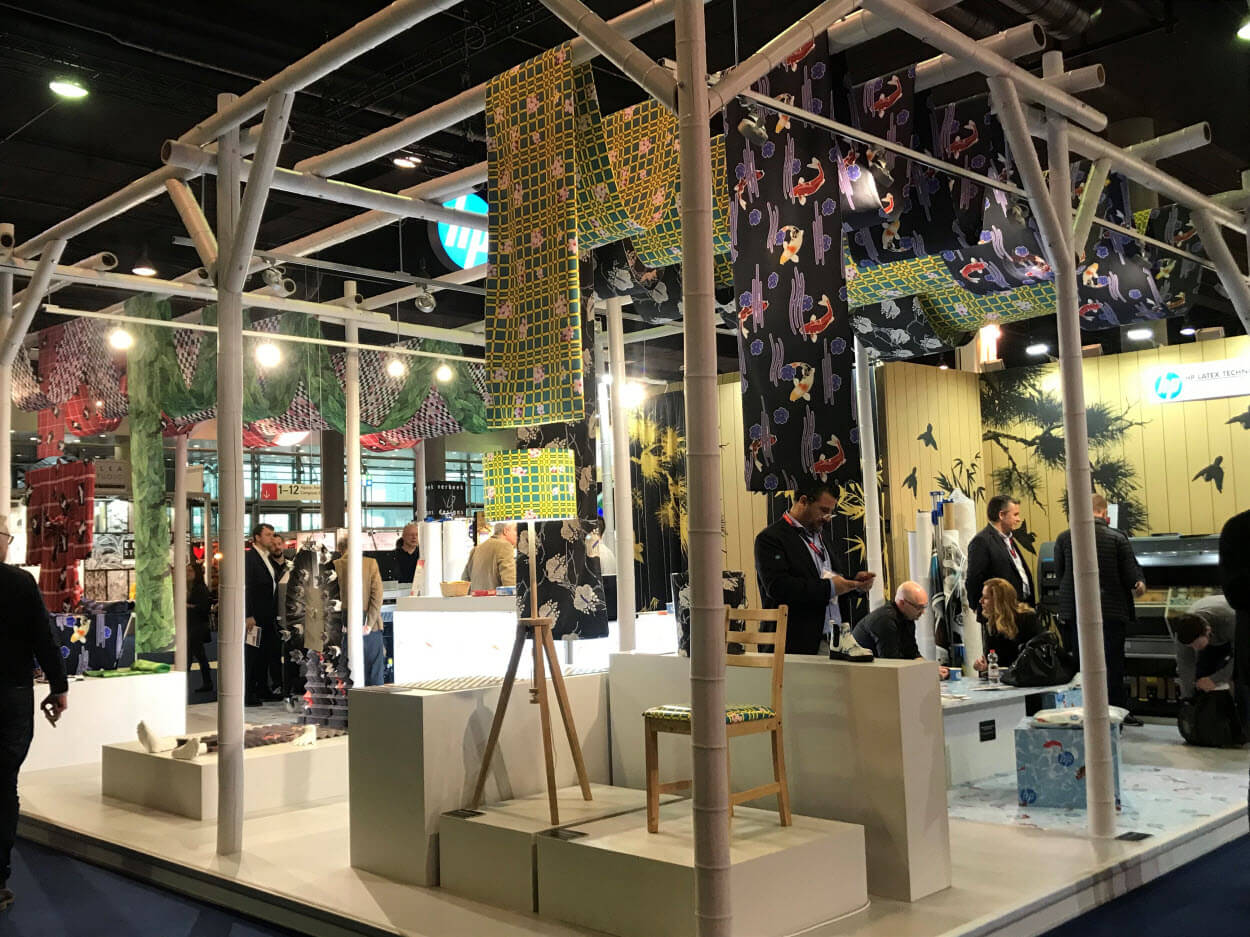
Merce Barcons, global head, GSB Large Format, HP and Javier Larraz, HP Large Format production director, Graphics Solutions Business EMEA, discuss HP’s Stitch technology, the company’s journey into dye-sublimation and the road ahead. Madelaine Thomas reports.
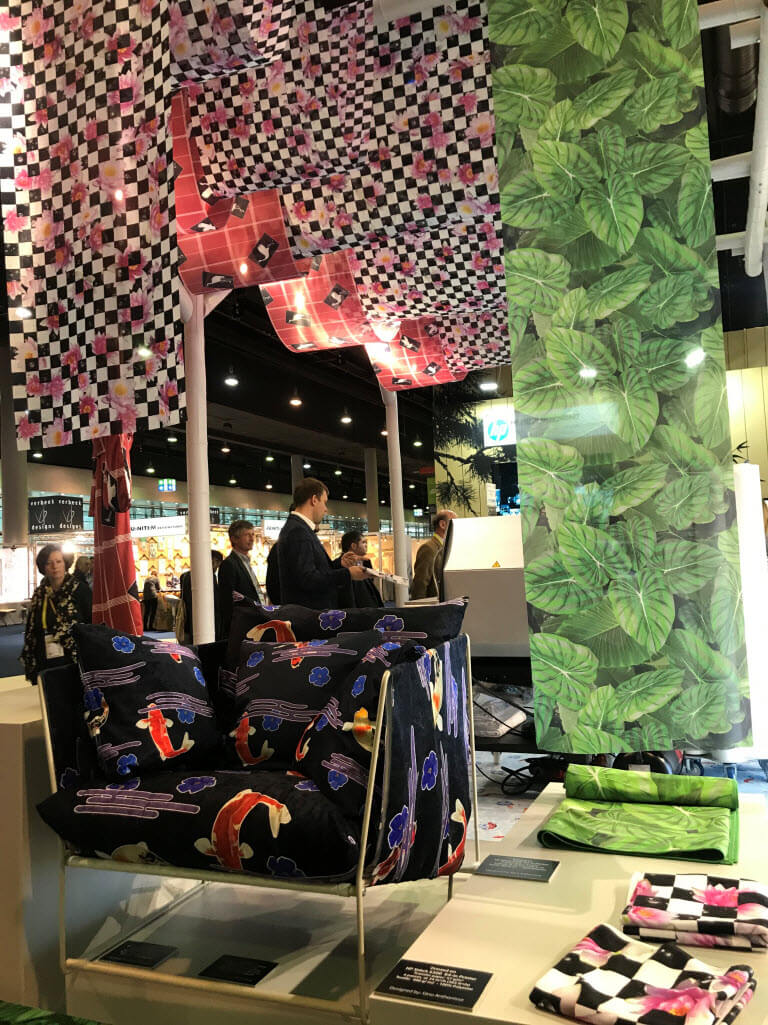
The digital textile print market is continuously growing, and more and more companies are seizing the opportunities that the market provides. Global technology OEM HP is one company that is aiming to reap the benefits of the rising inkjet industry: the company recently launched its HP Stitch technology for the dye-sublimation market (both direct-to-textile and transfer textile printing). The company has aimed this technology at the home textile, soft signage, apparel and sportswear markets.
Merce Barcons, global head, GSB Large Format, HP, says: “The opportunity in the textile industry is huge. Moving into digital is happening; it has been happening for the last few years and is accelerating with all the trends in the market. Being a part of this profit pool [is] important for us.”
Entering the market
Having provided technological solutions to the print industry for many years, HP has had to engineer its technology towards textiles – a considerably difficult task, since printing on textiles is very different to printing on other more rigid substrates like signage.
The progression began with water-based inks. Javier Larraz, HP Large Format production director, Graphics Solutions Business EMEA, explains: “We have been working on bringing something in signage that was different than the rest of the vendors for many years. We put a lot of priority on developing an ink that was waster-based. It’s a way to print that is more friendly to the environment and our competitors were using solvent-based inks. Solvent inks are important when it comes to producing prints that can be placed outdoors and that have a long durability. So, printing on water that can be outdoor, UV resistant and have long durability was a challenge.”
Following this R&D, HP launched its latex inks. Originally developed for signage and graphics, the latex printers, such as the Latex 300 series, can be used for some textile applications (soft signage, home décor). This was HP’s first exploration into printing on textiles.
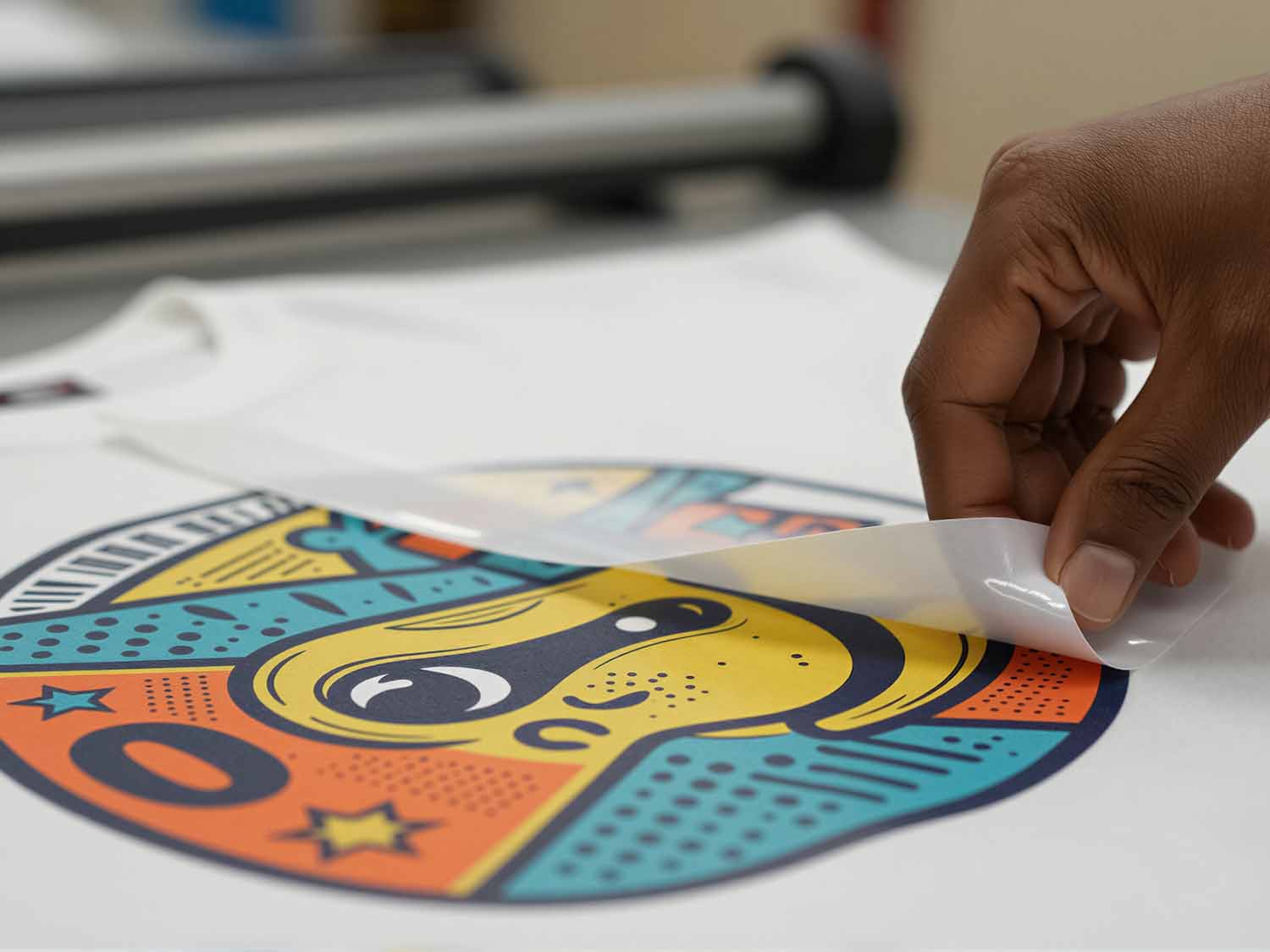
From there, the company saw that the signage industry was moving more into textiles as a result of advantages including cost, transportation, installation, look, hand-feel and environmental impact. Following this success, HP chose to develop dye-sublimation technology. Larraz says: “Dye-sublimation was an interesting technology because it prints on polyester, which has a large percentage of the overall digitally printed square metres that are produced.
“Although we can print with latex on textiles, dye-sublimation was a very good complimentary technology. Our solutions have a strong leverage and heritage from all the IP and the technology we developed for latex, when applied to dye-sub it made our printers really good in terms of competitiveness.”
According to Barcons, the decision to work toward a dye-sublimation based solution over a pigment or reactive solution, for example, was in the “breadth of application: addressing the opportunity.”
She continues: “We wanted to cover the opportunities across applications – signage, home décor. Also, sportswear – when you look at the opportunity – that was probably one of the big choices. The decision [therefore] is application driven.”
“If polyester is the target, the best solution is dye-sublimation,” Larraz adds.
Entering the market with a well-known and proven name served well for the OEM. Barcons says: “From a customer standpoint, we came into market with a very proven platform. People already know our reliability. The reliability, ease of use, productivity of these devices has been very much a win-win proposition to get customers onboard with HP Stitch solutions.”
Thermal print heads
A large part of what is unique about the HP Stitch technology compared to others in the digital textile printing market is the use of thermal inkjet print heads instead of piezo heads. “All HP technology is based on a system that uses thermal print heads,” says Larraz.
Instead of using vibrations to eject ink droplets onto fabric – because, according to Larraz, this method is “limited in size and limited in the amount of ink that you can apply” – thermal print heads use a system that “boils the ink in a chamber, and when it boils it ejects the ink drops,” says Larraz. He continues: “Instead of applying a current to vibrate [piezo] you apply temperature. The nozzles are smaller [than in piezo] – you can get more nozzles per inch and also [the ink] will eject much faster.”
However, the problem with thermal print heads and dye-sublimation technology is that the ink sublimates when temperature and pressure are applied. Therefore, using dye-sublimation ink on a print head where the ink is boiled to be released makes it likely that the ink is going to be sublimated inside the print head instead of on the textile. Larraz says: “In theory, thermal inkjet is very good for water-based inks but [these inks] react to temperature in a certain way: dye-sublimation sublimates.”
To conquer this problem, HP designed a print head and an ink that can ensure the ink can be boiled in the print head without sublimating, but can sublimate later on the fabric. “That’s the discovery – that’s what we are bringing to the picture here,” says Larraz. “This is the first time in history that thermal inkjet print heads are used with dye-sublimation inks.”
He adds that thermal inkjet technology has many advantages, including speed and ink density. “In one pass you can deploy much more ink,” Larraz says. “The nozzle density gives this high saturation with a low number of passes.”
"Our technology has to be future-proof" - Merce Barcons
Thermal print heads, however, have a shorter lifespan than piezo heads. After a while, the thermal head nozzles can clog – quicker than piezo heads. HP, though, sees this as an advantage rather than a challenge. This is because the company considers its thermal print heads as a consumable; they are relatively inexpensive compared to piezo heads and are easy to replace, says Larraz. With piezo heads, a technician is required to replace them in the printer, but HP’s heads are user-replaceable, he continues. “It’s a consumable like at home – if you have a printer at home and the quality degrades you just change the print head.”
Larraz adds: “What we are bringing here is of use for the companies that need to ‘do-it-yourself’ (DIY) but is also for the operator that needs an optimised fleet. That, with the peace of mind that if you make a mistake, you’re not going to pay a lot for the print head.”
Barcons says that the DIY trend is increasing. “The technology is easier for a small business that wants to print its own collections; these companies don’t want to be depending on a technician to come in and service machines all the time.”
As well as the print head being user-replaceable, the Stitch technology also encompasses many of the added features of HP’s latex range: “Close-look colour calibrations, self-maintenance – the printers clean themselves.”
The Stitch calibrates the colour in the printer “so it delivers consistent colours over time. In the industry we have printers from different vendors that use inks from different vendors – you need an operator that knows very well what they are doing. You need to be an expert on calibration, colour management – you need to be extremely careful what you do with your print heads because there are several thousands of dollars that are at risk,” says Larraz. “Our printers are self-calibrated, easy to use and optimised for a user that is not a super expert. “It gives a good solution for people that are starting in dye-sublimation that are not experts.”
HP also prides itself on the consistency and reliability of its Stitch solution. Over time and across printers, the technology can deliver the same colour and print. Larraz says: “When you have a fleet of printers like farms, it’s difficult to take care of each one of them [individually]. The HP Stitch printers are all optimised to behave the same, so, if a company has a job, it can split it between the devices and they will all give the same colour. From a software point of view, the printers can be controlled, are using the same profiles and have the same behaviour.”
"If polyester is the target, the best solution is dye-sublimation" - Javier Larraz
Opportunities
While the company is focusing on dye-sublimation at the moment, Barcons says HP is, “looking for all the opportunities and ways to complement its existing portfolio.” For example, pigment technology will broaden HP’s applications, incorporating natural fibres. “It’s a matter of priorities, opportunity and investment,” she says.
However, wherever HP decides to take its R&D, Larraz is adamant that it must be down the route of much lower environmental implications. The company will look to improve on technologies that have high environmental consequences. “For example, reactive or acid inks; if there are implications in terms of the washing or the consumption of water, we will do our best to add innovation that can reduce the environmental implications,” says Larraz.
“We like dye-sublimation because from an environmental aspect it was consistent with our position. Pigment will be good in that sense as well. All the technologies that are much more pollutant I would be more careful about.”
Barcons adds: “We are getting more and more environmental requests from our customers and we see more regulations coming in. We want to be able to show that we walk the talk.
“As we invest in innovation, we want it to last. Our technology has to be future-proof.”
Market trends also bring about opportunities. Barcons says: “Digital adoption is growing. […] Trends in the textile market are on-demand, customisation, environmental [protection], IoT (Internet of Things) on sportswear – all these are trends that, by definition, drive the digitalisation adoption.”