
October saw the return of the annual Taipei Innovative Textile Application Show (TITAS), one of the most important textile events in Asia. Continuing its theme of last year’s edition, TITAS 2018 showcased core products of functional, sustainable and smart textiles.
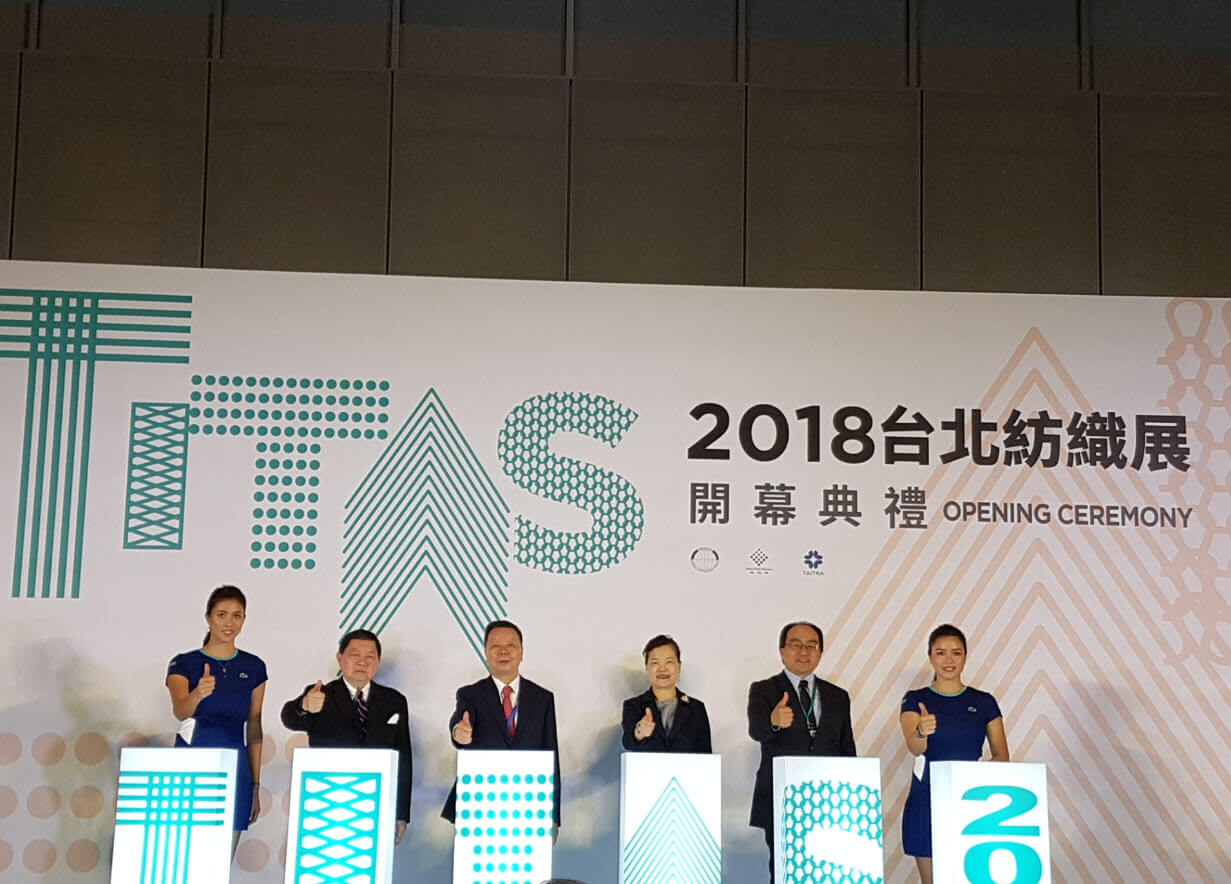
TITAS returned to Taiwan on 16-18 October
Now in its 22nd year, the event welcomed participants from 12 countries and regions including France, Turkey, Switzerland, Sweden, Germany, Japan, Korea, India, Hong Kong, Singapore and China as well as Taiwan, with a total of 456 exhibitors occupying 1,003 booths.
Organised by the Taiwan Textile Federation (TTF) and under the auspices of the Bureau of Foreign Trade, Ministry of Economic Affairs, TITAS is a platform for business activity, with more than 1,000 one-on-one meetings staged between this year’s show exhibitors, and over 100 invited representatives from international brands and retailers.
In order to offer a more comprehensive one-stop service to both exhibitors and attendees, in collaboration with the Taipei Sewing Machines Association (TSMA), TTF invited TSMA members to present the latest developments in smart manufacturing, including automatic sewing machines and smart sewing systems and solutions.
What’s more, the event featured 11 seminars to address the latest developments in innovative textiles, website retailing and business strategy, as well as presentations on new fibres and technologies.
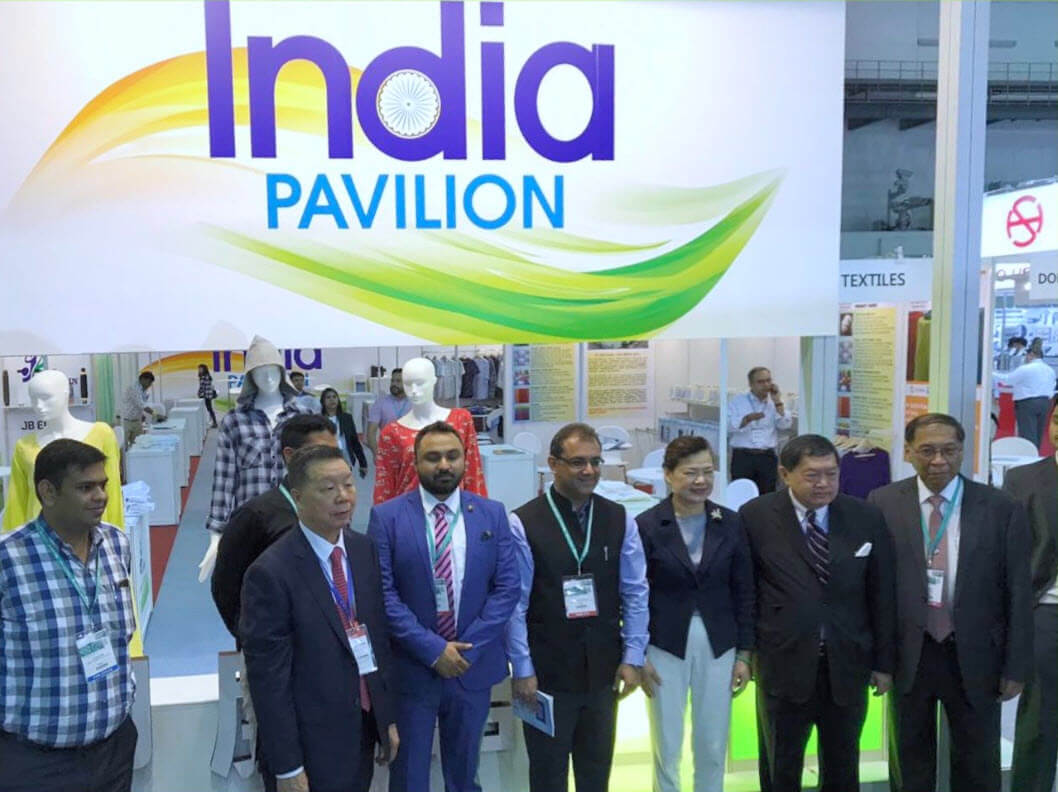
The Indian pavilion featured 10 FICCI members, stood here with president of Taiwan Textile Federation, Justin Huang
Smart Textiles Pavilion
In response to the emerging smart trend, this year introduced the Smart Textiles Pavilion. It featured three major themes: Smart textiles, smart manufacturing applications, and smart solutions – as a first step to welcoming the incoming industrial automation and digitalisation trend, to inspire the realisation of a smart textile value chain.
In the new pavilion, visitors were presented with products and solutions, such as: Smart thermal clothes integrating temperature control and positioning functions; LED clothing displays using ESTM (embedded smart textile module) to present a new garment image marrying art and tech; colour management technology to detect miniscule colour differences; software-based solutions adopting IoT, AI and RFID technologies; and textile technology combining isolated microcontrollers with yarns and fibres to enhance the applications of multifunctional textiles.
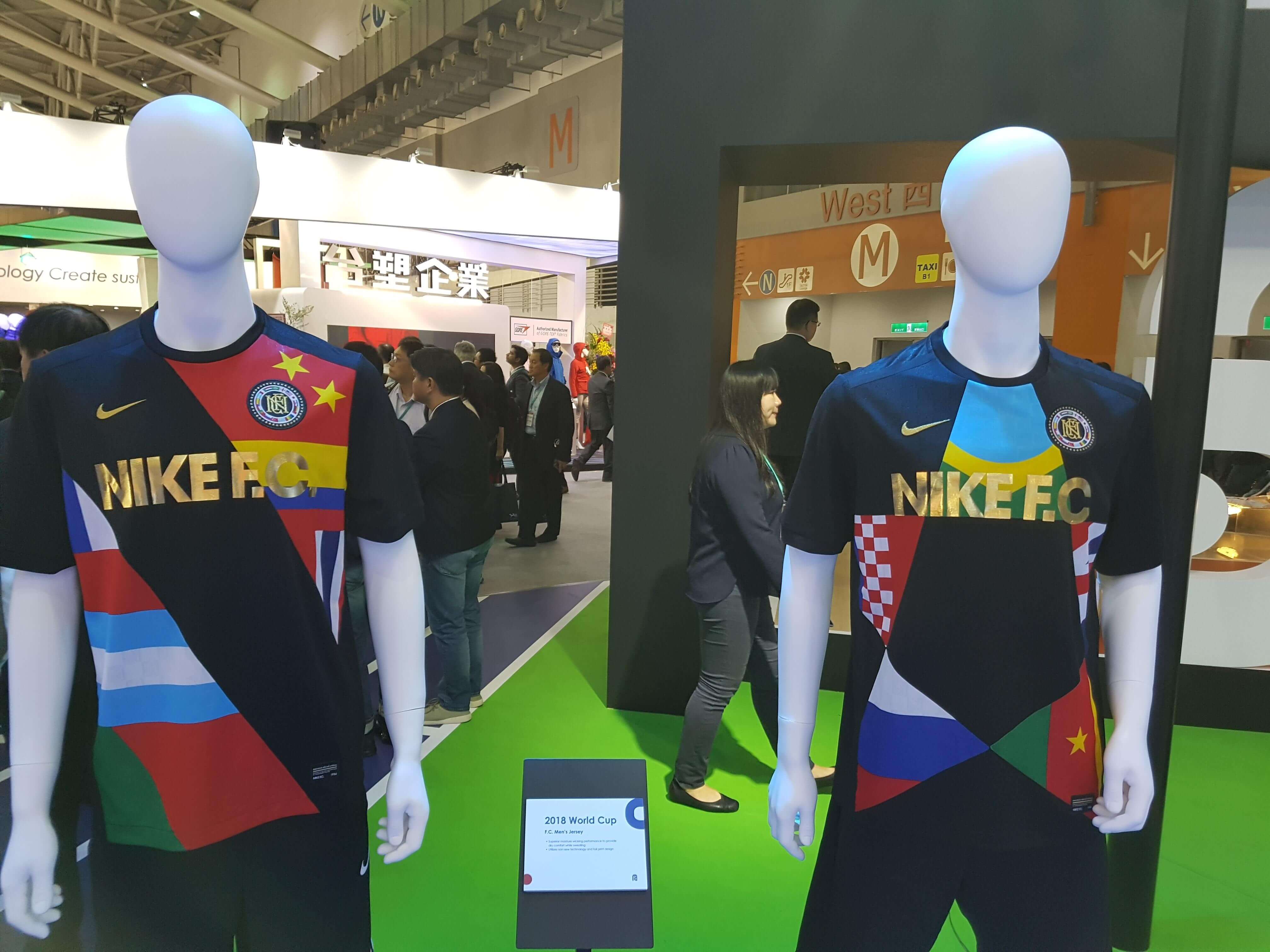 Far Eastern New Century (FENC) supports worldwide sporting events with its technology, including the 2018 World Cup
Taiwanese exhibitors
TITAS 2018 saw key players from Taiwan’s textile industry exhibit their latest products and services, while several research bodies, including Taiwan Technical Textiles Association, represented various segments of the Taiwan’s textile chain.
In keeping with this year’s theme, Formosa Plastics Group (FPG) focused on ‘Smart fashion with sustainability’ – reflecting its determination to implement a green policy while presenting high-quality, high-tech and high-value textiles. The FPG pavilion featured five image areas – Fashion and Down, Sportswear in Style, Outdoor Activity, Leisure Life, and Industrial Materials. FPG’s fibre lines cover polyester, polypropylene, rayon, elastic, carbon, polyamide, and functional fibres – all serving as materials for Formosa Taffeta to develop into sophisticated fabrics by incorporating advanced green and performance technologies.
Meanwhile, Far Eastern New Century Corporation (FENC) demonstrated the results of its water-free dyeing process for polyester. It follows this year’s launch of FENC’s water-free dyeing technology for nylon – a ‘world first’ for the textile industry. According to the company, the water-free dyeing technology not only eliminates wastewater but also significantly reduces the energy and time consumption in the fabric dyeing process.
FENC supports worldwide sporting events with its technology, including the 2018 Australian Open – its high-performance wicking technology was employed to provide better cooling and drying comfort to tennis jerseys; and the 2018 World Cup – jerseys made with the company’s recycled polyester yarns and an airflow design effectively reduce wind drag and facilitated maximum comfort.
Earlier this year, Shinkong Textile started a new collaboration with US recycled yarn brand Thread International. Thread works to improve the lives of people in places such as Haiti and Honduras by teaching them about producing apparel from plastic waste. This includes everything from collecting and cleaning bottles to sending them to relevant suppliers to make flakes and recycle yarn into fabric. Until now, Thread has supported around 4,000 jobs in these regions. As a result of this recycling approach, Shinkong says that ‘humane care’ will now be a new concept.
During the show, Shinkong Textile focused on new fibre research and innovative technologies development to maximise integrated value and meet market demand. It stated that it is always committed to environment protection and corporate social responsibility.
This October, Tainan Spinning returned to TITAS after an absence of nearly 10 years. The company’s product highlight was a brand new yarn series, Umorfil T, developed with Camangi Corp. Umorfil T has a water content three times that of virgin polyester while still retaining the heat resistance and tenacity of polyester, making the yarn series a more flexible, hydrating and skin-friendly choice for polyester users, says Tainan Spinning. The material is also eco-friendly since it is biodegradable.
Yi Jinn Group presented its latest product from a collaboration with Dazzeon – a nano-copper antibacterial fibre dubbed a new generation of healthcare fibres. The company says that “innovation, sustainability, comfort and health” are the key to developing innovative products through compound polyester materials. It also actively works to integrate upper, mid and lower stream resources in the textile industry to connect with global garment brands.
New Wide Group’s exhibit was divided into five sections: Urban Casual, Athleisure, Functional, Outdoor, and New Development. In response to the mix-and-match fashion trend and the increasingly blurred borderline between the sports and leisure categories, New Wide presented a range of sample clothes using innovative fabrics and underscoring the interchangeability of material, style and colour, not to mention comfort and good touch.
In-line with the announcement that all major fashion and sports brands plan to use recycled poly materials before 2022, New Wide showcased fine knit fabrics with eco-poly and recycled poly for buyers’ selection.
Meanwhile, Eclat, a multifunctional enterprise focused on the development of knitted fabrics and apparel for sports and day-to-day wear, introduced its first ever Eclat series knit fabrics and a brand new visual identity centred on the five elements of functional knits: Quick dry; air permeation; moisture control; light weight; and flexibility.
By combining texture design with automation, Eclat aims to demonstrate how technology and craft are incorporated to create fashion and performance in consumer clothing without compromising comfort and sustainability.
Further afield
On the overseas part, various vendors hailed from Japan, South Korea and China. From the former nation, Unitika and Japan Textile Evaluation Technology Council made their TITAS debut this year, while Mikiriken Industrial returned for its second exhibit. From Korea, Daegu Gyeongbuk Textile Industries Association continued to participate together with two newcomers, Dain Sky and Ibigeng.
There was also a Mainland China pavilion, and the Federation of Indian Chambers of Commerce and Industry (FICCI) from India led a group of 10 members, with the intention of enhancing business contacts and cooperation with their Taiwanese counterparts. A visiting delegation organised by VITAS, Vietnam, meanwhile, also attended TITAS with similar goals in mind.
TITAS will return to Taipei for its 23rd edition on 15-17 October 2019. For more information, visit www.titas.tw/


