
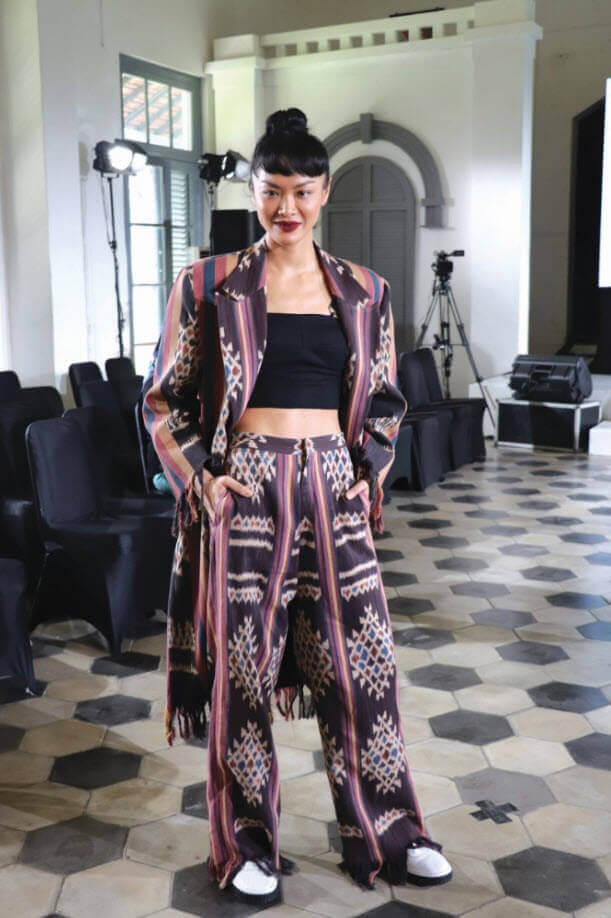
Drawing inspiration from the sustainable fabric-making methods of Indonesia’s Baduy tribal community, who live in a remote region of Java, a high-profile Indonesian textile designer has commercialised these textiles to create runway fashion for a global audience.
Woven fabric designs developed by Merdi Sihombing, called Suat Songket and Samping Aros, are "unique traditional weaving patterns that are used by the Baduy community,” Sihombing tells WTiN.com, adding that he uses these fabrics to make his collection of trench coats, trousers and many other items.
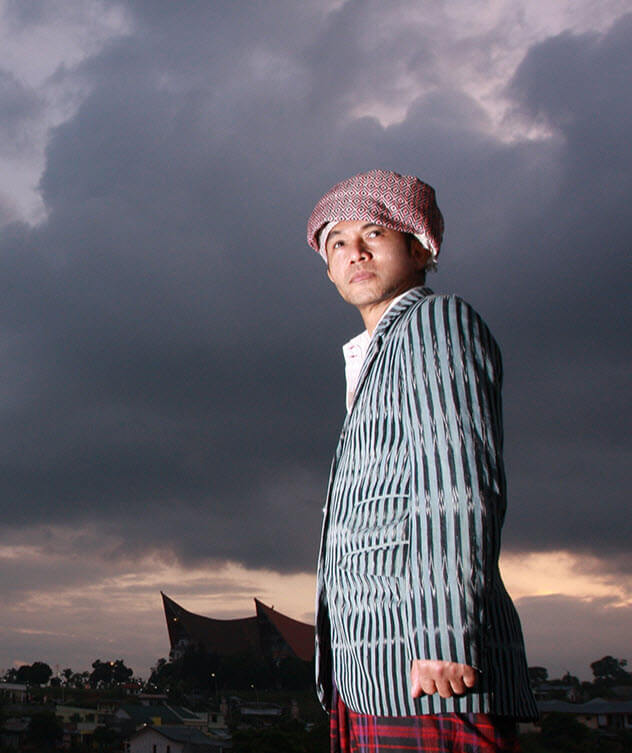
However, utilising these traditions is not just about the novelty of designs: sustainability is central to his work as “all raw materials used – such as cotton yarn, natural silk yarn and cellulosic yarn from eucalyptus and bamboo – comes from natural sources,” he says. And the range of colours used in his clothing are all derived from plant or marine sources – for example the use of octopus-skin extracts for dyeing. Moreover, these tie-dyed, hand-embroidered fabrics are made by the tribal community – mostly women – whose husbands work as farmers in mountain areas and fishermen in coastal areas, he says.
It was no easy job when Sihombing started the project back in 2003. Besides the fact that the community lived in very isolated parts of Indonesia, they were not willing to “share the wisdom of their ancestral culture”, which included how they made clothing, he says, adding that it took nearly three years for him to persuade them to work with him.
Today, he runs Merdi Sihombing Boutique, in Indonesia's capital Jakarta. He also co-founded the Eco Fashion Week Indonesia show and 2018’s three-day show, comprising seminars, ended on 2 December. Previously, he has held similar fashion shows promoting sustainability in Germany and Australia. Merdi is planning to help stage a Sustainable Fashion Week in London this February, showcasing an autumn collection with traditional tie-dye Ikat weaving. And a similar show is scheduled for September in New York.
That said, he has yet to create an export market for his clothing: “That’s exactly what I am hoping to do with these fashion shows abroad,” says Sihombing, adding: “We’ll get there soon. We are now in the process of liaising with agents abroad.”
Indeed, Indonesia is seeing greater interest in sustainable fashion. Local fashion brand Kana Goods offers clothing made from natural materials and dyes, showcasing batik prints, which have been a part of Indonesia’s tradition for many years. Unlike ordinary batik techniques, one piece of Kana's indigo batik needs to be dyed at least 10 times a day, for seven consecutive days. And "our mission is to introduce the value of natural dye as a unique and sustainable art form,” says Kana founder Sancaya Rini.
In fact, Rini is known in Indonesia as a pioneer of slow fashion, which she says typically describes long-lasting and locally manufactured clothing. “We have taken the initiative to reduce the use of water and chemicals,” she adds. “Most importantly, we are able to re-dye every product once the colours start to fade, so the customers don't need to purchase another one.”


