Otis Robinson investigates transparency, social and environmental sustainability, and the technology capable of demystifying the textile & apparel supply chain.
Alongside the Fourth Industrial Revolution, the demystification of the supply chain is undoubtedly a key priority of the textile & fashion industries. Not only does transparency generate immediate competitive benefits – the supply chain collapse during the Covid-19 pandemic exacerbated the need for comprehensive insight – but the movement also emboldens efforts to build an ethical value chain that is both socially and environmentally sustainable.
Throughout decades, reports of poor working conditions, organised crime, modern slavery, sexual and physical assault, and environmentally toxic production have snatched headlines, to consumer and stakeholder dismay. These cases are not isolated incidents. They occur as an indirect result of mystification – a lack of supply chain transparency – which helps to enable or reinforce socially irresponsible practices.
Transparency, on the other hand, is defined as the public discourse of credible, comprehensive, and comparable data and information about fashion’s supply chains, business practices and the impacts of these practices on workers, communities, and the environment. It is regarded as somewhat radical compared to the traditionally guarded nature of trade supply chains, but represents an unavoidable tidal wave change as consumers and governments push for malpractice to be weaned out.

From a business perspective, transparency is an arduous milestone to reach because supply chains stretch across the globe, and downstream supply is where many instances of malpractice tend to occur – much further out of reach than is helpful. A 2013 study found that Tier 2 and Tier 3 suppliers incurred up to 27% more human rights abuses and environmental issues than their Tier 1 counterparts [1]. Despite the clear and present danger in opaque supply chains, many businesses remain complacent. In a previous WTiN Intelligence: Textile 4.0 report, Dr Hinrich Voss, professor of International Business at the University of Leeds, told WTiN that many UK textile businesses are unaware of their suppliers beyond Tier 1 [2].
But brands are slowly taking responsibility. In 2020, it was found that 40% of 250 of the world’s biggest brands had publicly disclosed their Tier 1 manufacturers, while 23% had disclosed Tiers 2 and 3, according to Fashion Revolution in The Fashion Transparency Index [3]. (The organisation hopes these statistics will incentivise and push more major brands to be transparent but acknowledges that this involves shaming resistant brands to share information [4].)
On the other hand, environmental activists suggest big brands are evasive – that the remaining ‘opaque’ brands are purposefully ignorant to the dangerous circumstances lurking behind the manufacture of a product, in favour of inexpensive labour and production. Increasingly, consumers are aware of this: they demand accountability, with digital tools such as social media wielded to pressure companies for information. Today, transparent and ethical supply chains are vital in mitigating reputational risk [5].
So, as businesses are faced with no choice but to adapt, it’s important to understand the complexities of implementing transparency within the supply chain. And, on the journey to an ethical supply chain, what technologies can businesses adopt to shine light on unethical downstream activity?
Susceptible supply chains
Supply chain malpractice – which includes instances of corruption, modern slavery, organised crime, worker rights abuses and environmentally damaging practices – is a multi-causal problem which cannot easily be fixed, says Dr Martin Schleper, associate professor in operations & supply chain management at the University of Sussex Business School. “It requires different actors on various levels to tackle the problem.”
Schleper, who also acts as editorial assistant for the International Journal of Operations and Production management, happily accepts WTiN’s request for us to pick his brain about supply chain transparency. Firstly, we determine it’s important to get to grips with how susceptible the fashion supply chain is. Has it always been this vulnerable to mystification, I ask, and are things getting worse or better?
“When we picture modern supply chains, their complexity is quite unprecedented in historical terms,” says Schleper explains. “The huge outsourcing and offshoring waves in the past have created high degrees of horizontal, vertical and spatial complexity, meaning that there are more tier levels in the supply chain, more firms on each tier level and that those are globally dispersed, usually. Therefore, the higher the complexity, usually the lower the transparency in the supply chain, leading to more entry points for unethical and unsustainable behaviour. Unfortunately, disproportionally so in low-income countries.”
Schleper says the fashion industry supply chain, which is heavily linked to its negative environmental and societal repercussions, shows an opportune area for research and even more so for general action. This action has already begun: Schleper is quick to highlight the increased variety of ethical standards in place. Issues around transparency are now included in governmental and organisational development goals, while non-governmental organisations (NGOs) like Transparency International continue to fight against malpractice.
“I am positive things are heading in the right direction, although progress can take time,” says Schleper.
So, why do we see so many businesses still implementing opaque and unethical supply chains? Schleper muses that perhaps, from a supply chain perspective, the relative low margins in the fashion industry and the rise of fast fashion and the micro-collection require highly cost-efficient supply chains, achieved through price orientation, multiple sourcing and competitive bidding.
Though reports including The Fashion Transparency Index indicate an increased compliance with societal and consumer demands, the statistics still reveal a reluctance to report on certain ethical markers – known as ESG (environmental, social and governance) indicators.
“The reason for some companies’ reluctance to report on ESG indicators might be rather obvious,” Schleper says. “The industry’s margins can be relatively thin and paying for minimum wages and acceptable and environmentally friendly working conditions usually comes at a certain cost. Thus, not disclosing information might be a safer bet in the short-term for many firms that are less interested in responsible sourcing.”
Human rights abuses
While this may seem an obvious and evasive business decision, such irresponsible sourcing leads to those aforementioned detrimental effects on labourer lives and the environment, specifically on the lives of garment workers in low-income countries [6], where employees face low pay, lack of social security, sexual and physical violence, and exploitation of migrant status [7].
Perhaps one of the most controversial examples was the Rana Plaza building collapse in 2013 – an avoidable accident that killed 1,129 garment workers, many young women “working in appalling conditions for abysmal pay” [8]. After cracks appeared in the building and multiple warnings were issued to the owners to deny access to Rana Plaza, garment workers were nevertheless ordered to return; the building later collapsed during morning rush hour [9].
The catastrophe garnered attention from UK politicians: Labour Party MP Michael Connarty called on the UK government to enact new legislation that would force high street companies to audit their supply chains. Elsewhere, Karel De Gucht, the then European Commissioner for Trade, warned that retailers may face action from the European Union (EU) if nothing is done to improve the working conditions of workers in their supply chains. It was this disaster that also spurred the creation of Fashion Revolution, to “raise awareness of fast fashion’s true cost” [6], because without comprehensive legislation, it falls to voluntary action.
Contemporarily, pressures within the fashion industry – fast fashion, for example – have created a general disregard within B2B environments for where garments come from or the workers creating them. Slowly, this is changing, but perhaps not for the right reasons.
To a large degree, a business’s interest in an ethical supply chain is driven by economic considerations, says Schleper: “Big brands close to consumers want to avoid negative reputation, litigations, boycotts, drops in share prices, etc. This instrumental approach explains why to some extent B2C firms with a highly valued brand are usually more active in this area, while B2B firms often still lag behind. Of course, it would be more desirable if firms were intrinsically motivated to do good, without necessarily prioritising economic considerations.”
For those that do intend to prioritise ethical sourcing, Schleper lays out the steps a company must undertake to pursue a transparent approach: firstly, a materiality assessment must be conducted to determine who the relevant stakeholders are and what kinds of information they might seek in particular; this is followed by the mapping of the supply chain to visualise flows of information, products and finances, which will allow information collection and targeted engagement with critical suppliers; and finally, the reporting of this information – transparency itself – will require time and resources. This can, however, be outsourced or eased through new technologies.
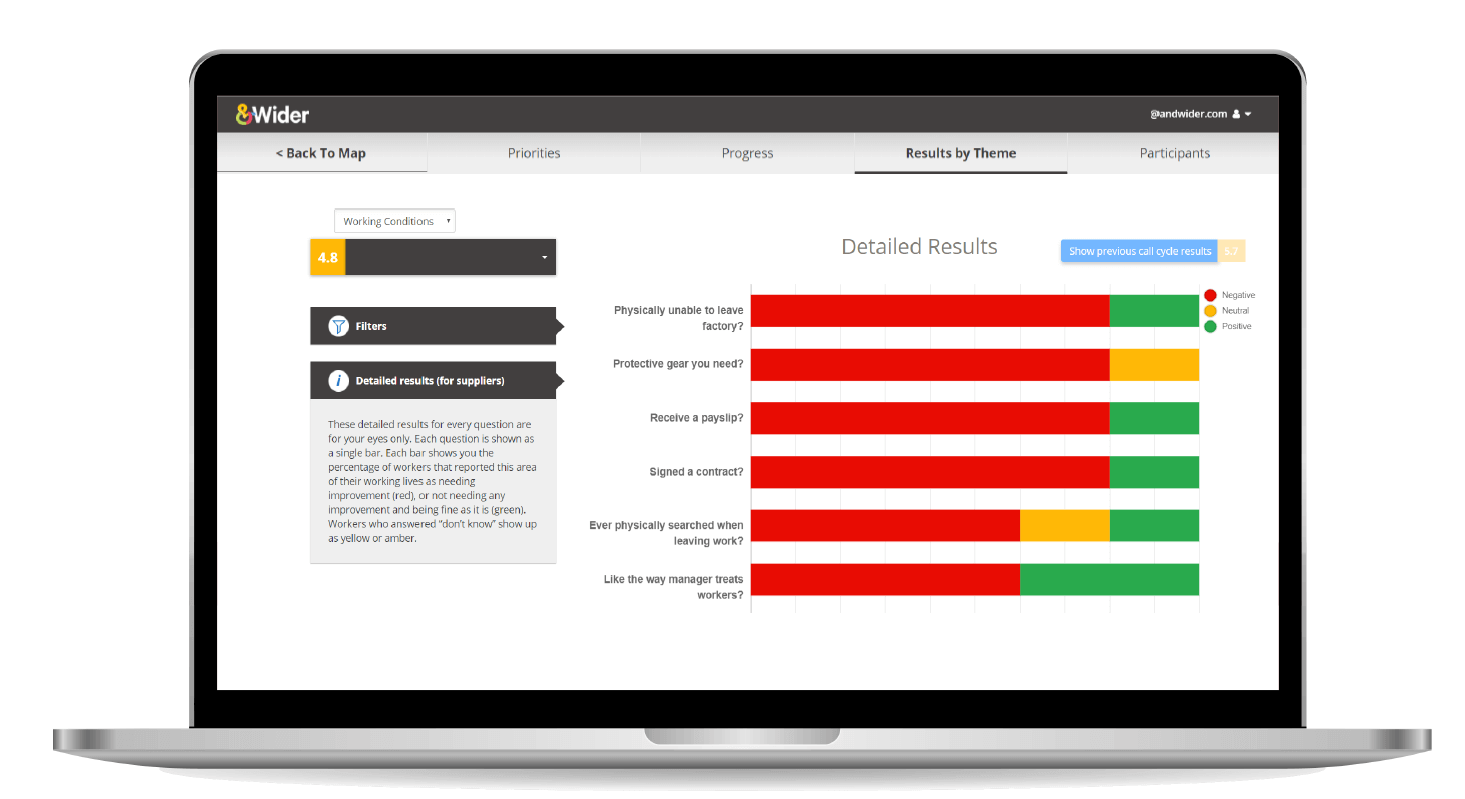
For example, South Africa-based company &Wider offers employers an automated calling system to anonymously gather information from factory employees (with their full consent) to form a traffic-light system on working conditions. According to the company’s owner Lea Esterhuizen, &Wider is working on making this information available through third-party information platforms like blockchain, too, so that the supply chain becomes more transparent [10]. Esterhuizen adds: “The brands that are taking these steps tend to be the first adopters, the progressive brands – a growing cohort. They don’t want to only do the right thing, but they want to do the wise thing. They want to engage with their supply chains.”
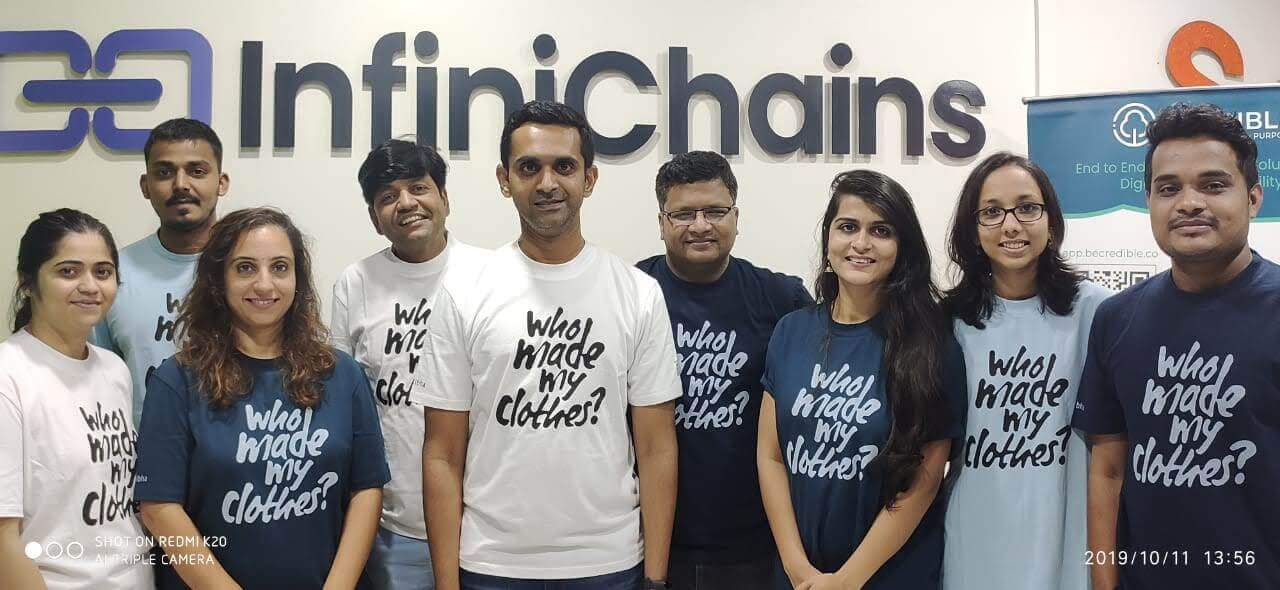
These technological offerings also target other pervasive malpractices. Tech company Infinichains offers a blockchain traceability platform that traces seed distribution through to crop entry, harvesting, manufacturing and end product – aside its immediate support of burgeoning supply chain transparency, the company says it proves beneficial for low-level, low-earning farmers in India [11]. According to Parth Patil, chief executive officer (CEO) at Infinichains, the platform allows brands to become more aware of how money is distributed across farmers and workers, thus address inequalities within their value chains and ensure fair practice.
Blockchain has also proven an effective solution to modern slavery. Companies such as US-based Sourcemap use the technology to ‘lay the groundwork for real transparency’ [2]. Leonardo Bonanni, founder and CEO of the company says Sourcemap can heighten accountability with regards to pertinent issues such as factory fires and child labour. Elsewhere, technologies such as smartphone apps allow workers to highlight instances of exploitation. Such solutions may proliferate in coming years as big brands – such as Asos, Dr Martens, Misguided and New Look – increasingly pledge themselves against modern slavery [2].
To reiterate, these instances of supply chain malpractice are not isolated incidents but are widespread and commonplace worker rights abuses. It is up to brands to wield their power by implementing technologies that can help them to identify, target and eliminate this – and almost all the solutions on the market do so through transparency. Ultimately, brands have a strong arm to push industry towards transparency and generate positive change: “The concentration of power in [the] supply network at the part of retail buyers makes it easier to dictate their terms,” Schleper notes.
The environment
Elsewhere, with respect to the environment, the role of technologies in supply chain management and logistics has always been an important one, explains Schleper, with RFID and barcodes standing as a few earlier developments, and blockchain one of the more modern ones. These technologies are often wielded to verify sustainable practices or detail a product’s constituents in aim of environmental transparency.

The market for this technology is crowded. Many tech brands populate the conversation with unique selling points (USPs) and technologies that can confirm to B2B customers and end-users the authenticity of a product’s sustainable backstory. For example, connected product platforms allow users to track garments from birth to death and provide environmental and constituent information – “like Facebook for garments,” says Natasha Franck, CEO of EON, in an interview with Textile 4.0 magazine [12]. Elsewhere, Australia-based FibreTrace offers a trackable, luminescent technology that is integrated into cotton and subsequently sensed by calibrated scanners to mark its position and log the information in a third-party blockchain [13].
Schleper adds that blockchain and distributed ledger technology also holds ‘quite disruptive potential’, since it securely offers essential information while protecting the sensitive stuff.
“Successful use cases have shown that blockchain and distributed ledger technology applications require only a minimum sharing of information (such that financial and sensitive data do not have to be shared on the same blockchain).
“In general, these technologies [also] allow for reduction in lead times, improved forecasting, real-time communication and increased trust and security of provided information on all kind of levels, such as economic, social and environmental.”
Applied to the textile & garment industry, these technologies could also help tackle greenwashing, a pervasive marketing trend that sees brands deceptively use buzzwords like ‘green’, ‘sustainable’ or ‘eco-friendly’ to attract customers. Greenwashing has largely led to customer confusion, particularly in an industry crowded with sustainability jargon.
Over years, consumers have shown disdain towards the multitudinous ethical labels applied to products, which can sometimes confuse more than help their purchasing decisions. “It can prove extremely difficult and time-consuming for consumers to check labels and standards for their authenticity and effectiveness,” Schleper adds. Thus, blockchain, supported by its secure information and historical product information, could allow genuinely sustainable products to push through to the spotlight while dispelling confusion among consumers.
However, as with all innovations, the technology poses its challenges too.
“Although stored and transferred data between supply chain parties and third actors might be comparably safe and incorruptible [over blockchain and distributed ledger technologies], one important challenge will remain in regard to data integrity: the so-called garbage-in, garbage-out conundrum,” Schleper explains. According to the University of Sussex scholar, false information input could be more harmful than with traditional information systems. “Consider the 2013 horse meat scandal,” he adds, “when products were falsely labelled as containing 100% beef without any further test or verification. Blockchains and distributed ledgers would not have prevented this, and the information would have been stored unalterably.”
Elsewhere, additional technological developments such as satellite and drone images may become crucial in tackling related industrial environmental issues over the next five years, he adds, and explains that the technologies could be capable of tracking deforestation.
Consumer demystification
Despite technological hurdles to overcome, the sector churns with new offerings and innovations orbiting transparency. Contemporary consumers are drawn to products with an ethical creation story, and in order to avoid public disgrace, brands are quick to appease their customers.
Schleper cites a study published in 2018 that found that consumers’ willingness-to-pay for goods from firms that offer more supply chain transparency can range between 2% and 10% [14]. Orsola de Castro, founder and creative director of Fashion Revolution, suggested in a 2017 interview with Reuters that this interest and pressure from younger consumers can ‘make brands sit up and listen’ [4].
Clearly, consumers’ upper hand has taken the form of their purchasing patterns. Historically, it has not been easy for the typical layman consumer to access supply chain information, but technologies themselves are now placing even more power in consumer hands.
Today, leading brands are paving the way by offering consumers access to demystification technology. Multinational retailer H&M, which led The Fashion Transparency Index in 2020 as the highest scoring brand, has been taking steps “to make it more accessible for customers to know where their products are made” [15]; the H&M website allows customers insight into the production country, supplier and factory names and addresses, the number of workers in a factory and the materials used to make a specific garment [15]. The move includes the use of mobile technologies to allow in-store customers to scan product tags to retrieve the information [16].
This in itself may become a particularly cyclical relationship: as push shoves brands to provide information about supply chains to its consumers, consumer influence will strengthen, leaving brands with no choice but to further provide even more information, and so forth. Consumers are already turning the cogs to drive industry forward: in 2016, only 12.5% of brands were publishing Tier 1 supplier lists [4], but this has risen to 40% in four years [3].
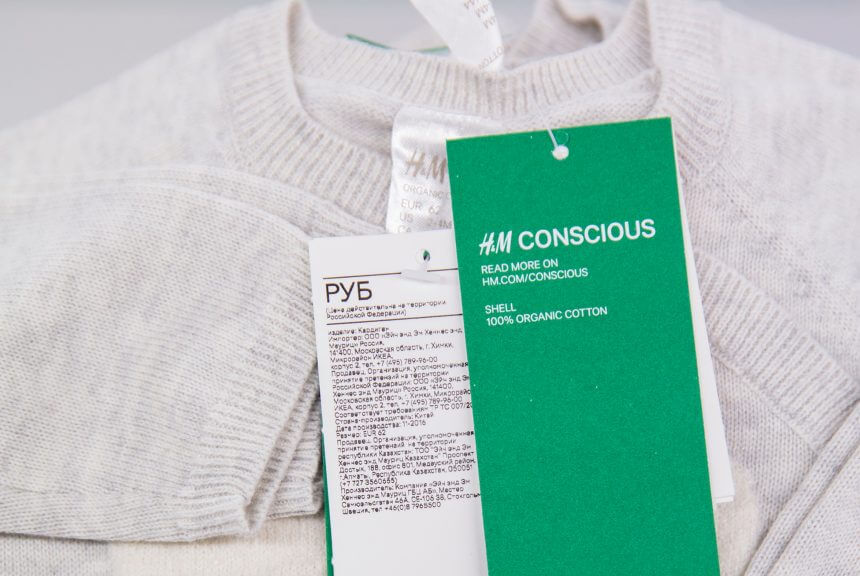
H&M led The Fashion Transparency Index in 2020 as the highest scoring brand.
Image credit: H&M
To take this a step further, Schleper explains that the use of end-consumer apps to detect and report potential ethical and sustainability issues is another technology perhaps capable of demystifying the supply chain, and again suggests that this drive is particularly consumer-driven.
Though perceived from industry as pressure, Schleper actually reframes this as a collaborative effort: “Altogether, I think that the problem of unethical supply chains can only really be tackled through [collaboration]. Consumers need to request fairer and cleaner working and production conditions through their consumption behaviour, which will push big retail brands to higher commitment towards a systematic change in the industry.”
Silver bullet
Thus far, transparency exists in the technological and voluntary solutions available and can enable a new business model that caters to consumer demand while setting new ethical boundaries. However, unfortunately, transparency is not a silver bullet. It does only what it says on the tin – helps to demystify. It is unable to clear away malpractice on its own.
What should follow the implementation of transparency is necessary change – the identification and elimination of unethical social and environmental practices and the forging of a greatly considerate and exemplary supply chain.
But even then, of course, there are limits to voluntary action. Though transparency technology lays the groundwork, global regulations are incredibly valuable in reinforcing these efforts, and no doubt governments will continue to be pushed to implement new rules and compulsory guidelines.
“History and research have shown that voluntary schemes and self-regulation are only effective to a limited extent,” explains Schleper. Though efforts are ongoing to create comprehensively transparent supply chains, opacity remains where businesses can slip through the cracks.
“Unless strict and enforceable regulation is in place, there will always be companies who talk the talk but don’t walk the walk,” Schleper adds.
References
[1] Chua, J. M., “Just One Major Brand is Fully Transparent About Its Suppliers”, Sourcing Journal, 2020. [Online] Available: https://sourcingjournal.com/topics/labor/fashion-revolution-tamil-nadu-india-suppliers-nudie-jeans-transparency-walmart-240492/ [Accessed 5th November 2020]
[2] Robinson, O., “Tackling modern slavery with Industry 4.0 solutions”, WTiN, 2019. [Online] Available: https://www.wtin.com/article/2019/june/100619/tackling-modern-slavery-with-industry-40-solutions/ [Accessed 5th November 2020]
[3] Fashion Revolution, “Fashion Transparency Index 2020”, Fashion Revolution, 2020. [Online] Available: https://www.fashionrevolution.org/about/transparency/ [Accessed 5th November 2020]
[4] Ley, R., “Not so fast: Millennials press fashion brands for greater transparency”, Reuters Events, 2017. [Online] Available: https://www.reutersevents.com/sustainability/not-so-fast-millennials-press-fashion-brands-greater-transparency [Accessed 11th November 2020]
[5] Cuddeford-Jones, M., “Why resilience and reputation go hand in hand”, Raconteur, 2020. [Online] Available: https://www.raconteur.net/supply-chain/brand-reputation-resilience/ [Accessed 16th November 2020]
[6] Hall, J., “How Much Has Actually Changed 5 Years On From The Rana Plaza Collapse?”, Refinery29, 2018. [Online] Available: https://www.refinery29.com/en-gb/2017/04/149832/rana-plaza-five-year-anniversary [Accessed 12th November 2020]
[7] Mooney, M., “Call for greater fashion supply chain transparency,” Logistics Manager, 2020. [Online] Available: https://www.logisticsmanager.com/call-for-greater-fashion-supply-chain-transparency/ [Accessed 5th November 2020]
[8] BBC, “Bangladesh building collapse death toll over 800”, BBC News, 2013. [Online] Available: https://www.bbc.co.uk/news/world-asia-22450419 [Accessed 12th November 2020]
[9] Nelson, D. “Bangladesh building collapse kills at least 82 in Dhaka”, The Telegraph, 2013. [Online] Available: https://www.telegraph.co.uk/news/worldnews/asia/bangladesh/10014778/Bangladesh-building-collapse-kills-at-least-82-in-Dhaka.html [Accessed 12th November 2020]
[10] Robinson, O., “Protecting apparel industry workers from malpractice,” WTiN, 2020. [Online]. Available: https://www.wtin.com/article/2020/october/121020/protecting-apparel-industry-workers-from-malpractice/ [Accessed 4th November 2020]
[11] Robinson, O., “Increasing traceability within the Indian textile value chain”, WTiN, 2020. [Online] Available: https://www.wtin.com/article/2020/july/270720/increasing-traceability-within-the-indian-textile-value-chain/ [Accessed 16th December 2020]
[12] Robinson, O., “Eon introduces connected products with CircularID Protocol”, WTiN, 2020. [Online] Available: https://www.wtin.com/article/2020/january/270120/eon-introduces-connected-products-with-circularid-protocol/ [Accessed 15th December 2020]
[13] Robinson, O., “Enabling cotton traceability”, WTiN, 2020. [Online] Available: https://www.wtin.com/article/2020/october/121020/enabling-cotton-traceability/ [Accessed 14th December 2020]
[14] Kraft, T., Valdés, L. and Zheng, Y., “Supply Chain Visibility and Social Responsibility: Investigating Consumers’ Behaviors and Motives”, Manufacturing & Service Operations Management, 20 (4), 2018. [Online] Available: https://pubsonline.informs.org/doi/abs/10.1287/msom.2017.0685 [Accessed 5th January 2021]
[15] H&M Group, “H&M Group leads the Fashion Transparency Index 2020”, H&M Group, 2020. [Online] Available: https://hmgroup.com/media/news/general-news-2020/hmgroup-fashion-transparency-index-2020.html [Accessed 11th November 2020]
[16] H&M, “H&M first major fashion retailer to bring product transparency to scale”, H&M, 2019. [Online] Available: https://about.hm.com/news/financial-reports/2019/4/3275581.html [Accessed 11th November 2020]