
On-demand custom-fabric is a trend that has been energised by developments in direct-to-garment (DTG) printing and consequently this has seen rise to an array of start-ups thriving from emerging business models.
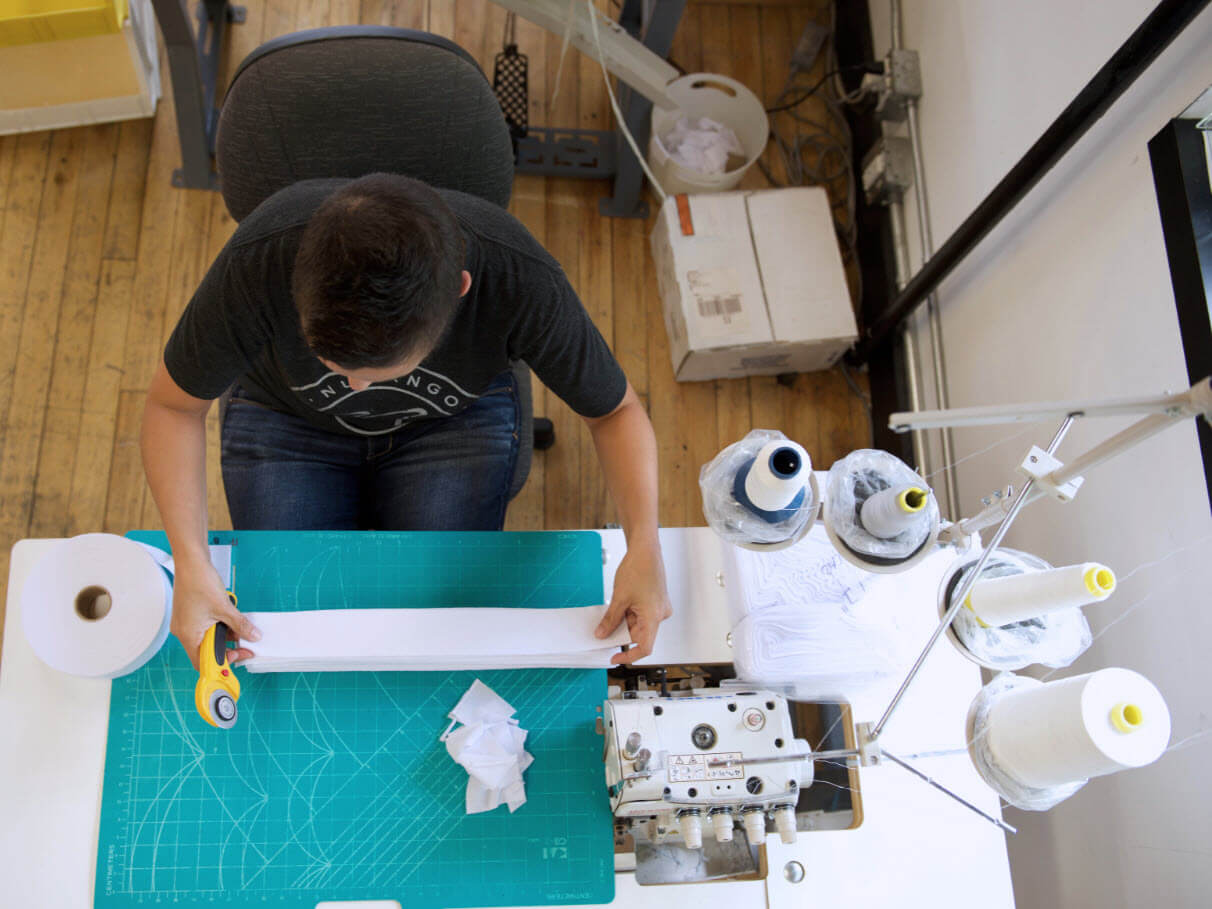
Notion's workforce has fluctuated over the years but currenty sits at a modest 10
In Canada, Notion is a prime example of how companies are benefiting from developments in DTG printing. Notion describes itself as a simple-to-use product design tool and manufacturing service. Its purpose is to take the frustration out of sourcing and manufacturing custom apparel accessories and fine art prints.
Notion director of communications and marketing, Dawn Laing, says: “The company’s origins date back to 2005. Named Gelaskins, the company made artist-designed vinyl skins for iPods. By 2014 the company expanded and rebranded as Nuvango, a fashion and lifestyle brand selling Gelaskins as a product.”
Having forged close ties with its customers, the company had a reshuffle and became Notion in 2017. Nuvango and Gelaskins then became brands within the newly-established company whose biggest market is the US, partly due to geography and logistics, but also because of the way in which the US – and North America more broadly – adapts to innovation, often enabling the country to set global trends.

Dawn Laing, Notion's director of communications & marketing
In order to achieve a vibrant and detailed print while maintaining speed-to-market, Laing states that Notion opted to implement digital textile print technology. She adds: “We run an on-demand manufacturing service that offers speciality printing services that support a variety of needs and interests. No job is too big or too small and digital printing is one of our core competencies.”
Currently, the company has Epson, Mimaki and Brother technology installed at its factory but declined to disclose model specifications. However, in 2014, the company first installed a dye-sublimation solution before investing in its first DTG machine three years later.
For companies like Notion, emerging trends like customisation and web-to-print are integral to its success.
Laing says: “We are currently working towards a more sustainable way of doing business. We are in the business of customisation, on-demand and just in time mentalities. This means we are working to prevent issues like overstock and juggling inventory.
“Our boutique API works with Shopify Stores, whom we have opted to partner with, to support on-demand manufacturing, fulfilment and distribution. This means we are working to drive businesses away from the clutches of fast-fashion and towards on-demand products that only exist because there is a willing consumer who has opted for the item.
“Fast-fashion relies on forecasting and inventory, which is risky and not environmentally sustainable. Our methods of just in time creation, on-demand means we are providing clients with products as customers need them as opposed to trying to guess what a client's customer might need and/or want,” Laing continues.
Currently, the textile industry is being heavily criticised for its poor sustainability record and despite developments in digital printing, which has cleaned textile manufacturing operations, analysts state that more still needs to be done – particularly in the fight against polyester and other man-made fibres which can take centuries to decompose.
Consumers are now vigilant of three things when it comes to buying textile-based products: How the goods were manufactured, where they were produced and what they are made from. Therefore, if developing trends like customisation and on-demand are really going to change the face of the textile supply chain they will need to combat these concerns over sustainability and cheap labour.
However, Notion is confident that it has the answers. “We are firm believers that we can educate and change the way people traditionally think about merch, product purchasing, and inventory management,” says Laing. “We can assist clients in understanding that good quality and sustainable manufacturing can go hand-in-hand, at a reasonable price and value. Made in Canada, on-demand, with low-to-no minimums means the businesses and clients we get to work with can spend their money more wisely without tying it up in products sitting in a warehouse.
“Sustainability starts with the consumer, they vote with their dollars. It’s our job to remind our clients that they can choose to work with a vertically-integrated studio factory like ours and offer a sustainable option to their customers, or they can go the way of traditional stock, inventory amd overseas purchasing which contributes to lower prices but often more risk and liability due to overstock and poor forecasting.”
Laing adds: “We hope that our fans, clients, and their customers opt to support on-demand manufacturing while also using data driven decisions about what sells on-demand to support conservative wholesale orders.”
Digital technology is going to play a pivotal role in these developments, without it they wouldn’t be possible due to the enhanced speed and low minimums which digital textile printing technology affords manufacturers. And, despite textile manufacturers reporting difficulties following initial installation, coupled with a less than satisfactory aftercare service offered by certain original equipment manufacturers (OEMs), Laing is confident that digital technology will go from strength-to-strength and that troublesome issues will be ironed out in due course.
She says: “Digital print technology is improving every day. Improvements in colour management, maintenance (print head and cleaning cycles), and user training have all seen an upward trend in propelling businesses, like ours, forward. Personally, I’d like OEMs to offer more standards and maintenance videos for their clients to ensure better longevity and use of products.”
Notion currently has the capacity to print direct-to-vinyl, dye-sublimation and DTG and is open to expanding on its current haul of print technology in due course as on-demand ecommerce business models further establish themselves.


