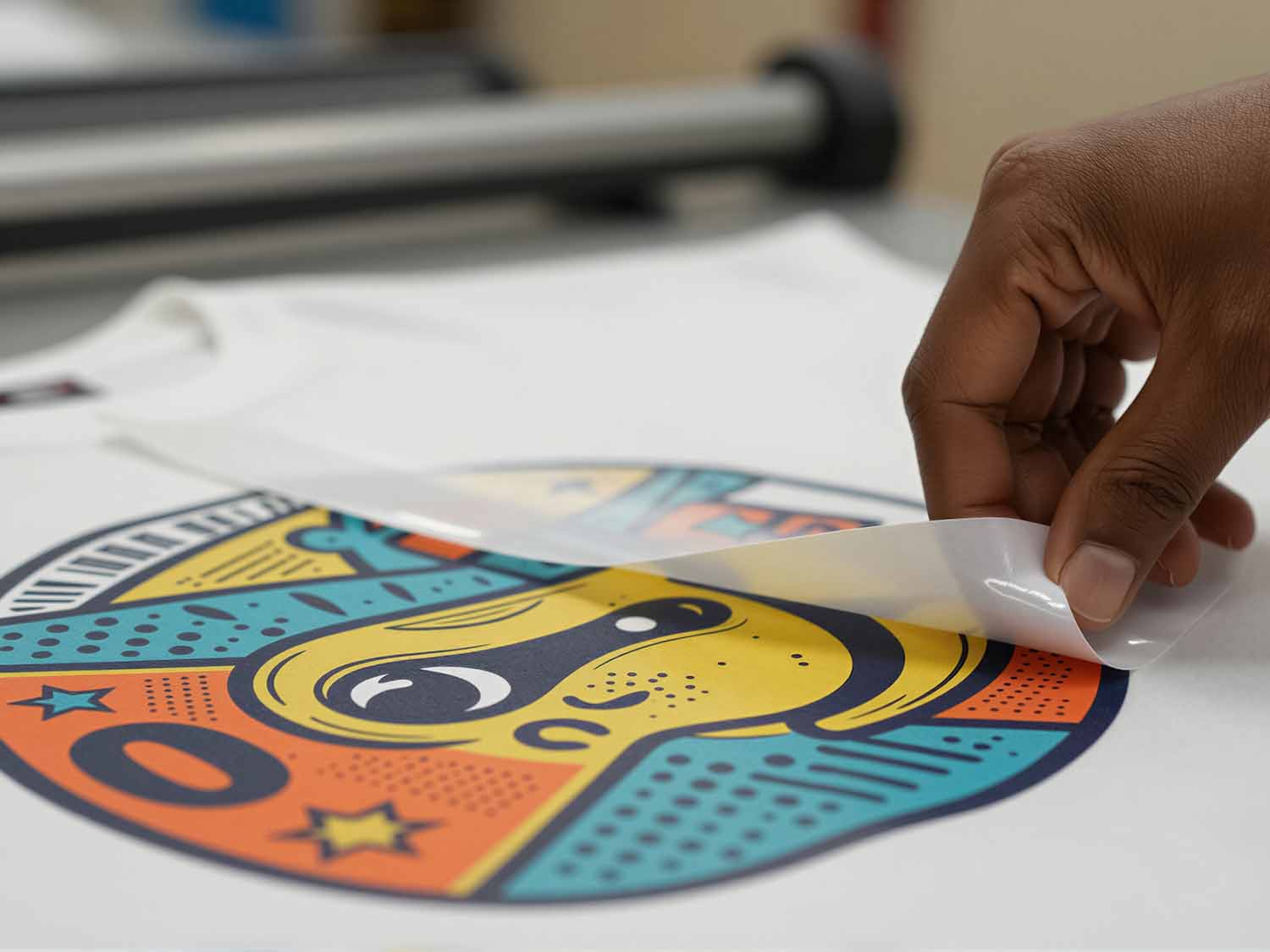
TTS (Texo Trade Services), the specialist in transfer print media and large-format printable textiles, is officially moving to its new business premises at the end of December. These newly built premises are located on the Gouwe Park business estate in Moordrecht and, with 6,000 sqm, is not only much bigger than its current premises, but also completely energy-neutral, according to the company.
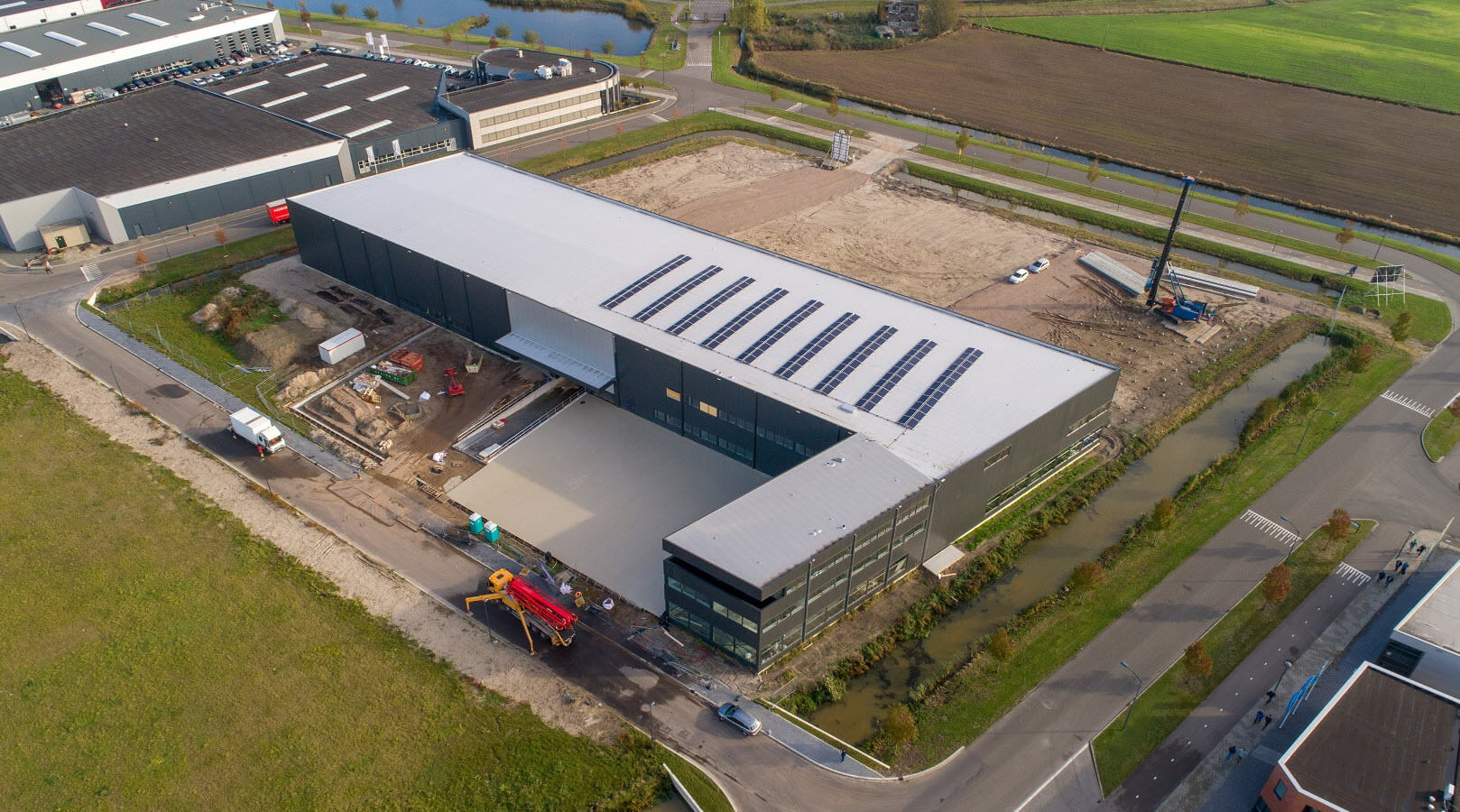
Construction new premises TTS
With a doubling of the workforce, a rapidly expanding circle of international clients and a quadrupling of turnover in ten years, relocation to bigger premises had become unavoidable. In addition, it has the ambition to continue leading in service and innovation, and space is needed for that as well. For that reason, after 10 successful years, TTS will be leaving its current premises at the Coenecoop business park in Waddinxveen at the end of December. In total, the new premises have an area of 6,000 sqm, of which 5,000 sqm consists of 12-metre-high warehouse and production areas and 1,000 sqm is devoted to office and demo centre.
The new premises are located right at the heart of the Randstad on the Gouwe Park business estate in Moordrecht. This estate is strategically located at the junction of the A20 and A12 motorways. As a modern organisation, TTS wants to do business as sustainably as possible, it says. That is why the new premises is completely energy-neutral. This is made possible through the application of underfloor heating, air circulation with heat exchangers and very good insulation in combination with solar panels, the company says.
In last decade, TTS has grown enormously in terms of digitally-printable textile media for visual communication, digital sublimation paper and silk-screen transfer paper, says the company. At its new premises, TTS has the space to grow even further. There is room for bringing certain production stages in-house, such as the rewinding and slitting of paper and textiles in accordance with the client’s wishes. And thereby, clients will find that TTS is a one-stop-shop from now on, adds TTS. From the new sample production facility, clients will be provided with samples more quickly and easily, which will further benefit the service provision. A new feature will be the demo centre, with various Mimaki printers, Monti calendars and heat presses. Here, TTS can test new products and bring them to market faster, it says. Besides that, a loading dock ensures that containers and trucks can be handled more quickly and efficiently.
Floris Jan van den Heuvel, director of TTS, says: “We expect that the market for digital textile printing will continue to grow worldwide. Particularly in segments like retail and stand construction, more and more textiles will be used. But also, companies which print textiles for the fashion or interior design segments are moving over to digital production. Beyond that, the applications for digital sublimation printing are continuing to grow in the market for promotional sales items. Think in terms of mugs, hand towels, key cords and floor mats. Since we will have more storage capacity and an efficient warehouse in our new building, we can operate more quickly, at lower costs, and respond to the growing demand from the market.”
As from 2 January 2019, TTS’s new address is: Oostbaan 601, 2841 ML Moordrecht, The Netherlands.
The company also recently opened two new stock locations in Europe – one in Paris, and the other in Leicester, UK. The two locations were chosen so that the company can better serve a concentration of customers in both the midlands of England and the French capital of Paris. With this local customer-oriented stock, TTS increases its service and delivery speed. The company says it currently aims to get products to the customer on the same day and never more than 24 hours after the order was received. The company says this enables its customers to guarantee their own clients faster turnaround times, allowing them to better distinguish themselves herein. This is a prime example of the impact trends like fast fashion are having on the entire textile supply chain – not just the apparel manufacturers and retailers.