The University of Dayton in Ohio has become the first teaching organisation in the US to kit out its medical students with revolutionary germ-killing apparel.
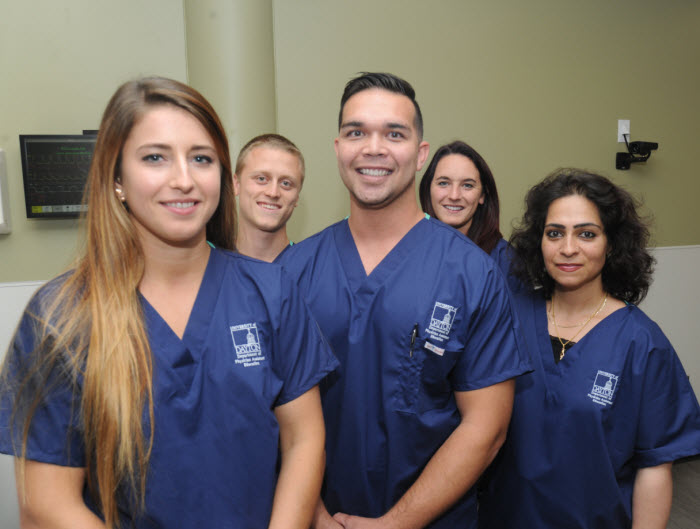
The University of Dayton has supplied its students with scrubs from Prime Medical
Students are wearing Prime Medical’s SAF-T scrubs, an innovative line of bactericidal apparel for healthcare that continuously kills germs on contact.
According to the Center for Disease Control and Prevention (CDC), 75,000 patients died in acute care hospitals as a result of healthcare-association infections (HAIs) in 2011 alone. Unprotected textiles in healthcare are known carriers of these harmful pathogens. A report in the American Journal of Infection Control indicated more than 60% of hospital nurses’ and physicians’ uniforms tested positive for dangerous bacteria. SAF-T products protect patients from HAIs by killing harmful germs and bacteria and preventing them from spreading.
“It is very exciting to know that our students, staff and the patients they treat will be protected from harmful pathogens that can lead to infections,” says Kevin R Kelly, dean of the School of Education and Health Sciences at the University of Dayton. “We’re pleased to lead the way in adding this new layer of infection prevention to our teaching environment.”
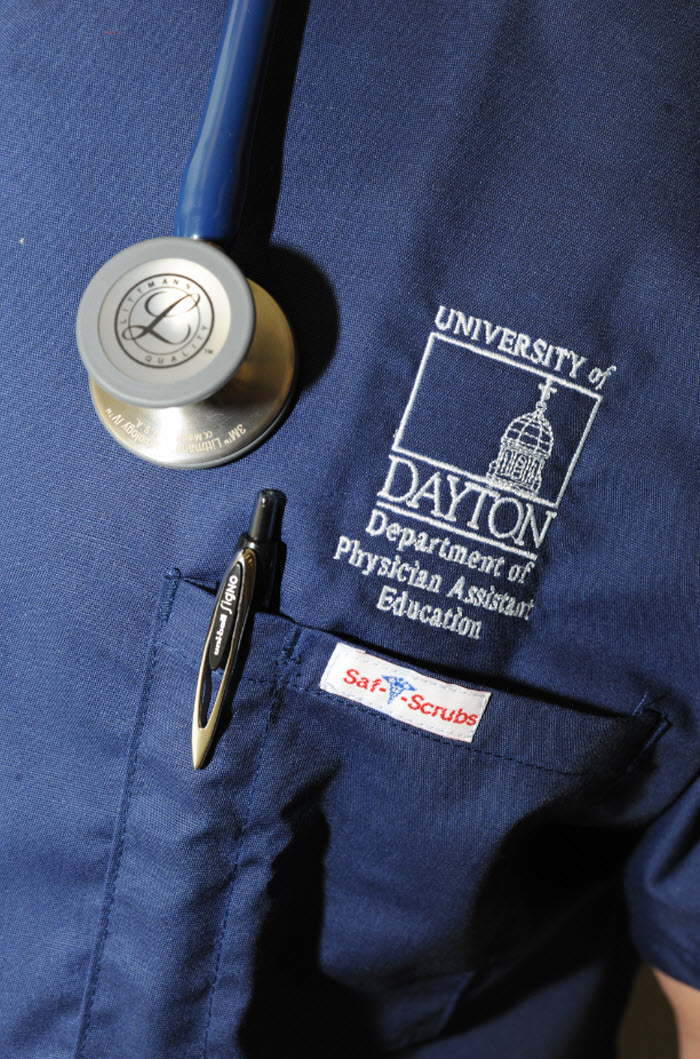
SAF-T products kill harmful germs and bacteria and prevent them from spreading
SAF-T is the only line of healthcare apparel and textiles to use BioSmart, a patented fabric technology that binds chlorine to the surface of fabric to continuously kill 99.9% of harmful pathogens for 120 days between wash cycles. Each laundering with EPA-registered bleach completely recharges the germ-killing effectiveness through 75 industrial wash cycles, with no loss of efficacy and without fading even the dark blue fabric.
Bactericidal soft surfaces, such as SAF-T scrubs, augment existing infection prevention protocol, including hand hygiene, hard surface disinfection and instrument sterilisation. Rather than serving as a fomite – an object that contributes to the spread of deadly infections – the textiles reduce HAIs and improve patient outcomes.
“Bactericidal fabrics are the new frontier in healthcare apparel, particularly as antibiotic-resistant super-bugs and HAIs continue to rise,” says Jim Sampey, CEO of Prime Medical. “We’re pleased that the University of Dayton is taking steps to protect healthcare staff and patients from preventable infections, while also shining a light on new infection prevention protocols for tomorrow’s healthcare professionals.”
Have your say. Tweet and follow @FHaran_WTiN and @WTiNcomment