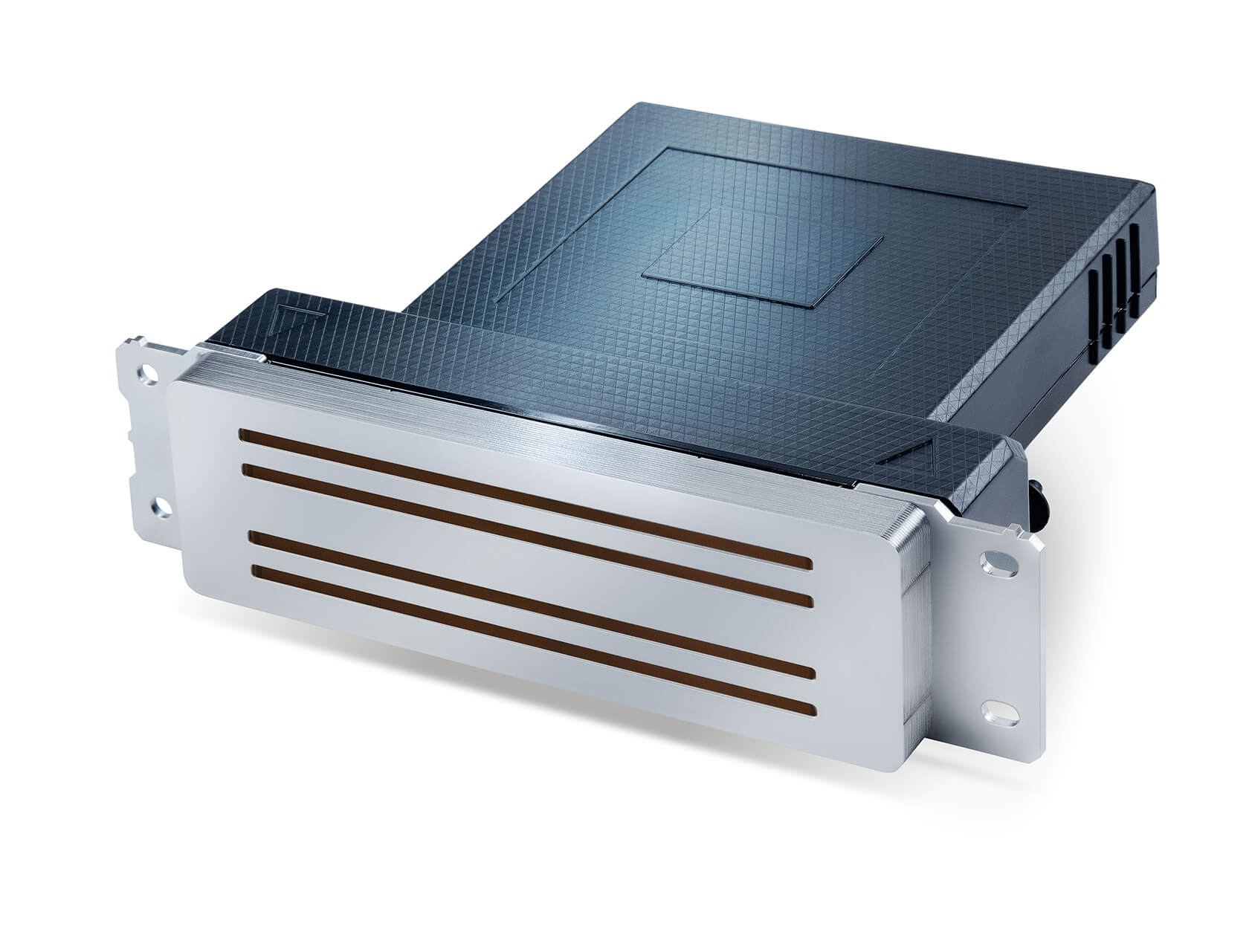
Innovate Textile & Apparel sees the Seiko Group enter the textile market for the very first time with its RC1536 printhead for printing water-based inks.
Seiko’s Printek Division – the division responsible for the industrial inkjet printheads – is said to be working very hard to bring to the market a “truly dependable printhead for printing water-based inks”.
“Initially, the architecture was said to be compatible but soon our engineers realised that water – the elixir of life for humans – is actually attacking some parts of the printhead and an update is necessary to make the printhead compatible for the new environmental friendly challenges,” says the company. “Water has proved its corrosive behaviour time and again in different fields and in the case of the printhead too it could eat away through some of the critical parts of the printhead.”
The problem was not only that. According to Seiko, its engineers realised that this corrosion is not happening during the compatibility testing but actually taking place during a long-term jetting test, which they perform while testing the product. “In such a test we are continuously moving the Piezo in the printhead to simulate the lifecycle of the printhead. These tests, which actually had to be done after every iteration, kept the engineers very busy to finally come up with the perfect parts which did not limit the functionality of the printhead and also remain stable for a time longer than the stipulated lifetime of the printhead,” explains the company.
It can be seen that there are existing products in the market which can print water-based inks. However, Seiko points out that it is not only bringing a water-based printhead to the market, but actually bringing the ‘reliability and robustness’ of its RC1536 printhead series into the new-generation market, “fitting perfectly to the environmental concerns of the new age”.
Starting from the ceramics market, where more and more environmental norms are disrupting the production, Seiko’s RC1536 printhead can be replaced one to one with its existing oil-based versions. “This makes it easy for the machine manufacturers to adapt to the change and address the market demands as early as possible,” says the company.
Apart from the ceramic’s market, where the product was successfully beta tested, the product is now being tested in other fields such as corrugated cardboard, 3D printing and even textiles. “Seiko can see that there is a strong requirement in the market for a product that can cater to the high reliability, high drop volume and wide range of operations,” the company adds.
The next step for Seiko is to work closely with ink manufacturers to determine where the limits and possibilities are to develop a complete solution for the different market segments. “Additionally, it must be noted that inkjet by itself is a symphony and not a one-man show,” says Seiko. “So, to bring the much-needed change to the market the entire process has to be worked out by the experts of the industry from the different parts of the process to make an inkjet system work.”
At Innovate Textile & Apparel, Seiko is inviting existing and new customers to contact the company and ‘share the knowledge’ of the different products they have to offer or would like to make.
“Let’s think and see where we can make the difference and strive for a much more environmentally friendly approach to our daily lives,” the company concludes.