As fashion consumers globally become ever more concerned about the ethics and sustainability of the products they purchase, the wool industry has been working hard to improve its traceability systems in order to meet growing demand for transparency across the supply chain.
Suppliers, processors and brands increasingly understand that it is no longer enough to be sustainable and ethical; they have to be able to prove this good husbandry practice through reliable data systems and certifications that can be trusted.
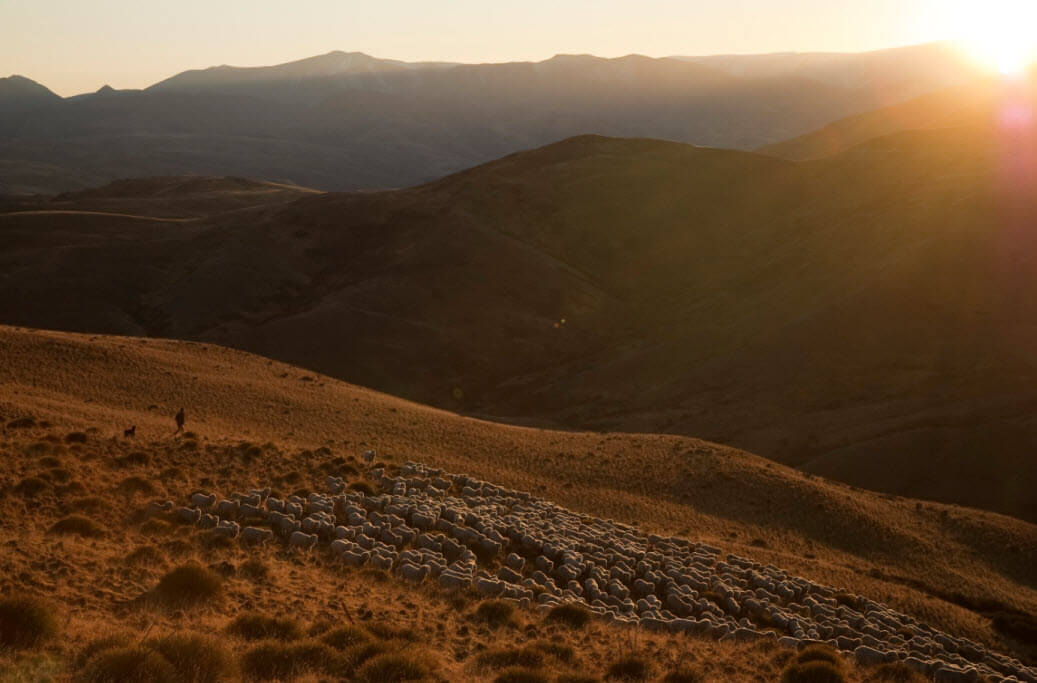
Traceability was a recurring theme at the 2018 International Wool Textile Organisation (IWTO) Wool Round Table, held in Buenos Aires on 3-4 December.
Indeed, IWTO President Peter Ackroyd says that the event “was perhaps the first global wool gathering where the growing demand for traceability dominated all agendas.”
He notes that “ever more searching questions are being asked about provenance, as consumers paying premium prices seek assurances about the integrity of the supply chain.
Transparency from farm to retail is not only the reserve of luxury brands. An ever-increasing number of high-street retailers are demanding more information about the journey wool embarks upon from the moment a sheep is shorn, and a growing number of agencies are offering supply chain solutions that include audits from farm to shop.”
He adds: “Wool is under significant pressure to be more transparent as other fibres, often disingenuously, seek to dominate the sustainability agenda. The industry is asking IWTO to play a more prominent role in the rapidly growing trend for sustainable solutions and increased transparency.”
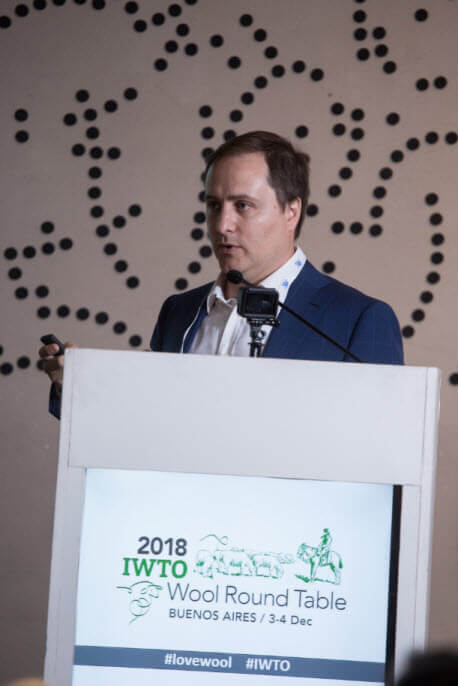
Among the speakers at the Roundtable was Willy Gallia, commercial and sustainability manager at the Argentine wool exporter and top maker Fuhrmann, based in Trelew, Chubut.
Gallia notes that wool has been produced sustainably in Argentina for years, a sales point that companies such as Fuhrmann are exploiting in meeting growing demand for responsibly sourced fibres.
He explains that the region of Patagonia, where most of the country’s wool is produced, has dry, cool weather, reducing infections in sheep, and the animals are handled only three times a year for shearing, weaning and lambing, less than in most regions.
Nevertheless, Gallia says that buyers have continued to express concerns about possible harmful shearing practices or over-handling, keeping a lid on sales growth.
The company, part of Switzerland-based The Schneider Group, has therefore taken steps to improve the traceability of its product to show buyers — and consumers — its responsible animal welfare and sustainable land management practices.
The wool produced by Fuhrmann for washing and combing into tops, which amounts to around 460,000 kg per year, is now processed under the Global Organic Textile Standard (GOTS). In addition, its 12 farms have been certified by the Responsible Wool Standard (RWS) to ensure land sustainability and animal welfare from farm to mill.
Gallia says this has boosted the company’s business in a variety of ways. He explains, for example, that the certifications have given it data to determine how many sheep can be put on a paddock, reducing the risk of hunger so the animals reach an ideal weight, boosting productivity.
The certifications are also designed to demonstrate that a wool producer has values and wants to achieve the highest environmental and social standards, making it possible to differentiate the product at a time when responsibly sourced fibres are growing in demand. Gallia predicts that if more producers incorporate traceability, this could boost wool’s share of the global textile fibre market from less than 2% currently.
“You have to do what the market is asking,” he says, adding that with differentiation, producers can hone client loyalty and boost returns by selling a speciality product at a higher price.

Historically, Argentine wool has been sold at a discount to Australian wool, but Gallia reveals that the certifications have pushed Fuhrmann’s prices higher at times.
“Every implementation of a preferred practice we have done has always outweighed the costs and the hassles of doing it,” he says. “The more we serve the market, listen to it and stay on the journey of best practices, the closer we will be as an industry to break the commodity status and enter the speciality one.”
Such initiatives, of course, depend on the reliability and demonstrable traceability of the certifications. The RWS, for instance, is becoming increasingly popular. H&M has given a commitment to use only RWS or recycled wool in all of its products by the end of 2022 and in September 2017 the first RWS certified garments went on sale in its ARKET stores. Wool from Uruguay and Australia was sourced and traced through the supply chain with accreditation of all suppliers and their processes from farm to store.
RWS is a voluntary global standard that addresses the welfare of sheep and of the land they graze on. It requires all sites involved in wool production to be certified by relevant independent third-party accreditation bodies according to their industry sustainability standards.
Only products with 100% certified wool can carry the RWS logo. Farms are certified according to animal welfare and best practice land management standards and then wool sourced from them is properly identified and tracked on its journey through the supply chain.
On farms, the certification ensures that sheep are treated with respect to their five freedoms – freedom from hunger and thirst; freedom from discomfort; freedom from pain, injury or disease; freedom to express normal behaviour; and freedom from fear and distress. These are international welfare standards for sheep upheld by leading animal welfare organisations, such as the UK’s Royal Society for the Protection of Cruelty to Animals (RSPCA), and endorsed by the IWTO.

In terms of land management, issues such as protecting soil health, biodiversity and native species are addressed in the assessment.
Founder of the RWS standard, Texas-based Textile Exchange is a global non-profit that works to create leaders in the sustainable fibre and materials industry by providing learning opportunities, tools, insight, standards, data, measurement and benchmarking.
In October 2018 New York clothing brand Eileen Fisher released its first RWS-certified garments made using wool from New Zealand and Argentina, while in the same month British retailer Marks & Spencer introduced a range of men’s blazers and waistcoats bearing the RWS logo made from New Zealand wool.
Phil Townsend, raw materials specialist at Marks & Spencer, says: “We’re proud to be one of the first retailers to launch RWS-certified items and to have played a significant role in its development with Textile Exchange and other committed partners. This is an important milestone as part of our ongoing commitment to be more transparent about our suppliers and ensure our raw materials come from more sustainable sources, which respect people, communities, the planet and animal welfare.”
California outdoor clothing specialist Patagonia announced in June 2018 that all wool in its autumn collection would be RWS accredited. “We know our requirements have challenged farmers to change centuries-old traditional wool ranching practices,” says a company spokesman.
In Australia, since 2008 there has been a voluntary traceability system in place for the Australian wool industry via a National Wool Declaration (NWD) which can trace wool lots through the supply chain. And while uptake has been slow, with still only 66% of all wool clips declared, according to WoolProducers Australia CEO Jo Hall, commercially-driven systems have been pushing Australian wool transparency forward. These include New South Wales-based New England Wool’s Merino SustainaWOOL Integrity Scheme in 2015 and Schneider’s Authentico scheme in 2018.
And in March 2018 Australian Wool Innovation (AWI) launched the first phase of its WoolQ portal, a centralised digital information platform which facilitates online collaboration between woolgrowers, classers, brokers and buyers. Its digitalisation allows a wide range of information to be accessed anytime and anywhere via desktop or mobile app, which may increase transparency and therefore traceability. In addition, The Woolmark Company, a subsidiary of AWI, is now working on a number of new traceability methods (see below).
Australia’s Ethical Merino Growers Co-Op has also started a new traceability initiative, embracing blockchain technology. The growers now offer the world’s first blockchain traceability platform dedicated to premium Merino wool fibre. The platform provides a secure traceback of data from paddock to processor, ultimately visible with just a wave of the consumer’s smart phone. Wool producers can use this open platform technology, an integral part of farm management software MyOrigins, to demonstrate how they grow wool without causing harm to the animals.
The new technology also enhances farms’ operations. “Our sheep are far better now in terms of flystrike,” says Philip Attard, a participating farmer. “We change paddocks for grazing twice a week and our flock don’t get the chance to go to a sheep camp. Plain bodied sheep also come into it and as a result our pasture is better with the rotational gazing. It rebounds after drought.”
Such initiatives are having an impact downstream. Australian fashion brand Country Road’s May southern hemisphere winter campaign included a Traceable Merino Collection with 29,000 units of traceable wool across its men’s and women’s ranges. The wool used in this collection could be traced back to just 25 farms in Australia.
Also, Australia’s Westcoast Wool & Livestock and Paris-based Chargeurs Luxury Materials recently launched the luxury Organica Precious Fiber brand. The partners use blockchain technology so consumers can track the product’s journey from the farm through the supply chain.
Michaël Fribourg, Chargeurs’ chairman and CEO, says traceability should help the brand gain “access to new markets, enhancing its reliability for our global partner in fashion and luxury products and, ultimately, for the end consumer.”
In addition, as reported previously on WTiN.com, Australian wool business Fox & Lillie has introduced Genesys, a new programme which aims to connect woolgrowers with leading brands around the world.
The programme provides a platform for woolgrowers to become accredited under various industry standards regarding ethical and sustainable requirements, and also enables brands to connect with woolgrowers upholding these requirements and deliver traceability back to the farm. The initial accreditation standard being supported by the programme is the RWS.
All this aside, WoolProducers’ Jo Hall explains that Australia can do better in increasing transparency at the first stage of the wool supply chain. “We would like to see every sale lot of Australian wool declared using the NWD,” she says. “Whilst 66% voluntary uptake is encouraging, all Australian growers must get behind this industry-driven system to demonstrate that our production sector is committed to ensuring transparency and traceability throughout the wool pipeline.”
In neighbouring New Zealand, transparency is also a key priority. The New Zealand Merino Company launched ZQ Merino, one of the world’s first ethical wool brands as long ago as 2007. Wool is fully traceable to individual farms.
Australian Merino wool producers are now reaping these benefits as well, with wool from non-mulesed sheep being now sold under the New Zealand brand after a trans-Tasman marketing partnership was announced in July 2018 between Australian Wool Network and the New Zealand Merino Company.
In South Africa the wool industry is also taking steps to provide greater traceability. Wool grower and IWTO sustainability committee chairman Geoff Kingwill says that communication along the long wool pipeline provides growers with information on consumer demands, while informing consumers about what is feasible and sustainable.
Wolf Edmayr, managing director of wool and mohair brokerage BKB, based in Port Elizabeth, agrees that wool consumers are now increasingly demanding information on responsible farming practices and traceability.
Recognising the complexity and depth of the wool supply chain, in February 2018 South Africa’s agriculture, forestry and fisheries department released a draft document on operating a South African livestock identification and traceability system (LITS), which Edmayr says aims to cushion the impact of diseases, specifically foot and mouth disease, on domestic and international trade.
But its implications could be broader – LITS will present livestock industries, including wool, and their trading partners with a credible system for identification and traceability and ensure producers, service providers and policymakers have enough information to make informed decisions.
“The lack of a LITS means the industry does not have the ability to differentiate between different production, management and treatment systems to underpin the various brands being used in South Africa,” says Edmayr, adding that traceability will strengthen existing markets and establish new ones.
It will also protect valuable foreign exchange earnings in an industry where only a small percentage of wool clip is processed or consumed locally. Monica Ebert, international brand development manager at BKB, says that as it promotes its Core Merino brand internationally it is focusing on detailing its wools’ origins and individual farmers’ environmental impact success stories.
“Cape Town and Gauteng [Johannesburg and Pretoria] consumers are increasingly environmentally conscious, making these key markets for promoting traceability and transparency in the production and manufacturing of wool products,” she says.
The Woolmark Company working on new traceability methods
The Woolmark Company is currently in the early stages of developing its own traceability programme for Australian wool, aiming to trace back the origin of wool used in an end product. This involves investigating the science behind objectively measuring the growing location of wool, something which is currently unavailable within the industry.
The Woolmark Company is exploring the feasibility of applying small quantities of a unique molecular DNA-based tracer with fluorophore material to wool fibres and following it through the manufacturing process, until it reaches the end garment.
The organisation is also looking at ‘product test methods’, which work to measure the naturally occurring chemical elements that exist within the wool fibre and vary from one growing location to another. The Woolmark Company says the methods could be used to supplement existing paper-based traceability methods and monitor the accuracy of product claims; for internal validation; and to maximise the transparency of supply chains.
“The service offers a scientifically proven and robust method to test a product and verify its origin claim,” says Stuart McCullough, The Woolmark Company managing director. “This approach has been used commercially to deliver a resolution back to country, region and farm of origin.”
The Woolmark Company is also investigating how to implement block chain-type systems to enhance paper-based traceability systems in the supply chain and give chain of custody data to supply chain participants as wool changes hands and is blended with other wool sources throughout processing.
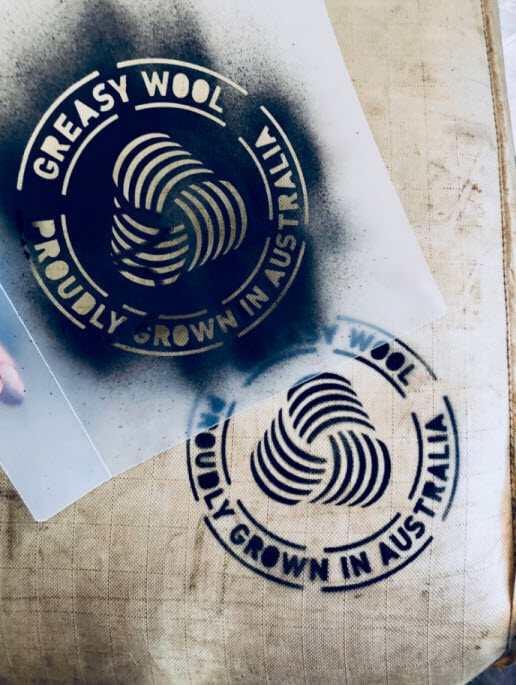
In addition, The Woolmark Company is offering eligible Australian woolgrowers a stencil of the Woolmark logo for branding use on their wool bales. “This will help to identify wool bales – and its contents – as Australian,” it states. “This provides an alternative to just having the Woolmark brand as a quality assurance mark for garments. It will move to become a supply chain integrity mark.”