As the coronavirus pandemic impacts all aspects of the global wool textile industry, experts from the International Wool Textile Organisation share their insights on the longer-term implications.
In the wool industry we’re accustomed to hearing jokes about black sheep, but black swans, it appears, are a whole other matter.
The term, used by essayist-scholar Nassim Taleb in his 2007 book ‘The Black Swan: The Impact of the Highly Improbable’, refers to an unpredictable event that has an enormous impact and which afterwards people find ways to convince themselves was predictable.
It’s been used in several places to describe the Covid-19 pandemic, and if uncertainty is an indicator of impact then we’re now well within Black Swan territory.
CROSSHEAD – Processing orders
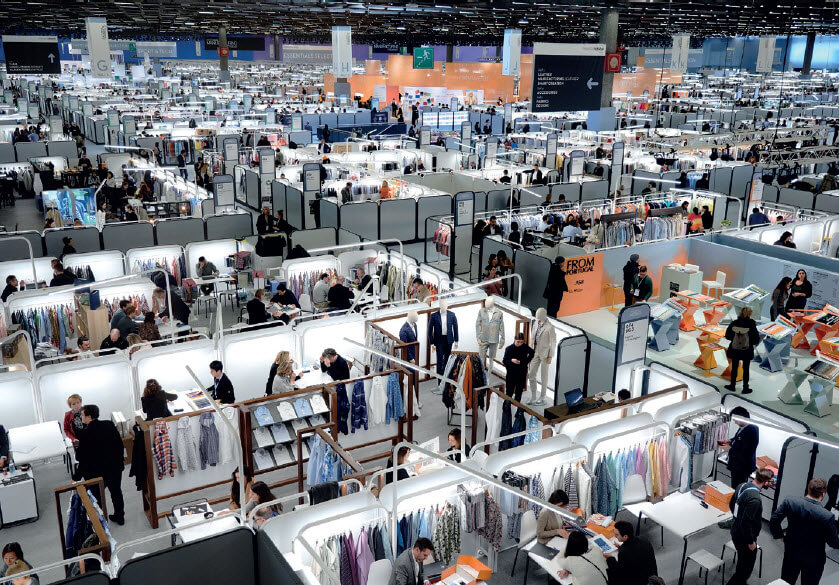
The first months of the year are pivotal in the life of a wool textile manufacturer, as orders for the forthcoming autumn season should ordinarily be in process to facilitate delivery of made up garments in mid-to-late summer.
This ordering is a predominately in-person process, an exchange between buyers and retailers at trade shows and showrooms.
The wool industry already had its hands full in January, dealing with the longest Australian drought in 100 years, followed by subsequent fires and floods. Still, prior to the coronavirus outbreak, global conditions were improving, helped by the ease in trade tensions between the US and China.
Under normal conditions, this boost of confidence would have indicated that a solid improvement in demand for apparel wool was at hand. But this was not to be.
Very quickly the rolling effect of the soon-to-be-declared pandemic led the Italian authorities to cancel the weaving yarn show Filo, scheduled for 27-28 February, and the remaining shows scheduled for the final day of Milan Fashion Week.
Armani filmed his catwalk event behind closed doors. But what the mainstream press did not report was that at least 1,000 Chinese retail buyers cancelled visits to Milan Fashion Week at the last minute.
By the time of Première Vision Paris, held on 11-13 February, reports Peter Ackroyd, Chair of the IWTO Retail Forum, Chinese exhibitors, buyers and consumers were largely absent.
Reliance on China
“Mill closures and a two-month-plus lockdown will inevitably impact the better end wool industry,” says Ackroyd. Spinners, weavers, knitters and clothing contractors in the premium sector are predicting seasonal demand for top-end expensive fashion to drop by between 40% and 50%.
Chinese consumers, either at home or abroad, normally make up 40% of global luxury brand consumption (valued at €281bn per annum). However, the Italian Fashion Chamber forecasts an overall sales slump of €100m in Q1 of 2020 and €230m in Q2, should the pandemic continue, which now seems certain.
The major per capita wool consuming countries of the world – Germany, Japan, the UK and South Korea – all rely on offshore manufacturing for around 94% of their apparel needs, China being the largest single supplier of yarn, fabric and made up garments.
The current crisis in China will impact both supply and demand, for not only do European high street brands rely on Chinese raw materials, but they are increasingly dependent on China as a market for lower middle level European branded fashion, as the number of H&M, Uniqlo and Zara stores increase across China.
European fast fashion companies are likely to suffer due to the just-in-time/quick turnaround time built into their business models.
The UK brand Next has £20m of goods currently at risk in China awaiting spring/summer delivery, but the brand is nowhere near as much exposed as H&M, Inditex and Primark, Ackroyd says.
On the luxury side, declines in consumer demand have emerged as shoppers from Asia and elsewhere cease travelling, and particularly scale back large-ticket splurges in the likes of New York and Paris.
Even those less inclined to spend big are likely to re-focus spending on health and necessities, and all this could carry over into 2021, Claudio Marenzi, President of Confindustria Moda, said in an interview with WWD.
While the virus should be extinguished by then, stocks of unsold goods from 2020 will translate into a slump through the first part of 2021.
Indeed, data in China shows that retail sales of garments at the major retailers in January-February were down by 33.2% compared with January-February 2019, reports Chris Wilcox, Chair of IWTO’s Market Intelligence Committee.
An early eradication of Covid-19 might have led to a surge later in 2020, as happened when the SARS scare subsided in 2003. However, that hasn’t happened.
Wilcox says that the rest of the world will see the same impact as consumers stop buying clothing, among other things, and as countries enter lockdown.
These lower retail sales will feed through the wool textile industry, resulting in lower demand signified by reduced and cancelled orders from retailers.
We can reasonably expect the wool market and the wool textile industry in the first six months of 2020 will continue to be dominated by these events, translating into volatility in the wool prices, particularly for prices of Merino wool, Wilcox says.
Towards the end of March the Australian Government announced tighter and tighter restrictions on industries and public movement. Wool auctions were proceeding with protocols and risk mitigation strategies to reduce the risk of Covid-19 infections.
What happens next?
We all want to return to production quickly. In China and other parts of Asia, workers are returning to factories, albeit in masks and having temperatures taken, including in Wuhan, the epicentre of the pandemic.
This is good news and hopefully will bring increased orders from mills keen for raw wool. However, elsewhere around the world we are seeing the opposite as cities, states and countries close down.
It is the longer-term economic impact that is of particular concern. Everything would need to go right with both fiscal and monetary policy for countries and the world to avoid a significant recession.
For Australia, for example, it would be the first recession in 28 years – the last was in 1990-91. More than a generation of working age Australians have never experienced a recession.
Could this epidemic also mark a turning point in the China-centric focus to supply chains? Some commentators predict a shift towards greater self-sufficiency and away from a dependency on “the factory of the world.” Manufacturers with heavy reliance may well reconsider, and diversify that risk.
According to Richard Wong, the Philip Wong Kennedy Wong Professor in Political Economy at the University of Hong Kong, our instinct is to see black swans through the same lenses we used in the past, and to then prescribe the same remedies used to treat previous disorders.
He questions that strategy, arguing that the remedy for a black swan event may require a move out of our comfort zones.
We certainly seem to be moving into that territory now. Still, “there is nothing like adversity to build cohesion,” notes IWTO Secretary General Dalena White. “We remain stronger together and can conquer this new threat if we all work together globally.
Jeannette Cook is communications manager at the International Wool Textile Organisation (IWTO).
The IWTO represents the interests of the wool textile pipeline from farm to retail. By facilitating research and development and maintaining textile industry standards, the IWTO ensures a sustainable future for wool.