Explore ideas, evidence and developments across the textile value chain.
72 articles · latest first · 25–48
 Insight22 Aug 2017
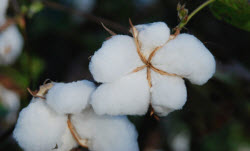
While Tanzania and Ethiopia have retained their focus on maintaining and improving their cotton outputs, Nigeria and Kenya have experienced disruption in their cotton production over the past two decades.
 Insight17 Aug 2017
In the last 10 years, India has established itself as the world’s top producer of cotton, as well as other yarns, increasing its spinning capacities and taking around 18-20% of the global yarn trade.

Despite being the world’s largest cotton and yarn producer, India has a low share – 5-5.5% – in the global textile trade.
 Insight10 Aug 2016
Munish Tyagi discusses the strong case for India’s home textiles industry to be treated equally to the country’s much-favoured apparel sector by the government to further boost its growth.
 Insight8 Aug 2016
The United States Fashion Industry Association (USFIA) has predicted that Vietnam’s position as a key supplier of clothing, and hence a buyer of textiles, will remain strong, even if the USA fails to ratify the TPP trade deal.
 Insight19 Nov 2015
India became the largest producer of cotton this year, taking China off the top spot to a close second position. However, its textile industry seems to be facing an uphill struggle and is under serious threat as a result of its ambition to increase its global share in textile trade from 4.5% to at least 8-10% by 2020. Considering the ongoing slowdown in China’s overall economy and textile industry, India today faces major concerns.
Kazakhstan [KZ] is one of the fastest emerging economy in the Central Asian or the CIS region. It is a country endowed with resources of hydrocarbons and minerals in a large landmass which is ninth largest in the world with land area of 2.72 million sq km.