Explore ideas, evidence and developments across the textile value chain.
420 articles · latest first · 217–240
 Prices12 Jun 2017
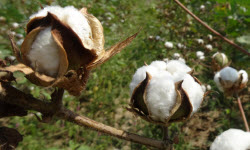
Pakistan cotton remained stable at Rs6,800 per 37.32 kg. There were some supply-side factors that have had a negative impact on cotton supply in the country, such as the unavailability of irrigation water – which has had a negative effect on productivity in Pakistan.
 Prices5 Jun 2017
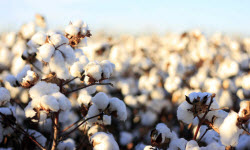
Indian cotton prices in Gujarat moved positively after the week ending 12 May, increasing 2.3% to 43,100 INR per candy on 2 June, from 42,100 INR per candy quoted four weeks’ prior; a 0.7% increase relative to 42,800 INR per candy quoted on 26 May.
 Prices30 May 2017
Global demand for cotton was revised upwards by the United States Department of Agriculture relative to estimates in April as a result of higher-than-expected consumption from Asia. Global exports were also revised upwards, led by the US, India and Cote D’Ivoire (Ivory Coast). It is important to note that the USDA revised downwards the global supply of cotton as a result of a large downward revision in production from India offsetting a marginal upward revision in initial reserves. Mill use has outstripped production in 2016/17, meaning a depletion of cotton reserves. Polyester staple and filament fibres prices moved upwards following the OPEC’s decision to extend supply cuts of oil to combat a glut in the market. The price levels of polyester staple and filament fibres are still below their 2016/17 peak level. PX prices are also moving positively, but remain below the 2017 peak level. Viscose staple fibre prices were still falling relative to the week before. The US dollar dropped 0.49% against the yuan relative to the week before. Placing upward pressure on the dollar value of Chinese yarns and fibres.
Prices22 May 2017Figures from the United States Department of Agriculture reveal that the estimated global cotton supply for 2016/17 has been revised downwards in May relative to April. This is mostly a result of a downward revision in production coming from India. The Cotlook A Index increased 3.9% to 90.80 cents per pound on 17 May, relative to 87.35 cents per pound quoted on 10 May. Cotton supply in Brazil has also been revised upwards in May relative to April, as a result of higher-than-expected productivity in the domestic market The dollar dropped against the yuan by 0.12% relative to the week before, and the INR gained 0.6% against the dollar on 17 May relative to 10 May.Polyester staple fibre prices stabilised at a new low, while viscose staple fibre prices continued to drop relative to the week before. Oil prices below $50 per barrel and overcapacity in China’s yarn market contributed towards the drop in staple fibre price levels.
Prices15 May 2017Prices of polyester and viscose staple fibres and yarns continued to drop relative to the week before in terms of yuan and US dollar as a result of overcapacity in the market. The Chinese yuan gained 0.04% against the dollar on Friday 12 May relative to the week before, placing upward pressure on the dollar price of Chinese fibres. The appreciation of the yuan was not enough to compensate for the impact of weak demand from domestic buyers. Stronger financial regulations in China worsened the prospect for fibre markets prices, as funds that can be used to prop up the market became more scarce. The supply and domestic consumption of Chinese cotton have been revised upwards, according to figures provided by the United States Department of Agriculture (USDA). The CCINDEX 3128B dropped marginally relative to the week before by Friday 12 May. Indian cotton production has been revised downwards relative to April, according to figures provided by the USDA, as a result of lower-than-expected productivity. The cotton fibre price of 29mm in Gujarat dropped relative to the week before, due to competition from imports and adequate supply in the market enjoyed by spinning mills.
 Prices15 May 2017
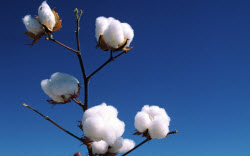
According to latest figures provided by the United States Department of Agriculture, Chinese estimated demand for cotton fibres in 2016/17 was revised upwards by 750,000 480lb bales, relative to estimates made in April (2.1% increase) to 37 million 480lb bales.
Prices8 May 2017Prices of polyester and viscose staple fibres and yarns continued to drop relative to the week before in terms of yuan and US dollar, as a result of overcapacity in the market and the weakening of Chinese yuan. The Chinese yuan dropped 0.11% against the dollar on Friday 5 May, relative to the week before, placing further downward pressure on the dollar price of Chinese fibre. Brazilian cotton prices are expected to dip due to stronger-than-expected domestic production and demand for imported cotton, according to the USDA. Furthermore, initial reserves were revised upwards in Brazil. Most of the increase in estimated cotton supply is expected to be held in reserves, while the rest are predicted to be exported. Markets are forecast to adjust in light of new data by allowing price levels to drop. Indian cotton prices dipped due to an increase in competition from imported cotton. There was also a marginal downfall in yarn prices, due to the use of cheaper imported cotton enjoyed by spinning mills. Despite this benefit, challenges arose for those relying heavily on Chinese markets, as news broke of China lowering its imports of yarn. The Indian rupee strengthened further against the dollar, placing more pressure on the competitiveness of Indian exported yarn. Demand for exported yarn in Taiwan remained quiet as prices remained unchanged.