Explore ideas, evidence and developments across the textile value chain.
420 articles · latest first · 49–72
 Insight12 Feb 2018
The dollar price of India’s exported yarns dipped marginally this week compared to the previous week on 9 February, due to a marginal dip in INR by 0.4% relative to the previous week.
 Pricesfree29 Jan 2018
The US dollar dropped further against the Chinese yuan by 1.2% this week, relative to the week before, and continued to place upward pressure on the dollarvalue of Chinese staple fibres, yarns and fabrics. YTD figures provided by China’s National Bureau Statistics show that cloth production in China dropped year-on-year in 2017 up to November. The difference in accumulated profits in November and October suggests recorded cloth production dropped steeply in November year-on-year, and relative to the previous month. Pakistan cotton prices have moved positively due to tight supply in the market since early December, despite withdrawing tariffs on Indian imports. The cotton market in Pakistan faced a lot of challenges in addition to its devaluation of currency against the US dollar, but this week Karachi cotton prices remained stable relative to the week before, as prices stabilised. India’s cotton output was attacked by boll-worms in Maharashtra, leading to a downward revision in available supply. India was expected to account for 25% of global cotton production, according to the United States Department of Agriculture. According to the Cotton Association of India, more than a quarter of its production came from Maharashtra in the previous market year, so pest attacks and weak yields in the area could lead to upward pressure in global cotton prices.
Prices22 Jan 2018The US Dollar dropped further as the ECB showed signs of a close end to its purchases of US Treasury bonds. The falling demand fuelled by the ECB places upward pressure on yields in the European market, making it relatively more attractive to foreign investors. The European market has also been outperforming the US market in terms of growth, as it remains in the earlier stages of its expansion. According to figures provided by the China Petroleum and Chemical Industry Federation, YTD staple fibre production (Polyester, Viscose, Polypropylene, Acrylic) in China went up 2.3% year-on-year, due Viscose staple fibre production offsetting a year-on-year drop in Polyester staple fibres. Acrylic and Polypropylene staple fibre production also contributed towards the year-on-year gain in Chinese staple fibre production. According to the National Bureau of Statistics, chemical fibre production rose marginally but and yarn production dropped 1.8%. According to the United States Department of Agriculture, US cotton supply and demand for the 2017/18 market year was revised downwards in January due to weakness in the domestic market relative to expectations in December 2017.
 Insight22 Jan 2018
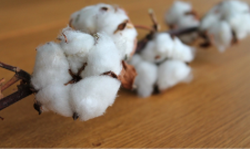
Latest figures provided by the United States Department of Agriculture, in January, show the projected total supply of cotton was revised downwards for this 2017/18 market year, relative to projections made in December, due to weakness in the domestic market.
 Insight22 Jan 2018
According to YTD figures provided by China’s National Bureau of Statistics, very weak production within November led to only a marginal increase in chemical fibre production in 2017 up to November, relative to the same period the year before. Yarns, on the other hand, had negative growth in China, in 2017 up to November, relative to the same period the year before. As with chemical fibres, low production within the month of November was the reason behind this drop in year-to-date output.
 Insight22 Jan 2018
According to data provided by China Petroleum and Chemical Industry Federation, and CEIC, staple fibre production (Polyester, Viscose, Acrylic, and Polypropylene) amounted to 15.16 billion kgs in 2017 up to November, up 2.3% year-on-year from 14.83 billion kg during the same period the year before. The bulk of the increase came from Viscose staple fibre production, which more than offset the year-on-year drop in Polyester staple fibre production. Acrylic and Polypropylene staple fibre production also contributed towards the year-on-year rise in fibre production in China.
Prices15 Jan 2018The US dollar depreciated further against the yuan and euro week-on-week, as a result of a rumour that China will slow down purchases of US bonds. US yields went up as the price of government bonds went down during a sell-off. Prices of US bonds were further supressed when the European Central Bank and Japan both echoed concerns about rising US government debt. The bonds market took the rumour seriously. According to Bloomberg, China found US bonds less attractive, and Donald Trump’s threat of trade war, as well as political tensions with China, further lowered the attractiveness of US bonds from China’s perspective. This is very serious for the dollar, as China is a major holder of US debt. The Cotton Association of India has revealed that arrivals of cotton in the country reached 39% of expected 2017/18 provisional levels of output. Cotton production in India is projected to expand 11.2% year-on-year, as output has increased in all zones in the country. Cotton output from the central zone is expected to make up the bulk of the increase in output, and plays the most significant role in ensuring adequate cotton supply is available in the market. More than half of total cotton production in India is expected to come from the central zone. Provisional figures provided by the Office of Textile Commissioner show year-to-date (YTD) filament yarn production went up 3.4% year-on-year in 2017 up to October, as the year-on-year gain in polyester filament yarn production offset the year-on-year drop in viscose, nylon and polypropylene filament yarns production. Spun yarn production in India, on the other hand, dropped 0.3% in 2017 up to October. The year-on-year increase in blended yarn production was not enough to offset the year-on-year drop in the production of both cotton and non-cotton yarns in 2017 up to October