Explore ideas, evidence and developments across the textile value chain.
139 articles · latest first · 121–139
 Insight5 May 2015
Although the final details of the Trans-Pacific Partnership (TPP) trade agreement have yet to be agreed, it is all but certain that the TPP’s free-tariff treatment for Vietnamese garments will see substantial amounts of yarn being shipped from US textile mills to garment factories in Vietnam, with the resulting clothing returning to the USA as finished ‘Made in Vietnam’ products.
 Insight27 Apr 2015
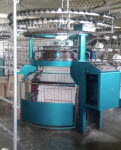
The Philippines’ once formidable knitwear sector has been shrinking in size in the past two decades, but the Pacific archipelago’s inclusion in the European Union’s (EU) Generalised System of Preferences Plus (GSP+) preferential tariff scheme from January 1 is filling remaining manufacturers with some hope for another heyday.
 Insight16 Mar 2015
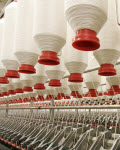
The Hong Kong unit of Luthai Textile Co Ltd, China’s leading producer of yarn-dyed fabric and shirts, has informed its shareholders of a plan to invest US$150 million in building a new Vietnam-based textile plant. The factory, whose location has yet to be disclosed, would have 60,000 spindles, with an annual output of 30 million metres of yarn-dyed fabric.
Insight17 Feb 2015Indian textile and clothing supply exporters are failing to seize backward linkage market share in Vietnam because of chronic delivery delays, a Vietnam buyer has claimed to WTiN.com. “We are happy with Indian yarn both price- and variety-wise, but the Indians are terrible lead time-wise,” said Sim Thai Ha Phuong, vice director of Thai Son S P Co Ltd, a medium sized knitwear manufacturer in Ho Chi Minh City.
An amendment to China’s national environmental protection law that took effect on January 1 will probably spark more closures of dyeing and finishing factories, as well as of factories producing dye precursor chemicals, experts predict. Prior to its implementation, a series of crackdowns on polluting plants ordered by local authorities had already caused prices of certain chemicals, for instance 2-amino-4-acetylamino-anisole, to skyrocket.
The Manila-based Asian Development Bank (ADB) has urged Cambodia to upgrade its manufacturing sector, including the development of textile production and finishing, to successfully transition from a low-income to a middle-income country, according to the bank’s November report.
Vietnam is planning a wide range of textile industry shows and conferences in 2015 that will help generate international business relationships enabling it to profit from any deal that may emerge regarding the planned Trans-Pacific Partnership (TPP) trade agreement with other Pacific Rim countries.
The close relationship between the textile sectors of Vietnam and South Korea could be intensified by the end of the year, with the two countries’ governments saying they want to conclude a bilateral trade deal in 2014.
Although outgoing European Commission president José Manuel Barroso, on his late-August visit to Vietnam, presented the planned EU-Vietnam free-trade agreement (FTA) as a nearly finalised deal – and Vietnamese state media predict the signing will happen in October – the Vietnamese textile industry is still unsure about the FTA’s potential impact.
 Insight15 Aug 2014
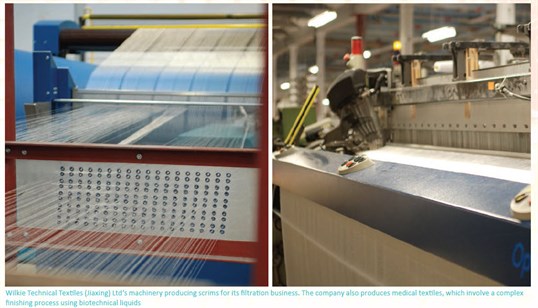
China’s technical textile sector – producing everything from protective gear for steel workers to materials used in artificial kidneys – has enjoyed strong growth in recent years, and 2013 was no exception. According to the annual report of the Beijing-based China Nonwovens & Industrial Textiles Association (CNITA), the value of the technical textile sector and the fixed asset investments within it grew in 2013 by 12.9% and 28.7% respectively year-on-year. Domestic demand has driven this growth, which was strong despite lacklustre economic performance in key export markets such as the United States and Europe. Imports of technical textiles into China also saw a healthy increase of 8% to $4 billion in 2013.
A glance at Hong Kong’s official trade data gives the impression that all is rosy for the Chinese special administrative region’s (SAR) knitwear manufacturers. In 2013, Hong Kong exported knitted and crocheted fabrics worth $2.5bn, up 4.1% year-on-year, easily outpacing the 1.6% growth posted by the city’s overall textile exports valued at $10.7bn, according to figures from the Hong Kong Trade Development Council (HKTDC).
 Insight11 Feb 2014
The Taiwan dyeing-and-finishing sector has never quite recovered from the World Trade Organisation's (WTO) abolition of global textile quotas in 2005. It resulted in the closure of many stand-alone units by making their labour-intensive manufacturing processes on the relatively wealthy island uncompetitive. However, in recent years, the situation has stabilised.