Professor Stephen Russell, chair of Textile Materials and Technology at the University of Leeds, UK, discusses some of the challenges being addressed in the woundcare sector, and how nonwovens can contribute to them.
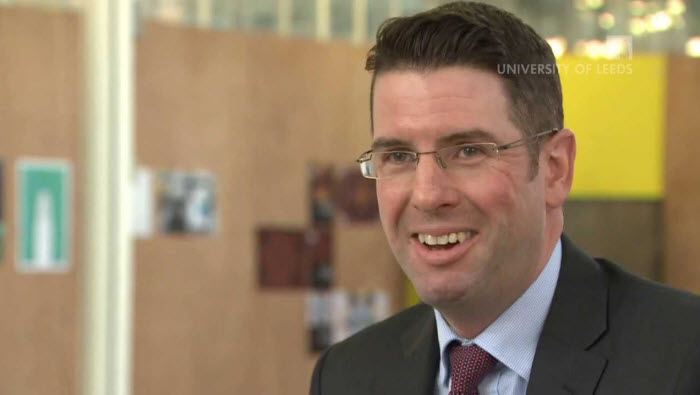
Professor Stephen Russell
Professor Russell is also director of the Clothworkers’ Centre for Textile Materials Innovation for Healthcare, and technical director of the University spinout NIRI Ltd. His research interests lie in nonwoven materials and biomaterials technology, applied to fibre-based devices for consumer, healthcare and industrial sectors.
“One of the key drivers in wound -healing advancement is the ageing population,” he says. “By 2050, around two billion people will be over 60 years of age, which is roughly three times the figure it was in 2000. In some developed countries such as Japan and Italy, people over 65 now account for well over 20% of the population. This partly reflects a shift in demographics, but it is also indicative of increasing life expectancy – which of course is very good news. “Related factors include the prevalence of cardiovascular disease and diabetes, as well as comorbidities and diet, particularly in relation to chronic wounds and ulceration,” adds Russell. “Based on recent statistics, the number of people with diabetes could rise substantially from a current position of around 415 million to 642 million by 2040 – which brings with it substantial challenges.”
Because chronic wounds do not heal in an orderly and predictable timeframe, many healthcare providers report substantial increases in the number of patients, intensifying the need for advancements in wound management strategies capable of reducing time to healing and minimising the cost of long-term treatment. According to Russell, a host of factors need to be balanced when designing improved woundcare products. “Of course, the functional attributes of wound dressings are critical, but with increasing budget limitations, the agencies that fund or deliver healthcare are likely to face increasing challenges in dealing with the demographic shift,” he says.
Personalisation approach
Generally, one of the most substantial changes in medicine over the last 20 years has been the progress towards stratified and personalised medicine, with the objective of improving healthcare outcomes. However, Russell says: “Although woundcare could benefit hugely from a stratified system, we are still some way off having a generally accepted approach that takes account of wound dressing selection.” It is interesting to consider the potential role that wound dressing design could play in providing improved wound-management options as part of a stratified or personalised approach. It is likely that stratification in woundcare could lead to substantial improvements in healthcare outcomes mirroring the benefits that have been found elsewhere in medicine, such as drug therapy.
In one interpretation, stratification in woundcare means applying wound diagnostics and condition monitoring to guide wound-management decisions, to ensure every patient does not receive the same treatment or therapy. Instead, patients are stratified into different groups based on the assessment of wound condition and other criteria, with each group receiving a different overall treatment programme. This would impact on the selection of wound dressings and other topical treatments. With the objective of reducing healing times and patient morbidity, “the ultimate destination would be personalised woundcare tailored to each individual patient,” says Russell.
There are various ways in which the challenge of stratified and personalised woundcare can be interpreted and implemented, but there is no consensus about the most appropriate approach and how it should affect wound dressing design. At present, some approaches would be easier to adopt than others within existing medical device regulations.
Developments in stratification and personalisation are partly reliant on progress in diagnostic tools and monitoring, wound dressing design and the supporting information technology. Of particular interest is real-time monitoring and rapid diagnostic capability. For example, wearable technology capable of monitoring diagnostic criteria in patients can have the dual benefit of assisting healthcare practitioners to tailor wound-management programmes, as well as assisting individual patients to better manage their own condition in the community. This applies as much to delaying the onset of ulceration as it does to the time required for healing an already formed wound.
Wound diagnostics provide a means of better understanding what a patient requires in terms of wound-dressing interventions, or other topical treatment at various stages of the wound-management process. However, the complexity of wound healing makes identifying appropriate molecular biomarkers and real-time assessment of microbial or enzymatic processes highly challenging. Detecting elevated protease activity in wounds as an indicator of infection to guide the selection of dressings is one area where diagnostics in woundcare has been applied, but enzymatic activity is only one aspect of delayed wound healing.
Another important area both for diagnostics and wound-dressing design is controlling the development of biofilms because of their potential association with wound infection. Real-time detection of biofilm formation in patients at the point-of-care or via wearable technology could therefore be a useful tool in preventing the development of delayed healing due to infection in chronic wounds.
Such diagnostic tools and monitoring methods in woundcare have the potential to provide improved information for carers, nurses and clinicians that could assist patients to independently manage aspects of their condition, as well as enabling improved decision-making by healthcare providers. Additionally, there is the potential to improve wound-dressing selection, which includes agile decision-making about the point at which dressings should be changed – which will vary from patient to patient. “The general strategy is to select the right wound dressing, for the right person at the right time,” says Russell.
Advanced wound monitoring approach
In terms of current approaches to monitoring wound conditions, Russell says: “Currently, decision-making still largely depends on a visual inspection of the wound site, requiring the dressing to be lifted at the risk of disrupting neo-tissue.” Transparent dressings may be one way forward, but apart from some hydrogel technologies, achieving this is technically challenging because of the inherent opacity of the polymers and nonwovens needed to manufacture dressings. In addition, there are aesthetic concerns for patients in having dressings where the wound area is more easily visible.
Therefore, various groups are developing diagnostic dressings that, when in situ, are capable of detecting changes in wound condition by producing for example a colour change to indicate a change in the biochemical status of the wound site, relating for example to enzymatic or microbial activity as well as pH. As part of an integrated wound management process, this could enable the prospect of continuous wound monitoring, alerting the wearer to a change in the condition of the wound without requiring a healthcare professional to be present to make an initial assessment.
Monitoring therefore contributes to the diagnostic assessment of the wound, providing an alert to action. “Once you can monitor in real-time, it is possible to be more responsive to a change in the status of the wound, enabling treatment to be adapted by changing the wound dressing, for example,” says Russell. Such an approach could also prevent inadvertent overuse of antimicrobial dressings. Judicious selection of topical treatments and wound dressings could therefore assist in minimising issues of microbial resistance, as well as contribute in some cases to lower wound care costs.
Moisture management
An ongoing challenge in wound healing is to effectively manage the fluid in heavily exuding wounds. Russell says: “There are various strategies to manage exudate effectively, rather than relying on absorbency alone – which is not good enough if you want to leave the dressing in place on the wound for longer.” To prevent the dressing from becoming heavy, excess fluid has to be managed by, for example, evaporating it from the back of the dressing. By manipulating porosity, fibre dimensions and fibre orientation, the structure of nonwoven fabric can play an important role in controlling not just how much exudate is absorbed, but also where it is transported within the composite structure of a nonwoven dressing.
Russell says: “For wound monitoring, there are opportunities to develop discrete sensing regions within a nonwoven structure that work by transporting a small fraction of the exudate away from the wound site.” These sensing regions respond to biochemical triggers, which alert the wearer to a change in the status of the wound.
Colour change is just one approach and, according to Russell, the sensor chemistry does not need to be present across the whole dressing, but only in certain areas. He says: “In a composite nonwoven structure, the sensor components can be incorporated into very small regions of the nonwoven structure, well away from the wound site because we are able to guide the exudate within the dressing to these specific locations – typically at the back where they are visible. So, the role of the nonwoven is both to manage exudate absorption and to provide a connection to remote sensing components, all of which forms part of the nonwoven system.”
Another opportunity for nonwovens is in the manufacture of single-use bedside diagnostics. “Using appropriate biomarker detection chemistry printed onto the fabric, a sample of blood or exudate dropped onto the nonwoven substrate spreads in such a way that it is transported to the printed regions to produce a visual indication, which can be aided by use of a low cost electronic circuit,” says Russell. These bedside diagnostic devices are disposable, and the objective is to provide a much quicker clinical assessment of a patient’s condition, which could include other markers of disease.
As discussed, exudate management has been and will continue to be one of the key areas of wound dressing development. However, Russell says: “The mechanical function of wound dressings is also important because they are frequently compressed during use, leading to reduced permeability and absorption capacity. We are looking at ways of improving the compressive strength of nonwoven dressings, particularly for chronic wounds on the lower legs, ankles and feet.”
Preventative approach
In patients at risk of developing chronic wounds, there has been increasing attention to preventative care, which can also involve advanced monitoring systems. In preventative woundcare, instead of just focusing on wound healing, it is attractive to minimise the probability of the wound forming in the first place. “For example, in people at risk of developing pressure ulcers, the likelihood of ulceration increases if there is insufficient movement and if prolonged pressure on soft tissues is not off-loaded,” says Russell.
Wireless patient monitoring using small wearable sensors enables a patient’s position and movement to be remotely monitored, so that an individual turn protocol can be developed for a patient lying in bed to minimise their risk of developing a pressure ulcer. Such an approach is at the heart of the Leaf Patient Monitoring System developed by Leaf Healthcare, which recently secured a strategic investment and distribution agreement from Smith & Nephew. This is an example of how wireless monitoring could be used to formulate a personalised care protocol for an individual patient. Clearly, this could have significant benefits for both patients in terms of their independence and reduced morbidity, as well as healthcare providers in terms of reducing the costs of community nursing.
With regards to such digitally based technologies, it is likely that progressive miniaturisation of wearable sensor components will continue, together with the ability to monitor a greater range of patient criteria, enabling the formulation of stratified or personalised care protocols. For example, the remote monitoring of the skin condition prior to ulceration is of interest, since if it becomes macerated or damaged, with a risk of skin breakage, it could lead to ulceration and potential infection. Here, smart monitoring devices could again be instrumental in reducing the risk of wound development.
Combinatory approach
Another issue concerns the healing of wounds where patients with diabetic peripheral neuropathy are particularly at risk of developing ulcers on their ankles and feet. At the moment, nurses, surgeons and podiatric physicians spend considerable time managing such wounds, which are difficult to heal because of their position. These can be deep, cavity-type wounds that require significant time to clean and dress, and orthoses are frequently used as a means to offload the wound site so it has a greater chance to heal.
The challenge is to achieve this without adversely affecting the mobility of the patient, so that they can lead as normal an active life as possible. Russell says: “We are exploring the feasibility of combining some of the functions of a wound dressing with the job of an orthotic device.” Developing such a wound dressing requires it to have greater load-bearing capacity as well as the ability to be tailored to shape, so that in the future it might be possible to avoid having a separate orthotic device alongside the dressing.
Another combinatory approach in relation to wound-dressing design is the incorporation of therapeutic agents or alternative antimicrobials. Functional chemistry including antimicrobials and drugs can be readily encapsulated within fibres, and various approaches can be taken to control the kinetic release profile. One of the challenges includes the claims made about the mode of action and the length and complexity of the regulatory development pathway, which can have a significant impact on time to market.
Older technology vs modern technology
According to Russell, there has been extensive research in nanofibre fabric production and nanotechnology more generally. But in terms of wound dressing development, the importance of older nonwoven technologies such as air-laying, carding, cross-lapping and spunmelt methods in delivering the most advanced wound products should not be ignored.
He adds: “Tremendous opportunities exist for nonwovens in advanced woundcare product development, not least because of the versatility of the processes and ability to tailor fabric properties cost effectively. We are still scratching the surface in terms of exploiting the full capabilities of fibre science and nonwoven technology in dressings.”