Explore ideas, evidence and developments across the textile value chain.
23,367 articles · latest first · 12,961–12,984
 Preview17 Oct 2017
In three months’ time, ISPO Munich will once again open its doors to almost 90,000 trade visitors, who will see latest trends and developments in the sports and activewear industry.
 Insight17 Oct 2017
The International Alpaca Association is aiming to boost the promotion of alpaca through hosting more regular fashion events.
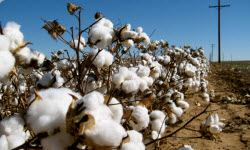
According to figures released by the United States Department of Agriculture, expected cotton supply and demand in Brazil was revised upwards for the 2017/18 market year in September, relative to expectations made in August. Expected supply increased due to higher than- expected domestic production and initial reserves, while an upward revision in demand was mostly supported by an upward revision in exports, as it was revised upwards at a faster pace (and larger amount) than domestic consumption. In the United States, cotton supply was revised upwards, due to an upward revision in domestic production offsetting a drop in estimated initial reserves. Like in Brazil, the upward revision in demand was driven by exports. In both Brazil and the United States, cotton production was driven by an upward revision in harvest area and expected productivity. Figures released by China’s National Bureau of Statistics show chemical and synthetic fibre production increased 4.4% and 2.9% year-on-year respectively in 2017 up to August. In India, according to provisional figures provided by Office of Textile Commissioner, staple fibre production dropped 3.1% in 2017 up to June, as the year-on-year drop in polyester staple fibre production continued to drag down the growth of total staple fibre production.