
Read
Explore ideas, evidence and developments across the textile value chain.
Explore the archive
23,370 articles · latest first · 22,945–22,968
 Technical20 Sept 2013
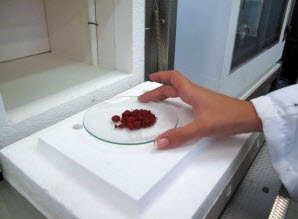
Patented catalyst removes VOCs from industrial chlorinated gas streams
Researchers at the University of Alicante (UA) and the University of the Basque Country (UPV) have developed and patented a new catalyst that efficiently removes volatile organic compounds (VOCs) from chlorinated gas streams.
AATCC issues new Stain Release Replica for testing labs
AATCC, the American Association of Textile Chemists and Colorists, has developed a new digitally printed Stain Release Replica for use with AATCC Test Method (TM) 130, Soil Release: Oily Stain Release Method. The new Stain Release Replica was developed by the Association’s RA56 Stain Release Committee Task Force, which conducted testing of the replica across six different labs.
DuPont to raise titanium dioxide prices
DuPont is to increase prices on all of its titanium dioxide (TiO2) products sold in North America, Europe, Middle East, Africa, Latin America and the Asia Pacific regions from October 1 or as contracts allow.
 News20 Sept 2013
ACTIF calls for long-term renewal of AGOA
The African Cotton and Textile Industries Federation (ACTIF) has called for the African Growth and Opportunity Act (AGOA) to be renewed for at least a decade.
 News20 Sept 2013
US BioDesign set for business growth
US BioDesign’s, the American producer of biomedical textile structure components, believes that relocating its manufacturing HQ to a business campus in Quakertown, Pennsylvania, supports the company's business strategy for remaining competitive, despite the Affordable Care Act's (ACA) economic impact on the global medical device industry.
 Insight20 Sept 2013
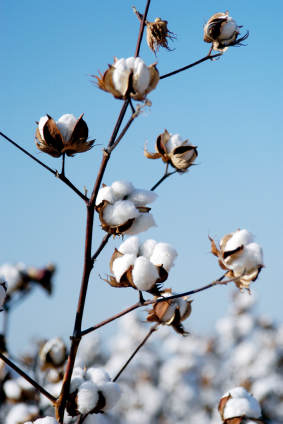
WTiN Outlook: China still holds key to cotton price prospects
Little has changed to influence us to alter our predictions of recent weeks. The nearby international price outlook appears about steady, with mill demand at a low ebb in most of the major import markets, but the available supply for immediate shipment still relatively tight. Further forward, harvest-time pressures, and in particular the need to dispose of a record Indian crop, with import demand from China potentially flagging, augurs an intensification in downward pressure on prices.
Front line fabrics
In golf, the sweet spot is the exact location on the club that provides the most accuracy and distance when it connects with the ball. Named after the founder’s favourite golf venue, Deer Creek Fabrics is an American manufacturer of weft knits and other fabrics based in Stamford, Connecticut that has found the sweet spot for their specialised products in both the military and active/outdoor markets.
 News20 Sept 2013
Henkel inaugurates Chinese adhesives plant
Henkel has inaugurated, what it calls, the world’s largest adhesives factory in Shanghai. The new factory, which is also known as the “Dragon Plant” at Henkel, comprises 150,000 square metres of space and is now the central production site for industrial adhesives in China and the Asia-Pacific region.
 News20 Sept 2013
Scottish wool blend features in Glen Shee carpet
Kingsmead Carpets has developed a new commercial carpet range, Glen Shee, made from the ‘Highland Fleece’ wool blend collection.
 News20 Sept 2013
International cotton prices maintained, as market awaits fresh stimulus
New York futures have edged higher this week, but without any conviction and trading was generally slow. Price direction seems to have been derived primarily from wider macro-economic influences and mirrored a general rise in commodity prices following the US Federal Reserve’s surprise announcement that it would maintain its economic support measures. Little fresh news has been forthcoming regarding the cotton market specifically, both in terms of crop development and mill business.
Ontex opens $30m diaper plant in Turkey
Hygiene products manufacturer Ontex has opened its new $30m factory in Istanbul in Turkey. Located in the Silivri dirtrct, the plant will manufacture Canbebe branded hygiene products including baby diapers and wipes, the business which the Belgian company acquired from Turkish Astel Kagitcilik in 2000.
 News20 Sept 2013
OECD: Existing chemical regulations appropriate for managing nanomaterial risks
After six years of research the Organisation for Economic Co-operation and Development (OECD) has stated that approaches for the testing and assessment of traditional chemicals are, in general, appropriate for assessing the safety of nanomaterials.
 News20 Sept 2013
Increased optimism discernible on Turkey's yarn and fabric markets
More encouraging signs have begun to emerge from Turkey’s yarn and fabric markets during the past week, in the form of modest improvements in the pace of orders.
 News20 Sept 2013
David Nieper appoints new fashion designer
British fashion house, David Nieper has appointed Elizabeth Edwards to the position of senior fashion designer.
 News20 Sept 2013
Business sentiment slightly brighter on Pakistan's yarn market
The appreciation of the Indian rupee against the US dollar has been cited as a reason for a slightly improved yarn business climate in Pakistan during the past week, owing to an easing in competition for orders from that quarter. In addition, mills have expressed some optimism that the pace of orders could pick up in the months ahead, with China expected to come back to the market.
WTiN Outlook: Australian wool prices
Exchange rate factors were the major influence on the market this week. Chinese purchasing was in evidence, but some merchants indicated that the major Chinese buying houses were not actively involved. While currency considerations could continue to create volatility in prices, the general direction in the short term could be modestly weaker, particularly as spring shearing gathers momentum and the supply to the market increases.
 News20 Sept 2013
Insulation alternative with Sorona
DuPont, a specialist in producing leading-edge technology for the fibre and textile industry, has developed a variety of insulation materials made with its Sorona fibre as an alternative to down and feather filling.
 News20 Sept 2013
Cleaning dye-polluted waters with treated natural fibres
A process using natural plant fibres embedded with nanoparticles can almost completely rid water of harmful textile dyes in minutes, a report by Cornell and Colombian researchers has revealed.
 News20 Sept 2013
Oerlikon turns attention to China
The amount of fibres produced by the People’s Republic of China grew by 60% between 2008 and 2012, and now totals 36.1 million tonnes which represents a world-market share of 65%, according to figures from textile machinery specialist Oerlikon.
 News19 Sept 2013
Hollanders introduces ColorBooster 250 at SGIA
Hollanders is to introduce its entry-level ColorBooster 250 2.5m wide-format textile printer to the American market at this year’s SGIA expo in Orlando, Florida.
 News19 Sept 2013
BioAmber project receives $12m Government investment
BioAmber’s new bio-based succinic acid plant, the first and only commercial scale production plant of its kind in the world, is to receive a $12 million investment from the Canadian Government to support its construction in Sarnia.
Insight19 Sept 2013WTiN Outlook: Is the current relationship between prices for individual fibres and their historical averages sustainable?
The accompanying chart plots global benchmark prices for a selection of textile fibres against their average value during the first decade of the millennium in attempt to gauge their competitiveness, both against each other, as well as in comparison to their historical ‘norms’. The chart highlights a divergence between fibre prices during 2013, compared with the past couple of years when prices moved more closely in tandem.
 Review19 Sept 2013
FESPA China attracts international suppliers
FESPA China 2013 is taking shape as an important and influential event for the region’s printers, with strong involvement from major international suppliers and an increased emphasis on digital technologies.
 Technical19 Sept 2013
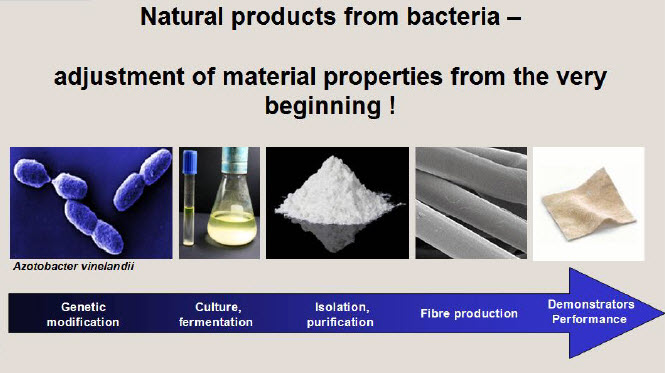
Fibre Production with Bacteria and Fungi – Opportunities of Gaining Raw Materials by Biotechnology
Sustainability has become an increasingly important topic for players along the textile value chain. Against the background of resource scarcity, we have to wonder how to handle resources and who – besides nature – generates raw materials for fibre production?