Explore ideas, evidence and developments across the textile value chain.
65 articles · latest first · 49–65
 Insight10 Apr 2019
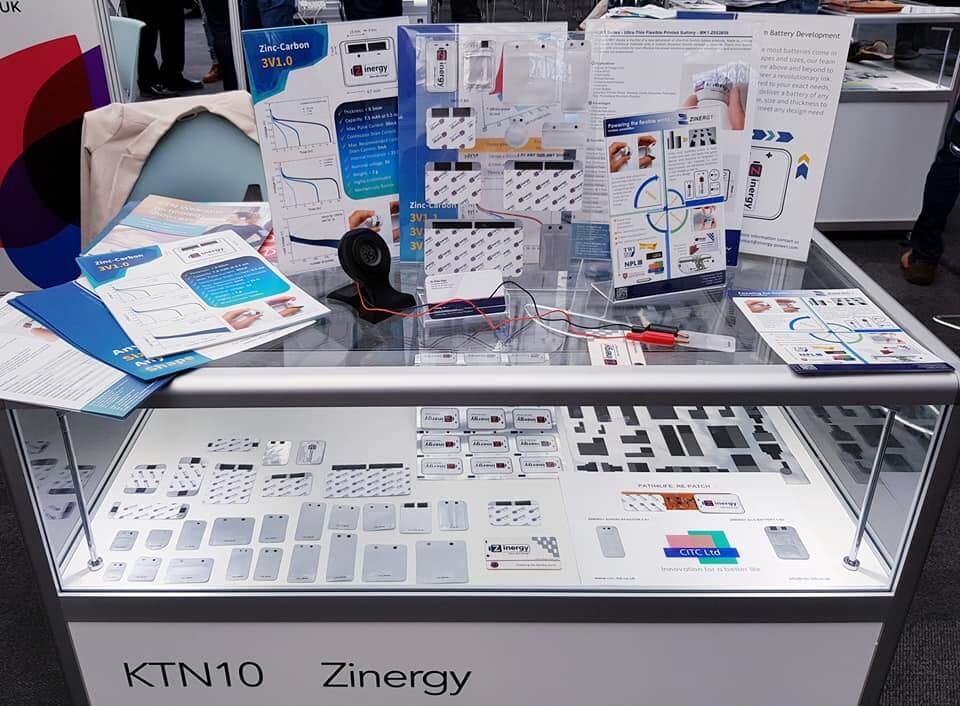
Dr Dilek Ozgit, co-founder and chief scientific officer of Zinergy, speaks to WTiN about an ‘ultra-thin energy’ the company has created through its flexible batteries
 Insightfree28 Mar 2019
The emerging coating technologies for protective applications highlight trends towards sustainable options within fire-retardant coatings, as well as nanotechnology advances for both protection against toxic gases and stab-resistant applications
 Innovation Briefingfree26 Feb 2019
Textile materials with a high specific tensile strength and modulus are the common choice for the manufacture of protective body armour. With gun control legislation becoming increasingly strict, sharp objects have become accessible weapons, and injuries arising from stabbings are now much more common. Conventional body armour has traditionally been bulky, stiff, uncomfortable and challenging to disguise under clothing. Therefore, there is a greater requirement for flexible and wearable stab-resistant materials.
 Innovation Briefing26 Feb 2019
In this innovation profile, WTiN reports on a textile material discovered by researchers from the University of Maryland, US, that can instantly alter its material properties to regulate how much heat can pass through the material in response to infrared radiation.
 Innovation Briefing8 Feb 2019
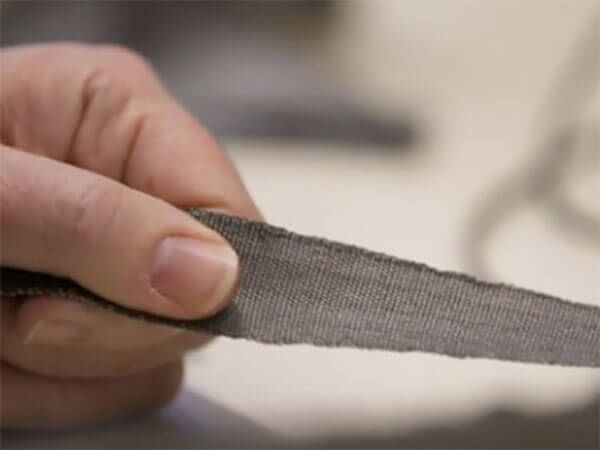
Energy harvesting is a process that converts ambient energy into electrical energy to power electronic devices. The required electrical energy for these devices can be harvested from various other forms of energy, including mechanical stress such as strain or displacements, heat energy, as well as thermal gradients and incident light (photovoltaics).
 Innovation Briefing30 Jan 2019
In this product innovation profile, WTiN reports on a research outcome from the University of Exeter’s Centre for Graphene Science and College of Engineering, aimed at a new technique compatible with mass scale production, to develop electronic graphene fibres that can be seamlessly incorporated within the fabric**strong text**
 Innovation Briefingfree3 Dec 2018
Thermotherapy is a common approach for the pain alleviation of muscle spasms, stiffness and joint injuries. However, conventional heating pads are stiff and unable to provide even heat treatment, particularly during movement or physical activity. The same mechanism applied to thermotherapy could potentially provide increased thermal conductivity and insulation in wearable applications. The human body produces a large amount of heat, even during sleep. However, more than 50% of body heat produced is lost and wasted through dissipation to the air. Although outdoor clothing designed for the cold weather is often made from thermally insulating materials, there is a further requirement for cold weather clothing to provide increased warmth. Metallic nanowires have great potential for application in conductive wearables due to their exceptional conductivity, in particular when pulled and stretched. Moreover, due to the one-dimensional microstructure, nanowires have an increased electrical conductivity when compared to nanoflakes or nanoparticles. Efforts have been made by scientists to coat metallic nanowires onto textiles and, in this case, heat is produced via a small battery. However, when cloth coated in extremely electrically conductive, electrically charged nanowires comes into direct contact with human skin it is likely to be unsafe and become damaged via abrasion during application. Additionally, the thermal insulation of nanowires reduces when coming into direct contact with the skin. Therefore, further development is still required to fabricate a material that is safe, inexpensive, durable and flexible for increased thermal conductivity and insulation. In this product innovation profile, WTiN reports on a research outcome from the Department of Mechanical Engineering of Ulsan National Institute of Science and Technology, the Republic of Korea, aimed at the incorporation of metallic nanowires into the high strength, aramid-based, bulletproof material Kevlar, to develop smart wearable heated body armour that can conduct and retain heat for police and military personnel in cold climates, as well as for thermotherapy application.
 Innovation Briefing12 Oct 2018
The body maintains thermal balance by losing heat into the environment through mechanisms of conduction, convection, radiation and evaporation. Moreover, the mechanism required for thermal balance within the body relies on uncontrollable external environments such as: temperature difference between the body and outside environment, air movement, relative humidity, and radiant heat from the sun or other sources of thermal radiation. As temperatures across the globe are rising due to global warming, excessive heat stress is reported as the leading cause of mortality in the United States. Clothing is integral to thermal balance within the human body; clothing systems can replace heat lost from the surface of the skin and, in some cases, help cool down the body in warm environments. The latter, however, is dependent on the design of the clothing system.
 Innovation Briefingfree4 Oct 2018
The development of a one-step fabrication method for novel, functional, conductive, flexible sensor material, designed to give electronic signals for the detection of chemicals such as nitric oxide (NO) and vehicle exhaust pollution (H2S) by coating both cotton and polyester fibres with two different conductive MOFs (Ni3HHTP2 and Ni3HITP2). In addition to sensing the chemicals the SOFT device is also able to capture and filter the harmful toxins. This smart fabric sensor can widely benefit wearers of hazardous material clothing by offering advanced protection against toxic chemicals.